





You arrive at your destination excited to start your trip, but your body still feels like it’s living in another time zone. You may feel sleepy during the day, wide awake at night, or not feel like yourself.
Jet lag is a temporary sleep and body-clock disruption that happens when you travel quickly across multiple time zones.
Your surroundings change faster than your internal clock can adjust, which can affect sleep, energy, focus, and even digestion.
Understanding what jet lag is makes it easier to know why it happens and what your body needs to get back on track.
What Is Jet Lag?
Jet lag is a temporary condition that happens when your body’s internal clock does not match the local time at your destination. Your body follows a natural daily rhythm called the circadian rhythm, which helps control when you feel awake and when you feel ready to sleep.
When you cross several time zones quickly, your surroundings change before your internal clock can catch up. Your body may still be following your old schedule even though the clock on the wall shows a different time.
For example, if you fly from New York to Paris, your body may still feel like it is nighttime even when it is morning at your destination. You may struggle to sleep, stay alert, or feel comfortable during the first few days of your trip.
Jet lag is not the same as being tired after a long journey. A long flight can leave you drained, but jet lag specifically comes from crossing time zones and disturbing your body clock.
Preparing for a comfortable flight can also make long journeys easier. Simple items like a travel blanket can help you rest better during your trip, but airline rules vary, so it is useful to check whether you can bring a blanket on a plane before packing one.
A Simple Jet Lag Example
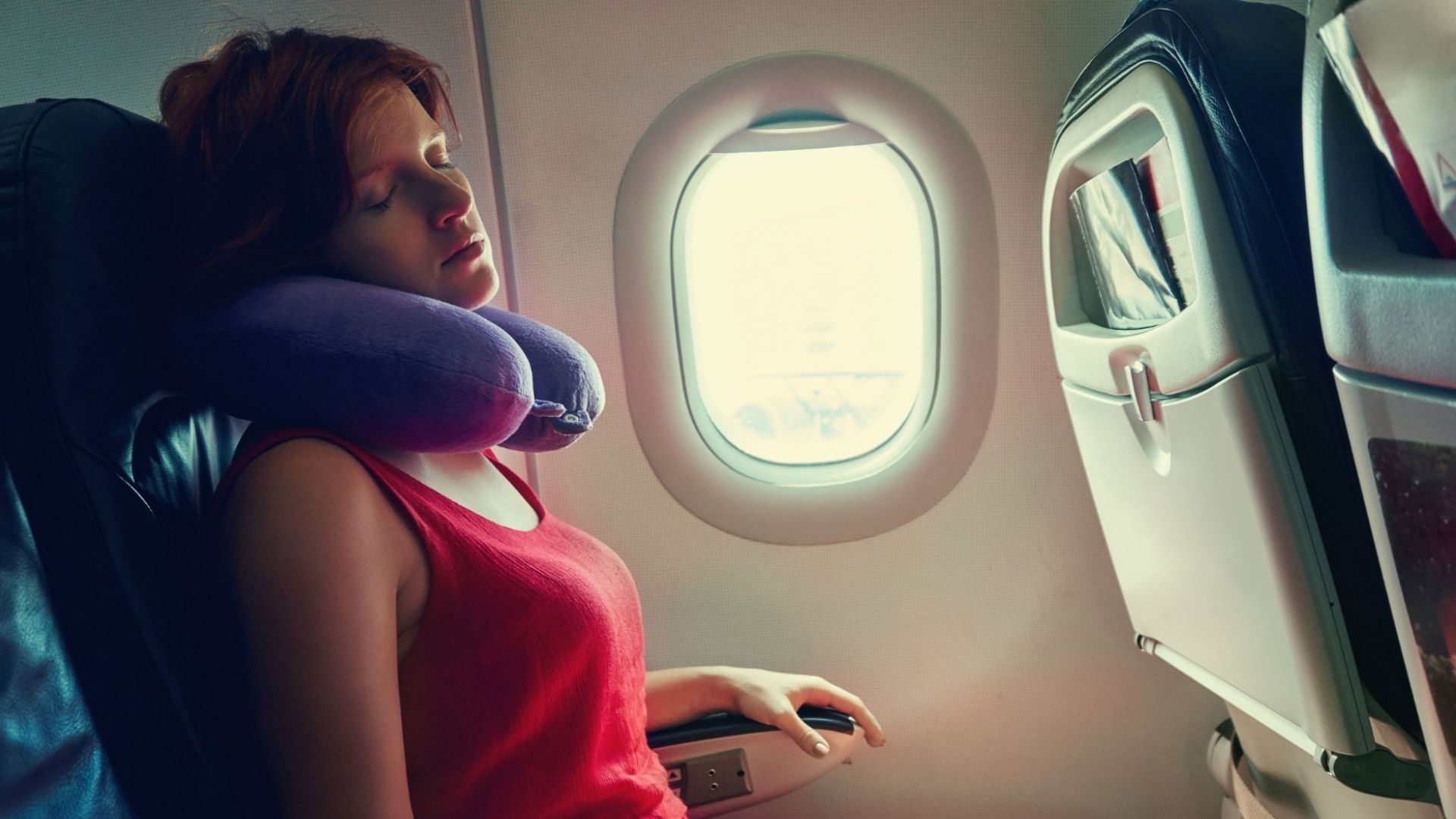
Alt Text – Woman sleeping on an airplane during a long flight while experiencing travel-related sleep disruption
Imagine flying overnight from New York to London. You land at 8 a.m., but your body still thinks it is 3 a.m. While London is starting its day, your body expects to be asleep. You may feel tired, foggy, and hungry at unusual times.
Later, when bedtime arrives in London, you might feel wide awake because your body thinks it is still early evening.
This mismatch between the local time and your internal body clock is jet lag. As your body slowly adjusts to London time, these symptoms usually begin to ease.
What Does Jet Lag Feel Like?
For many travelers, it feels like their body is running on the wrong schedule. You may know what time it is, but your energy, sleep, and focus do not match the day around you.
The experience can vary from person to person, but common feelings include:
- Feeling tired even after sleeping
- Struggling to fall asleep at your normal bedtime
- Waking up much earlier than planned
- Feeling foggy or unable to concentrate
- Having lower energy during the day
- Feeling more irritable than usual
- Changes in appetite or stomach discomfort
Some people describe jet lag as feeling like you’re awake at an unusual hour after an overnight shift. Your body tries to follow the routine it knows, while your environment asks it to follow a new one.
Jet lag can affect more than sleep because your body clock also influences daily functions such as alertness, mood, and digestion.
Why Does Jet Lag Happen?
Jet lag happens because your internal clock adjusts slowly, while travel can move you across several time zones in a few hours.
Your circadian rhythm uses signals like daylight, darkness, meals, and activity to understand when you should be awake or asleep. These signals normally stay consistent because you experience them at roughly the same time each day.
During long-distance travel, those signals suddenly change.
For example:
- Your body may expect darkness while your destination has bright morning sunlight.
- Your usual mealtime may fall when your new location is sleeping.
- Your normal bedtime may arrive several hours earlier or later.
Your body needs time to reset its schedule. Until that happens, your sleep pattern and energy levels may feel out of sync with the local routine.
Why Flying East Can Feel Harder
Many travelers find eastward trips more difficult because they require the body to adjust to an earlier schedule.
For example, traveling from the United States to Europe often means going to bed earlier than your body expects. Traveling west usually gives your body more time to stay awake because the day becomes longer.
However, the effect varies from person to person. The number of time zones you cross, your travel timing, your sleep before the trip, and your personal habits can all affect how severe jet lag feels.
Jet Lag vs Travel Fatigue
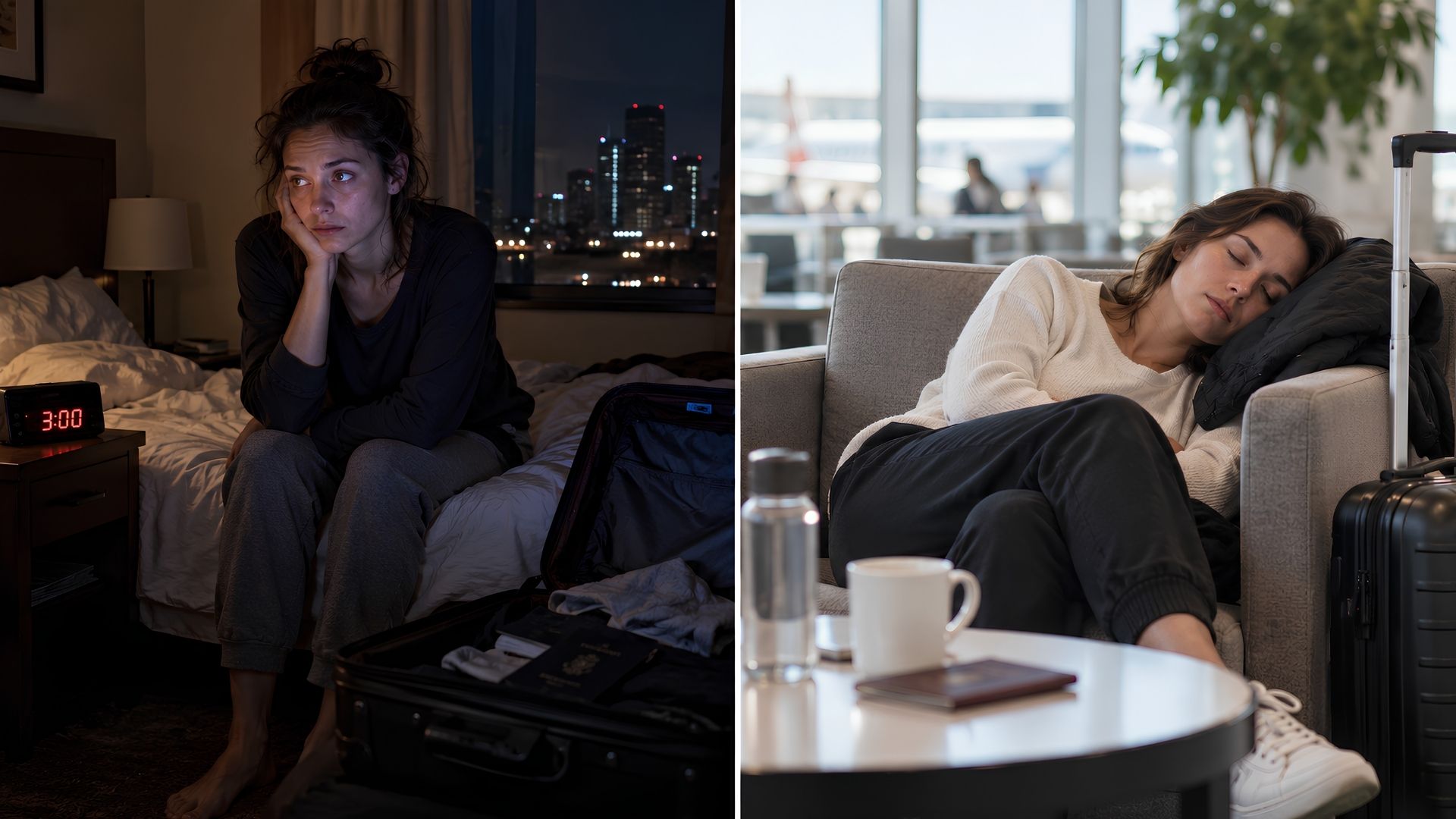
A long journey can leave you exhausted, but travel fatigue and jet lag are not the same.
Jet Lag | Travel Fatigue |
|---|---|
Happens after crossing time zones | Can happen after any tiring trip |
Caused by a disrupted body clock | Often caused by stress, sitting, or lack of rest |
Can affect sleep timing | Usually improves after proper rest |
May last several days | Often improves faster |
You can experience both at the same time. A long flight may leave you physically tired, while the time difference creates a separate problem with your sleep schedule.
The easiest way to tell the difference is to look at timing. If you feel sleepy, awake, or hungry at the “wrong” hours after crossing time zones, your body clock may still be adjusting.
What Makes Jet Lag Worse?
Several things can make jet lag feel stronger or last longer:
- Crossing more time zones: Larger time differences usually require a bigger adjustment.
- Traveling east: Moving your sleep schedule earlier can be harder for many people.
- Poor sleep before traveling: Starting a trip already tired can make symptoms feel worse.
- Bright light at the wrong time: Light plays a major role in resetting your body clock.
- Alcohol during travel: Alcohol can disturb sleep quality and may make recovery harder, and can throw off your sleep latency even once you land.
- Skipping normal routines: Irregular meals and sleep times can slow adjustment.
Not everyone experiences jet lag in the same way. Some people adjust quickly, while others need several days before their sleep and energy feel normal again.
How Long Does Jet Lag Last?
Jet lag usually improves as your body adjusts to the new time zone. For many travelers, symptoms begin easing within a few days, although longer trips across many time zones can take more time.
Recovery depends on several factors:
- How many time zones you crossed
- The direction you traveled
- Your normal sleep pattern
- Your age and personal sensitivity to schedule changes
A common estimate is that the body may need about a day for each time zone crossed, but this is not a fixed rule for everyone. Some people adjust faster, while others need longer.
If symptoms continue well after returning to your normal routine or happen frequently, it may be worth discussing them with a healthcare professional.
What Are the Possible Complications of Jet Lag?
Jet lag rarely causes serious health problems, but tiredness and reduced alertness can create safety risks. Poor concentration and slower reaction times may affect driving, work, or other tasks that require close attention.
According to the Mayo Clinic, people experiencing jet lag may be more likely to have drowsy-driving accidents.
Jet lag can also temporarily affect mental and physical performance, making the first few days of a trip more difficult when you need to work, drive, or stay focused.
How Is Jet Lag Diagnosed and Treated?
Jet lag is usually easy to recognize and often improves without medical care. Still, knowing how it is diagnosed, prevented, and treated can help when symptoms are stronger or last longer than expected.
1. Diagnosis and Tests
Jet lag usually doesn’t require special tests. A healthcare professional can often diagnose it based on your symptoms, recent travel, and the number of time zones you crossed. However, if sleep problems continue or do not seem typical of jet lag, a doctor may check for another sleep-related condition.
2. Prevention and Treatment
You can’t always prevent jet lag, but adjusting your sleep schedule before a trip may make the change easier. Going to bed earlier before eastward travel or later before westward travel can help your body begin adapting.
Most cases do not need medical treatment and improve as the body clock adjusts. For frequent or severe jet lag, a healthcare professional may suggest timed light exposure, melatonin, or certain medications depending on the traveler and schedule.
What Helps Your Body Adjust to Jet Lag?

The best way to handle jet lag is to help your body follow the new local schedule as soon as possible.
Simple steps that may help include:
- Adjust your sleep and meal times to the destination time.
- Spend time in natural daylight during the day.
- Avoid long daytime naps that make nighttime sleep harder.
- Drink enough water during and after travel.
- Keep caffeine earlier in the day.
- Avoid relying on alcohol to help you sleep.
Light exposure is especially important because it helps reset your body clock. Getting daylight at the right time can help your brain understand it’s in a different time zone.
The Centers for Disease Control and Prevention (CDC) recommends jet lag travel advice, using daylight strategically, staying hydrated, and following local routines after arrival.
If you travel often or have severe sleep disruption, a healthcare professional can suggest strategies based on your schedule and travel plans.
A Simple Way to Tell If It Is Probably Jet Lag
Ask yourself three questions:
- Did you recently cross several time zones?
If not, your tiredness may be caused by something else, such as poor sleep or travel stress. - Do you feel awake or sleepy at unusual local times?
Feeling tired at noon or wide awake at midnight can signal that your body clock hasn’t adjusted. - Are your symptoms slowly improving?
Typical jet lag gets better as your body adapts to the new schedule.
Jet lag is temporary, but understanding why you feel this way can help you manage the first few days after travel.
Final Thoughts
Knowing what jet lag is helps explain why you can feel tired, restless, or out of sync after reaching a new destination. It is not just the result of a long flight; it comes from your body and your new surroundings running on two different clocks.
The biggest changes usually come from crossing several time zones quickly, especially when your sleep and daylight patterns shift suddenly.
Giving your body time, following local routines, and using daylight wisely can make the adjustment easier. Jet lag may be frustrating, but it is usually temporary.
Frequently Asked Questions
How Many Time Zones Cause Jet Lag?
Jet lag becomes more likely when you cross several time zones quickly. Many sources say symptoms become more noticeable after crossing about two to three time zones, but sensitivity varies.
Is Jet Lag Worse Going East or West?
For many travelers, eastward travel feels harder because the body must adjust to an earlier sleep schedule. However, personal sleep patterns also play a role.
Can Jet Lag Make You Feel Sick?
Yes. Jet lag can cause stomach discomfort, appetite changes, headaches, tiredness, and a general feeling of being unwell, along with sleep problems.
Can You Get Jet Lag From a Short Flight?
A short flight usually does not cause jet lag unless it involves crossing enough time zones. The main factor is the time difference, not simply the number of hours spent flying.