


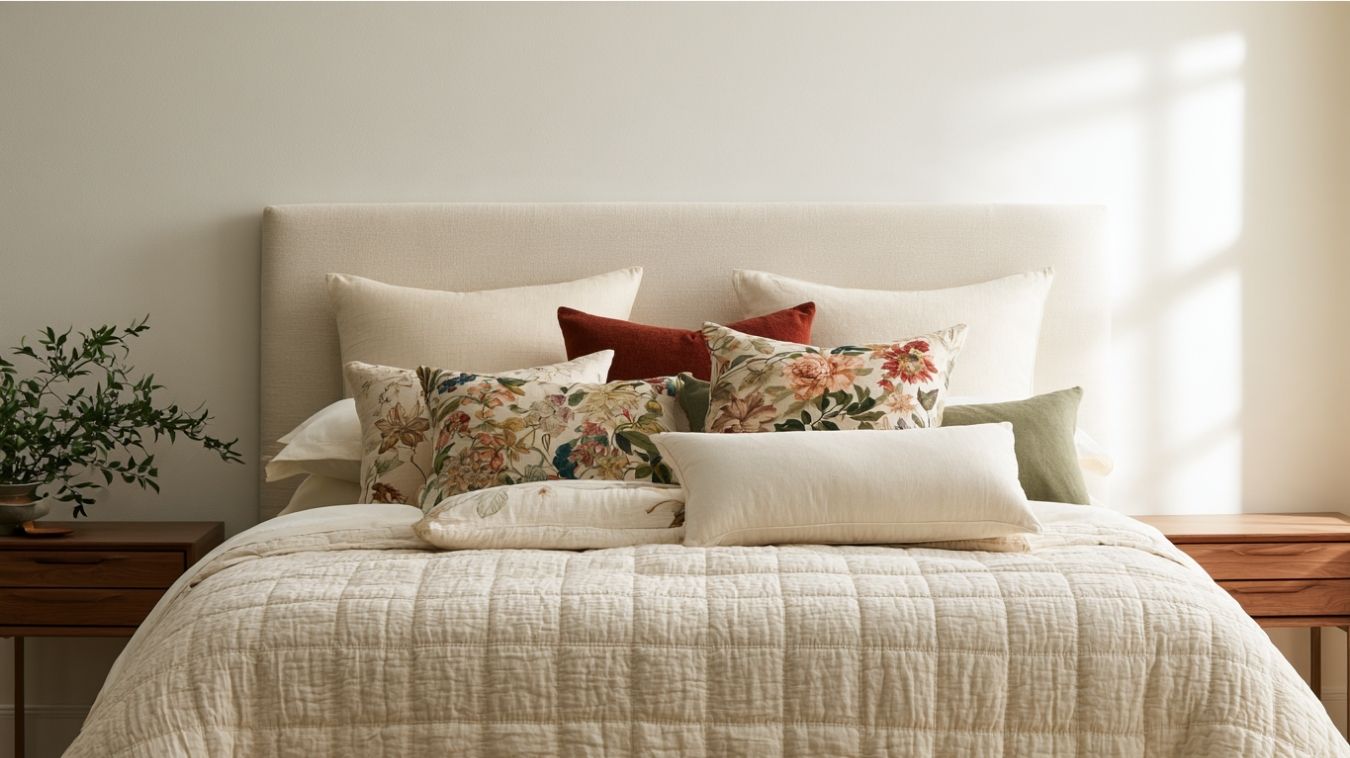


Queen headboard dimensions typically run 60 to 64 inches wide, designed to match or slightly extend beyond the 60-inch width of a queen mattress.
Height varies based on the design, with low-profile styles starting around 14 to 20 inches above the mattress and taller upholstered options reaching 60 inches or more.
The best size depends on your bed frame measurements, mattress thickness, available wall space, and preferred style.
If you’re unsure how the headboard fits with the rest of your bed’s structure, it helps to understand the different parts of a bed first.
A properly sized headboard should provide enough visible height above pillows while maintaining balance with the bed and room.
Measuring the frame and mattress before buying helps ensure the headboard fits correctly.
Standard Queen Headboard Dimensions Chart
Queen headboard dimensions typically range from 60 to 64 inches wide, with 62 inches being the most commonly cited standard width.
Height ranges more widely by style, from about 24 inches for low-profile designs to 60 or more inches for tall statement pieces. Since queen mattresses measure 60 by 80 inches, most headboards match or slightly exceed this width for proper balance.
Headboard Type | Width | Floor-to-Top Height |
|---|---|---|
Low-profile queen | 60–62 in | 24–36 in |
Standard queen | 60–64 in | 40–58 in |
Upholstered queen | 62–64 in | 48–60 in |
Tall/statement queen | 62–66 in | 60+ in |
A queen mattress measures 60 by 80 inches, and that 60-inch width is the baseline for every headboard size.
Furniture guides commonly note that headboards run anywhere from flush with the mattress to about 2 to 4 inches wider on each side, which is where the 60- to 64-inch range comes from.
How Tall Should a Queen Headboard Be?
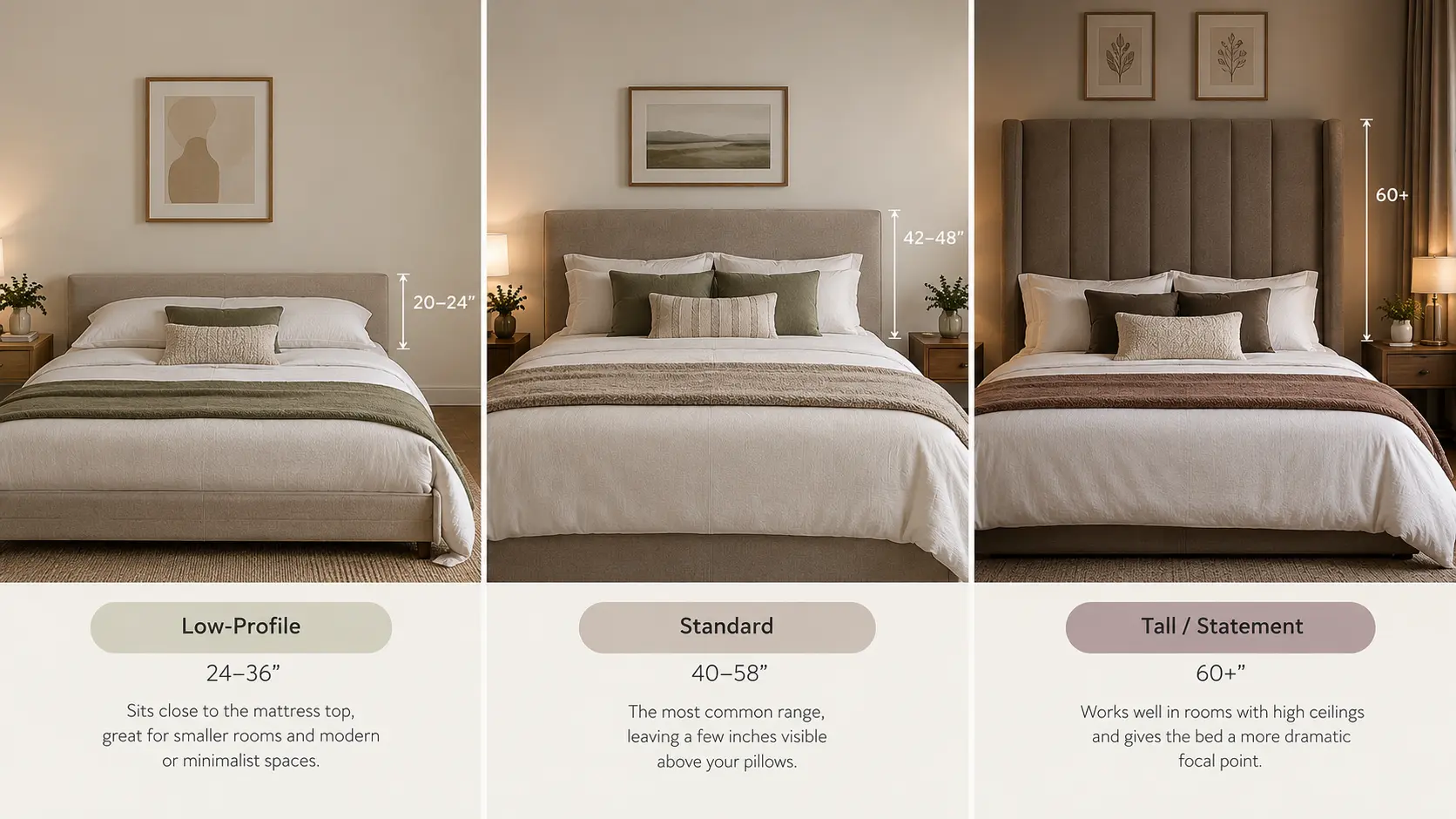
Height is where measurement conventions get mixed up.
Many sizing charts list a “standard” queen headboard height of about 28 inches, but that number refers to how much shows above the top of the mattress, not the total distance from the floor.
Most headboards mount with their bottom edge 3 to 4 inches below the mattress top, so that part stays hidden behind the bedding.
- Low-Profile Queen Headboards (24–36 Inches Floor-to-Top): These sit close to the mattress top and typically show 14 to 20 inches above it.
- Standard Queen Headboards (40–58 Inches Floor-to-Top): This is the most common range and the safest default for most bedrooms. Most sizing charts point to about 28 inches above the mattress top as the standard for this category, though some styles run a bit taller. A 42- to 48-inch headboard leaves several inches visible above a stack of pillows, which is the classic look most bed frames are designed around.
- Tall or Statement Queen Headboards (60+ Inches): Taller headboards work better in rooms with high ceilings and give the bed a more dramatic focal point. If you want more headboard exposed above your pillows rather than a headboard that disappears behind them, look at 52 inches and up.
Choosing the right queen headboard height depends on your room size, mattress thickness, and preferred style. Measure your space carefully to find a balanced fit that looks practical and comfortable.
How Wide Is a Queen Headboard?
That same 60 to 64 inch range applies here too, with 62 inches being the most common single figure you’ll see quoted. Most headboards match the 60-inch queen mattress width or extend a few inches on each side for balance.
Product examples vary by style. Some queen frames are around 60 inches wide, while canopy or decorative designs may reach 63+ inches.
Oversized upholstered or wingback headboards can exceed 70 inches for a wider visual effect. For most queen beds, a 62–64 inch headboard provides the best fit.
How to Measure for a Queen Headboard
Measuring a queen headboard correctly helps avoid sizing mistakes. Check the mattress, frame, height, and wall space before buying to ensure the headboard fits your bed and room properly.
1. Measure the Mattress and Frame Width
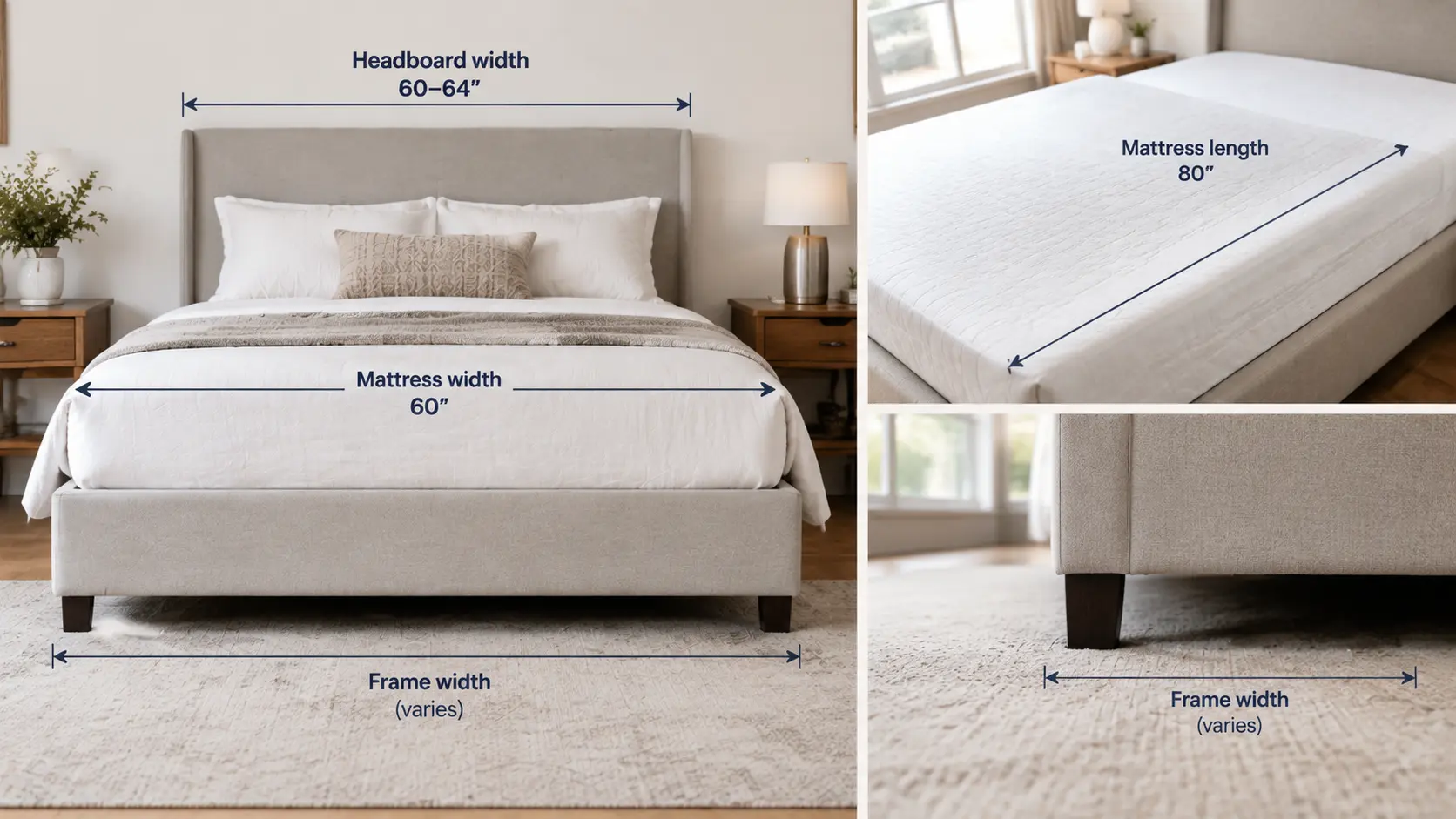
Start by measuring the mattress widthto confirm it is a standard queen size. Then measure the bed frame, since the headboard attaches to the frame, not the mattress. A headboard around 62–64 inches wide usually provides a balanced fit with a queen bed.
Dimensions to check:
- Queen mattress width: 60 inches
- Queen mattress length: 80 inches
- Recommended headboard width: 60–64 inches
- Bed frame width: Measure the outer edges, as frames may extend beyond the mattress.
Common mistake: measuring only the mattress and skipping the bed frame, which may be a different width and can change what headboard fits.
2. Measure Height From the Mattress Top, Not the Floor
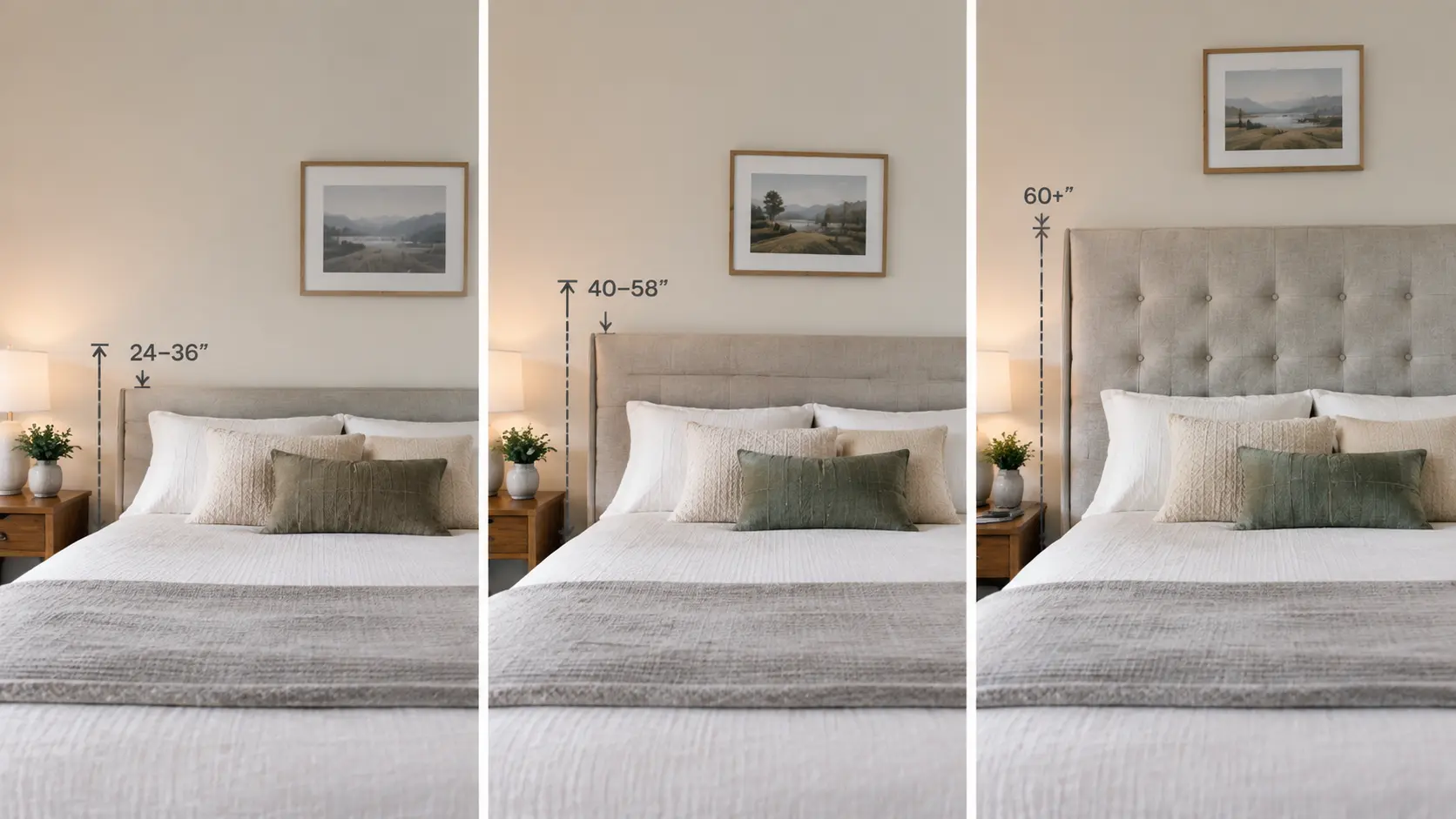
Measure from the top of the mattress to decide how much headboard should show behind the pillows. Add a few inches for the section hidden behind the mattress. This prevents choosing a headboard that looks too short once the bed is fully made.
Dimensions to check:
- Low headboard: 24–36 inches tall
- Standard headboard: 40–58 inches tall
- Tall headboard: 60+ inches tall
- Visible height above pillows: Usually 20–30 inches works well
Common mistake: measuring from the floor instead of the top of the mattress, which can make a normal-sized headboard look too short once a thick mattress and pillow stack are in place.
3. Check Wall Space and Mounting Style
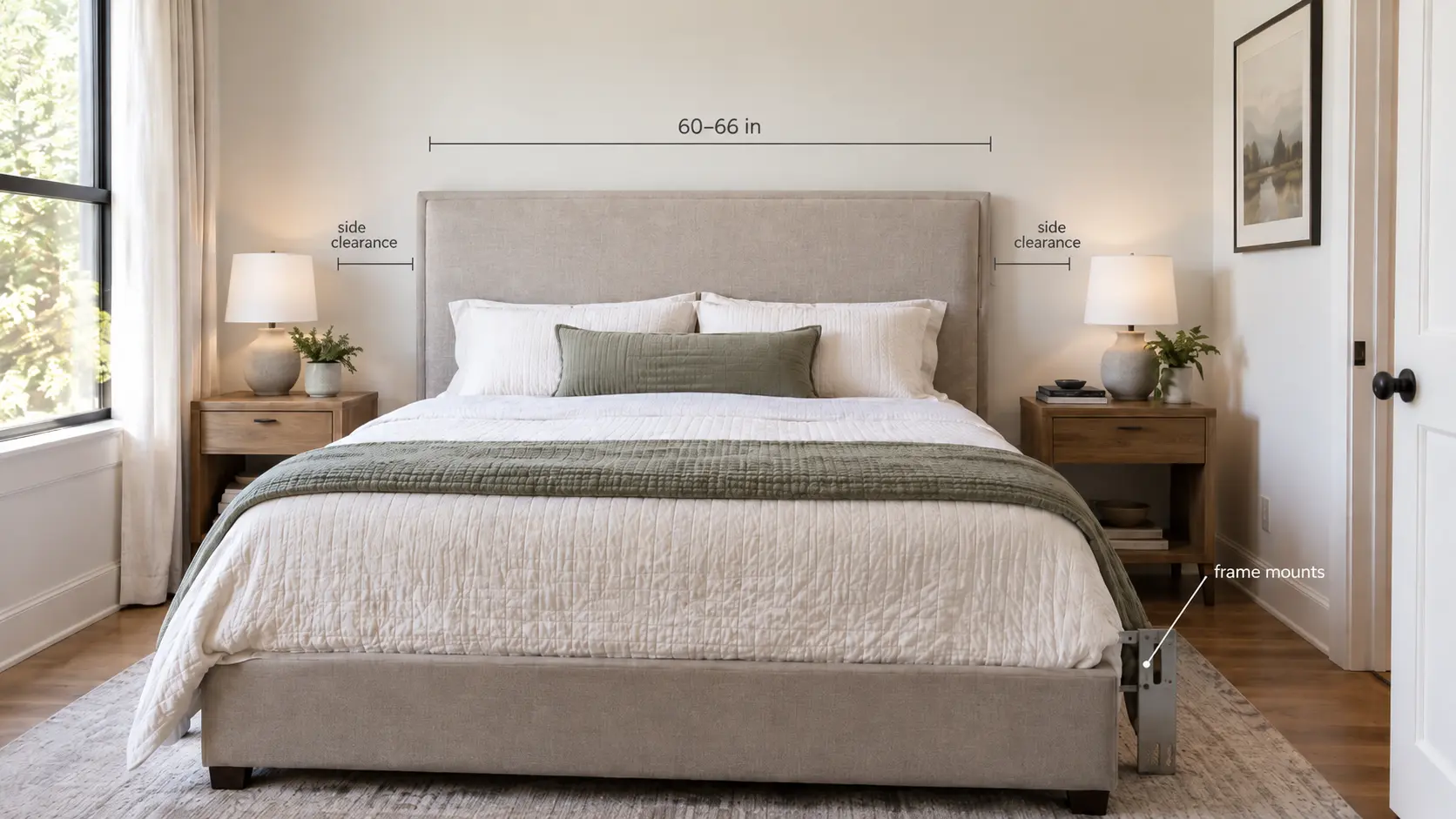
Before installing, measure the available wall area and check how the headboard attaches. Wall-mounted designs allow more height flexibility, while frame-mounted options need accurate bracket measurements for a secure fit.
Dimensions to check:
- Wall-mounted headboard width: Typically follows the same 60 to 64 inch range as frame-mounted queen headboards, though wall mounting allows more flexibility if you want to go wider.
- Side clearance: Leave enough room for nightstands and walking space
- Frame-mounted headboard: Match mounting points with the bed frame
Common mistake: skipping the mounting bracket check and not leaving enough side clearance for nightstands, especially with wider or wall-mounted headboards.
Queen Headboard Size Compared with Other Bed Sizes
Queen headboards fit a 60-inch-wide mattress, but exact measurements can vary depending on the design. Standard queen bed measurements also affect the bed’s overall footprint.
The chart below compares queen headboard dimensions with twin, full, king, and California king sizes.
Bed Size | Mattress Width | Typical Headboard Width |
|---|---|---|
Twin | 38–39 in | 41 in |
Full | 54 in | 56 in |
Queen | 60 in | 62 in |
King | 76 in | 80 in |
California King | 72 in | 74 in |
One exception worth knowing: because a full mattress (54 inches) is narrower than a queen headboard’s mounting width, some people do pair a queen headboard with a full frame, accepting a few extra inches on each side.
Non-Standard Queen Sizes
Not every queen bed uses the standard 60-by-80-inch mattress. A few variants change what headboard width actually fits:
- California queen: 60 inches wide by 84 inches long. Same width as a standard queen, so the same 60 to 64 inch headboard works; it just needs a slightly deeper room.
- Olympic or expanded queen: 66 inches wide by 80 inches long. Six inches wider than standard, so the headboard should scale up too, typically 68 to 70 inches wide rather than 60 to 64.
- Split-queen: two 30 by 80 inch mattresses on an adjustable frame. Overall width matches a standard queen, so headboard sizing follows the same 60 to 64 inch range.
Accurate measurements make choosing a queen headboard easier. Check width, height, mounting style, and available space together to find a size that fits your mattress and complements your bedroom layout.
Queen Headboard Dimensions by Style
Queen headboard dimensions vary by material and design. Upholstered headboards, wood, metal, and wall-mounted styles have different width, height, and depth requirements that affect fit, installation, and room appearance.
- Upholstered Queen Headboards: Usually run 62 to 66 inches wide and 48 to 60 inches tall. The padding adds depth and height, so these need slightly more clearance than a plain wood panel.
- Wood and Metal Queen Headboards: Tend to stay closer to the mattress width (60 to 62 inches) and run 36 to 50 inches tall. Simple panel designs are typically 2 to 3 inches thick, while headboards with built-in storage or shelving run noticeably thicker to accommodate the extra structure.
- Wall-Mounted Queen Headboards: Height and width are more flexible since the piece isn’t tied to the bed frame’s dimensions. Measure from the top of the mattress for placement, and confirm the wall anchors can support the headboard’s weight.
Choosing the right queen headboard style depends on your space, mounting method, and comfort needs. Always check width, height, and depth measurements before selecting a design for your bed.
Common Queen Headboard Measurement Mistakes
Common queen headboard sizing mistakes include measuring only the mattress and ignoring the actual bed frame width, which can affect fit and installation.
Another mistake is measuring height from the floor instead of checking how much of the headboard will remain visible above the mattress and pillows.
Choosing a headboard that is too short for a thick mattress and large pillow stack can make it appear hidden.
It is also important to check mounting brackets before ordering and leave enough space for nightstands, especially with wider or wall-mounted headboards.
Choosing a queen headboard for your room
Before ordering a headboard, use this CommHome checklist to confirm that its measurements suit your bed and available space.
My headboard is between 60 and 64 inches wide
The width leaves enough room for both nightstands
The headboard will not cover windows, outlets, or switches
Enough headboard will remain visible above my mattress and pillows
The height suits my wall and ceiling
The headboard depth will not reduce walking space too much
Doors, drawers, and bedside furniture can open normally
I marked the proposed width and height with painter’s tape
The mounting holes match my queen bed frame
I checked the assembled dimensions, not the package dimensions
The headboard can pass through my doorway, hallway, and stairs
Mark the headboard outline on the wall with painter’s tape and leave it overnight. This gives you time to assess the size before buying.
Final Recommendation
For most queen beds, a headboard measuring 60 to 64 inches wide and 40 to 58 inches tall works well with standard frames and bedroom layouts.
The ideal choice also depends on the bed style, available wall area, and how much space you want around the headboard.
Smaller rooms often benefit from simpler, lower designs, while larger bedrooms can handle taller options without making the space feel crowded. Before purchasing, check the frame’s attachment points, wall clearance, and mattress height to avoid fit issues.
These measurements help you choose a headboard that works with your setup instead of relying only on size labels.
Frequently Asked Questions
Is a Queen Headboard the Same Width as a Queen Mattress?
Not always. A queen mattress is 60 inches wide, and headboards typically match that width or run 2 to 4 inches wider on each side for a proportional fit.
Can a Full-Size Headboard Fit a Queen Bed?
No. A full headboard is built for a 54-inch mattress and will leave noticeable gaps on both sides of a 60-inch queen mattress.
Should a Headboard Be Wider than the Mattress?
A little extra width, generally 2 to 4 inches per side, gives a more finished look. Going much narrower than the mattress usually looks unbalanced.
What is the Best Queen Headboard Size for a Small Bedroom?
A low-profile queen headboard with a slimmer width and shorter height usually works better in smaller rooms because it keeps the space open.