
A queen bed takes up more floor space than people expect, and picking the right rug size for queen bed setups trips up even careful shoppers. Go too small, and the rug disappears under the frame. Go too large, and it swallows the room.
Search results throw out several standard sizes without much explanation for why one fits a bedroom better than another. Room size, bed frame, and how much floor you want visible around the mattress all factor into the right answer.
Standard queen dimensions are the starting point, and from there the math gets simple once you know what to measure. What follows covers exact sizes, overhang numbers, and where nightstands fit into the layout.
The Right Rug Size for a Queen Bed
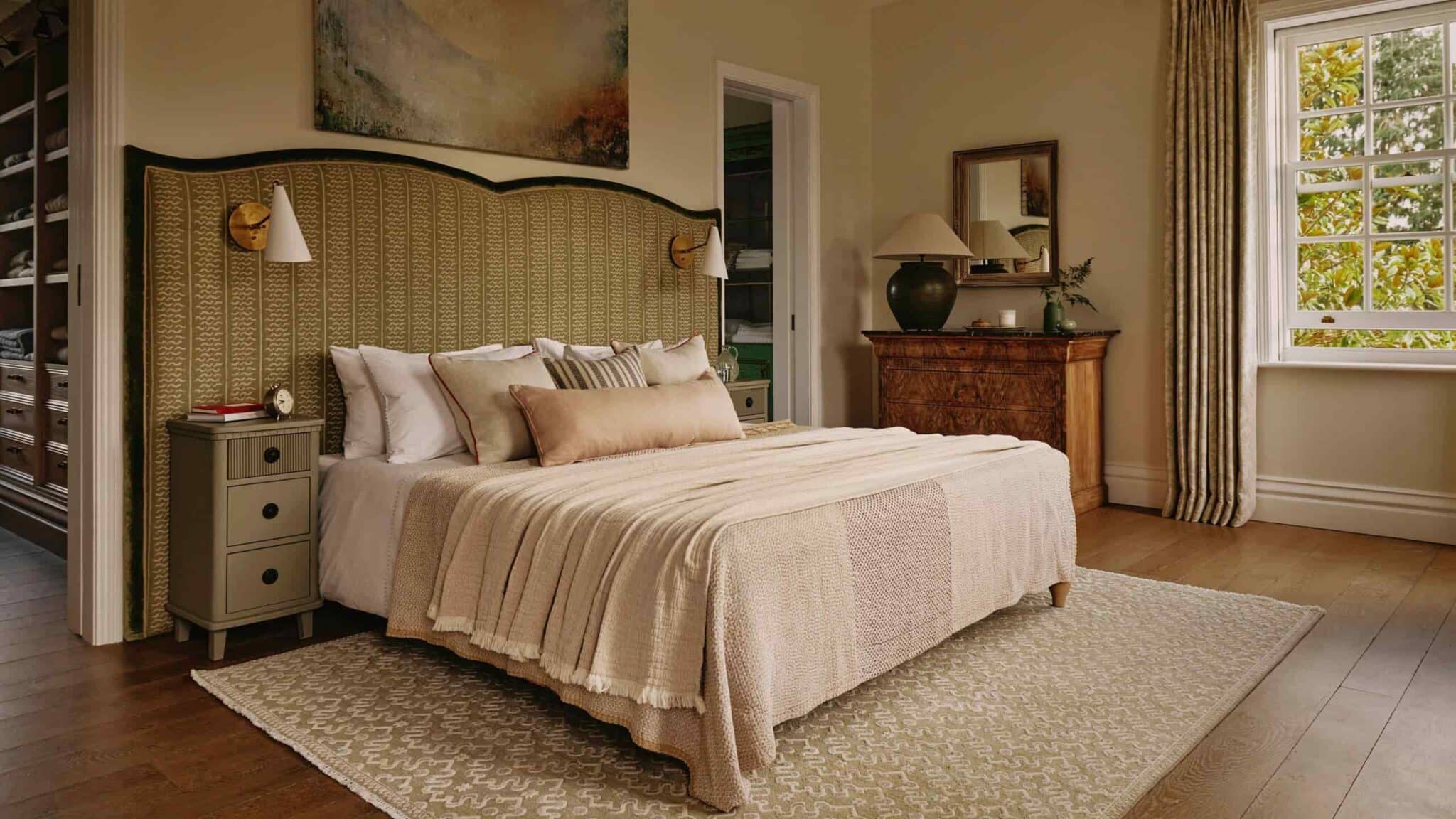
An 8×10 rug is usually the safest rug size for a queen bed because it gives the room a balanced, finished look without taking over the floor. It extends beyond the mattress on three sides, giving your feet a soft landing and leaving enough space to include both nightstands.
This size also works well in most mid-size bedrooms while keeping walkways comfortable. If the room is smaller, a 6×9 rug can still frame the bed without making the space feel crowded.
For a large main bedroom, a 9×12 rug creates a more spacious, luxurious look. A 5×8 rug is generally the smallest practical option for a queen bed and works best when floor space is especially limited.
Standard Queen Bed Dimensions
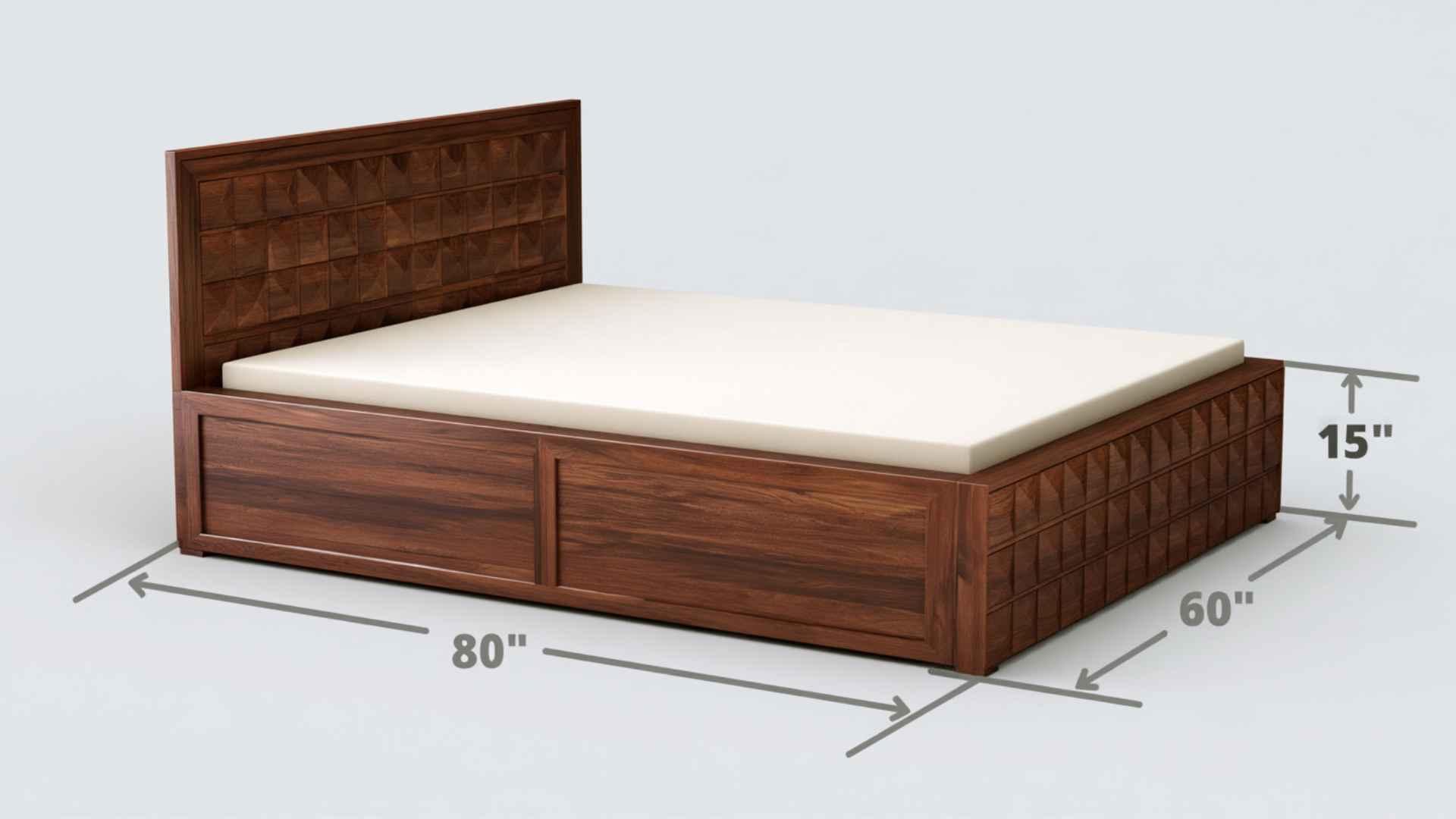
Before choosing a rug, it helps to know your bed’s actual dimensions. A queen mattress measures 60 inches wide by 80 inches long, making it the standard size most rug recommendations use.
Two non-standard queen sizes, the Olympic queen and California queen, need slightly different rug proportions, covered below.
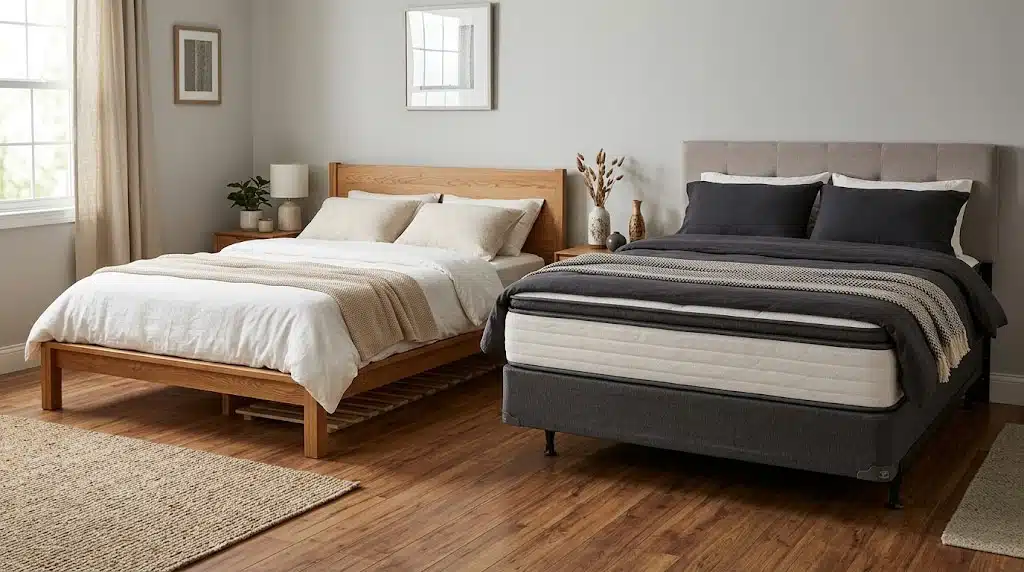
Remember to account for the bed frame as well, since many frames extend beyond the mattress edges, and choosing a sturdy base changes how much of that footprint shows past the rug.
Queen Bed Rug Size Chart
Here’s how the most common rug sizes stack up against a queen bed, including how much rug shows on each side once it’s in place.
Rug Size | Overhang Each Side | Works Best For |
|---|---|---|
5×8 | About 18 inches | Small bedrooms, tight budgets |
6×9 | About 24 inches | Mid-size bedrooms, the most common pick |
8×10 | About 30 inches | Bed and nightstands together |
9×12 | About 42 inches | Large bedrooms |
One thing to know before you shop: Place rugs with their longer side running across the width of the bed, not lengthwise. That’s why an 8×10 rug shows 30 inches on each side even though the bed is only 60 inches wide; the 10-foot side is what spans the width.
How Much Overhang You NeedRug guides don’t all agree on this number. Some say 12 inches of overhang is enough. Most say 18 to 24 inches looks better. The math backs up the higher number. A rug with only 12 inches showing tends to look accidental instead of intentional. Aim for at least 18 inches on each side. If your room allows it, 24 inches looks even more finished. |
|---|
Rug Placement Styles for a Queen Bedroom
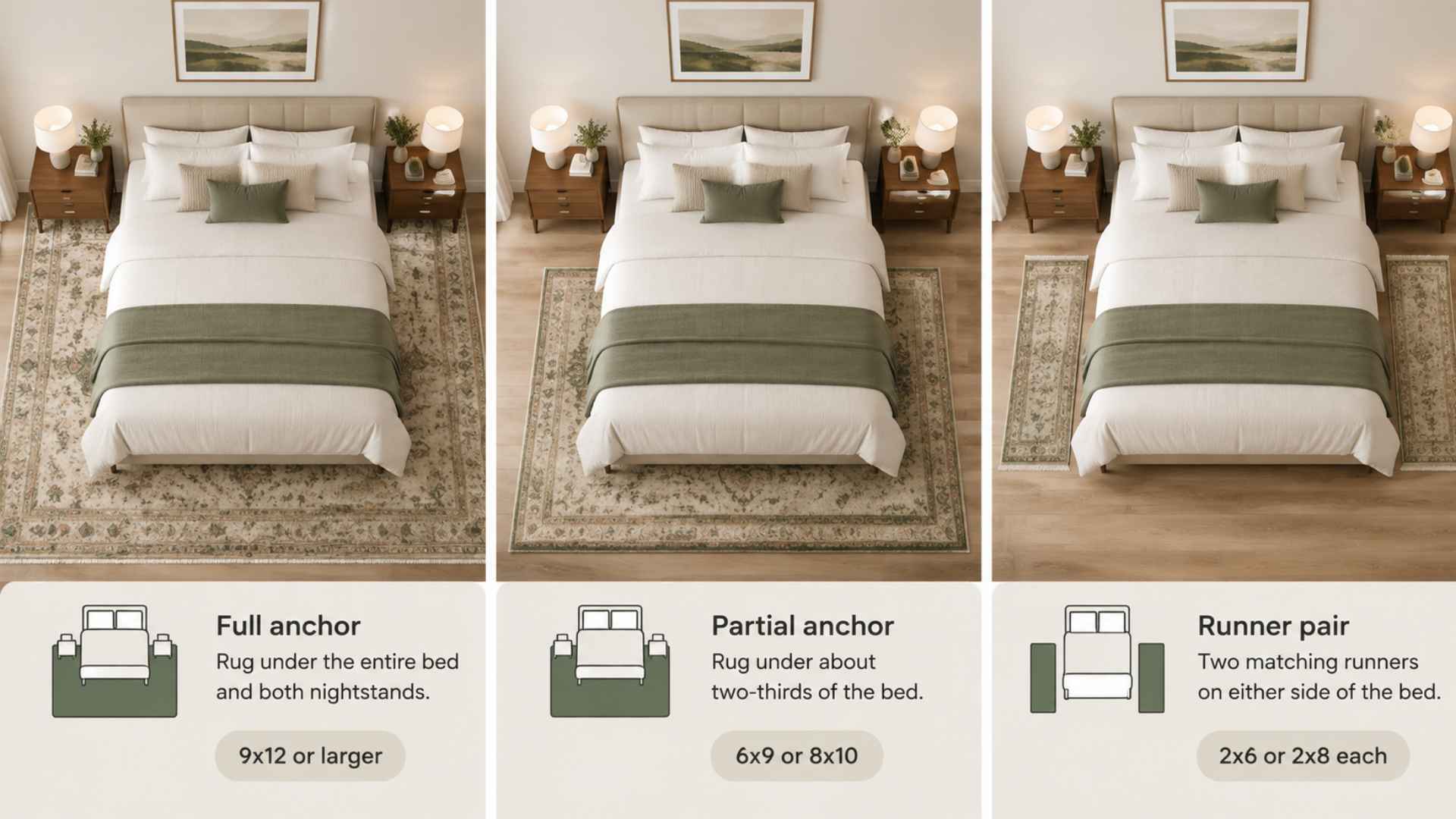
Once you know your rug size, the next question is where it goes. Three placement styles cover almost every approach to rug placement in bedroom queen layouts.
- Full anchor. The rug sits under the entire bed and both nightstands. This needs a 9×12 rug or larger, plus a room to match.
- Partial anchor. The rug sits under about two-thirds of the bed, with the nightstands left off to the side. A 6×9 or 8×10 works well here.
- Runner pair. Two matching runners sit on either side of the bed instead of one large rug. This works well for small rooms or a tighter budget.
Most queen bedrooms end up using the partial anchor style, since it fits a normal room size without needing a giant rug.
Sizing for Non-Standard Queen Beds
Not every queen bed sticks to the standard 60 x 80 inches, and sizing beyond standard mattresses is exactly why the Olympic and California queen exist in the first place. An Olympic queen is 6 inches wider, measuring 66 inches by 80 inches, so it may need a wider rug to maintain the same amount of visible space around the bed.
A California queen is longer at 60 by 84 inches, which means you should focus on adding extra rug length instead of width. These differences may seem small, but they can affect the final fit, especially in a smaller bedroom.
Check your mattress dimensions first using a trusted size reference like Sleep Foundation’s mattress size guide, then choose a rug that matches your bed’s footprint.
Matching Rug Size to Your Room
Your bedroom’s size matters just as much as your bed’s size when choosing a rug. In a small bedroom measuring around 11×12 to 14×16 feet, a 5×8 or 6×9 rug usually works well without overwhelming the space.
Mid-size bedrooms between 14×16 and 16×20 feet often suit a 6×9 or 8×10 rug, while larger bedrooms of 18×18 feet or more can handle a spacious 9×12 rug. If your room falls between two size options, choosing the larger rug is usually the better choice.
A slightly oversized rug can make the room feel more connected, while a rug that is too small may look disconnected from the bed and furniture.
Common Rug Sizing Mistakes
Choosing the right rug size for a queen bed can change your bedroom’s entire look. The right fit adds comfort, balance, and a polished feel without crowding the space.
- Choosing a Rug That Is Too Small: A tiny rug may sit under the bed without extending outward, making the room feel unbalanced.
- Ignoring Room Boundaries: Avoid oversized rugs that touch walls, block pathways, or prevent doors from opening smoothly.
- Measuring Only the Bed: Include the nightstands when measuring to ensure the rug creates a connected, anchored bedroom layout.
- Skipping Furniture Placement: Consider where chairs, benches, or storage pieces sit before choosing a rug size for better coverage.
- Forgetting Rug Clearance: Leave enough exposed flooring around the rug edges to keep the bedroom looking open and well-proportioned.
A well-sized rug brings the bed, nightstands, and room together. Measure your space carefully, consider your layout, and choose a size that feels comfortable while keeping the bedroom balanced.
Pro tip: Lay painter’s tape on the floor in the exact rug size you’re considering before you buy. It takes five minutes and saves you from a rug that looks wrong once it arrives.
Conclusion
A rug that photographs well online can still look off once it’s on your floor, since screens don’t show real room proportions. Measuring your actual bedroom, not just eyeballing a product photo, matters more than any size chart.
Keep your bed frame’s width and length on hand when you shop, along with your room’s dimensions, so you compare real numbers instead of guessing from a listing.
If a rug arrives and looks pinched or lost in the space, don’t force it to work. Getting the rug size for a queen bed right comes down to those two sets of measurements, not the product photo.
Many rug retailers allow returns or exchanges if the size doesn’t work once it’s home, so check the seller’s policy before you buy. Sizing rarely looks the same in a room as it does in a photo.
Frequently Asked Questions
What Size Rug Is Best for A Queen Bed?
An 8×10 rug works best for most bedrooms. It clears the bed frame on three sides and gives your feet a soft landing spot each morning.
Can I Use a 5×7 Rug Under a Queen Bed?
A 5×7 rug is the same width as the bed, so it won’t show on the sides. Use it at the foot of the bed instead.
Should Nightstands Sit on The Rug or Off It?
Either works. Placing nightstands on the rug looks pulled together in bigger rooms. In smaller rooms, leaving them off keeps the layout from feeling crowded.