




A pinched nerve in the neck can disrupt sleep and cause pain that affects the neck, shoulder, arm, and even fingers.
The right sleeping position and proper pillow support can reduce pressure on the nerve and improve comfort through the night.
Understanding how to sleep with a pinched nerve in the neck is important because small adjustments in posture and support can ease discomfort and help you wake up with less stiffness and pain.
Poor sleep position can increase nerve compression and slow recovery. Finding the right alignment helps keep the spine neutral and reduces strain on surrounding muscles.
What is a Pinched Nerve in the Neck?
A pinched nerve in the neck occurs when surrounding tissues, such as bones, discs, muscles, or tendons, place excessive pressure on a cervical nerve root.
This condition, medically known as cervical radiculopathy, occurs when a nerve root in the cervical spine gets compressed or irritated.
It is often linked to herniated discs, cervical radiculopathy, or age-related changes in the spine.
This nerve irritation can cause pain, tingling, or weakness that spreads from the neck into the shoulder, arm, and hand.
Other common symptoms include numbness, burning sensations, and sharp pain that travels into the fingers.
According to MedlinePlus, cervical radiculopathy occurs when a nerve in the neck is compressed or irritated, often leading to pain, tingling, or weakness in the arm.
Best Way to Sleep with A Pinched Nerve in The NeckSleep on your back with a cervical contour pillow that supports the neck curve, or sleep on the side opposite the pinched nerve with a pillow that keeps your ear level with your mattress. Keep your arms at your sides and your chin slightly tucked. Stick with one position through the night instead of switching, since this gives the nerve time to decompress and heal. |
Cervical Nerve Pain at Night
Nighttime pain from a pinched nerve can feel different from daytime discomfort.
Lying still for long periods puts steady pressure on already irritated nerves.
- Neck stiffness and sharp pain when lying down – Pain tends to spike the moment you settle into a fixed position and stay there.
- Radiating pain into the shoulder, arm, or upper back – The pain does not stay in one spot; it moves along the nerve path.
- Tingling or numbness that worsens in certain positions – Specific head angles increase pressure on the nerve root, making sensations more intense.
- Sleep disruption due to nerve sensitivity – When pain keeps interrupting sleep, it can lead to fatigue, mood changes, and slower healing, making recovery more difficult.
Spinal discs absorb water and swell slightly overnight when gravity is removed.
At the same time, cortisol levels drop to their lowest point around 3 to 4 a.m., reducing the body’s natural anti-inflammatory response.
How to Sleep with a Pinched Nerve in the Neck?
Overnight recovery from a pinched nerve depends on more than just where you place your head.
The angle of your shoulders, the firmness beneath you, and even how you transition from sitting to lying down all influence how much pressure stays on the nerve through the night.
Keeping your jaw relaxed and your breathing slow prevents the neck muscles from tensing up once you settle in.
Consistency matters as much as technique. Switching positions repeatedly through the night breaks the nerve’s ability to decompress.
Picking one supported position and training your body to stay there gives the cervical nerve uninterrupted time to settle, which is when the real overnight recovery happens.
Best Sleeping Positions for Pain Relief

Good sleep starts with the right sleeping positions for pinched nerve neck pain.
The goal is to keep the cervical spine in a neutral alignment so the compressed nerve has as much space as possible.
1. Sleeping on Your Back With
Lying on your back distributes your head’s weight evenly and allows the cervical spine to rest in its natural curve.
A cervical contour pillow, with a raised section under the neck and a lower cradle for the head, keeps the nerve openings wide and prevents your head from tilting to either side.
Keep your arms at your sides or resting on pillows rather than above your head.
This position takes pressure off the nerve root and gives the spine full support through the night.
Pro tip: If pain radiates into the arm, rest the affected arm on a thin pillow at your side. Avoid tucking it under your pillow or raising it overhead, as both positions pull on the cervical nerve root.
2. Sleeping on Your Side With Proper Alignment
Side sleeping works well if done correctly. Lie on the side opposite your pinched nerve.
The pillow must be the right height: thick enough to fill the space between your ear and the mattress, keeping your head level.
If the pillow is too thin, your head drops laterally, and the nerve opening on the upper side narrows.
Too thick, and it compresses the lower side. Keep your chin slightly tucked, not pushed forward or dropped toward your chest.
Pro tip: Use a body pillow along your front side to stop yourself from rolling forward during sleep.
3. Slight Reclined Position
Some people with a pinched nerve find relief sleeping in a slight recline, about 30 to 45 degrees, rather than flat.
A wedge pillow can raise your upper body and lower the pressure on the cervical spine.
If a wedge pillow is uncomfortable, sleeping in a recliner is another option.
The semi-upright position can provide support and reduce nerve compression.
As a cervical nerve compression sleep position, this works especially well during the first few weeks when pain is most intense.
Pro tip: Keep a small rolled towel at the base of the wedge to maintain the natural curve of your neck.
Best Sleeping Positions at a Glance
Choosing the right position matters more than most people realize. This quick comparison breaks down each sleeping position, the support needed, and who benefits most, making it easier to find your fit.
| Position | Key Support | Best For | Avoid |
|---|---|---|---|
| Back sleeping | Cervical contour pillow, arms at sides | Even weight distribution, nerve relief | Arms overhead or under pillow |
| Side sleeping | Pillow matching ear-to-mattress height | Side opposite the pinched nerve | Pillow too thin or too thick |
| Slight recline (30–45°) | Wedge pillow, rolled towel at base | Acute, early-stage pain | Sleeping fully flat |
Whichever position you choose, stick with it through the night.
Switching positions repeatedly prevents the nerve from decompressing, while consistent support gives the irritated nerve real time to settle and heal.
Tips to Sleep Better with Cervical Radiculopathy
A few small nighttime habits can lower nerve irritation and support real rest. These simple adjustments work alongside proper positioning and pillow support for lasting relief.
- Limit screen time before bed – Looking down at a phone flexes the neck and can aggravate arm symptoms before you even fall asleep.
- Stick to one position – Switching positions repeatedly throughout the night reduces the nerve’s chance to settle and slows recovery.
- Apply ice early in the evening – Reducing swelling before bed lowers nerve pressure and makes it easier to fall and stay asleep.
- Stretch gently before lying down – Slow neck tilts and chin tucks release tension that builds up in the muscles during the day.
- Check your pillow height regularly – A flat or worn pillow loses support fast, so replace it once it stops holding its shape.
Small, consistent habits make a real difference over time. Pair these tips with good positioning and a supportive pillow for steady, lasting nerve relief.
Best Pillow Setup for Pinched Nerve Relief
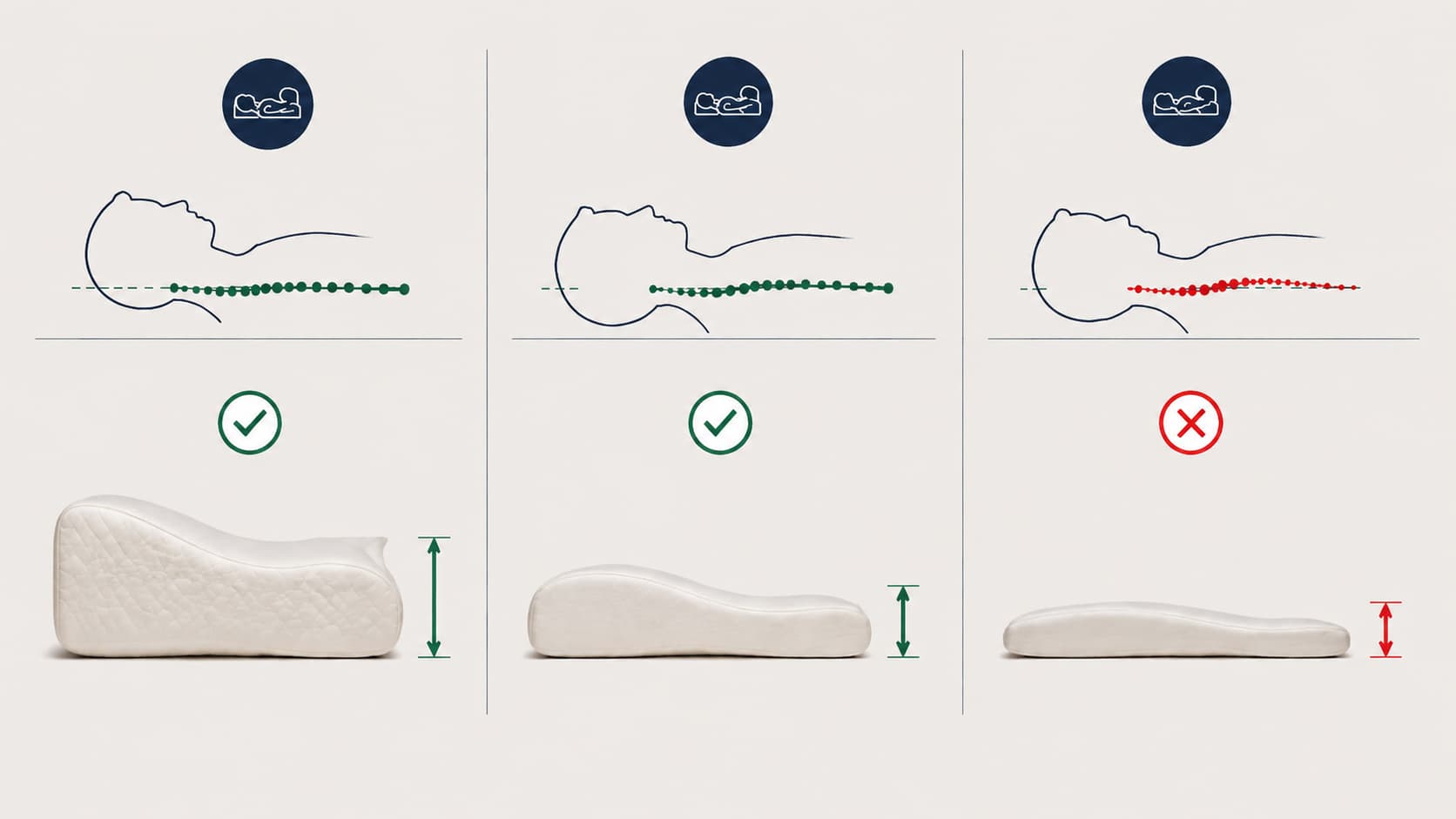
Finding the best pillow for cervical radiculopathy starts with one that supports the natural curvature of the neck, helping to relieve pressure on spinal nerves and support better alignment.
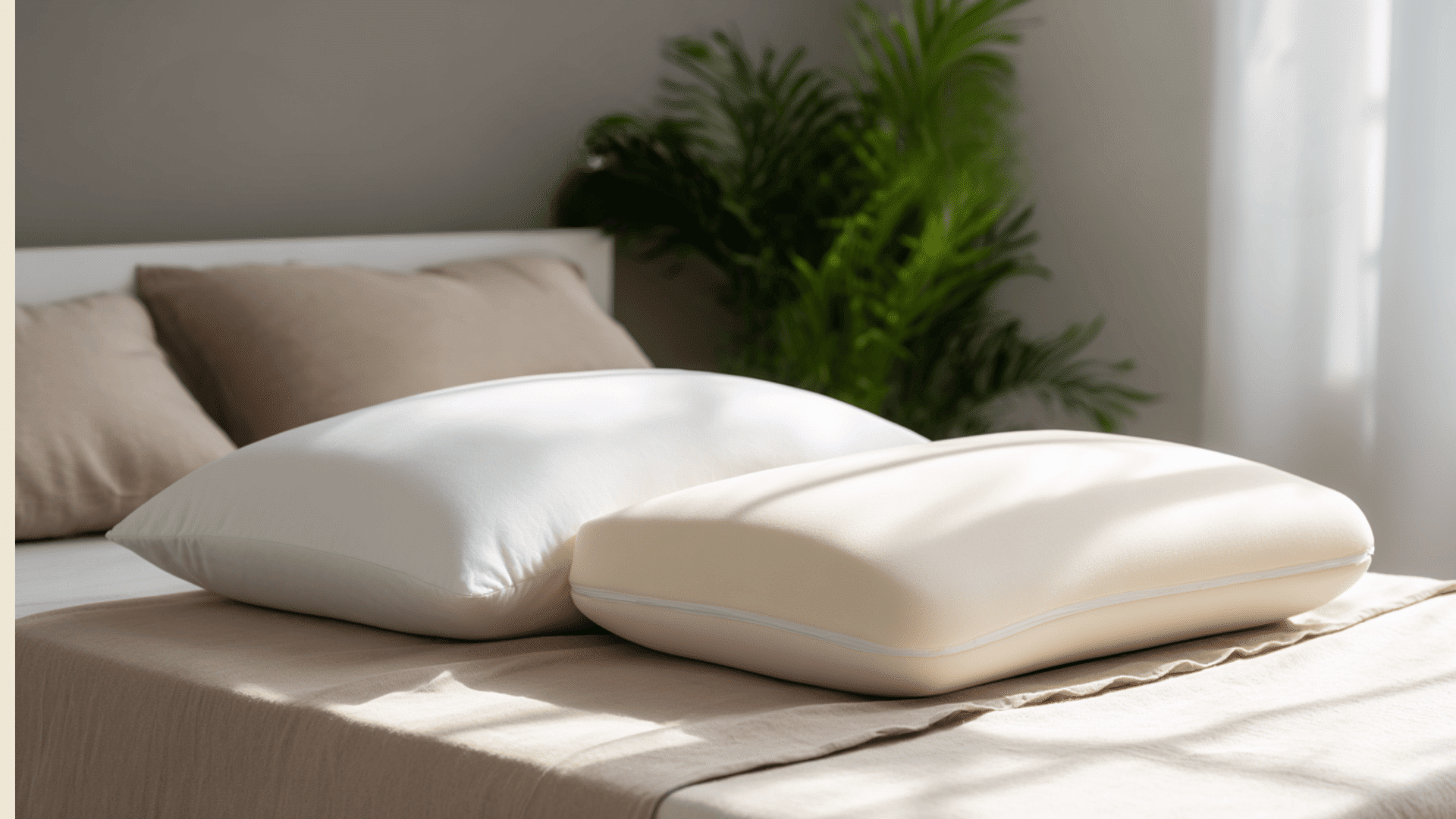
Memory foam pillows conform to the shape of your head and neck, providing personalized support that can reduce discomfort and improve sleep quality.
Orthopedic pillows often have a firmer feel, which works better for people who move around a lot during sleep.
The right pillow height depends on your sleep position: side sleepers need a taller pillow to fill the gap between the ear and the mattress, while back sleepers do better with a lower, contoured option.
If you do not have a cervical pillow, a tightly rolled towel placed under the neck curve can provide basic support while keeping the head on a flat surface.
Change your pillow if it has lost its shape, since a flat or lumpy pillow offers little protection for an already stressed nerve.
Mattress and Sleep Surface Considerations
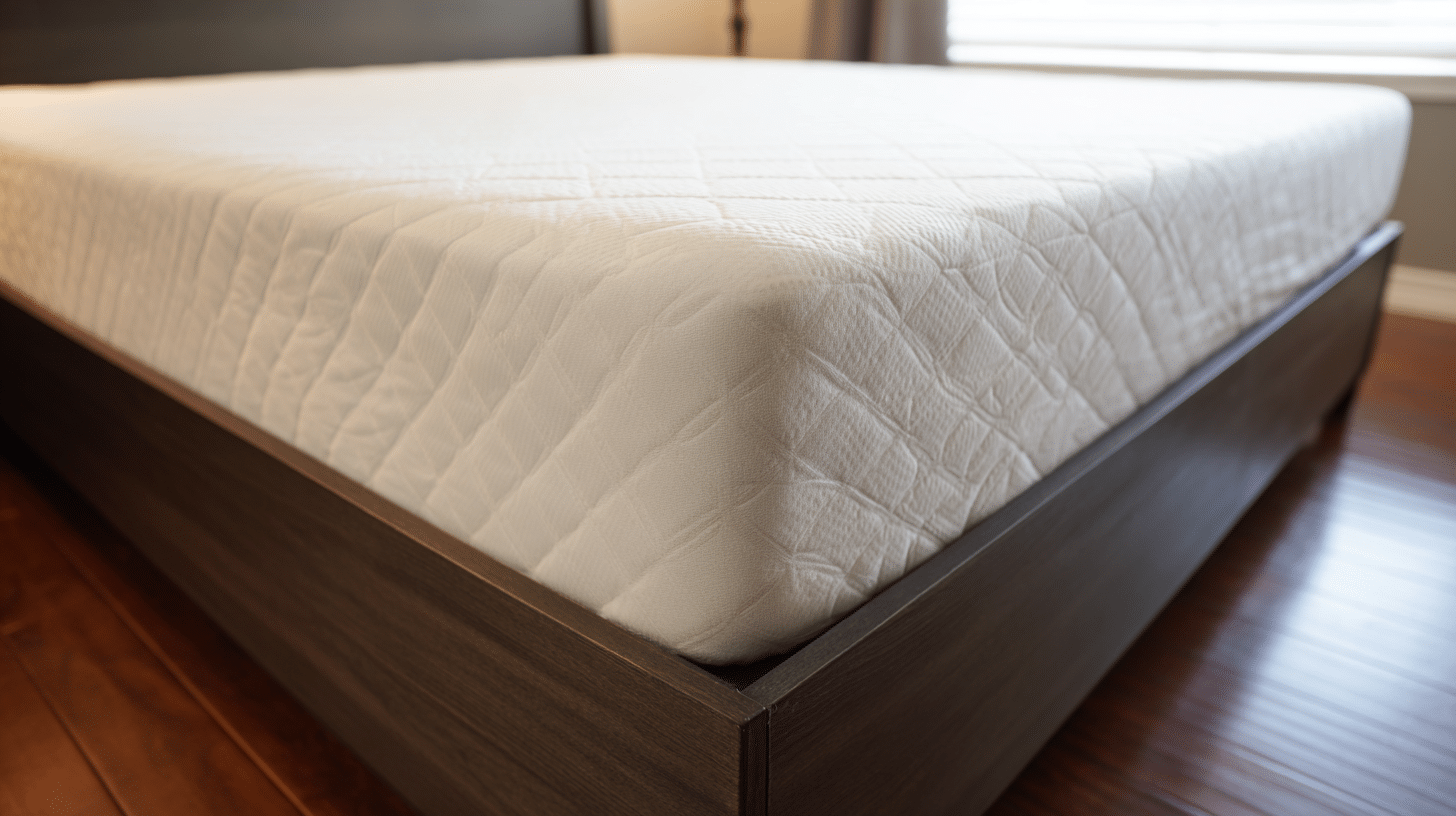
The surface you sleep on shapes how well your spine stays aligned through the night.
- Medium-firm support improves spinal alignment – A medium-firm mattress supports the spine’s natural curves without letting the hips sink or creating painful pressure points.
- Soft mattresses can increase nerve pressure – A mattress that lets your body sink too deeply throws the entire spine, including the cervical region, out of alignment.
- Shoulder and upper spine pressure distribution – Side sleepers need a surface that absorbs shoulder pressure without collapsing, keeping the neck level rather than angled downward.
- When a mattress change may help – A mattress older than seven to eight years, or one showing visible sagging, may be contributing to your overnight cervical pain.
If your mattress no longer holds its shape, no pillow adjustment will fully compensate. A supportive sleep surface is the base on which everything else builds.
Reducing Neck Nerve Pain Before Bedtime
Learning how to relieve neck nerve pain while sleeping often starts before bed, with a short pre-sleep routine that lowers pain levels before you even lie down.
Slow neck tilts and chin tucks release muscle tension that builds up through the day.
Follow these with diaphragmatic breathing to calm the nervous system and reduce neck stiffness.
During the first two weeks, apply ice for 10 to 15 minutes before bed to reduce swelling around the nerve root.
Once the acute phase passes, switch to heat to relax tight muscles around the compressed nerve.
Ice lowers swelling around the nerve root and reduces pain signals, making it easier to fall asleep.
Slow breathing and progressive muscle relaxation reduce overnight muscle guarding.
When to Seek Medical Help
Most pinched nerve cases respond to conservative care at home. Some signs, though, mean it is time to see a doctor.
- Persistent numbness or weakness – Numbness that does not go away or arm and hand weakness that keeps getting worse signals more serious nerve involvement.
- Pain lasting over one to two weeks – Most cases improve within four to six weeks with conservative care. Worsening symptoms after six weeks need medical imaging and professional evaluation.
- Severe sleep disruption despite adjustments – If position changes, pillow upgrades, and pre-sleep routines bring no relief, a clinical assessment is the next step.
- Worsening neurological symptoms – Any loss of grip strength, spreading numbness, or new symptoms appearing in the other arm need prompt medical attention.
Do not wait too long if symptoms are worsening rather than improving.
Early medical input can prevent a short-term nerve problem from becoming a long-term one.
Prevention Tips to Avoid Recurring Pain
Preventing a recurrence is much easier than treating a new episode. Good daily habits protect the cervical spine over time.
Sitting upright with the screen at eye level and feet flat on the floor takes strain off the neck.
A chair with proper lumbar support and a monitor at the right height prevent the forward-head posture that commonly triggers cervical nerve compression.
Strengthening the neck and upper back muscles reduces the risk of compression from muscle imbalance.
Chin tucks, wall angels, and shoulder blade squeezes are simple and need no equipment.
Regular mobility exercises keep cervical joints moving and prevent the stiffness that leads to nerve irritation.
Sleeping Positions to Avoid
Side or back sleepers alike can find some positions that make cervical nerve pain much worse.
Knowing what to avoid is just as important as knowing what to do.
- Stomach sleeping increases cervical rotation strain – Breathing forces your head to twist sideways all night, putting sustained pressure on stressed cervical nerves.
- Twisting the neck beyond neutral alignment – Pushing your chin toward your shoulder or tilting your head back compresses the nerve root further.
- Overly soft or stacked pillows – Pillows that are too high or too flat pull the neck out of alignment and increase nerve pressure.
- Unsupported sleeping posture – No lower neck support lets the head drop into poor alignment, adding unnecessary strain through the night.
Avoiding these positions reduces overnight nerve irritation and gives your cervical spine the rest it needs to heal.
Conclusion
Getting a full night of rest with a pinched nerve in the neck is not out of reach.
The right sleeping position, a supportive pillow, and a few simple pre-bed habits can reduce pain and give the compressed nerve space to recover overnight.
Small changes, like switching to a medium-firm mattress or adjusting pillow height, often bring more relief than expected.
The body heals during sleep, so protecting that time matters. If pain persists beyond a few weeks or symptoms worsen, seeing a doctor is the right move.
Start with one change tonight and build from there. Your neck will feel the difference by morning.
Frequently Asked Questions
Can a Pinched Nerve in the Neck Heal on its Own During Sleep?
Pinched nerves often stop causing pain without medical attention, but the underlying cause may remain if lifestyle and sleeping habits are not adjusted. Recovery still requires consistent positional changes.
How Long Does it take to Sleep Comfortably With a Pinched Nerve in the Neck?
Most people see improvement with non-surgical treatments within 6 to 12 weeks. Sleep comfort usually improves within the first one to two weeks with the right positional adjustments.
Should You Limit Phone Use in Bed With a Pinched Nerve in the Neck?
Looking down at a phone can flex the neck and aggravate arm symptoms before you even fall asleep, making it important to avoid screen use while lying in bed.