





If you’re a commercial driver, your DOT medical card is your ticket to keeping your job. But what happens when you’re diagnosed with sleep apnea?
Many drivers worry they’ll lose their ability to drive trucks or buses.
The good news is that having sleep apnea doesn’t automatically end your driving career. You can still get your DOT medical certification.
However, getting that full 2-year card might take some extra work and patience. This guide will cover how to stay compliant, what examiners look for, and practical steps to keep your medical card valid.
By the end, you’ll have a clear roadmap for managing your condition while maintaining your commercial driving privileges.
What Is Sleep Apnea?
Sleep apnea is a condition where you stop breathing repeatedly during sleep. This happens because your airway gets blocked or your brain doesn’t send the right signals to your breathing muscles.
The most common type is obstructive sleep apnea, where throat muscles relax and block your airway.
Main symptoms include loud snoring, gasping for air during sleep, and feeling tired during the day. You might also have trouble concentrating, staying alert, or experience morning headaches.
Many people don’t realize they have sleep apnea because symptoms happen while they’re sleeping. A sleep study is needed to properly diagnose the condition and determine its severity.
Reasons Dot Cares About Sleep Apnea
Sleep apnea creates serious safety risks for commercial drivers and everyone on the road. The FMCSA has strict rules to prevent drowsy driving accidents.
- Accident risk increases – Drowsy drivers are more likely to cause crashes
- Poor reaction time – Sleep apnea reduces your ability to make quick decisions
- Heavy vehicle danger – Commercial trucks and buses cause more serious accidents
- Public safety concern – Untreated sleep apnea puts other drivers at risk
Sleep Apnea Treatment
The FMCSA prefers Positive Airway Pressure (PAP) therapy as the main treatment for sleep apnea. These machines help keep your airway open while you sleep.
- CPAP machines – Provide steady, pressurized air through a mask all night
- AutoPAP machines – Automatically adjust air pressure based on your needs
- Filtered air delivery – Both machines clean and pressurize the air you breathe
- Prevents airway collapse – Keeps throat muscles from blocking your breathing
How Does Sleep Apnea Affect Your Medical Card?
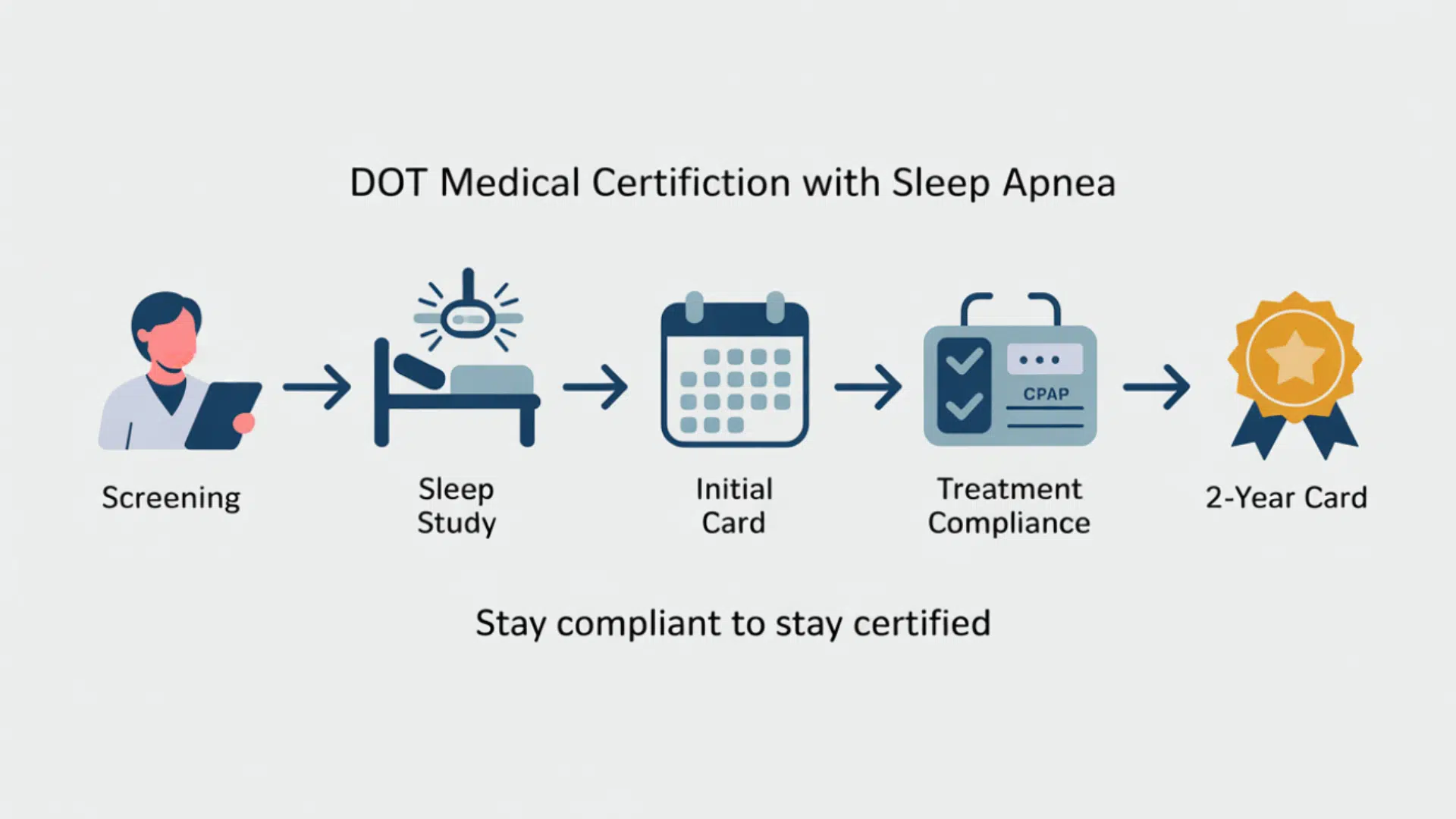
During your DOT physical, the medical examiner checks for many health conditions that could impact your ability to drive safely.
Sleep apnea is a particular concern because unaddressed sleep problems can cause daytime drowsiness and increase the risk of accidents.
1. Screening for Sleep Apnea
The examiner will ask about your sleep habits and assess risk factors such as a large neck circumference, being overweight, or having a history of loud snoring.
If these risk factors are present, or if you report symptoms like daytime sleepiness, the examiner may require a sleep study to determine if you have sleep apnea.
2. DOT Regulations on Sleep Disorders
Federal Motor Carrier Safety Administration (FMCSA) guidelines state that a driver cannot be medically certified if they have a condition that may cause loss of consciousness or the ability to control a vehicle, which includes poorly managed or untreated sleep apnea.
However, drivers receiving appropriate treatment; such as using a CPAP machine faithfully, are eligible for certification as long as they remain alert during the day and have their symptoms under control.
3. Can You Get a 2-Year DOT Medical Card With Sleep Apnea?
Yes, it is possible to get a 2-year DOT medical certificate if you have sleep apnea, but it’s uncommon right after diagnosis.
Most drivers get a shorter medical card first, usually for one year or less, so the examiner can monitor treatment compliance.
To qualify for the standard 2-year certification, you typically must show at least 12 months of documented, consistent CPAP use.
This usually means 4 or more hours per night on 70% of nights. You also need to show that your symptoms, like daytime sleepiness, are well-controlled.
Medical examiners use this compliance information to decide whether longer certifications are safe. Without proper treatment and compliance documentation, you may only get temporary certification or be disqualified until your sleep apnea is properly managed.
Source: Federal Motor Carrier Safety Administration
What is Required for DOT Compliance with Sleep Apnea?
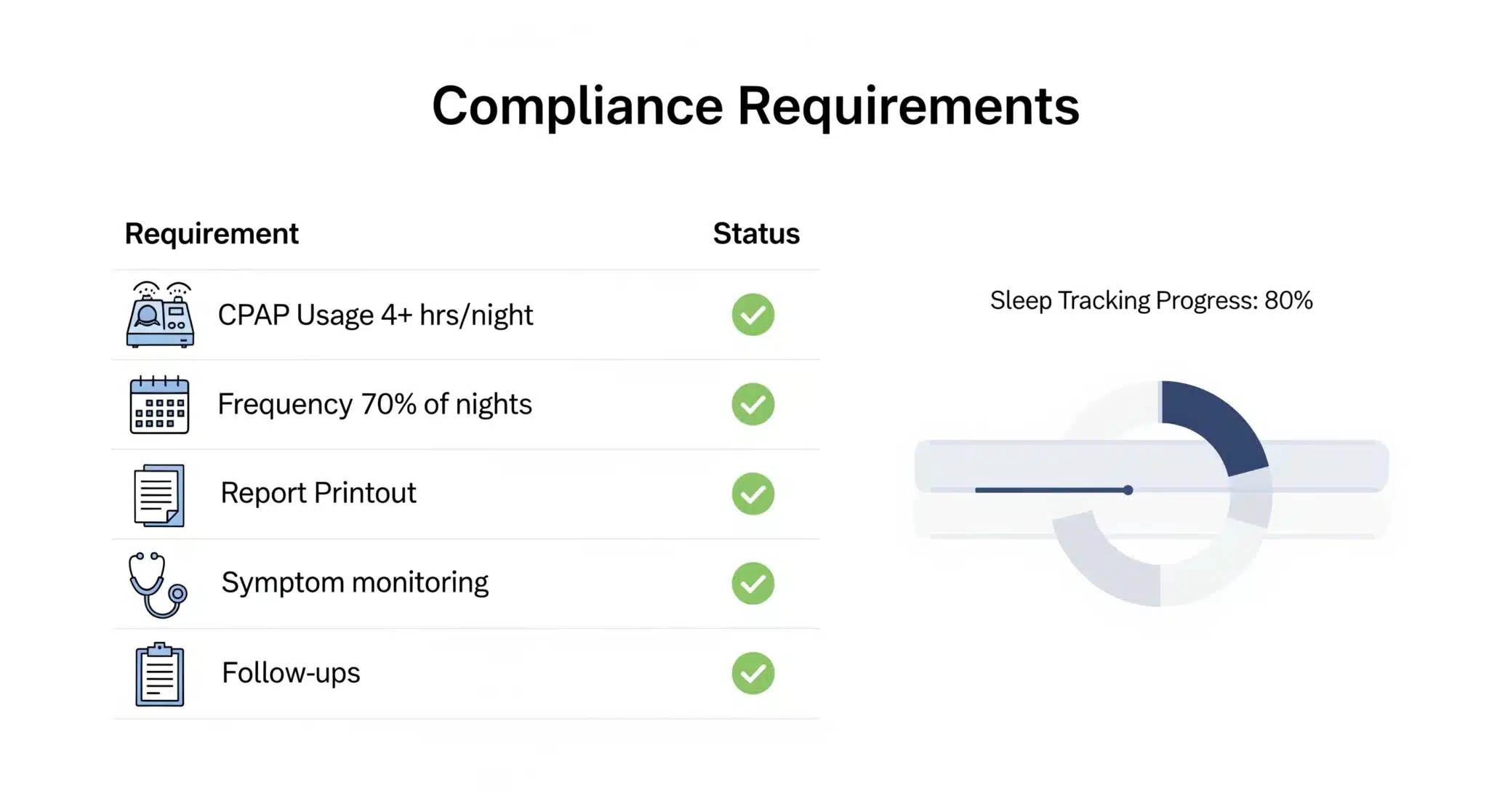
To stay compliant with DOT requirements, you need to follow specific treatment guidelines and keep detailed records. Here’s what the FMCSA requires for drivers with sleep apnea:
| Requirement | Details |
|---|---|
| CPAP Usage | At least 4 hours per night |
| Frequency | 70% of nights over a 30-day period |
| Documentation | Compliance reports from your CPAP machine |
| Symptoms | No significant daytime sleepiness or fatigue |
| Follow-ups | Regular medical check-ins as required |
Note: Non-compliance with these requirements can result in temporary disqualification, shorter medical card periods, or complete loss of your DOT medical certification until treatment is properly managed.
Medical Examiner’s Role and Common Scenarios
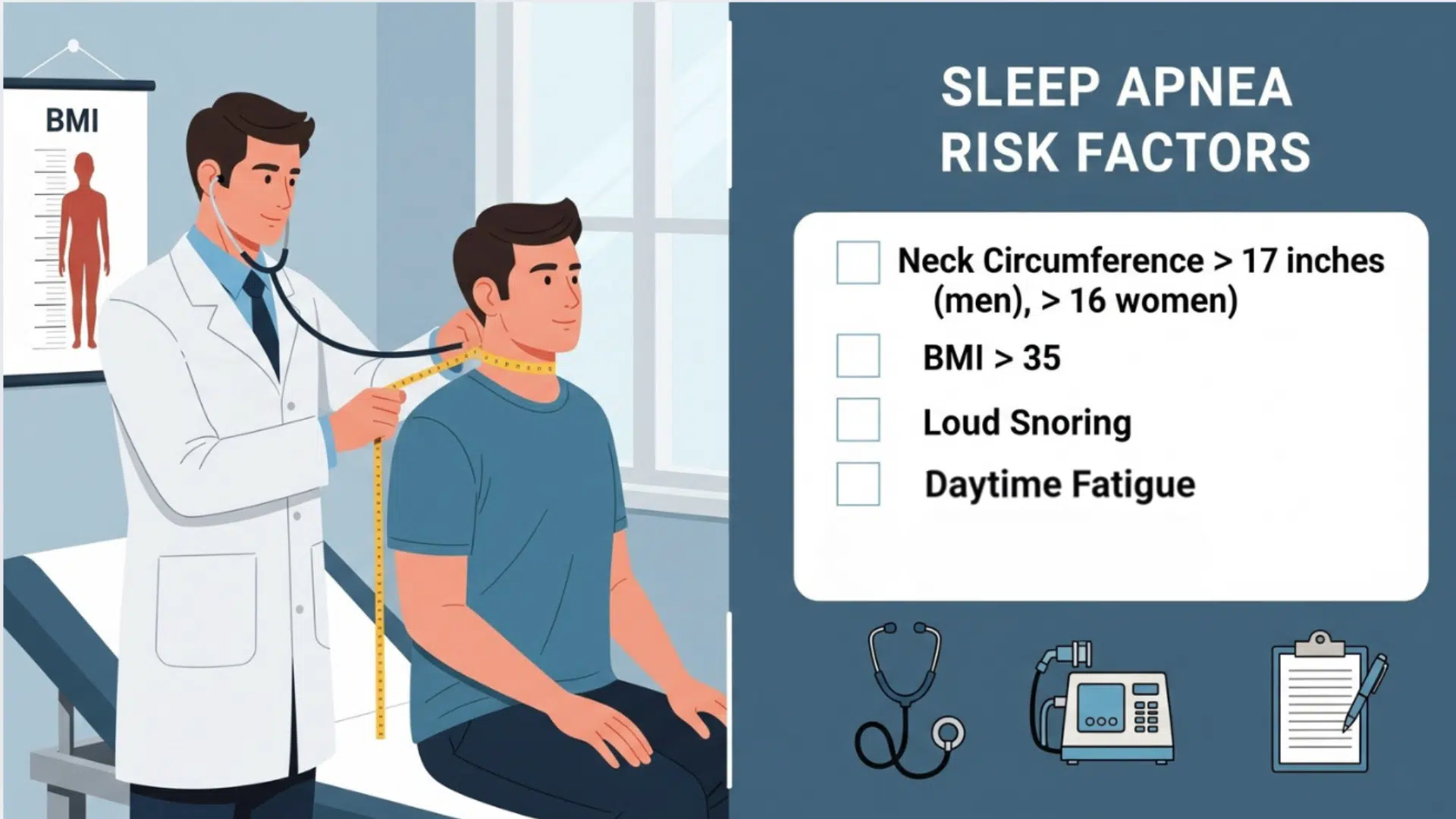
Medical examiners play a key role in identifying sleep apnea risk and monitoring treatment progress. They look for warning signs during your physical exam.
Common risk factors they check include:
- BMI over 35
- Neck size larger than 17 inches for men or 16 inches for women
- History of loud snoring or gasping during sleep
Typical scenarios you might face: If risk factors are present, the examiner may issue a 3-month temporary card for you to get a sleep study.
Once diagnosed, expect a 6-12 month card initially while you start treatment. After showing good CPAP compliance for a year, you may qualify for longer certification periods.
Throughout this process, you’ll need regular follow-ups with documentation of your treatment progress.
Tips for Drivers With Sleep Apnea
Managing sleep apnea as a commercial driver takes commitment, but it’s totally doable. Here are the key steps to keep your medical card and your job.
- Use your CPAP every night – Aim for at least 4 hours per night, 70% of the time over 30 days.
- Keep compliance reports handy – Always bring current reports showing at least 30 days of usage to your DOT exam.
- Talk openly with your examiner – Be honest about your treatment plan and how you’re feeling during the day.
- Contact your doctor if symptoms persist – If you’re still tired or drowsy despite treatment, get help right away.
- Stay consistent with follow-ups – Don’t skip appointments or delay getting required sleep studies done.
Managing Sleep Apnea and DOT Certification
Having sleep apnea doesn’t have to end your driving career. Many drivers with this condition maintain their CDL and continue working successfully.
Work closely with your healthcare providers and be honest with your DOT examiner. With proper treatment and documentation, you can work toward getting that full 2-year medical card.
Stay consistent with your therapy, follow the compliance requirements, and don’t skip your follow-up appointments.
Remember, every driver’s situation is different. Your path to certification may take time, but it’s definitely possible with dedication and proper care.
Have questions about managing sleep apnea as a commercial driver? Share your experience or ask questions in the comments below – we’d love to help!
Frequently Asked Questions
Do I Automatically Lose My CDL with Sleep Apnea?
No, as Long as You Get Treated and Stay Compliant with Your Therapy.
What Happens if I Miss CPAP Nights?
Poor compliance May Lead to A Shorter Medical Card or Temporary Disqualification.
What Documentation Do I Need?
Bring your CPAP compliance report and any other treatment records your doctor recommends.