




Baby blankets serve purposes far beyond providing warmth, offering comfort, security, and bonding opportunities that support healthy development.
These soft companions become treasured items that help babies feel safe while providing parents with practical tools for daily care routines.
Selecting the right blanket involves considering safety guidelines, intended purpose, and the baby’s current needs.
From tiny lovey blankets that provide security to larger crib blankets for toddlers, each size serves specific functions that change as children grow and develop new sleep patterns.
Why Baby Blankets Matter?
Baby blankets provide emotional and developmental benefits that extend well beyond temperature regulation for growing infants.
These soft items offer security and comfort through familiar textures, scents, and warmth that help babies self-soothe during stressful moments.
Practical functions make baby blankets essential tools for daily care routines, including swaddling, stroller coverage, playmat use, and burp cloth alternatives.
Quality blankets enhance sleep quality by providing appropriate warmth without overheating while creating cozy environments that signal rest time.
The right blanket choice supports both baby comfort and parent convenience through versatile, washable options.
Baby Blanket Safety Guidelines
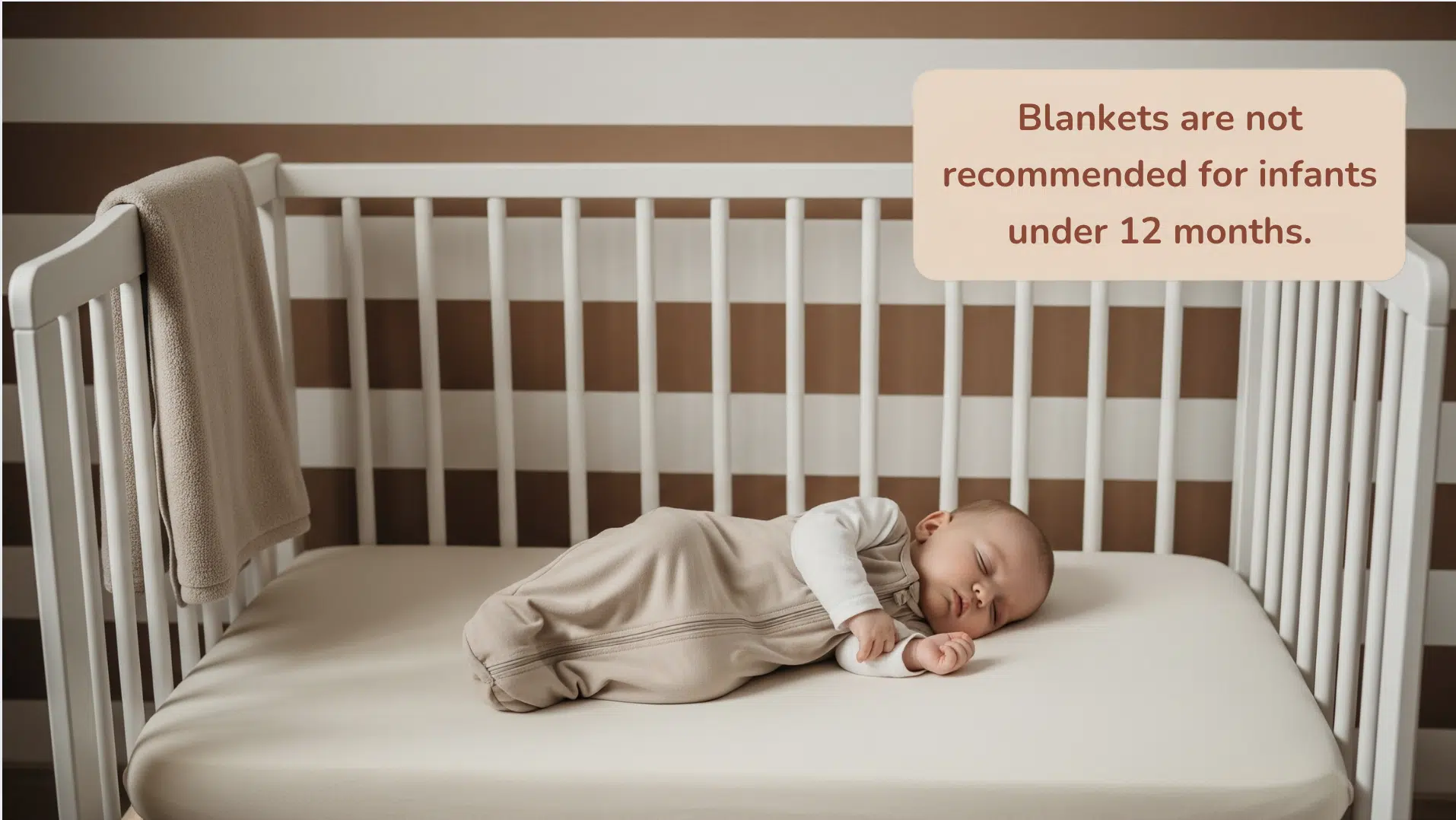
Proper blanket use includes swaddling techniques that keep fabric secure, stroller coverage that allows air circulation, and cuddle time supervision that prevents covering the baby’s face.
Fabric choices should prioritize hypoallergenic, breathable materials that prevent overheating while remaining soft against sensitive skin.
- The American Academy of Pediatrics recommends avoiding loose blankets in cribs for infants under 12 months to reduce suffocation and SIDS risks.
- Safe sleep practices require keeping sleep areas clear of loose bedding, toys, and bumper pads that could pose breathing hazards.
- Always ensure blankets fit their intended use without creating safety hazards.
However, blankets remain safe for supervised use during feeding, playtime, and stroller outings.
Types of Baby Blankets with Sizes and Features
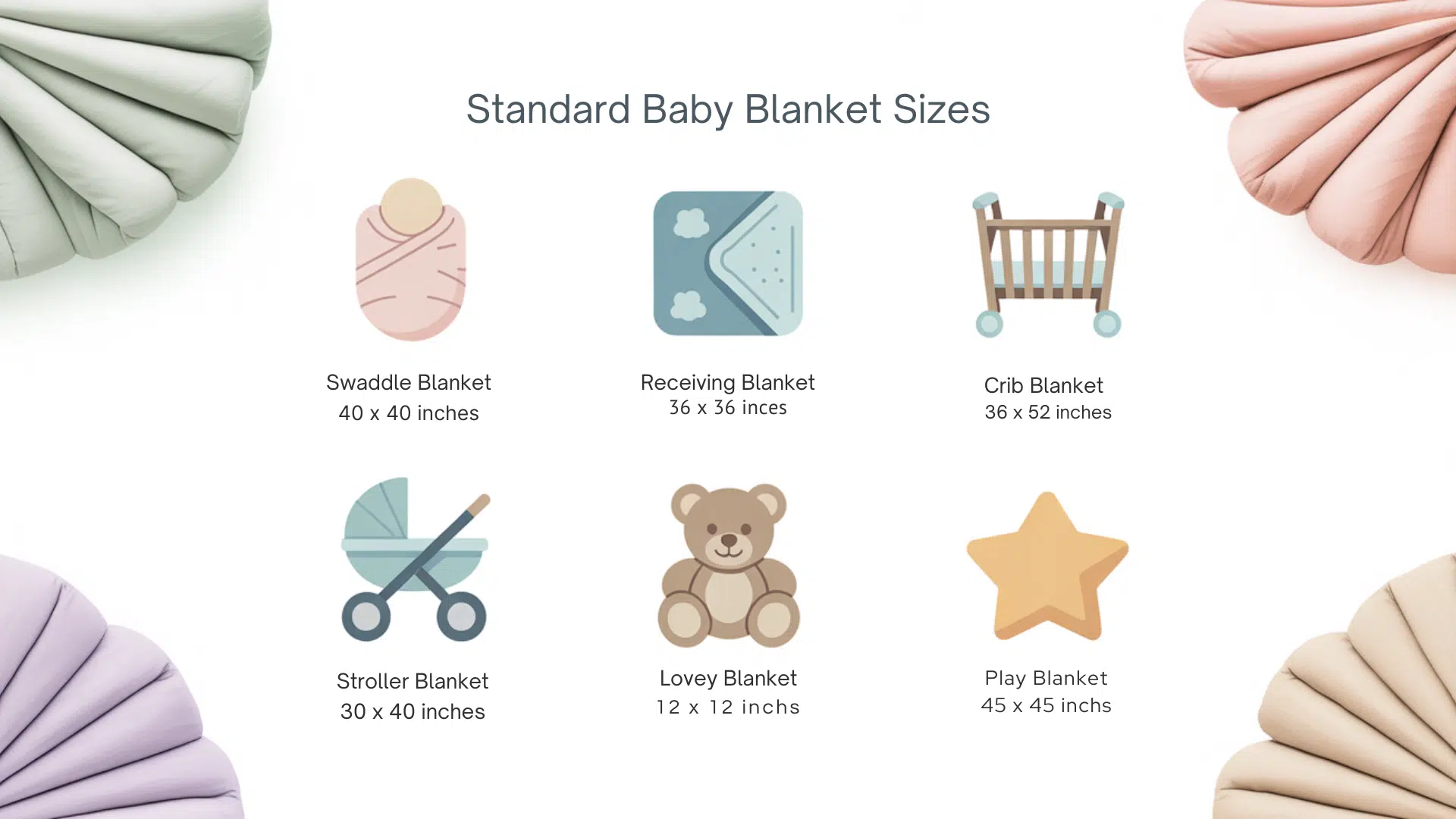
Understanding different blanket types helps parents select appropriate options for various situations and developmental stages.
Each category serves specific purposes while offering different size options that accommodate growing babies and changing needs.
| Blanket Type | Size | Special Features |
|---|---|---|
| Lovey Blanket | 12 x 12 inches (30 x 30 cm) | Small security blanket, often with an attached toy or plush element |
| Baby Blanket | 14 x 16 inches (36 x 41 cm) | Lightweight for swaddling or security, easy to carry and wash |
| Cradle Blanket | 14 x 30 inches (36 x 76 cm) | Fits newborn cradles perfectly, cozy and compact design |
| Receiving Blanket | 40 x 40 inches (102 x 102 cm) | Multipurpose for swaddling, burping, cleanup, and coverage |
| Stroller Blanket | 22-30 x 30-36 inches (56-76 x 76-91 cm) | Designed for stroller use, breathable to prevent overheating |
| Crib Blanket | 45 x 60 inches (114 x 152 cm) | Fits standard crib mattresses, appropriate for babies over 12 months |
Each blanket type addresses specific needs while providing appropriate sizing for safe, comfortable use throughout different stages of development.
How to Choose the Right Baby Blanket
Selecting the perfect baby blanket requires considering multiple factors, including seasonal needs, developmental stage, and intended purpose, for optimal safety and comfort.
1. Seasonal Considerations
Season and climate significantly influence blanket selection, with different materials providing appropriate comfort levels throughout the year.
Lightweight, breathable fabrics like muslin and cotton work best during warmer months when temperature regulation becomes crucial for preventing overheating.
Winter months require thicker, plush blankets or wool blends that provide additional warmth without compromising safety.
However, even winter blankets should remain breathable to prevent excessive heat buildup that can disrupt sleep or create safety concerns during supervised use.
2. Age-Appropriate Choices
Different ages require specific blanket types that match developmental needs and safety requirements.
Newborns benefit from smaller lovey blankets, cradle blankets, and receiving blankets that provide security without overwhelming their tiny bodies.
Toddlers can safely use larger crib blankets or small throws designed for active use as they develop mobility and independence.
3. Purpose-Based Selection
Swaddling requires soft, slightly stretchy receiving blankets or muslin cloths that wrap securely without restricting movement.
The fabric should be gentle against the skin while maintaining shape through multiple uses and washes.
Comfort and security needs call for smaller lovey blankets with plush attachments that babies can easily grasp and manipulate.
Outdoor and stroller use requires breathable, easily washable stroller blankets that provide coverage without trapping heat or becoming cumbersome during outings.
4. Material Considerations
Natural fibers, including cotton, bamboo, and muslin, provide optimal softness and breathability for sensitive baby skin.
These materials regulate temperature effectively while remaining gentle during extended contact. Organic and hypoallergenic options benefit babies with sensitive skin or allergies.
Machine-washable fabrics that maintain softness and shape through multiple cleaning cycles provide the best long-term value for busy families.
Selection Tips and Additional Considerations
These additional considerations ensure long-term satisfaction and value while supporting daily care routines and family preferences.
| Consideration | What to Look For | Why It Matters |
|---|---|---|
| Care Requirements | Machine washable, quick drying, colorfast materials | Frequent washing needs require easy maintenance without quality loss |
| Safety Certifications | OEKO-TEX, GREENGUARD, organic standards | Ensures fabrics meet strict safety requirements for baby products |
| Construction Quality | Reinforced edges, secure attachments, durable stitching | Prevents fraying and separation through repeated use and washing |
| Aesthetic Appeal | Colors and patterns that coordinate with nursery themes | Creates cohesive nursery design while maintaining function priority |
| Value and Longevity | Quality materials that maintain softness over time | Investment in durable blankets provides better long-term value |
Note: Prioritize safety certifications and washability first, then consider aesthetic preferences that complement your nursery design and personal style.
Making the Right Choice for Your Family
Successful blanket selection balances safety requirements with practical needs and personal preferences that suit individual family lifestyles.
Consider how many blankets you need for different purposes, keeping extras available for washing cycles and emergency situations.
Multiple smaller blankets often provide more versatility than single large options.
Think about your daily routines and how blankets will fit into feeding schedules, stroller outings, and sleep routines.
The right combination of sizes and materials creates a collection that supports various needs without creating storage or care challenges.
Conclusion
Choosing appropriate baby blanket sizes supports safety, comfort, and developmental needs while providing practical tools for daily baby care.
Understanding different types and their intended uses helps parents make informed decisions that balance function with seasonal requirements and personal preferences.
Remember to always follow current safety guidelines when using baby blankets, prioritizing supervised use and appropriate sizing for each developmental stage.
The right blanket choices enhance both baby comfort and parent confidence while creating positive associations with rest, security, and family bonding experiences.
Share your experiences with different blanket types and any tips for choosing the right materials in the comments below!