

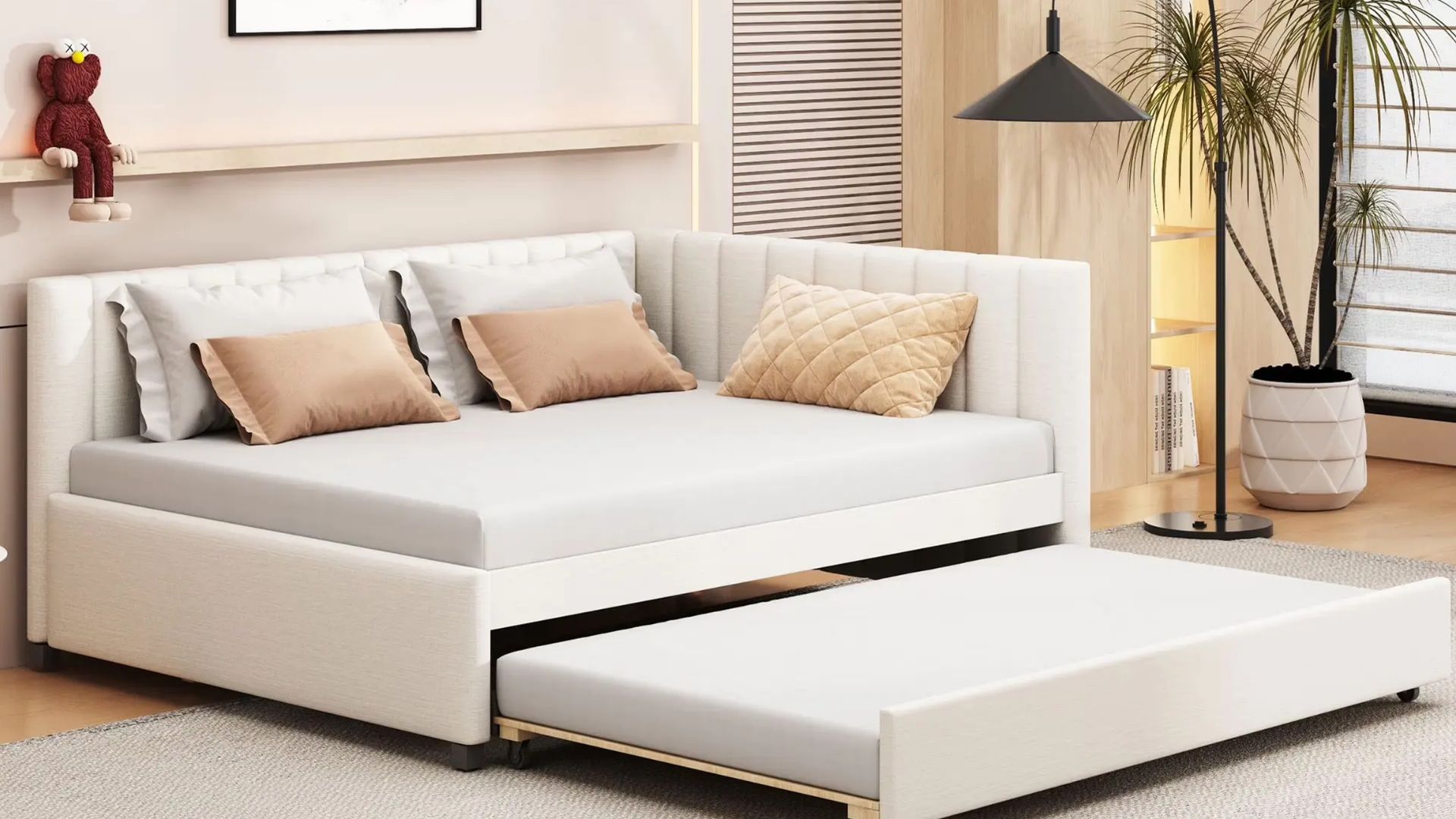


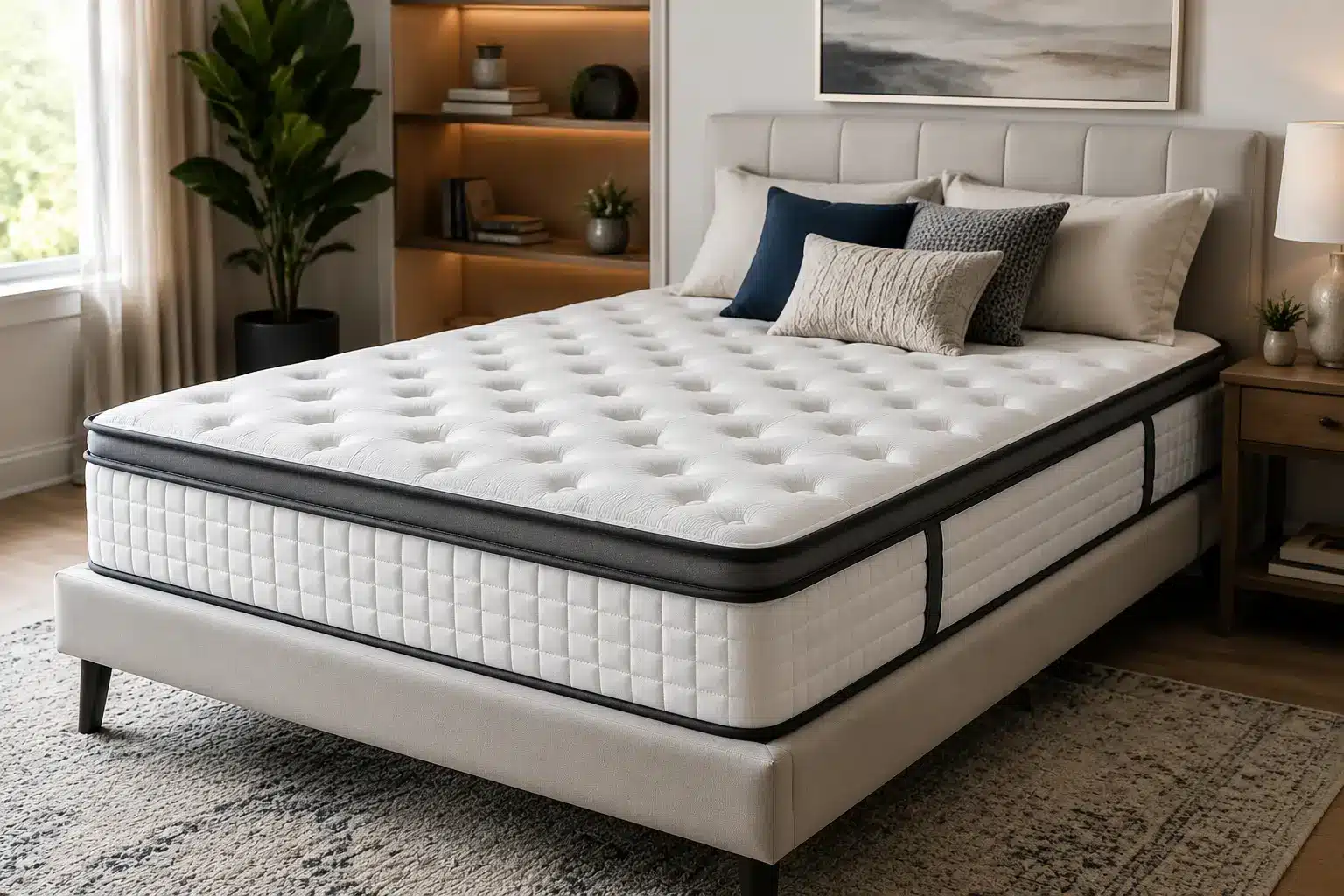
Decorative pillow sizes typically run from 16×16 to 24×24 inches for square styles, with 26×26 as the standard Euro size for beds.
A 20×20 pillow is a solid starting point for most sofas, while 18×18 tends to suit smaller chairs and loveseats better.
There’s no single “correct” size across the industry, just a range of common ones. The chart below sorts them by furniture so you can skip the guesswork.
Decorative Pillow Sizes at a Glance
A size chart only helps if it tells you what each size is actually for, not just the number printed on the tag. Here’s how the most common decorative pillow sizes break down.
Size | Shape | Best Starting Use |
|---|---|---|
16×16 in | Small square | Accent chairs, front layer on a sofa |
18×18 in | Square | Loveseats, compact sofas, accent chairs |
20×20 in | Square | Standard sofa, most versatile size overall |
22×22 in | Large square | Deeper sofas, sectionals |
24×24 in | Oversized square | Deep sofas, large sectionals, beds |
26×26 in | Euro square | Back row on queen and king beds |
14×20 in | Lumbar | Chairs, front layer on sofas, kids’ beds |
16×42 in | Long lumbar/bolster | Beds, benches, wide sofas |
Tonic Living’s own size range runs from a 14×20 lumbar up through 24×24 squares, and the brand lists 20×20 as its most common, most versatile size for layering or styling on its own.
Separately, Cushion Source’s buying guide names 18-inch and 20-inch squares as the most common decorative pillow sizes for sofas, moving up to 22 or 24 inches for larger sofas and sectionals with deep seats or high backs.
The message is consistent: 18 to 20 inches covers most sofas, and you size up from there based on the furniture, not the other way around.
What Size Decorative Pillow Should You Choose
Rather than memorizing every dimension, it helps to work backward from the furniture piece in front of you.
- Small accent chair: 18×18
- Loveseat: 18×18 or 20×20
- Standard sofa: start at 20×20
- Large or deep sofa: 22×22
- Large sectional: 22×22 or 24×24
- Bed: 26×26 Euro pillows for the back row
- Bench: one long lumbar instead of several small squares
Treat this list as a starting point, not a rule. Back height, seat depth, and how much sitting room you want to keep all matter more than the size printed on the sofa’s spec sheet.
Once the size feels right, the count matters almost as much.
An odd number of pillows creates a more natural look, generally three for a smaller sofa or loveseat and five for a larger sofa or sectional. Odd counts also make it easier to size down slightly toward the front without the arrangement looking lopsided.
Decorative Pillow Sizes for Sofas and Couches
Sofas cause the most sizing confusion because “sofa” covers everything from a two-seat loveseat to a ten-foot sectional. No single number works for all of them, so here’s the breakdown by furniture type.
Accent Chair
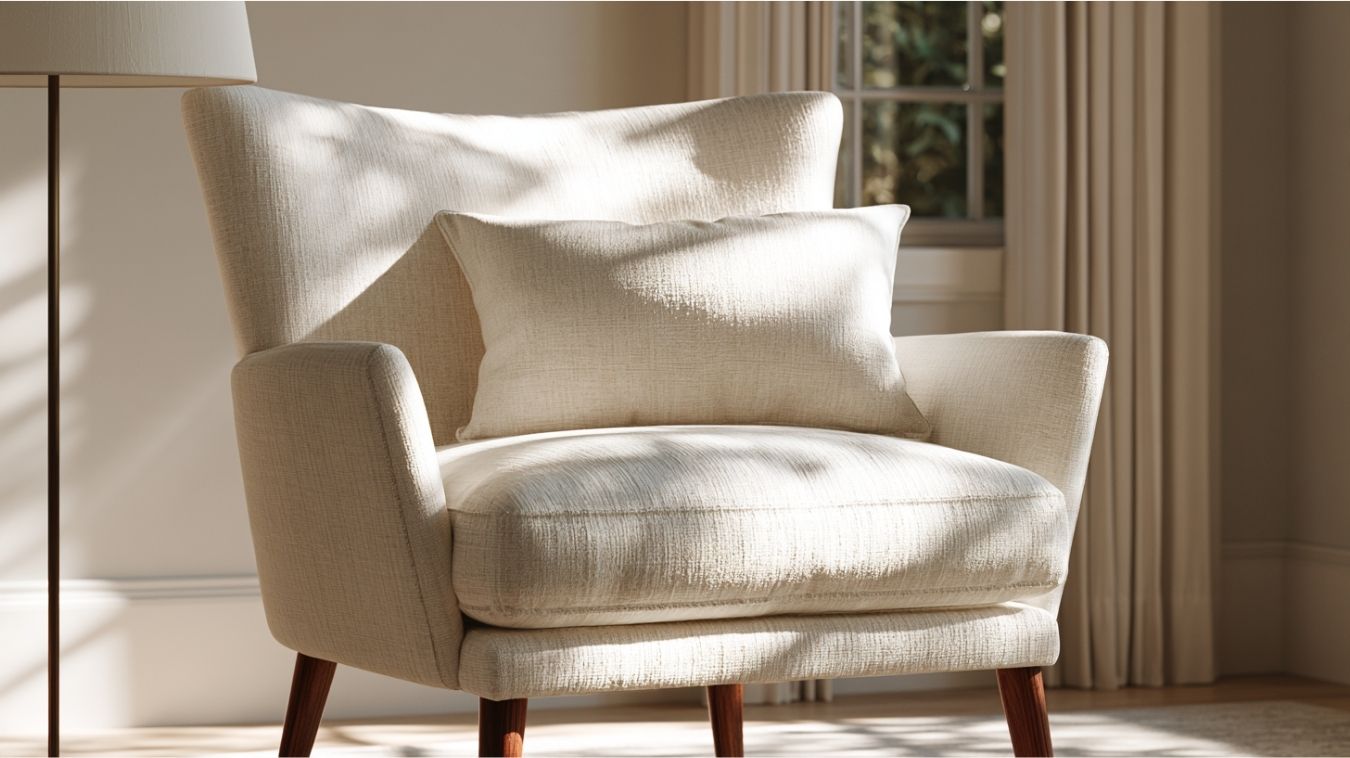
Start with an 18×18 square or a 14×20 lumbar.
Size up only if the chair is unusually wide or deep. Avoid a 24×24, since it tends to eat up the sitting room on a chair this size.
Loveseat
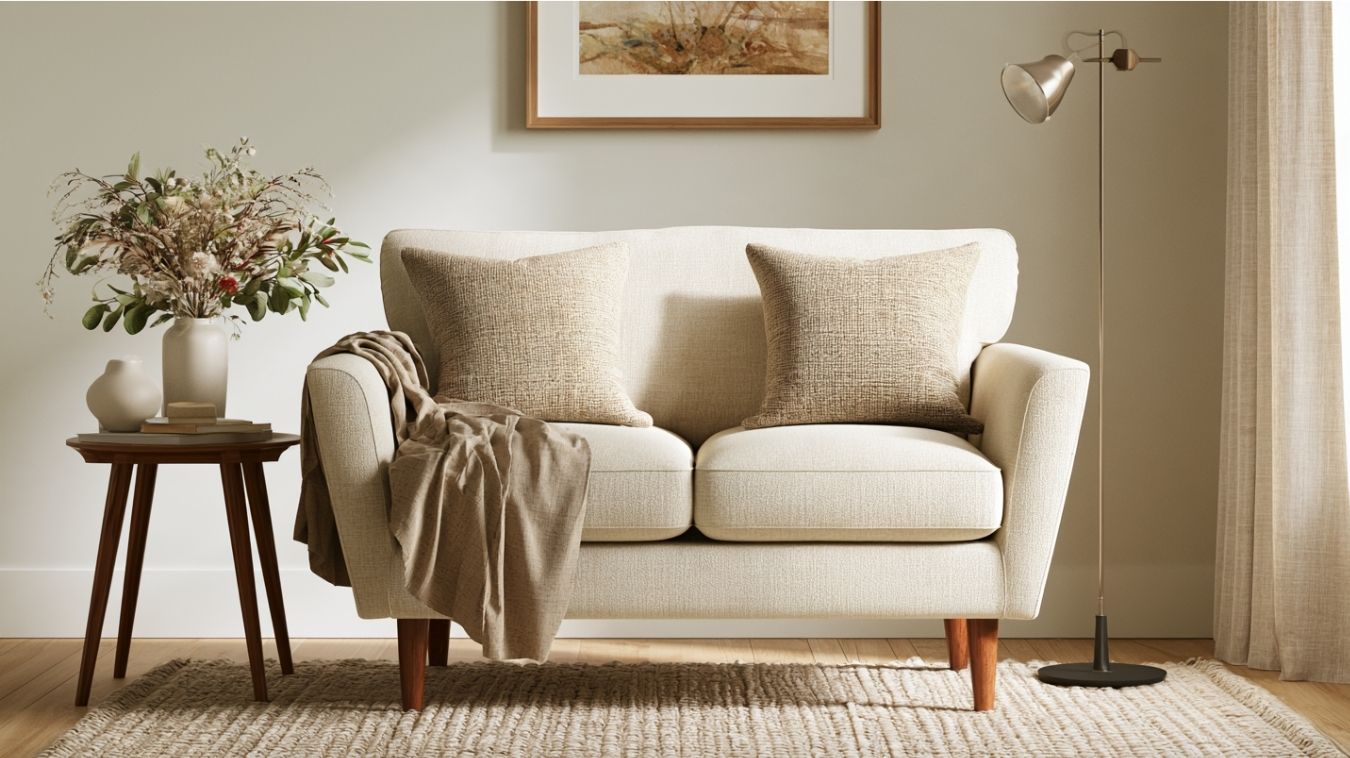
Start with an 18×18 to 20×20 square.
Size up if the back or frame runs tall. Avoid stacking too many layers, which can overwhelm a smaller piece.
Standard Sofa

Start with a 20×20 square. If the sofa has a deep back or a large frame, move up to 22×22.
Avoid relying on 16-inch pillows alone, since they tend to look undersized on a full-size sofa.
Deep Sofa

Start with a 22×22 square. For a very large frame, move up to 24×24.
Avoid sizing based on the sofa’s width alone, since depth and back height matter more.
Sectional

Start with 22×22 to 24×24 anchor pillows. Size up for large corner sections or unusually deep seats.
Avoid lining up identical small pillows across every seat, which reads as repetitive rather than styled.
A sectional can typically carry more pillows than a standard sofa without feeling crowded, as long as the count stays odd and the largest sizes anchor the corners.
A habit worth borrowing across all five: put the largest pillows at the back corners, then step down in size toward the front. It works whether you’re filling a loveseat or a full sectional.
Decorative Pillow Sizes for Beds
Bed sizing is more predictable than sofa sizing, mainly because mattress widths are fixed.
If you’re not sure which mattress size you’re working with, this bed sizes chart breaks down the exact dimensions for Twin through California King before you start shopping for pillows.
Bed Size | Recommended Starting Point |
|---|---|
Twin | One 18×18 or 20×20 square, or one lumbar |
Full | One to two 20×20 or 22×22 squares |
Queen | Two 26×26 Euro pillows, then a smaller pair or one lumbar |
King | Three 26×26 Euro pillows, then smaller accents or one long lumbar |
California King | Same approach as king, adjusted for headboard width |
The Euro sham count here isn’t a guess. Parachute’s product guidance recommends two Euro shams for a queen bed and three for a king, noting that queen and full beds use the same pillow arrangement since the mattress width differs by only six inches, with two Euro or super-Euro pillows as the base layer.
Keep the Headboard in the Picture
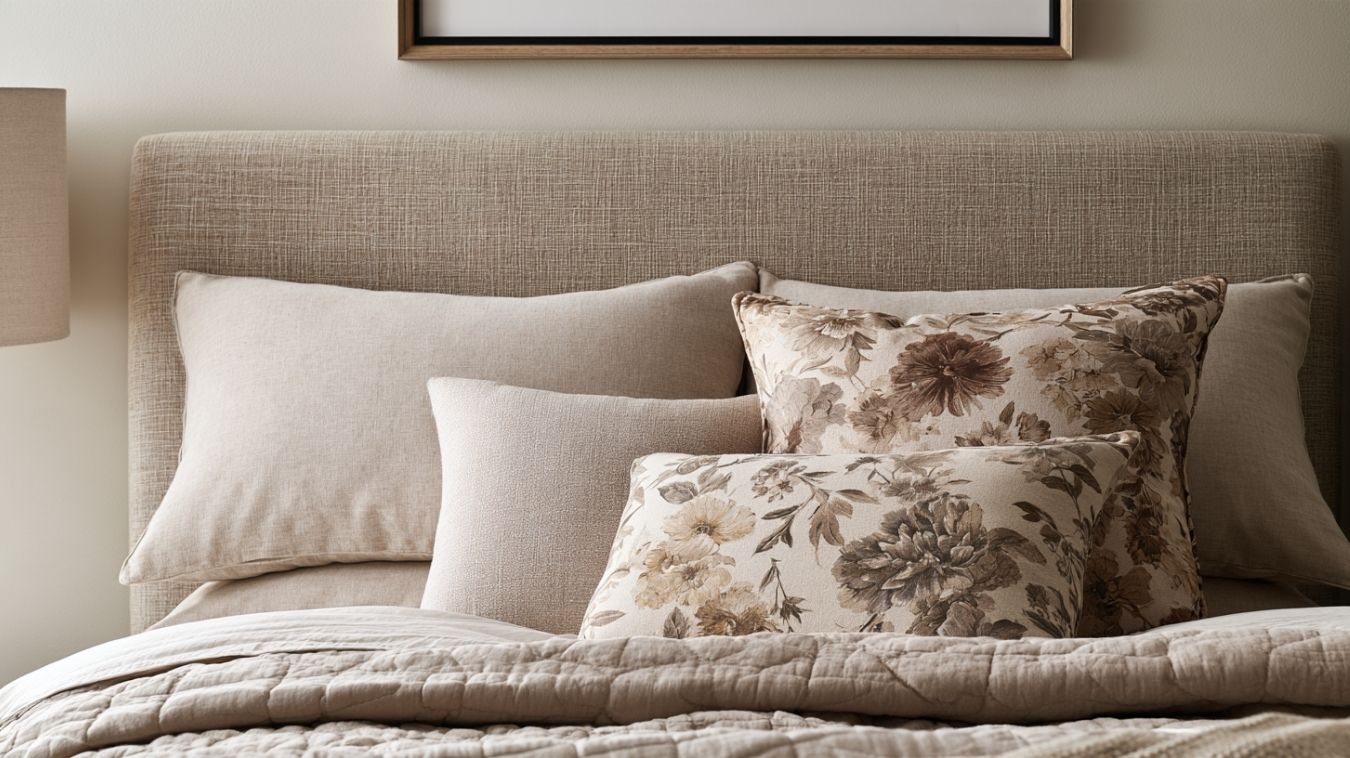
Bed pillows can bury a headboard fast, especially on a queen with a low frame. Before adding pillows, look at how much of the headboard shows above the top row.
A good visual check: if you can still see roughly the top third of the headboard once the pillows are stacked, the arrangement is working. If the headboard disappears completely, pull one layer, usually the smallest pillows, and see if the bed still looks finished.
Euro, Square and Lumbar Pillows Are Not Interchangeable
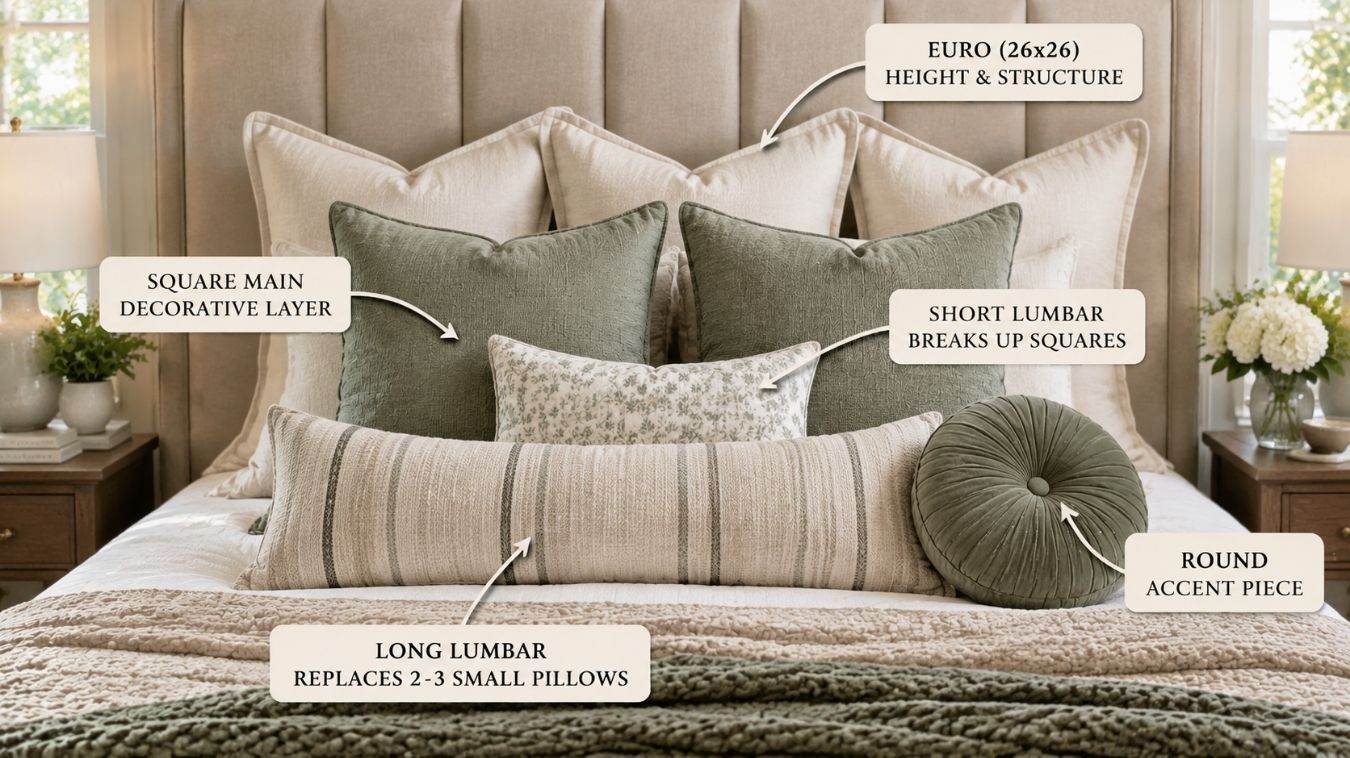
Shape decides the job a pillow does, not just its size. Mixing shapes is usually a better fix than adding more of the same square.
Shape | Main Role |
|---|---|
Square | Main decorative layer |
Euro (26×26) | Height and structure on beds |
Short lumbar | Breaks up a row of matching squares |
Long lumbar | Can replace two or three small squares |
Round | Accent piece only |
If a sofa or bed looks flat even after adding pillows, the fix is often a shape change rather than a size change. Swap one square for a lumbar and the arrangement usually reads as more finished, not busier.
Should the Pillow Insert Be Bigger Than the Cover
This is where many size guides oversimplify. “Always buy an insert two inches bigger” gets repeated often, but it isn’t a fixed rule.
A same-size insert is a safe choice when a cover is built for a tailored, structured look. Sizing up, typically by one to two inches, creates a fuller, plumper look, which is why several designers default to it.
A quick way to see the difference:
- 20×20 cover with a 20×20 insert: controlled, tailored fit
- 20×20 cover with a 22×22 insert: fuller, plusher look
Check the cover’s construction before sizing up. A structured cover with piping or a tight zipper may not stretch enough for a much larger insert, no matter what the general rule says.
How to Measure a Decorative Pillow Correctly
Accurate measurements matter more than picking the “right” size, since a mismeasured pillow throws off every other decision on this page.
- Remove the insert if the cover has a zipper or opening
- Lay the cover flat on a hard surface
- Measure the pillow body from seam to seam, not including trim
- Skip any flange, ruffle, or piping in the measurement
- Record width by height, in that order
Cushion Source’s measurements back up steps one and two, advising shoppers to remove the insert before measuring if the cover has a zipper; if it doesn’t, pinch the top corners and pull the seam tight against a tape measure, ideally with a second person helping. Skipping this step is one of the most common reasons a “20×20” order arrives looking smaller than expected.
The Simplest Pillow Size Formula to RememberIf none of the charts above stick, this shortcut usually does. 18 for compact, 20 for everyday, 22 to 24 for deep furniture, 26 for Euro bed pillows. For layering, put the largest square at the back, step down once in size, then add a lumbar if you want a second shape in the mix. It’s not an industry standard, just a fast way to shop without pulling out a tape measure for every seat in the room. |
|---|
Common Decorative Pillow Sizing Mistakes
A few habits show up again and again in reader questions and return requests, so it’s worth naming them directly.
- Buying by sofa width alone. Two sofas of the same width can have very different seat depth and back height.
- Starting too small on a deep sectional. Small pillows work as accents, but they look lost as the only size on a large piece.
- Oversizing a small chair. If the pillow pushes the sitter forward or covers most of the chair back, size down.
- Treating every lumbar as the same length. Lumbar dimensions vary more between brands than square sizes do.
- Following the two-inch insert rule without checking the cover. It works well for soft, unstructured covers, but not every cover is built to take it.
- Picking an even number of pillows out of habit. An odd count, usually three or five, tends to look more natural than a matched even set.
Most of these come down to the same root cause: sizing from a single number instead of the actual piece of furniture in the room.
Final Thoughts
Start with the furniture, not the pillow display.
A 20-inch square works as a dependable baseline for most sofas; compact chairs usually need less, and deep sectionals usually need more.
Beds are more straightforward: two 26×26 Euro pillows on a queen, three on a king, give you a dependable back layer every time.
Before ordering a full set of covers, hold the size against the actual piece of furniture and make sure there’s still room left to sit down.
Frequently Asked Questions
What Is The Most Common Decorative Pillow Size?
Both 18×18 and 20×20 rank as the most common square sizes for sofas, with 20×20 working as a reliable general starting point for a standard sofa.
Should Pillow Inserts Be Bigger Than Pillow Covers?
Sometimes. A matching insert gives a tailored fit, while one size larger adds fullness on covers built to allow it. Check the manufacturer’s guidance first.
How Do I Know What Size Pillow My Sofa Needs?
Measure the seat depth and back height, not the sofa’s overall width. Deeper, taller sofas generally handle 22- to 24-inch pillows better than 18- or 20-inch ones.
How Many Decorative Pillows Should Be On A Bed Or Sofa?
An odd number usually looks best: three for a loveseat or smaller sofa, five for a standard or larger sofa, and two to four on a bed depending on how full you want the arrangement.