

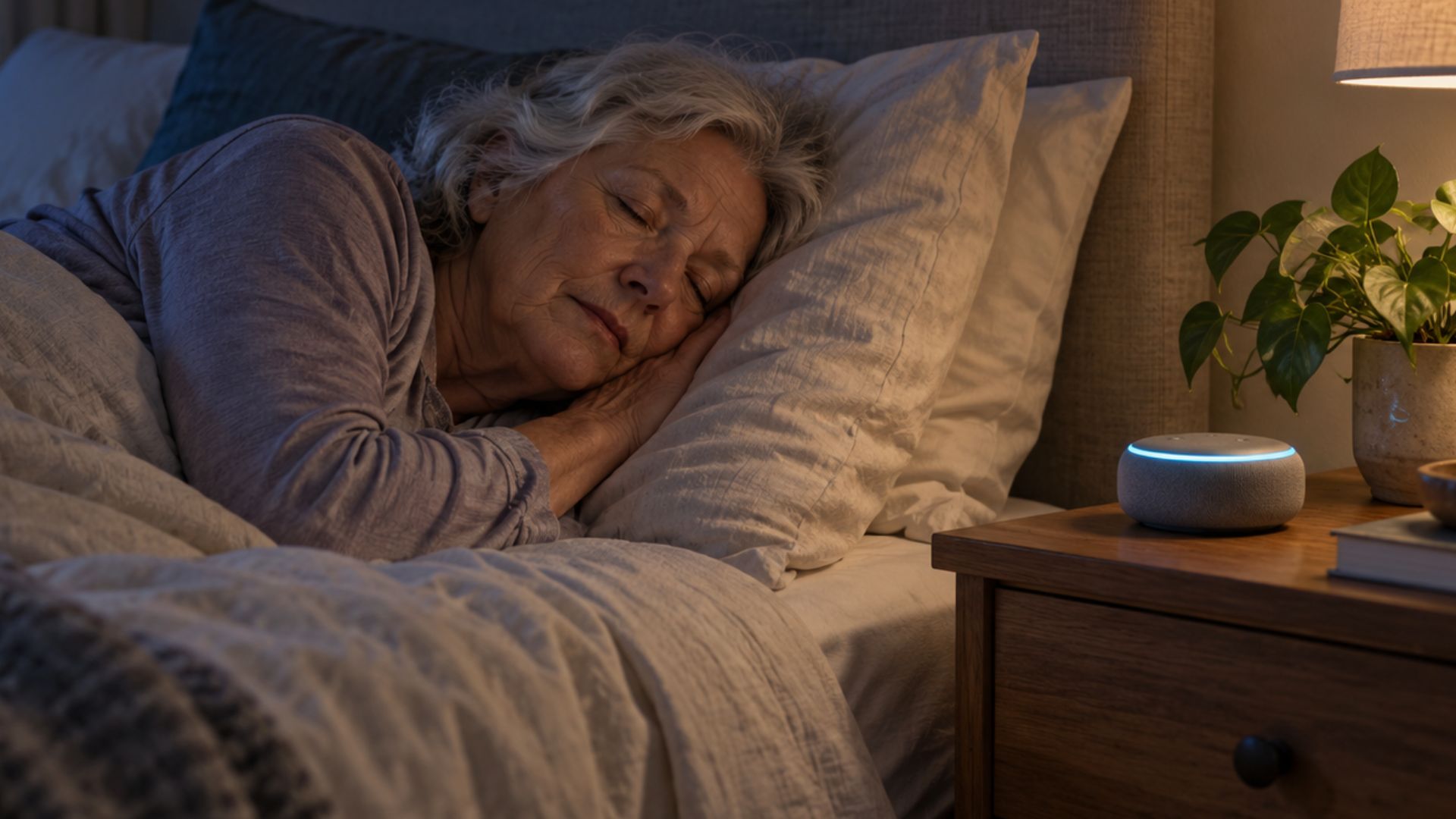

Pink noise is a type of steady background sound that reduces the intensity of higher frequencies, giving it a softer and deeper sound than white noise.
It is often compared to steady rainfall, wind, or ocean waves. Many people use pink noise for sleep to mask traffic, voices, snoring, and other sounds that may interrupt rest.
It is widely available through sleep apps, sound machines, and YouTube recordings. However, experiences vary.
Some sleepers find it calming and easier to tolerate than white noise, while others find any continuous sound distracting.
Research has also produced mixed results, especially when comparing continuous playback with carefully timed sound stimulation used in sleep studies.
What is Pink Noise?
Pink noise contains a mix of frequencies, with the higher ones softened to create a deeper, gentler sound than white noise.
This gives pink noise a deeper, smoother, and less sharp sound that some people find easier to listen to at bedtime.
People often describe it as sounding natural. Steady rainfall, ocean waves, wind through trees, and rustling leaves can all have a similar sound pattern.
White noise, by comparison, may sound more like TV static or a constant hiss. Because pink noise emphasizes lower frequencies, some sleepers find it gentler and more comfortable than white noise.
How to Try Pink Noise for Sleep
You do not need a complicated setup to test pink noise. Start simply so you can tell whether the sound is actually helping.
1. Choose a Simple Pink Noise Track
Pick a steady pink noise track from a sound machine, sleep app, streaming service, or YouTube. Look for audio that stays smooth and consistent throughout.
Avoid tracks with voices, sudden volume changes, noticeable loops, or added sounds that could grab your attention while you are trying to sleep.
2. Start With a Low Volume
Keep pink noise soft enough to fade into the background. It should cover distracting sounds without becoming the main thing you hear.
If you find yourself focusing on the noise or feeling irritated by it, lower the volume until it feels less noticeable and more comfortable.
As a rough guideline, keep continuous pink noise around 60 decibels, roughly the volume of a running refrigerator, and set a sleep timer instead of leaving it on all night. Overnight noise at higher volumes and hearing safety are worth taking seriously, not just comfort.
3. Try a Timer First
Start by playing pink noise only while you are falling asleep rather than leaving it running until morning. Set a timer for a reasonable bedtime period and see how you respond.
This lets you test its masking effect without assuming that continuous sound throughout the night will improve your sleep.
4. Compare How You Feel in the Morning
Test pink noise for several nights, then compare it with silence, a fan, white noise, or brown noise. Do not focus only on how quickly you fall asleep.
Pay attention to nighttime waking, morning tiredness, and how rested you feel to see which option actually works best.
Pink noise is worth testing, not forcing. Start simple, keep the volume low, and notice how you sleep and feel the next morning.
What People Say About Sleeping With Pink Noise
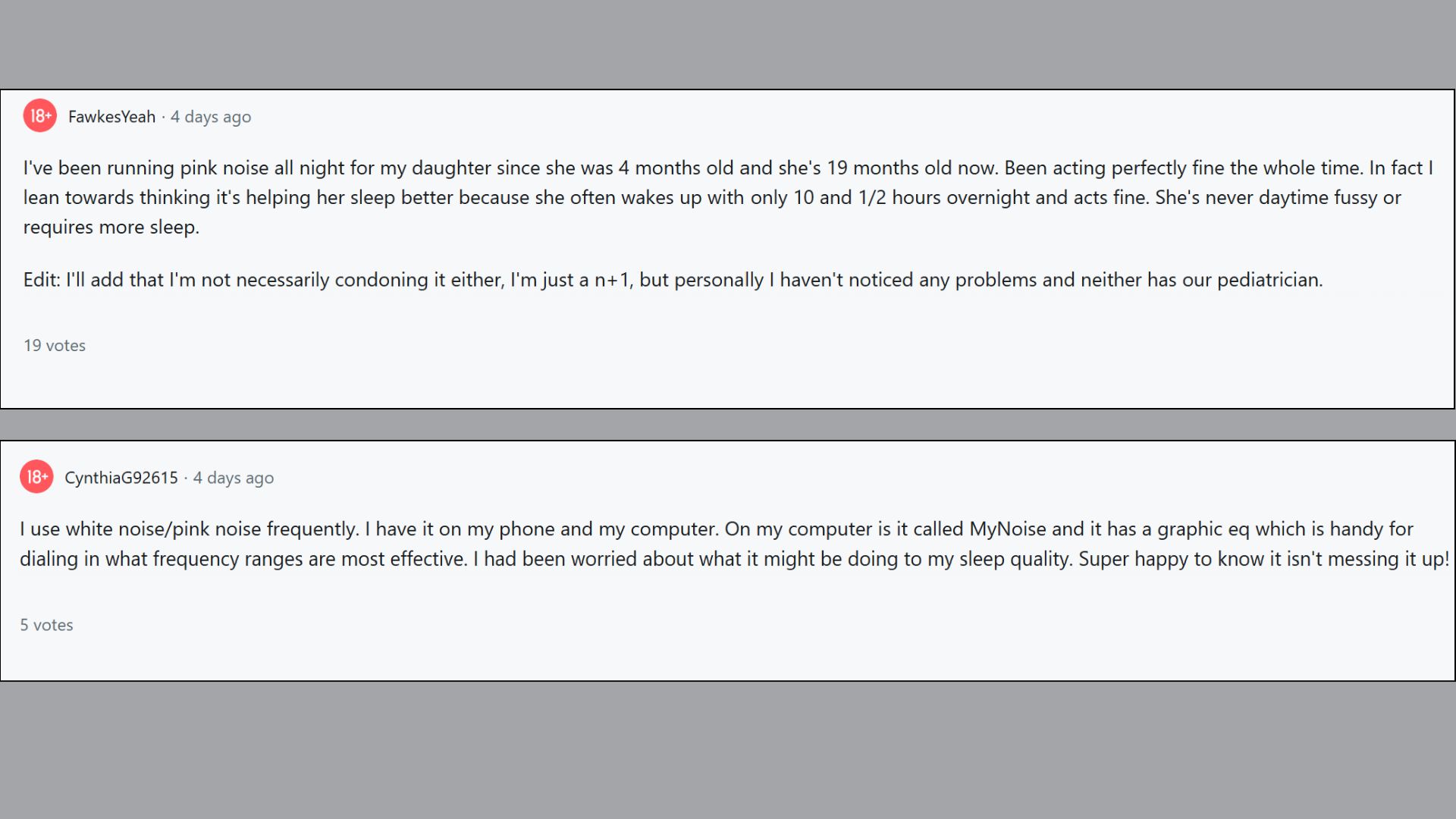
People on Reddit share mixed experiences with pink noise for sleep. Some say its softer sound feels more relaxing than white noise, while others prefer deeper brown noise or say pink noise did not improve their sleep. These comments are personal experiences, not proof that the sound will affect everyone the same way.
A common theme in sleep communities is that pink noise feels softer than white noise. That can matter for people who find a strong hiss distracting. Some sleepers also use it to cover:
- Passing cars
- Voices from another room
- Noisy neighbors
- A partner’s loud snoring
- Small sounds from outside the bedroom
Rain-like pink noise tracks are especially popular because they can feel more natural than electronic static. Some people also say a steady background sound makes sudden noises stand out less.
Benefits of Pink Noise for Sleep
Most of the research on pink noise centers on a handful of specific effects, from faster sleep onset to some early signals around memory and brain health.
- Faster sleep onset: Masks disruptive sounds like traffic, voices, or a snoring partner, helping some people fall asleep sooner
- More stable, deeper sleep: Several small studies found it reduces brain wave complexity and increases time spent in slow-wave sleep
- Gentler masking than white noise: Softer high frequencies make it easier to tolerate for many sleepers
- Tinnitus and general sound masking: Used clinically to help cover ringing in the ears and other intrusive sounds
- An emerging, lab-only benefit: MIT’s 2026 study found precisely timed pink-noise bursts strengthened cerebrospinal fluid flow, tied to brain waste clearance and dementia research, though this isn’t something a consumer app or track currently reproduces.
None of this makes pink noise a guaranteed fix. It can feel calming for one person and distracting for another, and playing it all night isn’t automatically better than playing it for just part of the night. Treat it as something worth testing for a few nights, not a rule.
What Does Research Say About Pink Noise for Sleep?
A study by MIT News gives a more complicated picture than online claims sometimes suggest. Some findings are promising, but they do not prove that playing pink noise all night improves sleep.
- Pink Noise May Help With Deep Sleep: Some small studies have found changes in slow-wave activity or sleep stability after certain forms of sound stimulation. However, a broader review of auditory sleep studies found that the overall evidence was still not strong.
- Timed Pink Noise Is Different From a YouTube Track: Some sleep studies use closed-loop auditory stimulation. Researchers monitor brain activity and play very short pink-noise bursts at specific moments during slow-wave sleep. One study, for example, used brief pulses timed to slow oscillations rather than a continuous recording.
Other research has used similar timed stimulation and found changes in slow-wave activity, but no clear improvements in memory or alertness.
So results from these lab methods should not automatically be applied to an eight-hour pink-noise video.
This distinction matters most for parents: the Penn Medicine study below specifically cautions against using broadband sound machines with newborns and toddlers, whose brains spend much more time in REM sleep than adults.
Where to Find Real Pink Noise Sleep Experiences
Reddit’s r/sleep is a useful starting point. Search terms such as “pink noise Reddit,” “pink noise sleep experience,” or “pink noise vs white noise Reddit” can bring up relevant threads.
You can also search YouTube for long pink-noise recordings and read the comments. Sleep-focused forums may offer similar discussions.
Use those comments for personal opinions and practical ideas, not medical advice or scientific proof.
Pink Noise vs White Noise vs Brown Noise for Sleep
The three sounds differ mainly in how they balance frequencies. That changes how bright, soft, or deep they seem to your ears.
Noise Type | What It Sounds Like | Who May Prefer It |
|---|---|---|
Pink noise | Soft rain, wind, or steady natural sound | People who find white noise too sharp |
White noise | Fan-like hiss or TV static | People mainly trying to cover outside sounds |
Brown noise | Deep rumble or heavy waterfall | People who prefer stronger low tones |
No sound color works best for every sleeper. Try them under the same bedroom conditions and pay attention to comfort, waking, and how you feel the next morning.
Can Pink Noise Make Your Sleep Worse?
There is now a reason to be more careful about continuous overnight playback. That does not mean pink noise is automatically harmful.
A 2026 laboratory study from the University of Pennsylvania followed 25 healthy adults, ages 21 to 41, across several sleep conditions over seven nights.
Continuous pink noise at 50 decibels, about the volume of moderate rainfall, reduced REM sleep by nearly 19 minutes compared with a quiet control night.
The study’s lead author noted this may matter most for infants and toddlers, who spend far more time in REM sleep than adults and are commonly exposed to sound machines placed near their cribs.
The researchers also found that pink noise did not protect sleep from environmental noise as well as earplugs did. The study was small and short-term, so it cannot tell us what happens to every sleeper over months or years.
Still, louder or longer is not automatically better. If you wake more often or feel unusually tired in the morning, shorten the playback or stop using it.
Who May Prefer Pink Noise?
Pink noise can work well for some sleepers, but others may find any steady background sound distracting. Your bedroom and sound preferences matter most.
Pink Noise May Suit You If | Pink Noise May Not Suit You If |
|---|---|
Traffic or street noise often disturbs your sleep | You already sleep well in a quiet room |
Noisy neighbors or household sounds wake you | Repetitive sounds make you feel more alert |
You sleep beside someone who snores | You keep focusing on the sound instead of relaxing |
White noise sounds too sharp or hissy | You prefer the deeper sound of brown noise |
Rain, wind, or soft nature sounds help you relax | A fan, earplugs, or silence already works better |
Sudden noises make it hard to fall asleep | Background sound makes you wake more often at night |
Pink noise is worth testing rather than assuming it will help. Try it for a few nights and judge it by how easily you sleep and how rested you feel the next morning.
Final Thoughts
Pink noise is not a guaranteed sleep solution, which is why it helps to treat it as a personal experiment rather than a rule.
The sound may feel calming for one person and distracting for another, so comfort matters more than following a trend.
If you are curious about pink noise for sleep, give yourself a few nights to decide how it fits into your routine.
Pay attention to your overall sleep quality instead of judging it after one bedtime.
A simple change in your sleep environment can make a noticeable difference, but you don’t need to keep using a sound that doesn’t feel right.
Choose what helps your bedroom feel calmer and easier to settle into.
Frequently Asked Questions
Are Speakers Better Than Headphones for Pink Noise?
A bedside speaker is often more comfortable; headphones can press on ears or shift while you sleep.
Can Pink Noise Help when Sleeping in a Hotel?
It may mask hallway or street sounds, but use the same low-key setup you tolerate well at home.
Does the Quality of a Pink Noise Track Matter?
Yes. Seamless audio without volume jumps, ads, or sudden loops is less likely to wake or distract you.
Can a Smart Speaker Play Pink Noise at Night?
Yes, if it can loop a stable track and avoid alerts, ads, or abrupt changes during playback.
Should a Pink Noise Speaker Sit Close to the Bed?
No. Keep the speaker at a comfortable distance so the sound blends into the room instead of feeling direct.
Is a Fan the Same as Pink Noise?
It depends on the fan. A fan that produces a steady, higher-pitched hum behaves more like white noise, while a softer, quieter “shushing” sound is closer to pink noise.




One Response