


Most people do not think twice about which side they sleep on. But the left side has real research behind it, making it worth a second look.
If you deal with acid reflux, back pain, bloating, or restless nights, sleeping on your left side may ease several of those problems without changing anything else about your routine.
Learn what left-side sleeping does for your body, who it helps most, and how to get comfortable in the position even if it does not feel natural at first.
Why is Left-Side Sleeping Getting Popular?
According to the Sleep Foundation, about 54 percent of adults already sleep on their side, making it the most common sleep position by a wide margin. Of those, a growing number are making a point to stay on the left side specifically.
The reason comes down to how the body is built. Your stomach, pancreas, and dominant lymphatic drainage pathway all sit on the left side of your body. Sleeping on that side means gravity works with your anatomy rather than against it.
For most people, the switch starts with one specific problem, acid reflux, snoring, back pain, or a difficult pregnancy, and they stay with it because they simply feel better in the morning. The position is not a trend. It has a clear physical logic behind it.
What Actually Happens to Your Body When You Sleep on Your Left Side?
Your stomach sits slightly left of center in your body. When you lie on your left side, your stomach stays below the esophagus, so stomach acid has to work against gravity to travel upward. That is the core reason this position eases acid reflux for so many people.
Your pancreas also hangs more naturally in this position, which supports the release of digestive enzymes overnight. Waste moves more readily into your descending colon, so your body is better positioned to eliminate it by morning.
Your aorta curves left, aiding blood flow. Lying on your left enhances lymphatic drainage, improving waste clearance and immune function.
Benefits of Sleeping on Your Left Side
Switching to the left side does more than just feel different. The way your organs are positioned means this one change can have a real effect on how your body functions overnight.
- Reduced Acid Reflux and Heartburn: Lying on your left keeps stomach acid below the esophagus, reducing the chance of it traveling upward overnight.
- Better Digestion and Colon Function: Your stomach and pancreas sit more naturally on the left, supporting enzyme production and moving waste into the descending colon.
- Improved Lymphatic Drainage: The left side is your body’s dominant lymphatic side, supporting drainage, reducing fluid buildup, and taking pressure off the heart.
- Reduced Snoring and Mild Sleep Apnea Symptoms: Side sleeping keeps throat tissues forward and the airway open, though it is worth knowing whether snoring means sleep apnea or something less serious.
- Brain Waste Clearance During Sleep: Some animal research suggests side sleeping may support glymphatic (brain waste clearance) function better than back or stomach sleeping, with a few studies pointing to a possible slight edge for the right side, though human evidence remains limited.
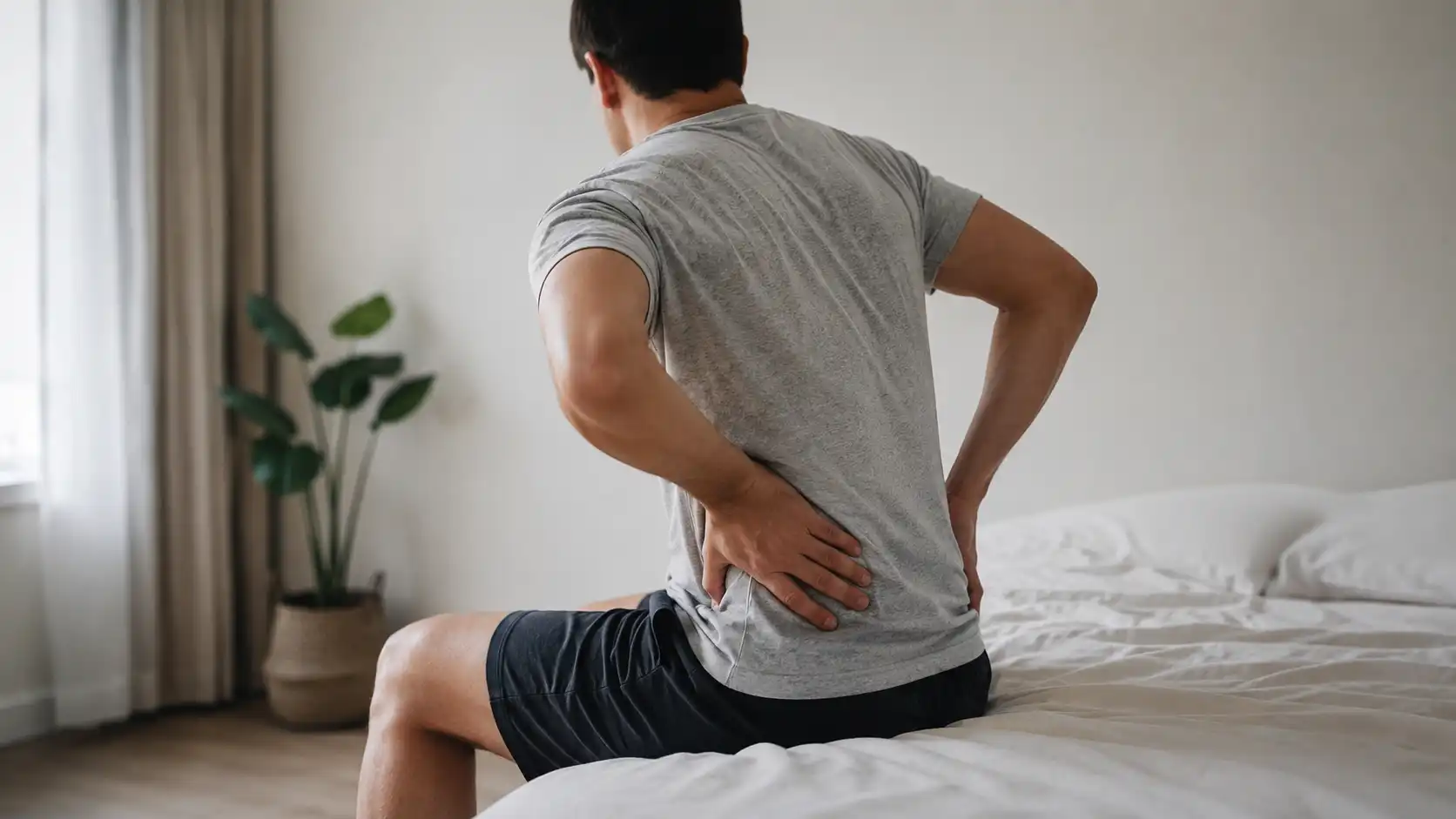
- Spinal Alignment and Back Pain Relief: Symmetrical side sleeping keeps the spine neutral and relieves pressure, which is particularly helpful for those managing lower back pain at night.
According to the Sleep Foundation research, symmetrical side sleeping, where your head, shoulders, and hips stay aligned, can reduce morning neck and back pain compared to stomach sleeping, which puts the most strain on the spine overnight.
Is Left Side Sleeping Right for You?

Left-side sleeping works well for most people, but it makes a more direct difference for those dealing with specific health concerns.
1. People With Acid Reflux or GERD
When you sleep on your left side, your stomach stays below the esophagus, and the lower esophageal sphincter sits above the stomach contents. This makes it physically harder for acid to travel upward.
A 2022 study in The American Journal of Gastroenterology, covered by Harvard Health, found that sleep position did not change how often acid reflux occurred, but acid cleared from the esophagus far faster in left side sleepers than in those sleeping on their right side or back, reducing total nighttime acid exposure.
2. Pregnant Women
Doctors recommend sleeping on your left side from the second trimester onward because it promotes blood flow through the inferior vena cava, the large vein that carries blood back to the heart and the baby.
It also takes pressure off the liver, which sits on the right side. If you wake up on your right side or your back, do not stress about it. Simply shift back to your left and move on; the goal is to start each sleep period on your left side, not to stay perfectly still all night.
3. People Who Snore or Have Mild Sleep Apnea
When you sleep on your back, the tongue and surrounding soft tissues fall toward the back of the throat, narrowing the airway. Side sleeping keeps those tissues forward and the airway more open.
For people with certain types of sleep apnea in which symptoms are directly tied to lying on the back, switching to the left side can reduce snoring and nighttime breathing disruptions without any other intervention.
4. People With Digestive Issues or Bloating
The stomach and pancreas are positioned on the left side of the body. Sleeping on that side keeps them in a more natural alignment, which supports enzyme production and helps move waste through the digestive tract overnight.
If you regularly wake up with bloating or sluggish digestion, sleeping on your left side is one of the easier adjustments to try first.
5. People With Varicose Veins or Circulation Concerns
Left-side sleeping supports venous return, the process by which blood travels from the lower body back to the heart. When circulation is sluggish, blood can pool in the leg veins and put pressure on vessel walls over time.
Sleeping on the left side takes some of that pressure off and may reduce overnight swelling in the legs and feet, particularly for people who spend long hours on their feet during the day.
Is the Left Side Actually Better than the Right?
For most healthy adults, the difference between left-side and right-side sleeping is smaller than most people think. The right side has its own advantages, and among the many sleeping positions available, the best choice often depends on your specific health concern rather than on a universal rule.
| Factor | Left Side | Right Side |
|---|---|---|
| Acid Reflux | Reduces nighttime acid exposure | Worsens symptoms for most people |
| Digestion | Supports stomach and pancreas positioning | Less favorable for digestive function |
| Pregnancy | Recommended for blood flow to the uterus | Generally safe but less preferred |
| Snoring | Keeps the airway open effectively | Similar benefit to the left side |
| Heart Health | It may feel uncomfortable for some heart conditions | Often more comfortable for heart patients |
| Shoulder Pressure | More pressure on the left shoulder | More pressure on the right shoulder |
| Skin and Wrinkles | Left-side facial compression | Right-side facial compression |
| Brain Waste Clearance | Some studies favor side sleeping generally | Some studies suggest a slight advantage here |
| Lymphatic Drainage | Stronger drainage on the dominant lymphatic side | Less effective for lymphatic flow |
Left side sleeping wins on digestion, reflux, and circulation. But if you have a heart condition or simply sleep better on your right, that comfort matters more than any rule.
Drawbacks of Sleeping on Your Left Side
Left-side sleeping works well for most people, but it does come with a few downsides worth knowing before you make the switch.
- Shoulder and Hip Pressure: Your left shoulder and hip bear most of your body weight, which can lead to soreness over time, especially if you already deal with hip pain at night.
- Facial Skin Compression: Hours of pressure against a pillow can cause sleep wrinkles and acne on the left side of your face.
- Arm and Hand Numbness: Tucking your bottom arm under your head can cut off circulation and put pressure on the nerves. If your hands go numb overnight, this habit is often the reason.
- Discomfort in Some Heart Conditions: People with heart failure sometimes feel short of breath when lying on their left side. Check with your doctor first.
- Shoulder Hunching: Without the right pillow height, your top shoulder rolls forward and builds tension in the neck overnight.
- Sleep Quality Comes First: If this position consistently wakes you up or leaves you sore, it is not the right choice.
If left-side sleeping consistently disrupts your rest or leaves you sore every morning, your sleep quality matters more than your position. Listen to your body first.
What to Expect When You First Start Sleeping on Your Left Side?
Switching to a new sleep position is not instant. The first few nights on your left side will likely feel awkward, and you will probably wake up on your back or right side. That is expected. The only goal at this stage is to start each sleep period on your left side, not to stay there all night.
Many people find that within the first one to two weeks, they wake up on their back less often and shoulder discomfort starts to ease as their body adjusts, though the exact timeline varies from person to person.
The adjustment period is short. Realistic expectations in the first week are what keep most people from giving up too early, particularly those already struggling to fall asleep in 10 seconds.
How to Sleep on Your Left Side Without Waking Up Sore?

Getting the position right makes the difference between waking up refreshed and waking up with a stiff shoulder. These setup tips work best when used together rather than individually.
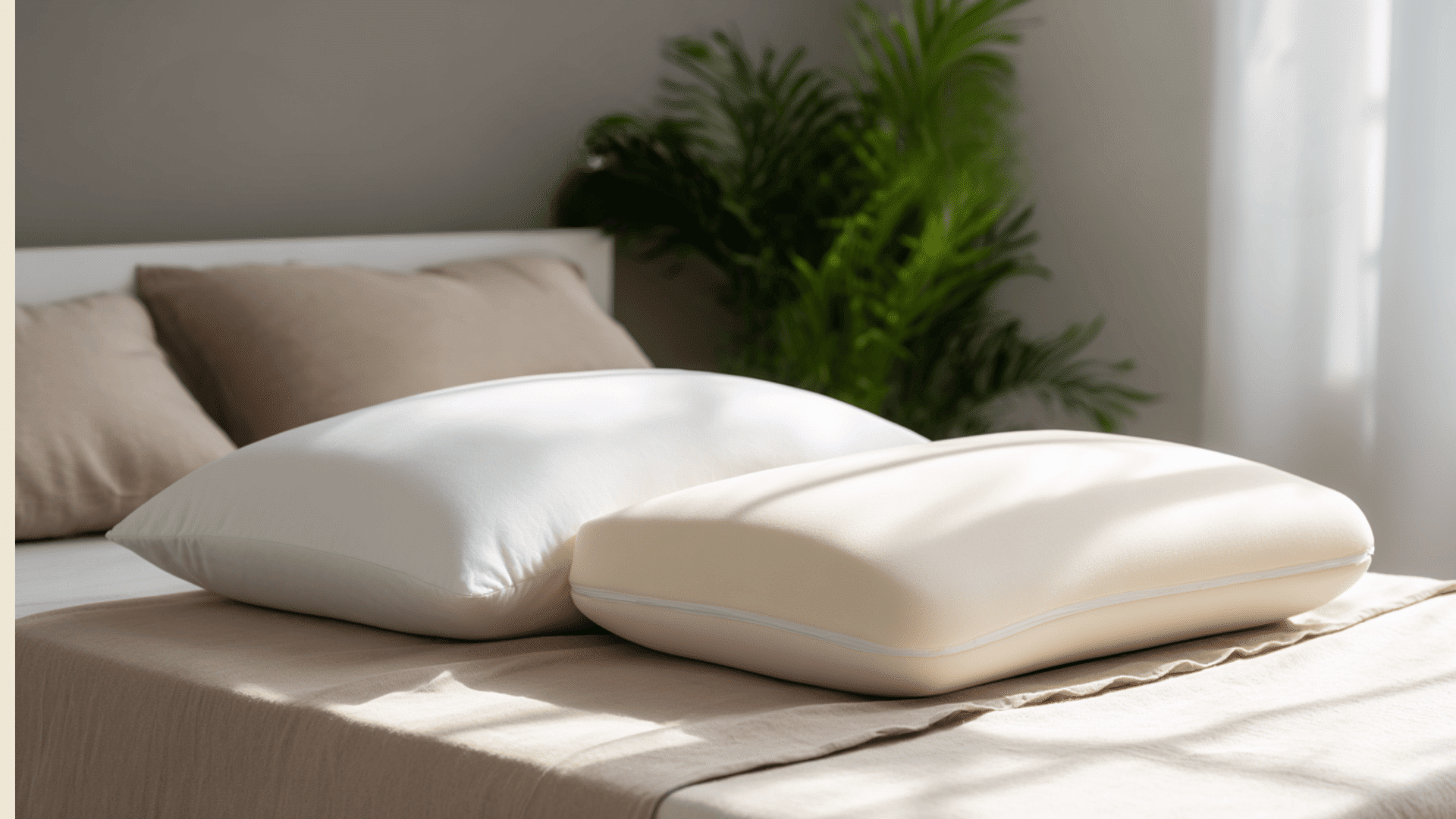
- Get Your Pillow Height Right: Your pillow should fill the gap between your ear and mattress without pushing your head up or letting it sink.
- Place a Pillow Between Your Knees: A firm pillow between your knees keeps hips stacked and stops your pelvis from rotating overnight.
- Keep Your Arms Forward: Rest both arms in front of you. Tucking the bottom arm under your head cuts circulation and causes numbness.
- Use a Body Pillow for Full Support: A body pillow along your front gives your top arm and knee a natural resting place, reducing pressure on your shoulders.
- Check Your Mattress Firmness: A mattress that is too soft lets your shoulders and hips sink unevenly. A medium-firm surface keeps the spine aligned.
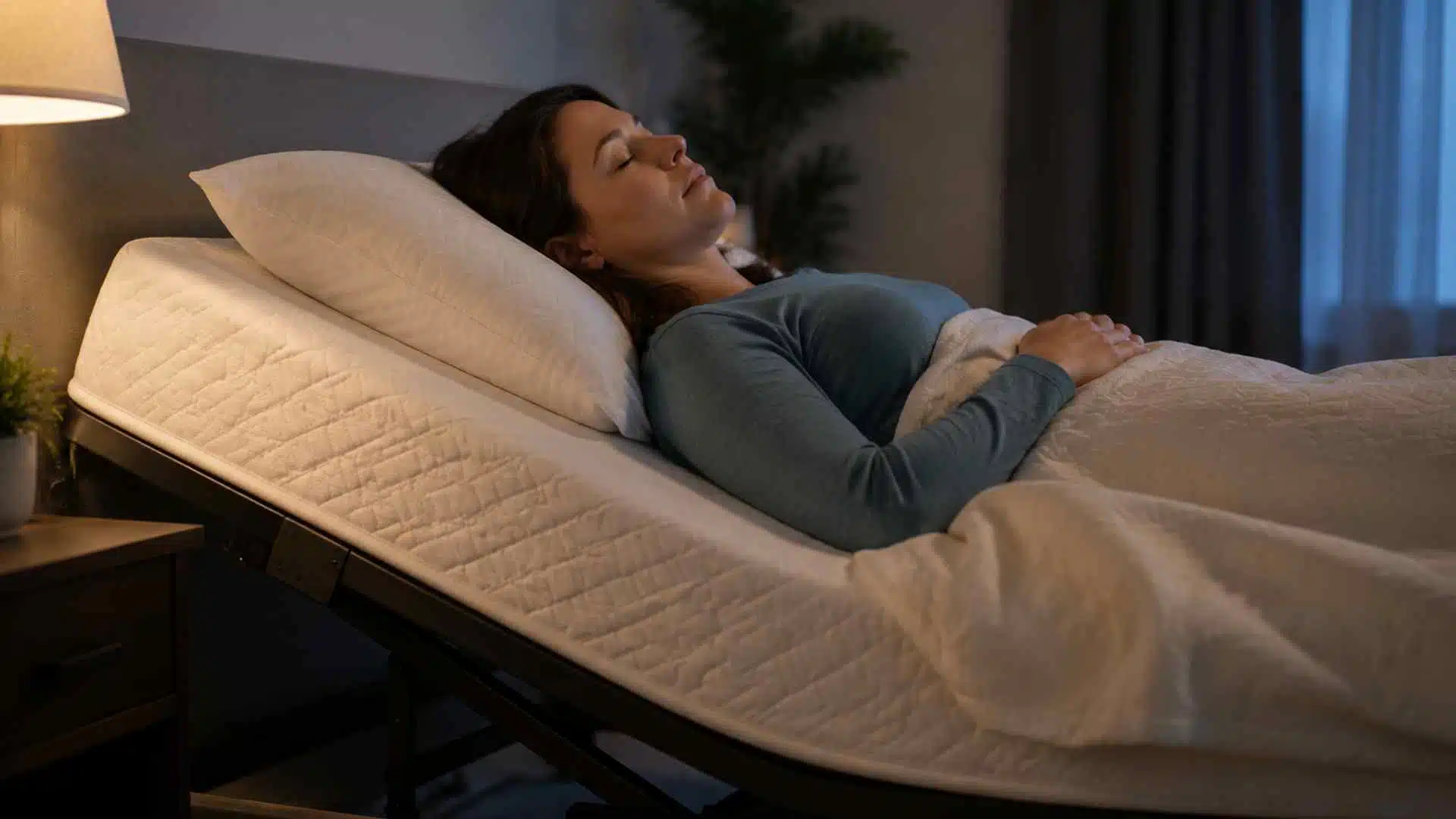
- Raise Your Head Slightly for Reflux: A wedge pillow or slightly raised bed head works with left-side sleeping to keep acid down, similar to how raising the head of your bed helps reduce reflux symptoms overnight.
- Switch to a Silk or Satin Pillowcase: A smoother pillowcase cuts friction against your face overnight and reduces the skin compression that side sleeping causes.
Small setup changes make a bigger difference than most people expect. Get the pillow height and knee support right first, and the rest of the position tends to fall into place.
Fetal Position vs Straight Leg: Which One Works Better?
The fetal position pulls the knees toward the chest, while the straight leg position keeps the body in a more extended line. Both work, but they affect your body differently overnight.
A tight fetal curl feels comfortable but compresses the chest, rounds the lower back, and causes hip stiffness by morning.
The straight leg position is better for spinal alignment but harder to maintain naturally without a pillow between the knees.
The better option is a relaxed middle ground: knees slightly bent rather than pulled up tightly, hips stacked, and head supported at ear level.
It gives you the comfort of the fetal position without the spinal compression and the alignment of the straight leg without the rigidity.
Common Mistakes To Avoid
Getting the position right takes more than just rolling onto your left side. These are the habits that work against you night after night:
- Tuck the bottom arm under your head or pillow. This cuts off circulation and compresses the nerves in your arm, leading to numbness and tingling that wakes you up mid-sleep.
- Using the wrong pillow height. A pillow that is too flat lets your head drop, and one that is too thick pushes your chin toward your chest. Either way, your neck pays for it by morning, and alignment becomes even more critical when managing a pinched nerve in the neck.
- Leaving the top knee unsupported. Without a pillow between your knees, the top knee drops forward, pulling the pelvis into a twist and straining the lower back and hips overnight.
- Curling too tightly into the fetal position. A tight curl rounds the lower back and compresses the chest. A relaxed bend in the knees does the same job without the spinal strain.
- Ignoring shoulder soreness. Persistent soreness in the left shoulder after switching is almost always due to a mattress or pillow issue, not a sign that the position is wrong. Adjusting the setup usually resolves it within a few days.
- Forcing the position when it disrupts sleep. If left-side sleeping consistently breaks your rest during the adjustment period, dial back rather than push through. Gradual introduction works better than forcing a full night in a new position from day one.
Most of these mistakes come down to setup rather than the position itself. Fix the pillow height and knee support first, and the rest usually sorts itself out.
Final Words
Sleeping on your left side supports digestion, reduces acid reflux, and takes pressure off key organs, making it one of the more practical sleep positions to try.
The adjustment period is real but short. With the right pillow setup and a few habit-building tricks, most people find the position starts to feel natural within two weeks.
If sore shoulders or restless nights are a regular problem for you, give left-side sleeping a fair try for at least a week and see how your body responds.
Frequently Asked Questions
Does Sleeping on Your Left Side Help with Shoulder Pain?
Not always. If the pain is in your left shoulder, this position adds pressure to it. Sleep on the opposite side until the pain eases.
Can Left Side Sleeping Cause or Worsen Glaucoma?
Possibly. Side sleeping increases eye pressure on the downward-facing eye overnight, which may be a concern for people already managing glaucoma. Check with your eye doctor.
Does Left Side Sleeping Affect How Quickly You Fall Asleep?
Position alone rarely affects sleep onset. If the position feels uncomfortable at first, the adjustment period, rather than the position itself, is usually what delays sleep.
Is Left Side Sleeping Safe for Older Adults?
Generally yes, but older adults with hip or shoulder arthritis may find sustained pressure on one side more uncomfortable. A softer mattress topper and knee pillow help significantly.