




You found the perfect queen mattress. It looks great online, the reviews are solid, and the price fits your budget.
But now comes the part nobody warns you about: actually getting it into your home.
Will you need a second person? Can you manage the stairs alone? What about moving it between rooms later?
The weight of a queen mattress affects every one of these moments, and knowing what to expect in advance makes all the difference.
This will tell you exactly how much a queen mattress weighs and what that means for you.
What is a Queen Mattress?
A queen mattress is one of the most popular mattress sizes available, and that popularity is easy to understand.
Queen-size mattresses work well for couples because they provide enough personal space without taking up the entire room.
If you are still comparing standard bed dimensions before settling on a queen, it helps to see exactly how the sizes stack up side by side.
At 60 inches wide and 80 inches long, the queen gives couples and solo sleepers plenty of room to move around without feeling cramped.
Whether you are setting up a master bedroom or a guest room, a queen mattress fits well without overwhelming the space.
Does Mattress Type Affect How Heavy It Is?
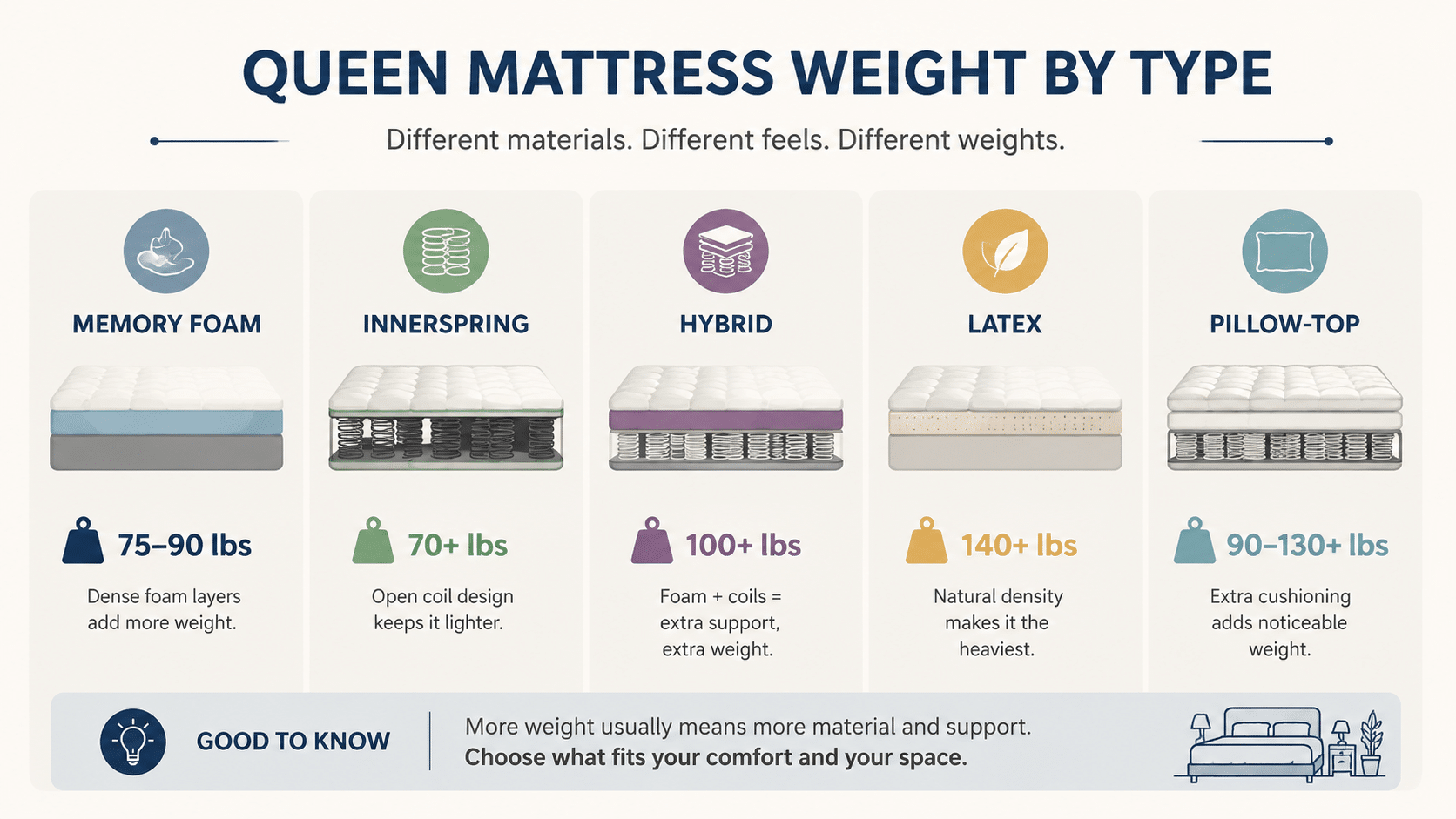
The materials inside your mattress determine how heavy it ends up being. Knowing what to expect by type helps you plan ahead and avoid surprises on delivery day.
- Memory foam queen mattress weight: typically 75-90 lbs. It contains a dense base and comfort layer, so the higher the foam density, the heavier it gets.
- Innerspring queen mattress weight: They start around 70 lbs, making them the lightest option. Their open coil structure keeps them light, but a higher coil count adds more weight.
- Hybrid queen mattress weight: It typically starts at around 100 lbs and can go higher. They combine a foam comfort layer with a coil support core, which makes them one of the heavier types.
- Latex queen mattress weight: They start at around 140 lbs, making them among the heaviest. Dunlop latex is heavier than Talalay due to its compact structure and fewer air pockets.
- Pillow-top queen mattress weight: They range from 90 to over 130 lbs. The extra cushioning layer adds noticeable weight, while an innerspring base keeps the overall weight on the lower end.
The heavier the mattress, the more support and material you are getting. Match the type to your needs and your space.
How Much Does a Queen Mattress Weigh by Brand?
Queen mattress weight varies by brand, depending on the materials and construction. Here is a look at the three popular brands:
- Casper Queen Mattress Weight: It weighs 79 lbs, while the Casper Original Hybrid queen weighs 91 lbs due to its added spring layer.
- Purple Queen Mattress Weight: They weigh between 110 and 168 lbs, depending on the model. The Purple Original queen weighs 110 lbs.
- Sealy Queen Mattress Weight: On average, this weighs between 60 and 100 lbs depending on the model and construction.
This is how queen mattress weight varies by brand and type; you can choose one that fits your space and handling needs.
Questions to Ask About Mattress Weight Before You Order
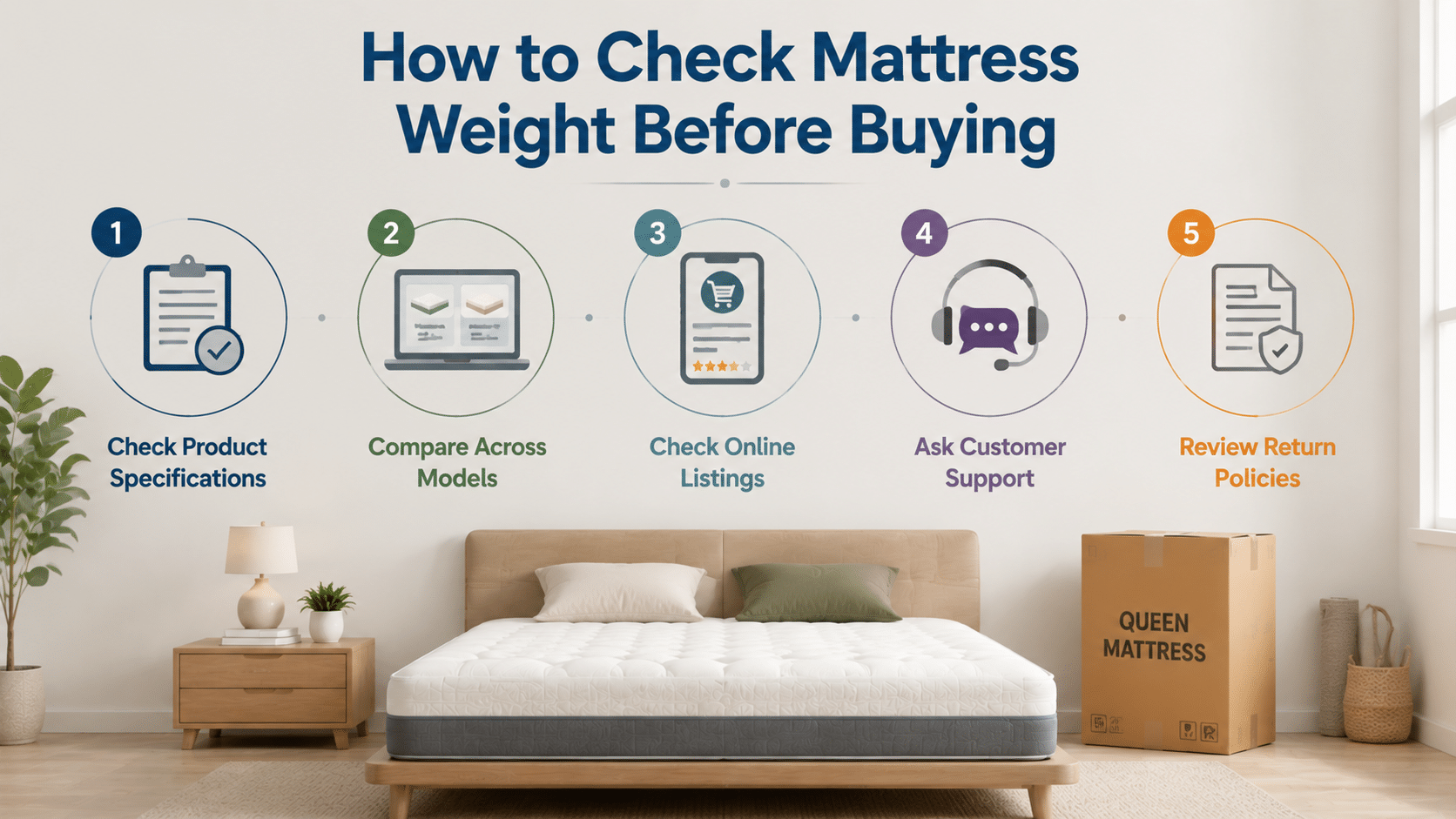
Checking mattress weight before buying helps you avoid surprises during delivery and setup.
Weight plays a big role in handling and installation. A few quick checks can give you a clear idea before you place the order.
- Product Spec Sheet: It is the most reliable place to find the exact mattress weight. Brands usually list both boxed and actual weight in this section.
- Brand Comparison Pages: They let you compare different mattress models side by side. This makes it easier to understand how weight changes across materials and designs.
- Amazon/Retailer Listings: Online marketplaces like Amazon and retailer websites often include shipping or boxed-weight details. These listings also help you see real customer feedback about the delivery experience.
- Checking Return Policies: These matter because heavier mattresses are harder to move or send back. Some brands may charge pickup fees or have strict return conditions once opened.
- Asking Customer Support: It can give you the most accurate and up-to-date weight information. If anything on the website is unclear, reaching out directly helps avoid confusion.
Knowing how to check mattress weight before buying helps you make a more practical decision. It reduces delivery stress and prevents unexpected handling issues.
What Affects the Weight of a Queen Mattress?
As per Sleepwell, the weight of a queen mattress comes down to what is inside it. Materials, layers, coils, and added features all play a role, and the difference between the lightest and heaviest can be over 100 lbs.
| Key Factor | What It Means |
|---|---|
| Material Density | Denser foam means more packed material. High-density memory foam and latex are noticeably heavier than standard foam types. |
| Number of Layers | Every additional comfort layer adds weight. A five-layer mattress will always be heavier than one with two or three layers. |
| Coil System | Tighter coils, larger coil sizes, and extra coil layers all increase total weight. More coils generally means a heavier mattress. |
| Thickness and Height | A 14-inch mattress will weigh more than a 9-inch version of the same type. More height means more material throughout. |
| Added Features | Cooling gels, pillow tops, and extra quilting add measurable weight. The plusher the mattress, the heavier it tends to be. |
Every feature you add comes with extra weight. Knowing this helps you balance comfort with what is practical for your setup.
Box Weight vs. Mattress Weight
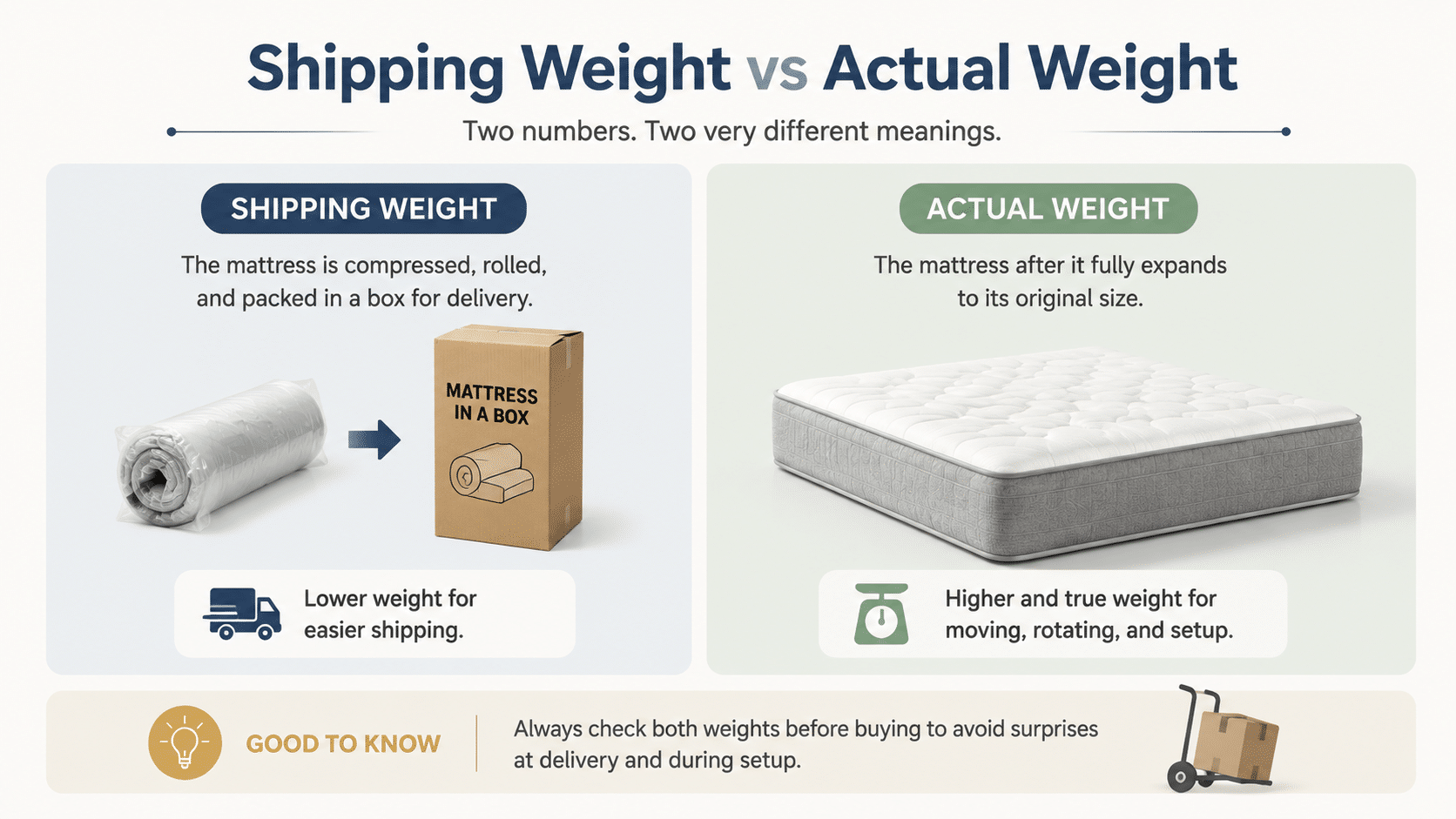
When you order a queen mattress online, the weight listed on the product page can be misleading.
That’s because the number you see often showcases shipping weight, not the fully expanded mattress you will actually use at home.
- Shipping Weight: This is the mattress weight when it is compressed, rolled, and packed in a box for delivery. This is designed for easier transport and handling during shipping.
- Actual Weight: This refers to the mattress after it has fully expanded to its original size. This is the real weight you deal with when moving, rotating, or setting it up.
Knowing the difference between shipping weight and actual weight helps you make a more practical purchase decision. It ensures smoother delivery and easier setup.
Why Does Queen Mattress Weight Matter?
Weight is just as important as comfort and price when buying a queen mattress.
A heavier mattress can strain your bed frame and complicate delivery.
It also tells you something about how the mattress is built. A well-constructed mattress with quality layers tends to weigh more, and that density usually reflects better support over time.
If you are shopping because your current mattress has started to sag or feel uneven, it may be time to replace it before the problem affects your sleep.
Knowing the weight upfront helps you choose the right frame and plan your setup without any last-minute surprises.
Queen Mattress Selection
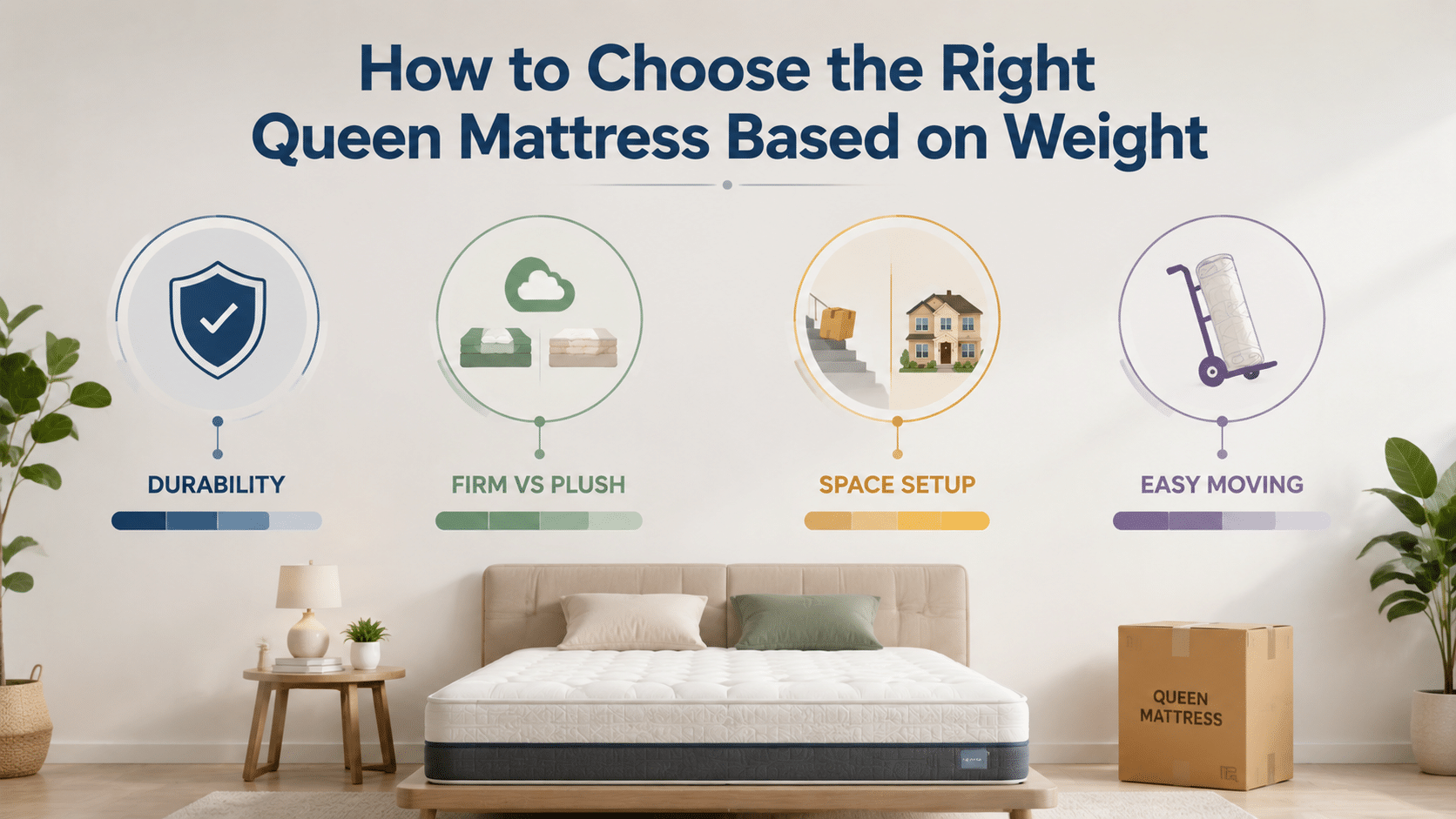
The right queen mattress weight depends on your bed frame, your living space, and how often you plan to move or rotate it. Match the weight to your setup before you buy.
- For Long-Term Durability, a heavier mattress with denser materials tends to hold its shape longer. Latex and hybrid queens are heavier but offer better support over the years.
- For Firm vs Plush Feel- Firmer mattresses are usually lighter since they use less material. If you prefer a plush and cushioned feel, expect the mattress to weigh more due to the extra comfort layers.
- For Apartment vs House Setup- In an apartment with narrow hallways or stairs, a lighter mattress is much easier to manage. For a larger house, a heavier latex or hybrid queen is a practical option.
- For Easy Moving and setup, go with an innerspring or memory foam queen. They are lighter and easier to handle in smaller spaces or if you are setting up without help.
There is no single right answer. The best queen mattress weight is the one that fits your space, your frame, and your daily life.
Mattress Weight vs Comfort vs Durability
Mattress weight is not just about how heavy something is; it often reflects how the mattress is built and how it performs. Understanding the balance among weight, comfort, and durability helps you make smarter choices.
| Factor | What It Means |
|---|---|
| Heavier = More Layers, Better Support | Heavier mattresses usually include more layers, denser foam, and stronger coil systems. This adds structure and improves long-term durability and support. |
| Lighter = Easier Handling, Less Material | Lighter mattresses use fewer layers or lower-density materials, making them easier to carry, rotate, and install. Ideal for small spaces or frequent moves. |
| Balance – Weight vs Comfort vs Longevity | The best choice depends on balancing comfort, durability, and convenience. Heavier options last longer but are less portable, while lighter ones are more flexible but may wear faster. |
There is no perfect weight that guarantees the best mattress. The goal is to find a balance that fits your comfort needs and living situation.
Common Mistakes When Estimating Mattress Weight
Many buyers underestimate mattress weight because they focus only on size or comfort. This leads to delivery issues and setup challenges later.
Assuming All Queen Mattresses Weigh the Same: Not all queen mattresses weigh the same, even if they share the same size. A memory foam queen can be much lighter than a latex one. Assuming they are all equal often leads to wrong expectations during delivery.
Ignoring Material Density: It plays a major role in how heavy a mattress becomes. Higher-density foam adds extra weight and support. Many buyers overlook this and only check size, not internal build.
Forgetting Hybrid and Latex Weight Differences: These mattresses are usually much heavier than innerspring options. Hybrids combine coils and foam, while latex uses dense natural material. Forgetting this difference can make moving or setup more difficult than planned.
Underestimating Stair and Room Access Impact: Even if a mattress is not extremely heavy, tight stairs or narrow hallways can make it hard to move. Many buyers focus only on weight and ignore space constraints. This can create serious delivery challenges on arrival.
Avoiding these common mistakes helps you choose a mattress that fits both your comfort and your space. It also ensures smoother delivery and easier setup.
Queen Mattress Weight Comparison Chart
This reference chart compares the different queen mattresses that you can check at a glance before making a decision.
| Mattress Type | Average Weight Range | Notes |
|---|---|---|
| Memory Foam | 75 to 90 lbs | Dense base and comfort layers; heavier with higher foam density |
| Innerspring | 50 to 70 lbs | Lightest type; open coil structure keeps weight low |
| Hybrid | 100 to 120 lbs | Combines foam and coils; weight increases with coil count |
| Latex | 120 to 150 lbs | Heaviest type: Dunlop latex is heavier than Talalay |
| Pillow Top | 90 to 130 lbs | Extra cushioning layer adds weight; varies by base type |
The exact weight of your mattress will depend on the brand, thickness, and specific materials used in that model.
Tips for Moving a Queen Mattress Safely
Moving a queen mattress is not as simple as it looks. A little preparation before moving day saves you from damage, injury, and a lot of frustration.
- Have at least one other person with you. A queen mattress can weigh up to 160 lbs and is not safe to carry alone.
- Use a plastic mattress bag to protect it from dirt, moisture, and damage during the move.
- Keep it flat at all times. Bending or folding a foam or latex queen can permanently damage the layers inside.
- Measure doorways and staircases before moving day to avoid getting stuck mid-move.
- Consider white-glove delivery when buying online. A team handles setup for you; no heavy lifting needed.
| Pro tip: Always check your bed frame’s weight limit before buying a queen mattress. Heavier mattress types like latex and hybrid need a sturdier base. |
Final Thoughts
Now that you are aware of what goes into a queen mattress weight, you are in a better position to make the right call.
Think about where it is going, what your bed frame can support, and whether you have help moving it.
Weight reflects what the mattress is made of and how it will perform over time. A heavier mattress is not always better, and a lighter one is not always easier to live with.
It comes down to your space, your needs, and your setup. Check the weight, check your frame, and plan ahead before you buy.
Frequently Asked Questions
How Heavy is a Queen-Size Mattress in Kg?
A queen mattress typically weighs between 54 kg and 72 kg. Memory foam and latex queens sit on the heavier end, while innerspring models are lighter.
Which Queen Mattress Type is the Heaviest?
Latex queens are the heaviest, starting at around 140 lbs (63 kg). Hybrid mattresses come in close behind due to their foam-and-coil combination.
Is a Queen Mattress Hard to Move Alone?
Yes. A Queen Can Weigh up to 160 Lbs Depending on the Type. Always have a Second Person with You, especially on Stairs or in tight spaces.
Does Mattress Weight Affect Quality?
It can be a useful indicator but not a guarantee. A heavier mattress often reflects denser materials and better construction, but always check the layers and build before deciding.