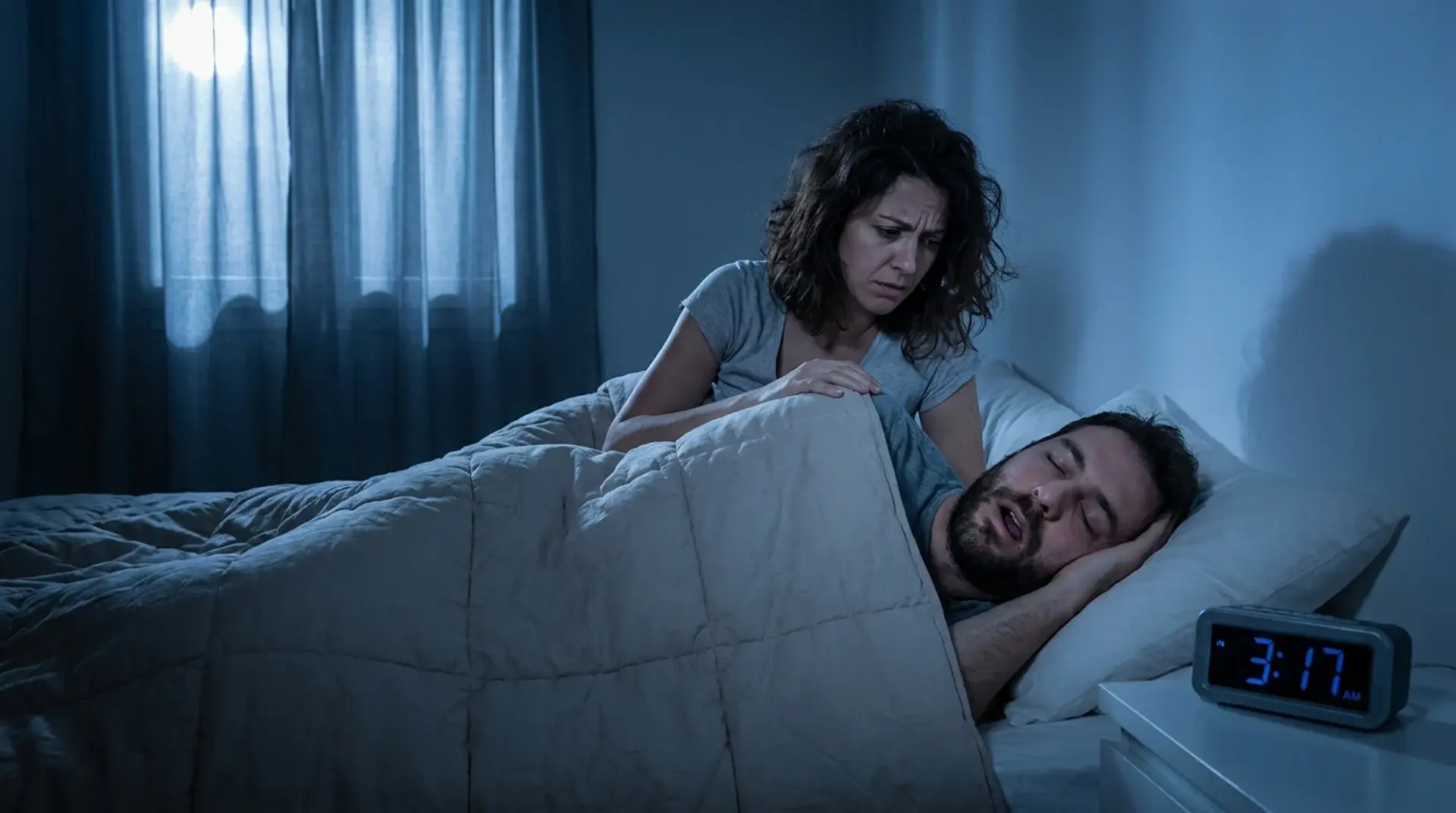


Most asthma deaths do not happen during the day. Research cited in The Lancet shows that 70 to 80 percent of fatal asthma attacks occur at night or in the early morning hours.
That number changes how you should think about a 3 a.m. coughing fit or waking up short of breath. Fatal asthma attacks during sleep are rare, but they are closely tied to asthma that is uncontrolled or under-treated.
Nocturnal asthma, the pattern in which asthma symptoms worsen during sleep, affects up to 75 percent of people with asthma.
Several biological changes that occur overnight make the airways more vulnerable, and understanding them is the first step toward managing the risk.
What is Nocturnal Asthma?
According to the Allergy & Asthma Network, nocturnal asthma refers to asthma symptoms that worsen at night and often signal poor control of the condition.
It is a pattern in which asthma symptoms, including coughing, wheezing, chest tightness, and shortness of breath, become noticeably worse during sleep or in the early morning hours.
When this pattern appears, it usually signals that overall asthma control needs adjustment.
Some studies put the figure higher, with up to 75 percent experiencing sleep disruption at least once a week and roughly 40 percent dealing with it every night.
Why is Asthma Worse at Night?
Asthma is worse at night because of a convergence of biological and environmental factors that occur together during sleep. No single cause is responsible. They build on each other.
- Body clock changes: Lung function naturally declines at night, often reaching its lowest point around 4 a.m.
- Lower protective hormones: Cortisol and adrenaline levels fall during sleep, which can increase airway swelling, mucus production, and airway tightening.
- Melatonin rise: Melatonin increases at night and may affect lung function in some people with asthma.
- Lying flat: Sleeping flat can reduce lung volume and cause mucus or postnasal drip to collect near the airways.
- Bedroom allergens: Dust mites, pet dander, and mold in bedding or soft surfaces can irritate airways for hours.
- Cold, dry air: Cool night air or strong air conditioning can tighten sensitive airways.
- Acid reflux: Lying down can let stomach acid move upward, irritating the airways and worsening nighttime asthma.
Knowing the cause can help you reduce triggers and speak with your doctor about better nighttime asthma management.
Signs of a Dangerous Asthma Attack at Night
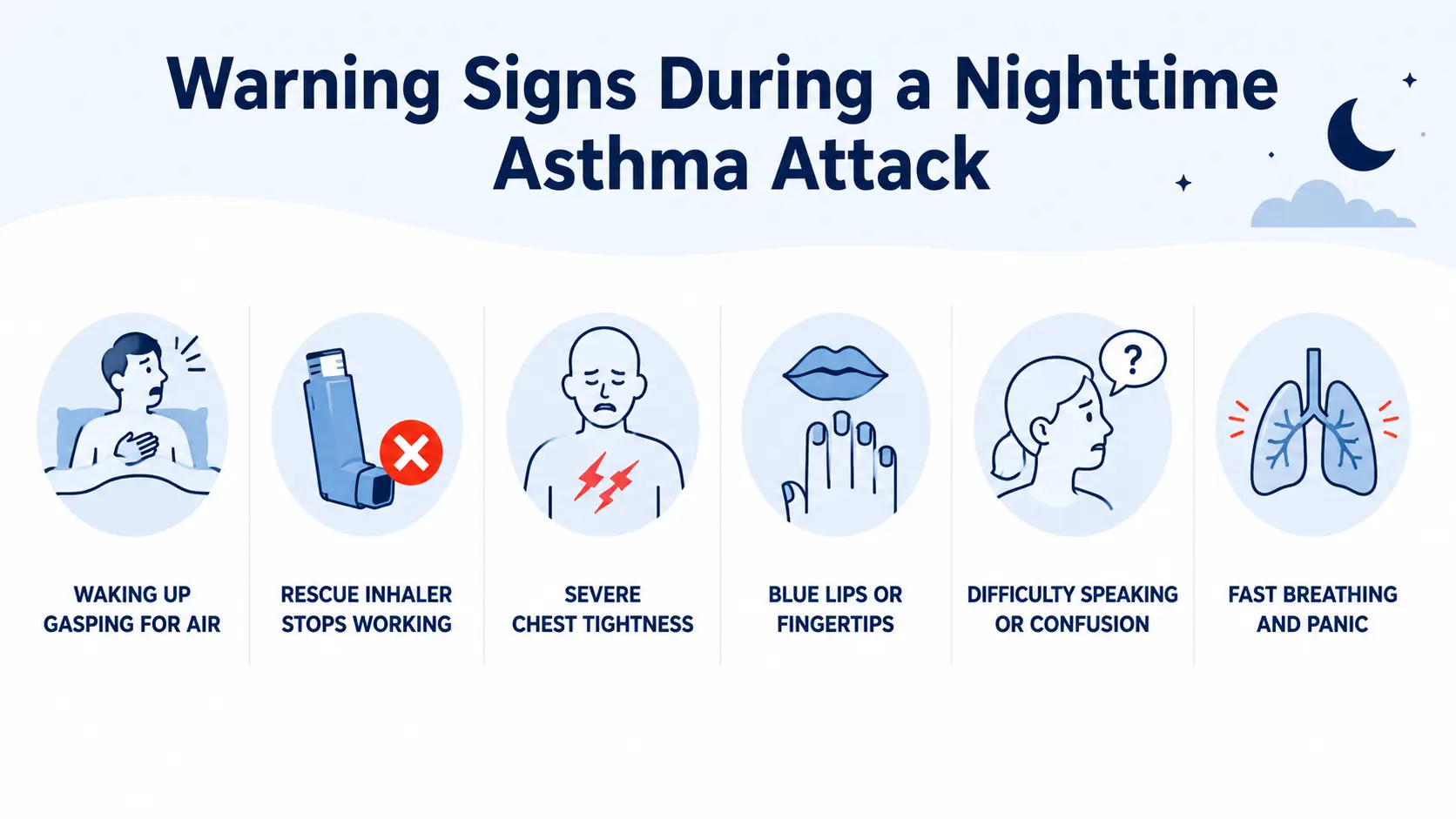
The following symptoms require urgent action. Do not wait until morning.
Waking Up Gasping for Air
Waking suddenly with the feeling of suffocation, unable to take a full breath, signals that an attack has become serious. Mild shortness of breath typically eases when you sit up. If sitting up brings no relief, treat it as an emergency.
Rescue Inhaler Stops Working
If two puffs of a rescue inhaler produce no improvement after 20 minutes, the airways are severely obstructed, and the attack has moved beyond what the inhaler can reverse. This is a medical emergency. Call for help immediately.
Severe Chest Tightness
Significant pressure or pain in the chest during a nighttime asthma attack indicates major airway narrowing. When chest tightness does not ease with medication or worsens despite sitting upright, emergency care is needed without delay.
Blue Lips or Fingertips
A bluish or gray tinge around the lips, fingertips, or mouth is called cyanosis. It means blood oxygen levels have dropped to a dangerous point. This is a 911 situation, not a signal to try a second dose of an inhaler.
Difficulty Speaking or Confusion
If someone with asthma can only manage one or two words between breaths, or seems confused and disoriented during a nighttime episode, the brain is not receiving enough oxygen. This is a critical emergency sign.
Fast Breathing and Panic
Rapid, labored breathing that does not slow down, combined with visible muscle pulling in the neck or between the ribs, indicates respiratory distress. Alongside panic or agitation, it means the body is working at its limit to move air.
Common Symptoms of Nocturnal Asthma
|
How to Prevent Asthma Symptoms at Night
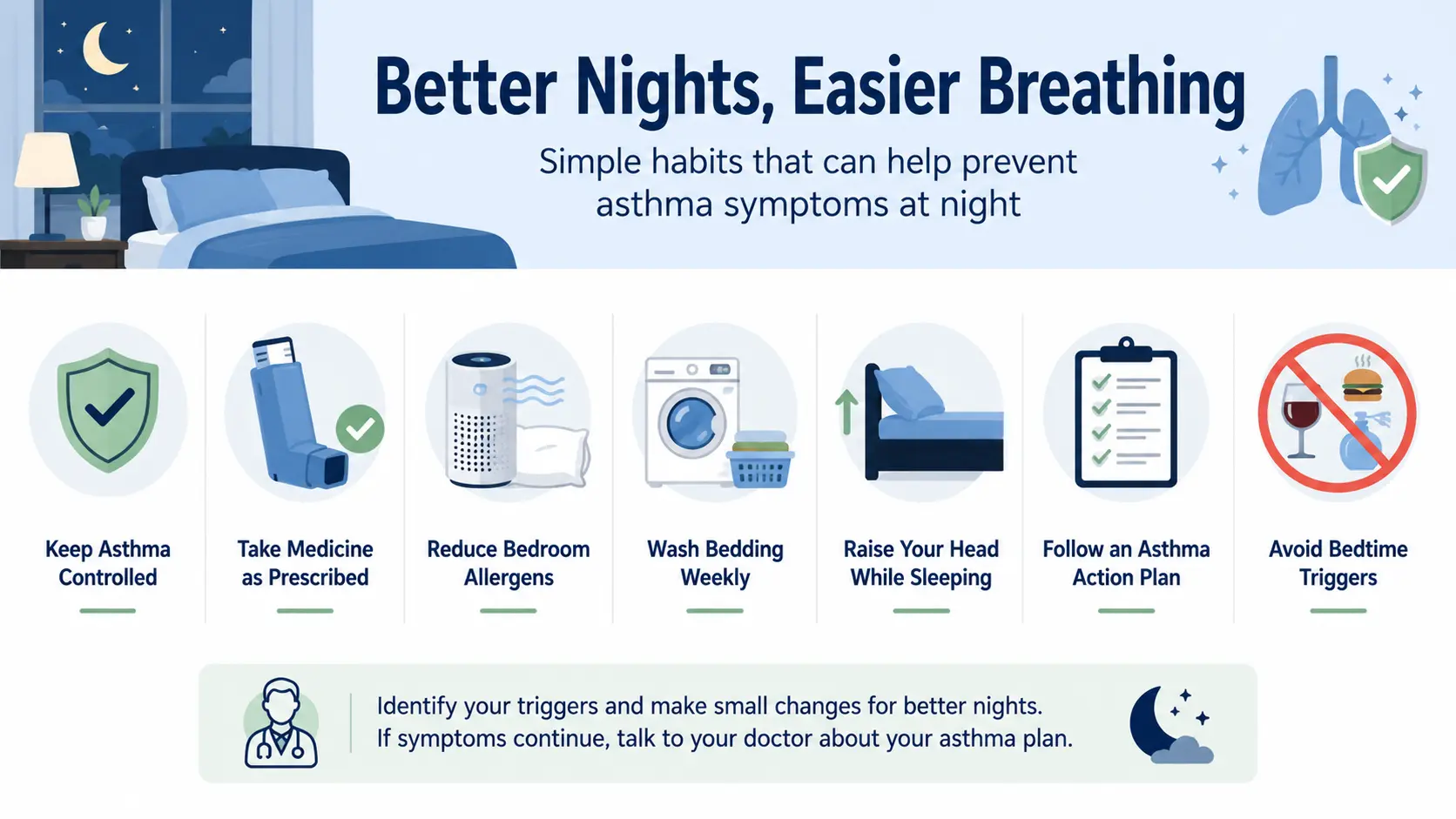
Nighttime asthma symptoms can often be reduced with a few consistent habits and better management of triggers. Small changes in your routine and sleeping environment may help you improve your breathing per minute during sleep.
- Keep Asthma Controlled: Good daytime asthma control usually means fewer nighttime symptoms.
- Take Medicine as Prescribed: Do not skip controller inhalers, as missed doses can allow airway inflammation to build.
- Reduce Bedroom Allergens: Use allergen-proof covers, remove dust-holding rugs where possible, and consider a HEPA air purifier.
- Wash Bedding Weekly: Wash sheets, pillowcases, and covers in hot water to help reduce dust mites.
- Raise Your Head While Sleeping: A slight elevation can help reduce reflux and mucus pooling.
- Follow an Asthma Action Plan: A written plan helps you know what to do when symptoms worsen at night.
- Avoid Bedtime Triggers: Skip heavy meals, alcohol, strong fragrances, and intense exercise close to sleep.
Managing nighttime asthma usually starts with identifying what triggers your symptoms after dark. If symptoms continue despite these steps, speak with a doctor about adjusting your asthma treatment plan.
When to See a Doctor
Go to an emergency room or call emergency services immediately if you experience blue lips, inability to speak, worsening symptoms that do not respond to your rescue inhaler after two doses. |
Can Children Have Nocturnal Asthma?
Yes. Nocturnal asthma is common in children and sometimes the first sign of asthma. As per the National Library of Medicine, children often do not describe their symptoms the way adults do.
Rather than reporting chest tightness or breathlessness, they may simply seem restless at night, difficult to wake in the morning, or unusually tired throughout the day.
Parents should pay attention to:
- A dry, persistent cough that appears mainly at night or on waking
- An audible wheeze or high-pitched breathing sound during sleep
- Frequent nighttime waking with no clear explanation
- Morning complaints of a tight chest or difficulty breathing on first waking up
Nighttime coughing in children is often mistaken for a recurring cold or seasonal allergy. A pediatrician or pulmonologist can differentiate nocturnal asthma from other causes and adjust the child’s treatment plan to cover overnight hours.
Conclusion
Nocturnal asthma is manageable for most people. The factors that make asthma potentially dangerous at night, including poor medication adherence, untreated reflux, bedroom allergens, and undiagnosed sleep apnea, are all addressable with the right medical support and a few deliberate changes to the sleeping environment.
If you are waking up with asthma symptoms at night more than twice a week, that is your body asking for a treatment review.
Talk to your doctor, update your asthma action plan, and take the straightforward environmental steps that reduce your overnight risk.
For the majority of people with asthma, that combination is enough to sleep through the night safely.
Frequently Asked Questions
Why Do Asthma Attacks Happen More at Night?
Asthma attacks are more common at night because airway-protecting hormones drop during sleep, lung function declines, and allergens can further irritate sensitive airways.
Can You Stop Breathing from Asthma While Sleeping?
In severe, uncontrolled cases, yes. A serious asthma attack can narrow the airways to the point where breathing becomes inadequate to maintain safe oxygen levels.
Is Nocturnal Asthma Dangerous?
It can be. Nocturnal asthma that is untreated or under-managed increases the risk of severe attacks that require emergency care. Chronic nocturnal asthma doubles the risk of anxiety and fatigue in adults, which affects quality of life independently of any physical harm.