





Most parents do not think about mattress dimensions until they are standing in a store or waiting for a delivery, unsure if the size is right.
A standard toddler mattress measures 27¼ inches wide by 51⅝ inches long. Knowing this one number can help you avoid the wrong purchase, an ill-fitting frame, or sheets that simply will not stay on.
This page covers toddler mattress dimensions, crib mattress size comparisons, fit checks, and a few things to know before you buy or reuse a mattress.
Standard Toddler Mattress Dimensions
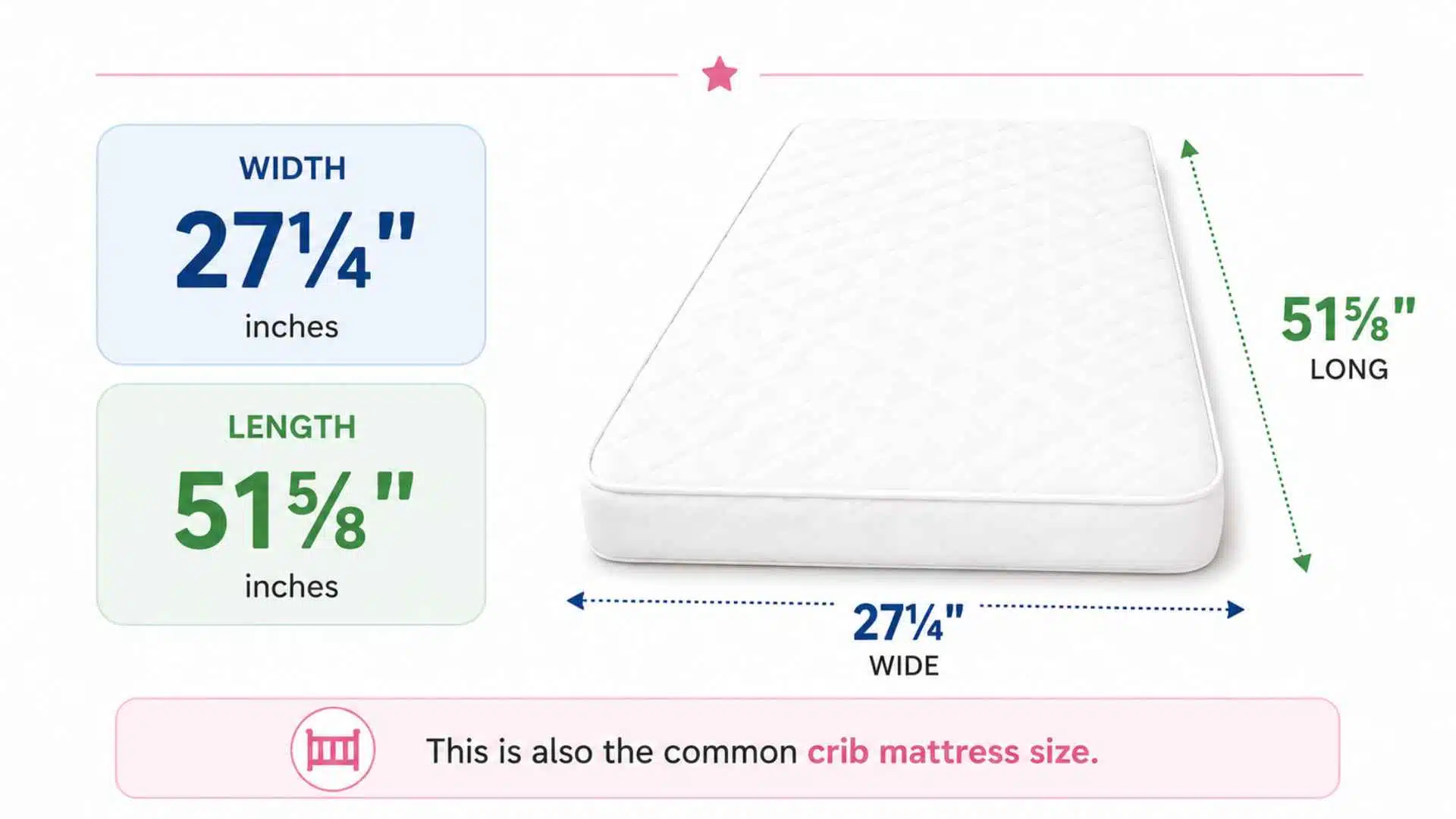
A standard toddler mattress is usually 27¼ inches wide by 51⅝ inches long. Many brands round this to 28 inches by 52 inches for simpler packaging and product listings.
This is also the common crib mattress size, which means most crib mattresses can fit directly into a toddler bed frame. So if the crib mattress is still firm and in good shape, there is often no need to buy a new one right away.
Always check the exact measurements of your toddler bed frame before reusing a crib mattress, just to be sure it fits properly.
Toddler Mattress Dimensions Chart Parents Can Use
Not all toddler mattresses are the same size, and knowing the difference can save you from buying the wrong bedding or mattress. This simple chart covers the most common mattress types and their best uses.
| Mattress Type | Common Size | Best For |
|---|---|---|
| Toddler mattress | 27¼ by 51⅝ inches | Standard toddler beds |
| Crib mattress | 27¼ by 51⅝ inches | Cribs and many toddler beds |
| Rounded toddler size | 28 by 52 inches | Shopping and bedding labels |
| Mini crib mattress | About 24 by 38 inches | Mini cribs only |
| Twin mattress | 38 by 75 inches | Older toddlers or kids |
Keep this chart handy when shopping for a mattress, bed frame, or fitted sheets. Even a small size difference can mean sheets that do not fit properly or a mattress that leaves unsafe gaps along the frame.
Is Toddler Mattress Size the Same as Crib Mattress Size
Yes, most standard toddler mattresses and crib mattresses share the same size.
Both measure 27¼ inches wide by 51⅝ inches long, which is why many parents can reuse the crib mattress when their child moves to a toddler bed.
This can be a practical way to save money, as long as the mattress is still in good condition. It should be firm, clean, flat, and free of sagging or visible wear before reuse.
The mattress should also fit the toddler bed frame without leaving any unsafe gaps along the sides or ends. A poor fit can be a safety risk for young children.
When the Size May Not Match
Mini crib mattresses, travel crib mattresses, and some imported bed frames may use different dimensions. These do not always match standard toddler bed frames, so always check the exact measurements before assuming the mattress will transfer over.
How to Check If the Mattress Fits the Toddler Bed
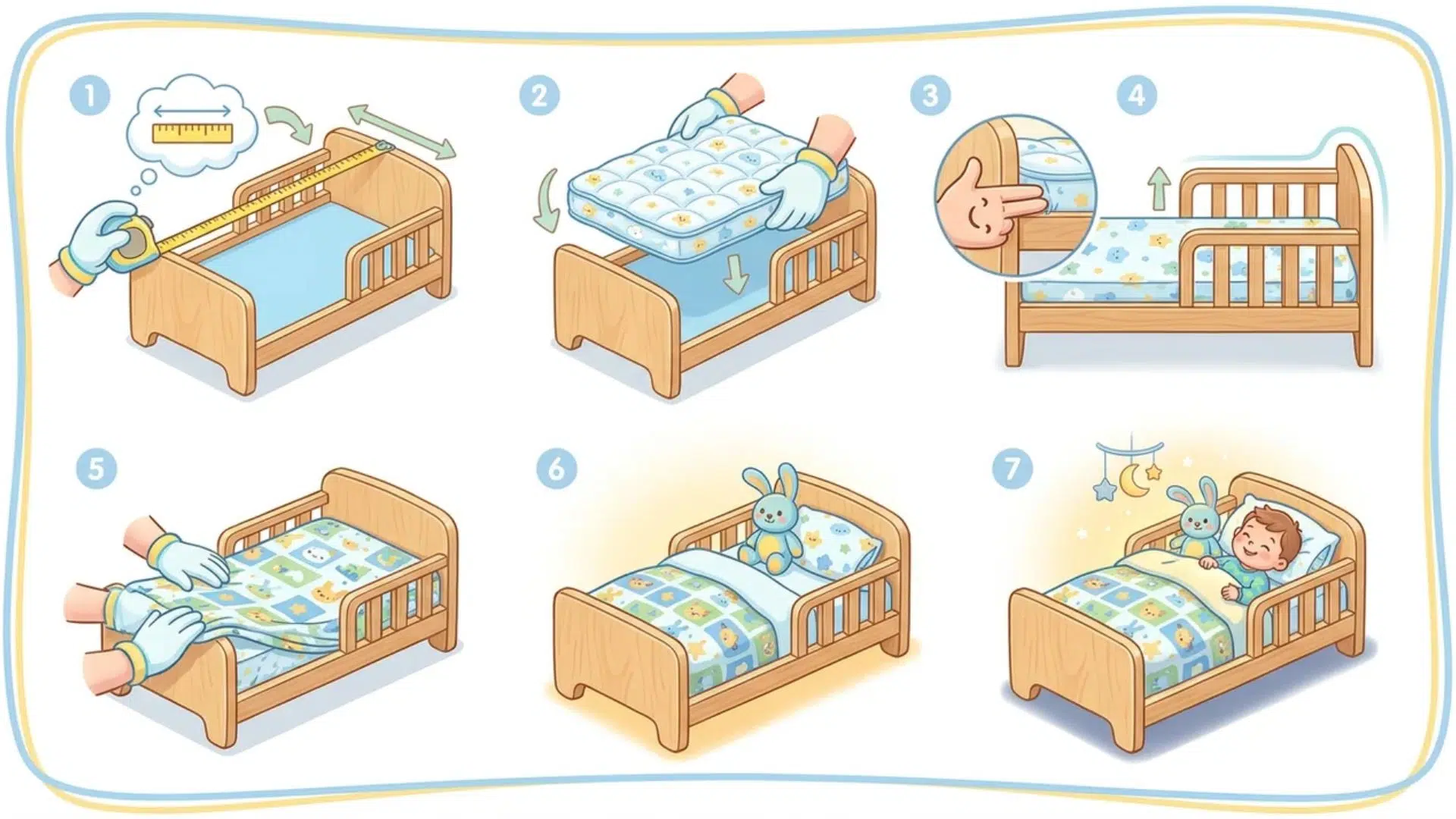
Getting the right fit is just as important as getting the right size. A mattress that does not sit properly in the frame can create safety risks for young children.
Step 1: Measure the Inside Width of the Bed Frame
Use a measuring tape to get the exact inside width of the frame. Do not measure the outside, as the frame walls take up space.
Step 2: Measure the Inside Length of the Bed Frame
Measure from one inner end to the other. Write both numbers down before shopping or reusing a mattress.
Step 3: Place the Mattress Inside the Frame
Set the mattress into the frame and see how it sits. It should slide in without force but also without too much room to shift around.
Step 4: Check All Sides for Gaps
Run your hand along all four sides of the mattress. Any gap wider than two fingers is unsafe; the CPSC officially allows no more than ½ inch between the mattress and frame perimeter
Step 5: Make Sure the Mattress Lies Flat
The mattress should sit flat with no tilting or raised edges. Uneven surfaces can affect how well your child sleeps and how well the body is supported through the night.
Step 6: Check That Guardrails Still Rise Above the Mattress
The guardrails must extend at least 5 inches above the top of the mattress. This is the minimum required under the CPSC mandatory toddler bed standard. If the mattress is too thick, the rails lose their effectiveness and become a safety concern.
Step 7: Put on the Fitted Sheet and Check That It Stays Snug
A well-fitted sheet should go on smoothly and stay in place. If it bunches or slips off easily, the mattress size may not match the bedding.
A mattress that is too small can leave unsafe gaps along the frame. A mattress that is too thick can make the guardrails less useful and put your child at risk.
Toddler Mattress Thickness and Firmness
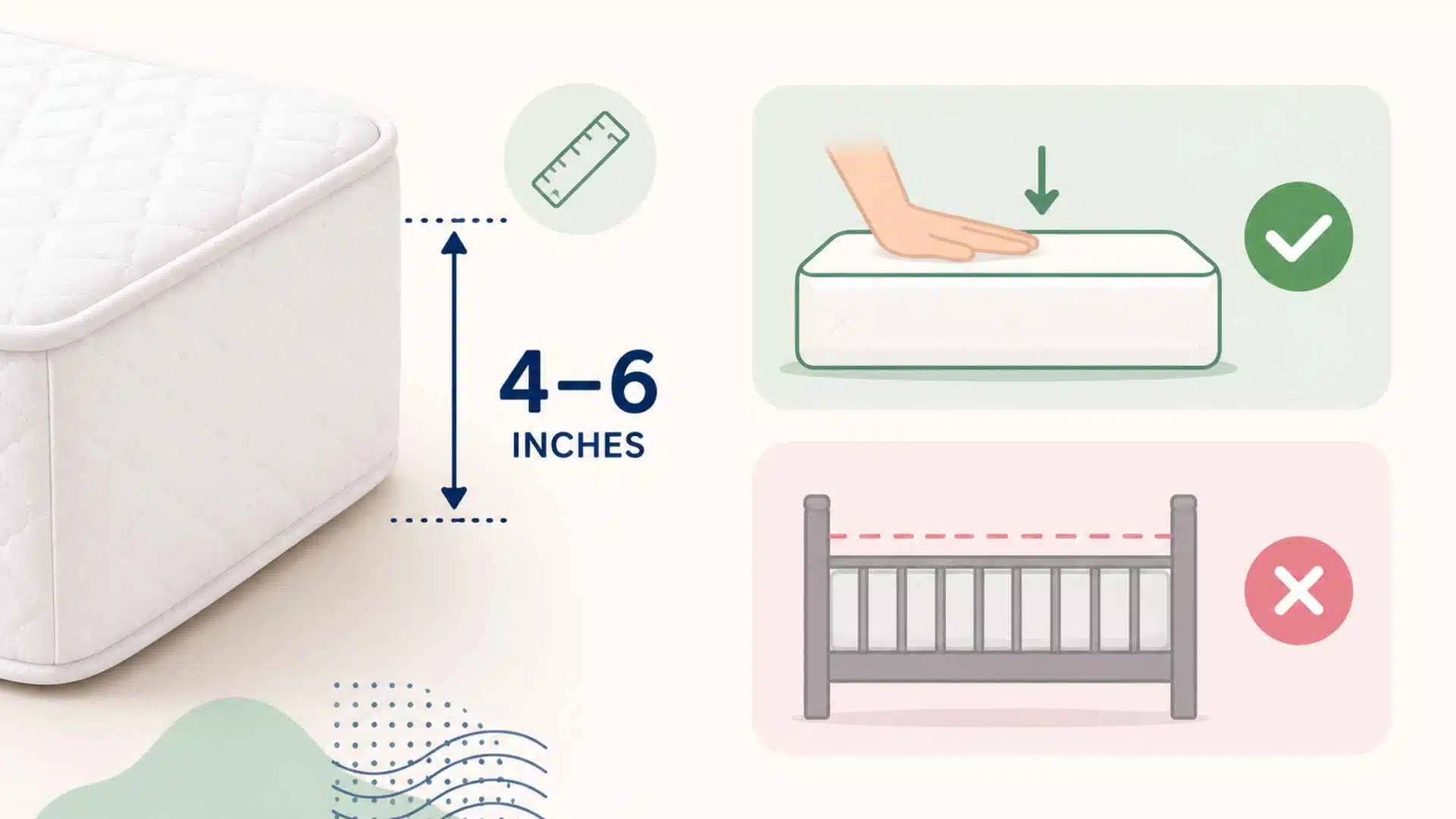
Most toddler mattresses are around 4 to 6 inches thick. This gives enough support for a growing body without raising the sleeping surface too high above the frame.
The CPSC requires crib and toddler mattresses to be no more than 6 inches thick.
Some newer premium mattresses on the market are up to 8 inches; if yours is, check that the guardrails still clear the 5-inch minimum above the mattress surface before use.
Staying within this range helps the guardrails remain effective and keeps the sleeping surface at a safe height for young children.
The mattress should feel firm and flat when pressed. A soft or uneven surface does not support the spine properly, which is one reason your back hurts when you wake up. The same applies to young children.
A very thick mattress or an added topper can also cause guardrails to sit too low, which reduces their effectiveness.
When to Replace the Toddler Mattress
Replace the mattress if it has any of the following.
A dip in the middle. Torn or fraying fabric. Weak or soft edges. Odor or stains that do not clean out. A soft or lumpy surface.
A mattress showing these signs is no longer giving your child the firm, flat base needed for healthy sleep.
Toddler Mattress vs Twin Mattress
Choosing between a toddler mattress and a twin mattress depends on your space, budget, and how long you want the bed to last. Here is a quick comparison to help you decide.
| Basis | Toddler Mattress | Twin Mattress |
|---|---|---|
| Size | 27¼ by 51⅝ inches | 38 by 75 inches |
| Fits | Toddler bed frames | Standard twin bed frames |
| Reuses crib mattress | Yes, in most cases | No |
| Room space needed | Less | More |
| Growing room | Limited | Much more |
| Guardrails needed | Usually included | May need to add separately |
| Best used as | Short transition bed | Longer-lasting bed |
Choose a toddler mattress for a smaller transition bed that works well in a compact room. Choose a twin when you want a bed your child can grow into, and you have enough space to work with.
When to Move From Crib to Toddler Bed
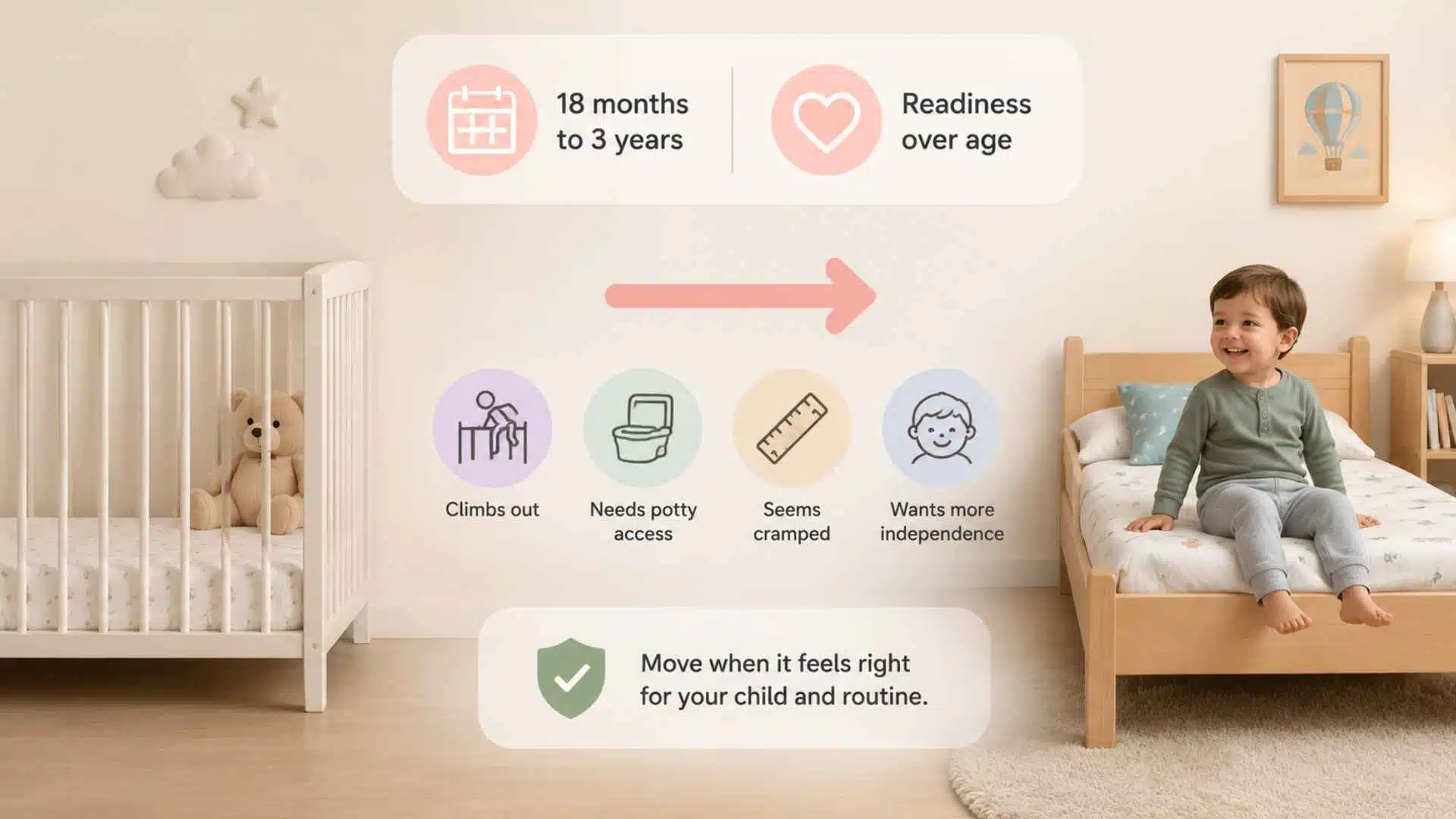
Most parents move their child from a crib to a toddler bed between 18 months and 3 years. Still, readiness matters more than age.
Your child may be ready if they climb out, seem cramped, need easier access to the potty, or want more independence at bedtime.
There is no need to rush if your child sleeps safely and comfortably in the crib. Move when it feels right for your child and routine.
Common Mistakes When Buying a Toddler Mattress
Small sizing mistakes can lead to poor sleep, safety risks, or wasted money. Here are the most common ones and what to do instead.
| Mistake | Better Choice |
|---|---|
| Buying only by age label | Check the exact dimensions before purchasing |
| Assuming every crib mattress fits | Measure the inside of the frame first |
| Ignoring mattress thickness | Check that guardrails still sit high enough |
| Buying loose sheets | Choose snug-fitted sheets made for the size |
| Reusing a sagging mattress | Replace it with a firm, flat one |
| Mixing mini crib and toddler sizes | Match the mattress size to the frame |
A mattress that looks right on the label does not always fit the frame correctly. Taking a few measurements before buying can save you from returning the wrong size or dealing with unsafe gaps along the sides.
Quick Parent Checklist Before Checkout
Before buying or reusing a mattress, take a few minutes to go through this list. It covers the basics that are easy to overlook but important to get right.
- The mattress measures 27¼ by 51⅝ inches, matching the size listed on the bed frame.
- The bed frame has been measured from inside edge to inside edge.
- There are no unsafe gaps along the sides or ends once the mattress is placed inside.
- The mattress feels firm and flat with no soft or uneven areas.
- There is no sagging, dipping, or visible wear from previous use.
- Fitted sheets go on snugly and stay in place without slipping or bunching.
- Guardrails sit clearly above the top of the mattress once the mattress is set in the frame.
- The bed is placed away from windows, loose cords, and heaters.
Getting these right before checkout takes very little time and goes a long way in keeping your child safe and comfortable through the night.
Conclusion
Getting the right mattress size for a toddler bed does not have to be complicated. A little measuring and checking goes a long way in making sure your child sleeps safely and comfortably.
Whether you are buying new or reusing what you already have, the fit between the mattress and the frame is what matters most.
Good sleep at this age supports healthy growth, and the right mattress plays a bigger role in that than most parents expect.
When everything fits the way it should, bedtime becomes much smoother for both you and your child.
Frequently Asked Questions
Can I Use Regular Crib Sheets on a Toddler Mattress?
Yes, since crib and toddler mattress sizes match, standard crib fitted sheets usually work well on a toddler mattress.
What is the Safest Mattress Thickness for a Toddler Bed?
A thickness between 4 and 6 inches is generally considered safe and keeps guardrails at the right height for younger toddlers.
Does Toddler Mattress Size Vary Between Brands?
The standard size stays mostly consistent, but always check the exact measurements listed by the brand before buying a toddler bed frame or bedding.