



Buying a blanket sounds easy until you bring one home and find it dangling off the sides or barely covering your toes.
Twin blanket size matters more than most people realize, and the wrong dimensions can ruin a good night’s sleep.
Standard twin-size blanket dimensions aren’t always what they seem online, leaving many shoppers second-guessing their choice.
Below, you’ll find a clear size chart, real tips for choosing the right fit, and a closer look at how Twin XL, oversized, and lightweight options compare.
Picking a blanket type for your bed should not feel like a guessing game.
What is a Twin Blanket Size?
A standard twin blanket measures 66 by 90 inches (168 cm by 229 cm). It fits a twin bed and works well for one person.
The size gives enough coverage to keep a single sleeper warm without feeling heavy or oversized.
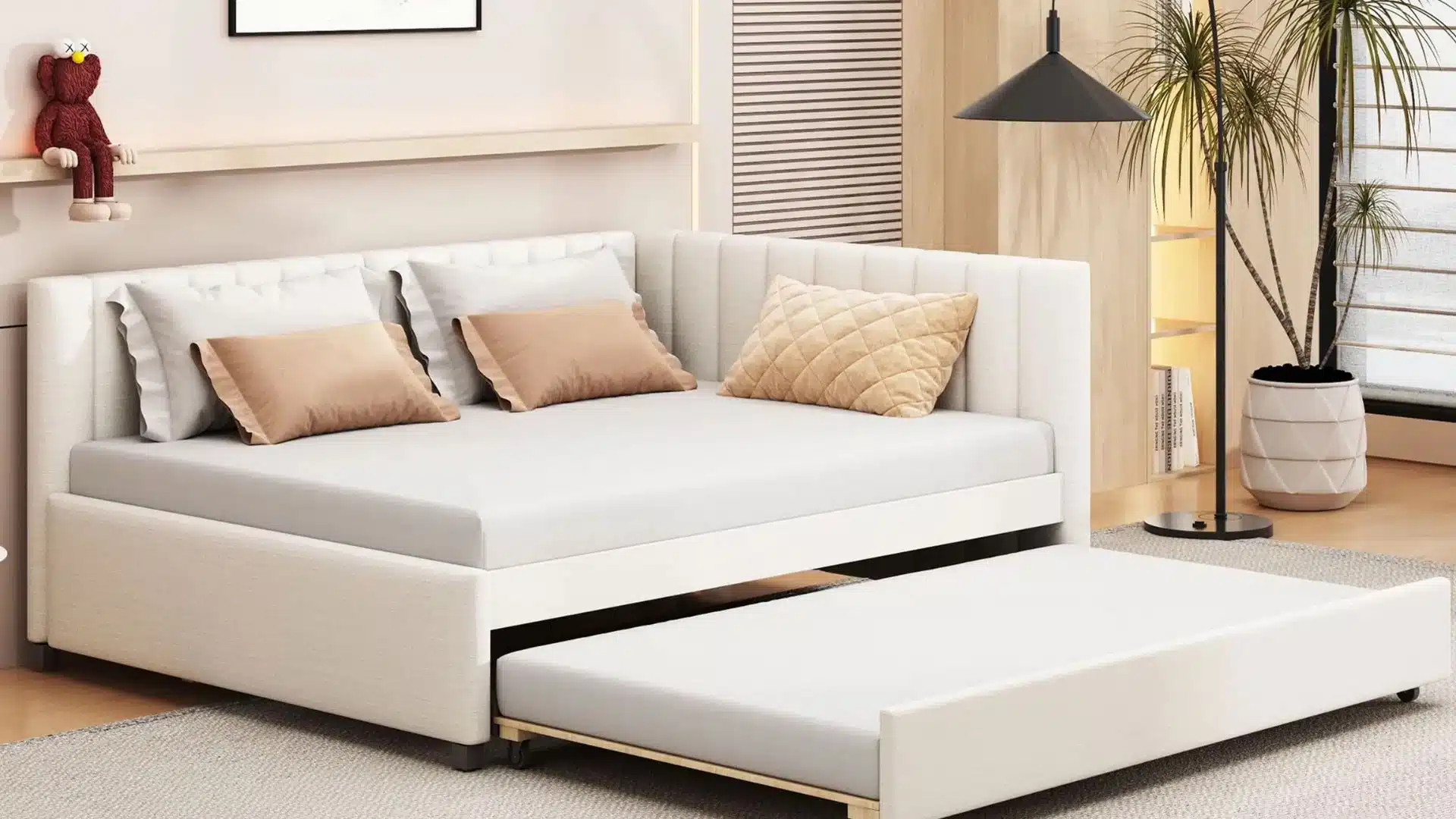
Twin blankets are common in kids’ rooms, guest rooms, and college dorms. They also work well for daybeds and bunk beds, where space is tight, and a smaller blanket sits better on top.
Since twin beds are smaller than full or queen beds, the blanket is shaped to match that space.
This helps it stay in place and cover the bed evenly. Choosing the right twin blanket size makes daily use easier and more comfortable, especially when the blanket fits the bed the way it should.
Twin XL vs Standard Twin Blanket Size
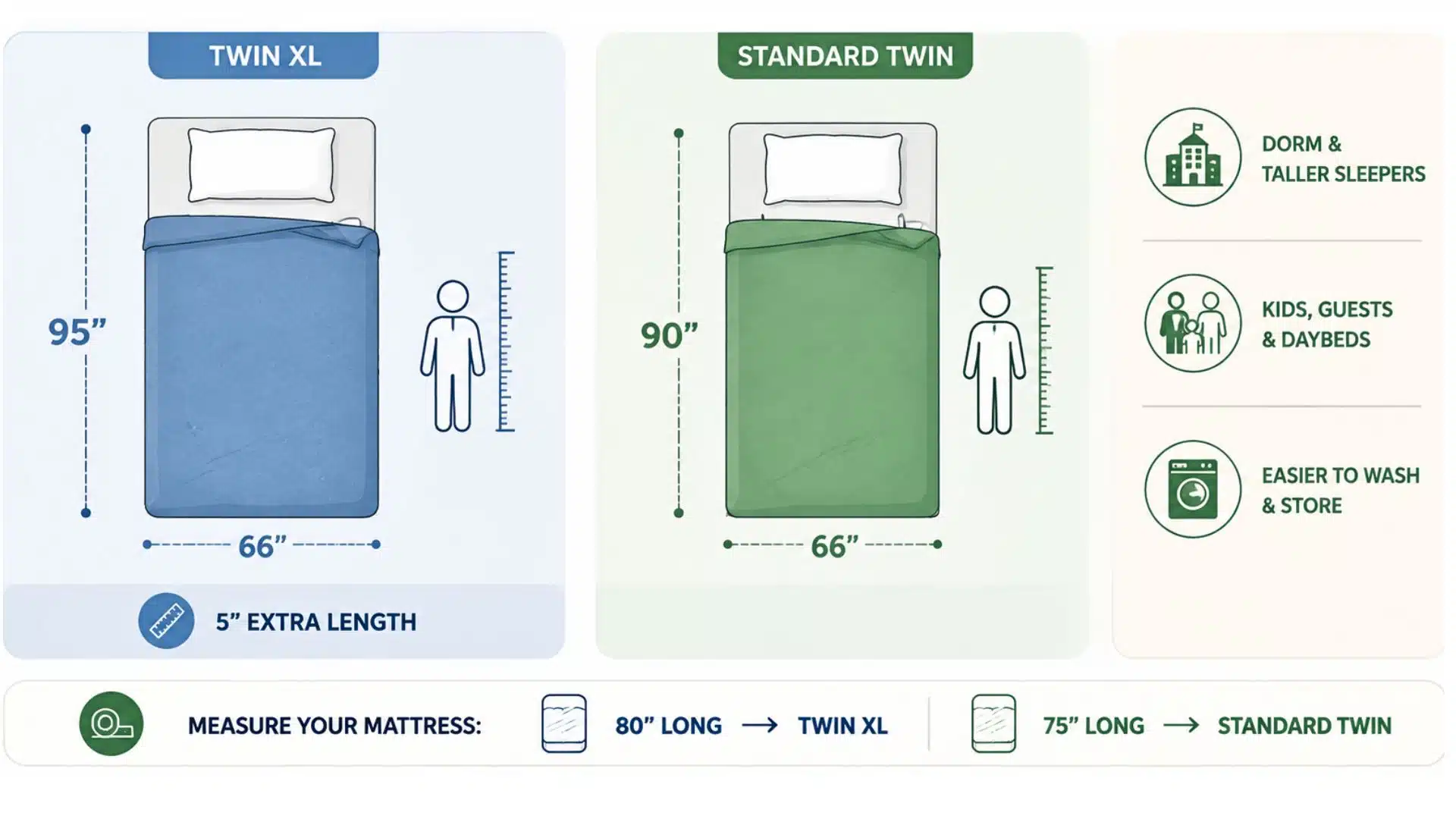
The main difference between a twin and a Twin XL blanket is length. A standard twin blanket measures 66 by 90 inches, while a Twin XL stretches to 66 by 95 inches.
That extra 5 inches at the bottom may sound small, but it makes a real difference for taller sleepers.
Twin XL bedding is built for longer mattresses, which are most often found in college dorms. If you are over six feet tall or sleep with your feet hanging off the edge of a regular twin, the XL gives you the extra coverage you actually need.
A standard twin blanket on a Twin XL bed will leave your feet exposed at night, which gets old fast in winter.
For a child’s bed, a guest room, or a daybed, the standard twin works fine. Most kids do not need the extra length, and the smaller size is easier to wash and store.
But for a tall teenager moving into a dorm or an adult sleeping on a twin bed in a small apartment, the Twin XL is the smarter pick.
A quick way to decide: Measure the mattress first. If it’s 75 inches long, go with a standard twin blanket. If it’s 80 inches long, get the Twin XL.
Twin Blanket Size Chart (Quick Reference Table)
Sometimes it’s easier to see all the numbers in one place. Use this quick chart to match your bed type with the right blanket size before you shop.
| Blanket Type | Width | Length |
|---|---|---|
| Standard Twin | 66″ | 90″ |
| Twin XL | 66″ | 95″ |
| Oversized Twin | 68-70″ | 90″ |
| Throw | 50″ | 60″ |
| Full | 80″ | 90″ |
| Queen | 90″ | 90″ |
| King | 108″ | 90″ |
Knowing these numbers ahead of time saves you from returns and bad fits. Save this chart or screenshot it before your next bedding purchase.
How to Measure Your Bed and Blanket for a Perfect FitGrab a tape measure and follow these steps:
|
Twin Blanket Fit Scenarios (Who This Size is Best for)
Twin blankets work best when space is tight, and only one person sleeps.
- Kids’ Rooms: A twin blanket fits a single bed without spilling over the floor or piling up at the foot. It helps kids to sleep safely, and is light enough for small hands to handle.
- Dorm Rooms: The twin (or Twin XL for longer mattresses) is the standard pick for college beds. It works with compact dorm mattresses and will not crowd a roommate’s side of the room.
- Guest Beds: A simple twin blanket is enough for a bed that gets used a few times a year. It stays cozy without taking up much storage space when not in use, and most twin blankets are quick to wash between visits.
- Daybeds and Bunk Beds: A twin-size daybed sits cleanly on the mattress without a bulky overhang that hangs into the room or swings off the top bunk. The blanket looks neat and stays where you put it.
If your bed matches any of these setups, a twin blanket will do the job well. Just measure the length first, so you can pick between standard and Twin XL the right way.
Blanket Sizes for Every Bed Type
Blankets come in different sizes for a reason, and the wrong one will either swallow the bed or leave half of it bare. Below is every common size from a twin to a California King, sorted by the type of bed it fits.
Throw Blankets
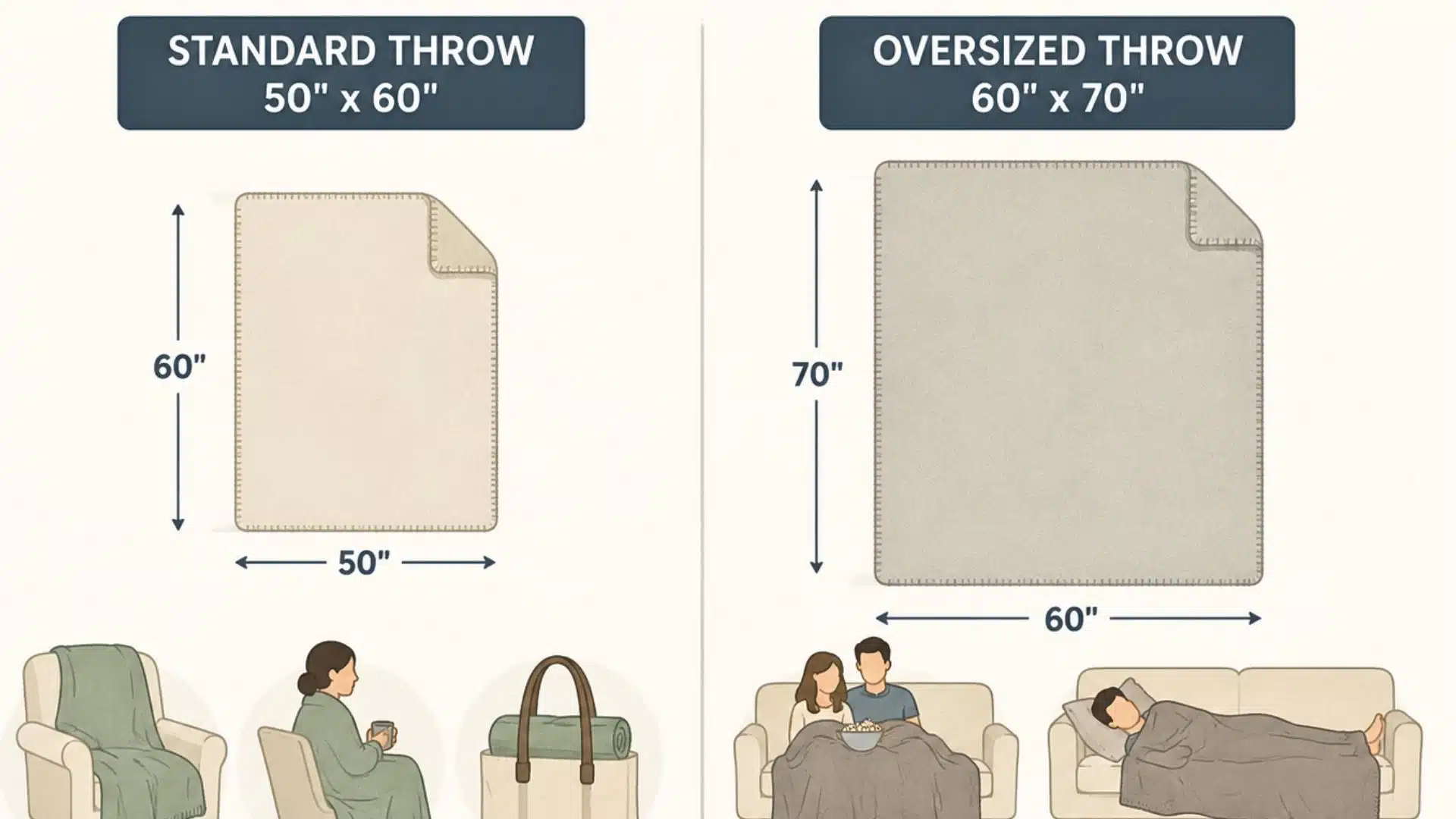
Standard Throw (50″ x 60″)
This is the size you grab when you want a blanket but not the whole bed’s worth. It works on a recliner, an armchair, or across your lap during a movie.
The 50 by 60-inch shape folds small enough to fit in a tote bag, making it easy to bring on a plane or pack for a weekend trip.
Oversized Throw (60″ x 70″)
Built for shared use or full-body coverage on the couch. At 60 by 70 inches, it is long enough to cover an adult from shoulders to feet without pulling up at one end.
Two people can share one comfortably during a movie night, and one person can lie flat on a sofa with the blanket reaching past their toes.
Twin Blankets
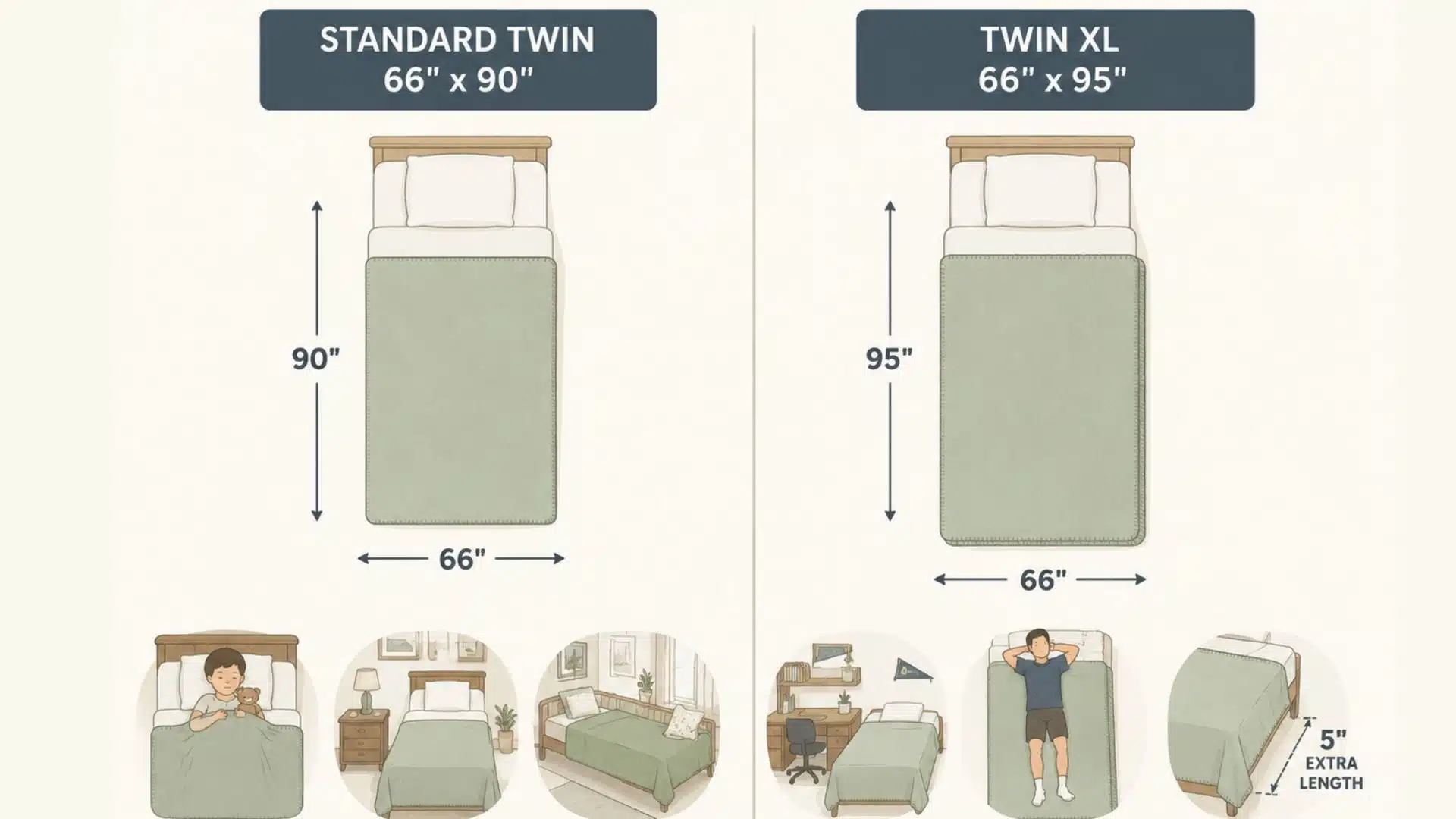
Standard Twin (66″ x 90″)
The standard twin blanket is what most people picture when they think of a single bed.
At 66 by 90 inches, it covers a regular twin mattress with enough left over on each side to tuck under or hang neatly. This size works well for kids who have outgrown a toddler bed but still sleep on a smaller frame.
Twin XL (66″ x 95″)
Twin XL keeps the same 66-inch width as a standard twin but adds 5 inches to the length, making it 66 “x 95”.
The extra room works for college dorm beds, which use Twin XL mattresses across most U.S. universities. It also helps any adult who is taller than the average twin user.
Full and Queen Blankets
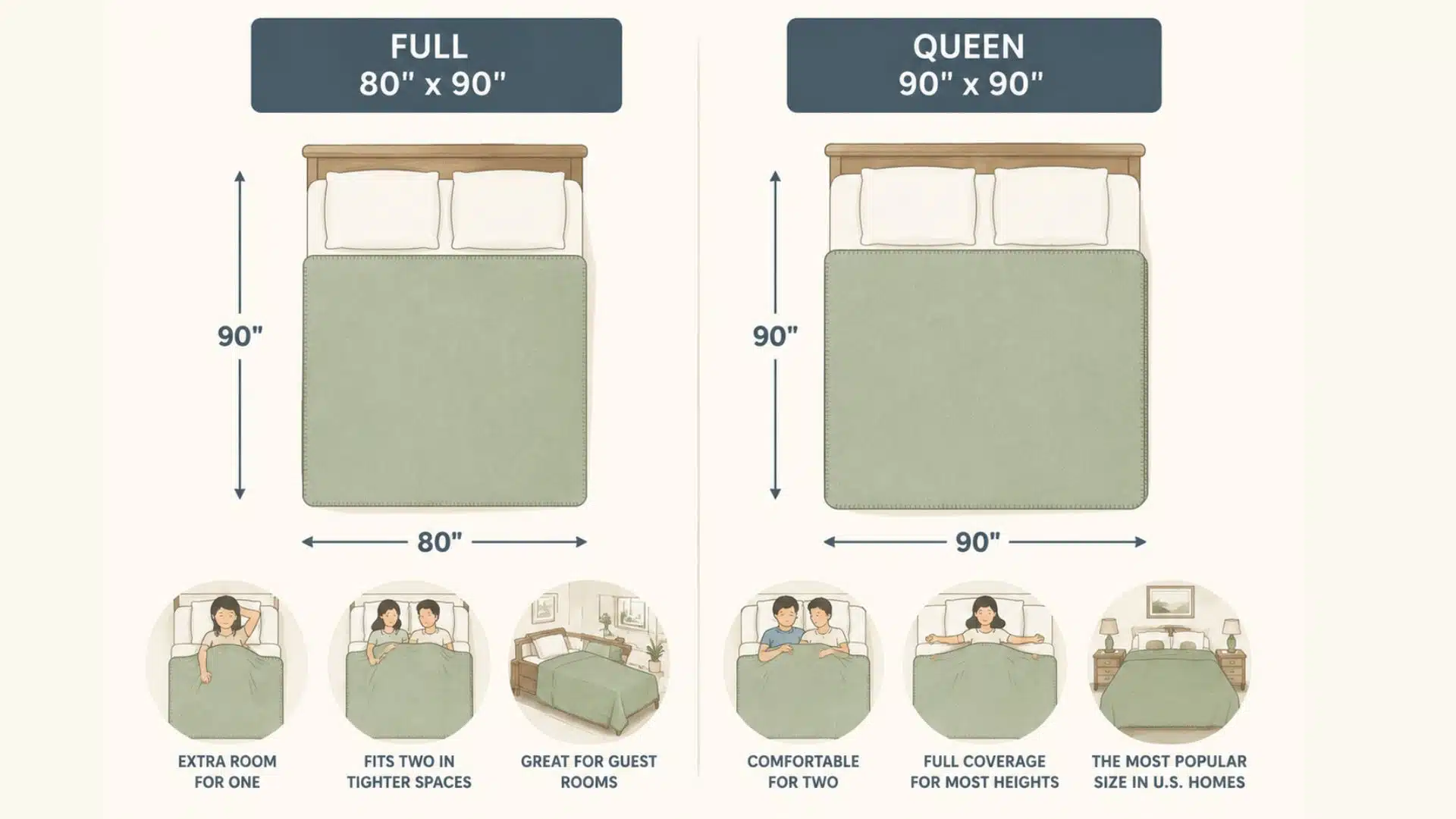
Full (80″ x 90″) A full blanket measures 80 by 90 inches, which is wide enough for one adult who likes extra room or two people sharing a full mattress in tighter quarters.
It is the right size for guest beds in smaller homes and for couples who do not want to upgrade to a queen.
Queen (90″ x 90″) A queen blanket is 90 by 90 inches, the same for both width and length. This square shape sits evenly across a queen mattress with a matching drape on both sides of the bed.
Two adults can share one without fighting over the middle, and the length gives full foot coverage for most heights.
King Blankets
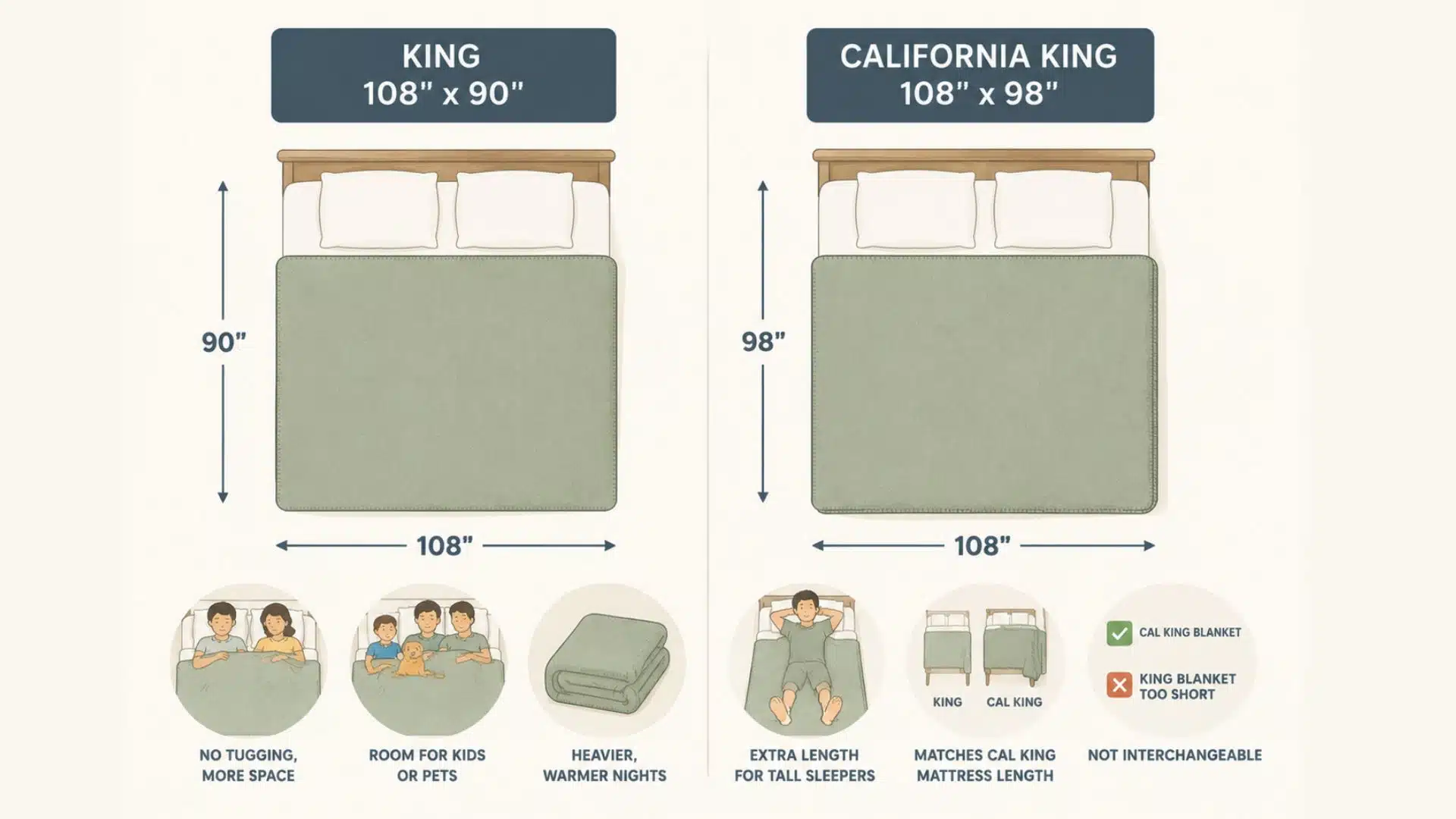
King (108″ x 90″)
A king blanket measures 108 by 90 inches, giving it 18 more inches of width than a queen blanket. That extra width changes everything for couples since both sleepers can fully cover themselves without tugging.
The 90-inch length matches the standard king mattress, so the blanket lies flat without hanging too far at the foot.
California King (108″ x 98″)
California King blankets share the 108-inch width of a standard king but stretch 8 inches longer at 98 inches.
Standard king blankets will leave a tall person’s feet hanging off the edge, so the longer Cal King size fixes that without going wider than needed. Pick this size if your bed is a Cal King, not a regular king.
Twin Size Blanket Dimensions by Material
Twin blanket dimensions can vary slightly depending on the material, even when the listed size looks similar. Fabric weight, thickness, and drape all affect how the blanket sits on the bed and how much coverage it gives.
Cotton Twin Blankets: Cotton twin blankets usually follow standard dimensions, offering breathable comfort, easy care, and everyday coverage.
Fleece Twin Blankets: Fleece twin blankets often feel thicker, so standard sizes provide warm coverage without excess bulk.
Knit/Chunky Blankets: Knit or chunky twin blankets can be wider, providing side coverage and a cozy look.
Quilted / Weighted Twin Blankets: Quilted or weighted twin blankets may seem smaller folded, but standard dimensions still cover properly.
When choosing by material, always look beyond the label size and think about how the blanket will actually fall on the bed.
Twin vs. Other Blanket Sizes
Here’s a simple side-by-side view to help you see how a twin blanket compares with other common blanket sizes. This makes it easier to spot what works best for your bed and daily use.
| Blanket Size | Approximate Dimensions | Best Used For |
|---|---|---|
| Throw | 50 × 60 inches | Couches, chairs, light cover |
| Twin | 66 × 90 inches | Single beds, kids, dorms |
| Full / Double | 80 × 90 inches | Full beds, shared use |
| Queen | 90 × 90–100 inches | Queen beds, extra coverage |
| King | 108 × 90–100 inches | King beds, wide coverage |
Tips To Choose the Right Twin Blanket
Picking the right twin blanket is not just about size. Keeping a few key points in mind helps you choose a blanket that fits well and works for your routine.
Height Matters: If the sleeper is tall, a longer twin blanket helps keep feet covered through the night. Shorter blankets can shift, leaving cold spots.
Check the Mattress Type: A standard twin bed and a Twin XL bed are not the same length. Twin XL mattresses need longer blankets to avoid a tight fit.
Think About All Seasons: Some blankets work better year-round, while others are better for warm or cool weather. Fabric choice affects how warm or light the blanket feels.
Extra Coverage for Cold Nights: A slightly wider or longer blanket helps trap warmth. This is helpful if you live in a cooler area or use strong air conditioning.
With these tips in mind, you’ll be sure to find a blanket that enhances your sleep and suits your space.
Wrap-Up
Picking the right twin blanket comes down to knowing the size of the bed it will cover.
A standard twin (66 by 90 inches) covers most regular twin mattresses, while a Twin XL (66 by 95 inches) adds the extra length needed for dorm beds and taller sleepers.
Other options like throws, full, queen, and king sizes work for different bed types and use cases.
The smartest move before any purchase is to pull out a tape measure and check the mattress first. That one step prevents returns and bad fits.
Use the size chart in this post as your guide, measure your bed, and order the twin blanket that fits your space the way it should.
Frequently Asked Questions
Will a Twin Blanket Fit a Queen Bed?
No, a twin blanket is too narrow for a queen mattress and will leave both sides of the bed uncovered. Use a queen blanket instead.
What is the Difference Between a Twin Blanket and a Comforter?
A twin blanket is thinner and lighter than a comforter. Comforters add insulation and bulk, while blankets sit closer to the body and breathe better.
Can Adults Use a Twin Blanket?
Yes, twin blankets work for adult solo sleepers, especially in studio apartments or smaller bedrooms where a queen blanket would feel too bulky.
What is the Best Material for a Twin Blanket?
Cotton works year-round for breathability, fleece holds heat in cold months, and wool gives the most warmth. Choose based on your climate and washing preferences.