



Your respiratory rate while sleeping is simply the number of breaths you take per minute while you are asleep. One breath means one inhale and one exhale. Doctors count it as a basic vital sign, just like heart rate or blood pressure.
Sleep is the best time to measure it because your body is fully at rest. No movement, no talking, no stress, just your body breathing naturally. This gives the most accurate baseline reading.
You may see it labeled differently on fitness trackers, breathing rate, sleep respiratory rate, or bpm, but they all mean the same thing. For healthy adults, the normal range is 12 to 20 breaths per minute during sleep.
This number matters more than most people realize. A sudden or consistent change in your sleep breathing rate can be an early sign of illness, stress, or a breathing disorder, often before other symptoms even appear.
Normal Breathing Rate While Sleeping by Age
Breathing rates during sleep vary with age, with younger individuals generally breathing faster due to smaller lungs and higher metabolism. As we age, our breathing rate naturally slows down.
| Age Group | Normal Breathing Rate (breaths/min) |
|---|---|
| Newborns (0–1 month) | 30–60 |
| Toddlers (1–2 years) | 24–40 |
| Young Children (3–5 years) | 22–34 |
| Children (6–12 years) | 18–30 |
| Teenagers (13–17 years) | 13–21 |
| Adults (18–65 years) | 12–20 |
| Older Adults (65+) | 16–25 (slightly elevated due to reduced lung elasticity) |
It’s normal for adults to breathe between 12 and 20 times per minute during sleep. Athletes may have a lower range, while older adults breathe slightly faster due to age-related changes in lung capacity.
Consistency in your breathing rate is key, so any sudden changes should be monitored.
How Does Breathing Rate Change During Sleep Stages?
Your breathing does not remain the same throughout the night. It shifts based on which sleep stage your body is in. Here is how each stage affects your breathing rate.
1. NREM Sleep (Deep Sleep): This is when your body is in full recovery mode. Breathing slows down and becomes very steady and regular. Your respiratory rate is at its lowest during this stage.
2. REM Sleep (Dream Sleep) Your brain becomes highly active during REM. As a result, breathing speeds up and becomes irregular. It may even pause briefly or change rhythm, which is completely normal.
3. Light Sleep This sits between deep and REM sleep. Breathing is neither too slow nor too fast. It is a transition phase your body passes through multiple times a night.
Understanding how sleep stages affect your breathing rate helps you better understand the data your fitness tracker shows every morning.
What Affects Your Breathing Rate While Sleeping?
Several factors can raise or lower your breathing rate during sleep. Some are within your control, and some are not. Here is a quick look at the most common ones.
- Age: As you age, lung capacity naturally decreases, leading to a slightly higher breathing rate during sleep than in younger adults.
- Fitness Level: Those who exercise regularly tend to breathe more slowly during sleep due to more efficient lung function.
- Stress and Anxiety: High stress levels can elevate your breathing rate even during sleep, as stress doesn’t fully subside when you fall asleep.
- Illness or Fever: When your body is fighting an infection, your breathing rate increases to deliver more oxygen, often before other symptoms appear.
- Alcohol Before Bed: Alcohol relaxes the muscles in your throat and airway, potentially leading to irregular or slower breathing patterns during sleep.
- Altitude: At high altitudes, your respiratory rate increases as your body adjusts to lower oxygen levels, then normalizes within a few days.
- Sleep Position: Sleeping on your back can increase respiratory resistance, especially in people with snoring or mild sleep apnea. Side sleeping is a common first intervention.
- Body Weight: Excess weight around the neck and abdomen increases the work of breathing during sleep, contributing to sleep-disordered breathing.
Knowing what influences your breathing rate helps you spot changes that are lifestyle-related versus ones that may need medical attention.
Respiratory Rate While Sleeping and Sleep Apnea
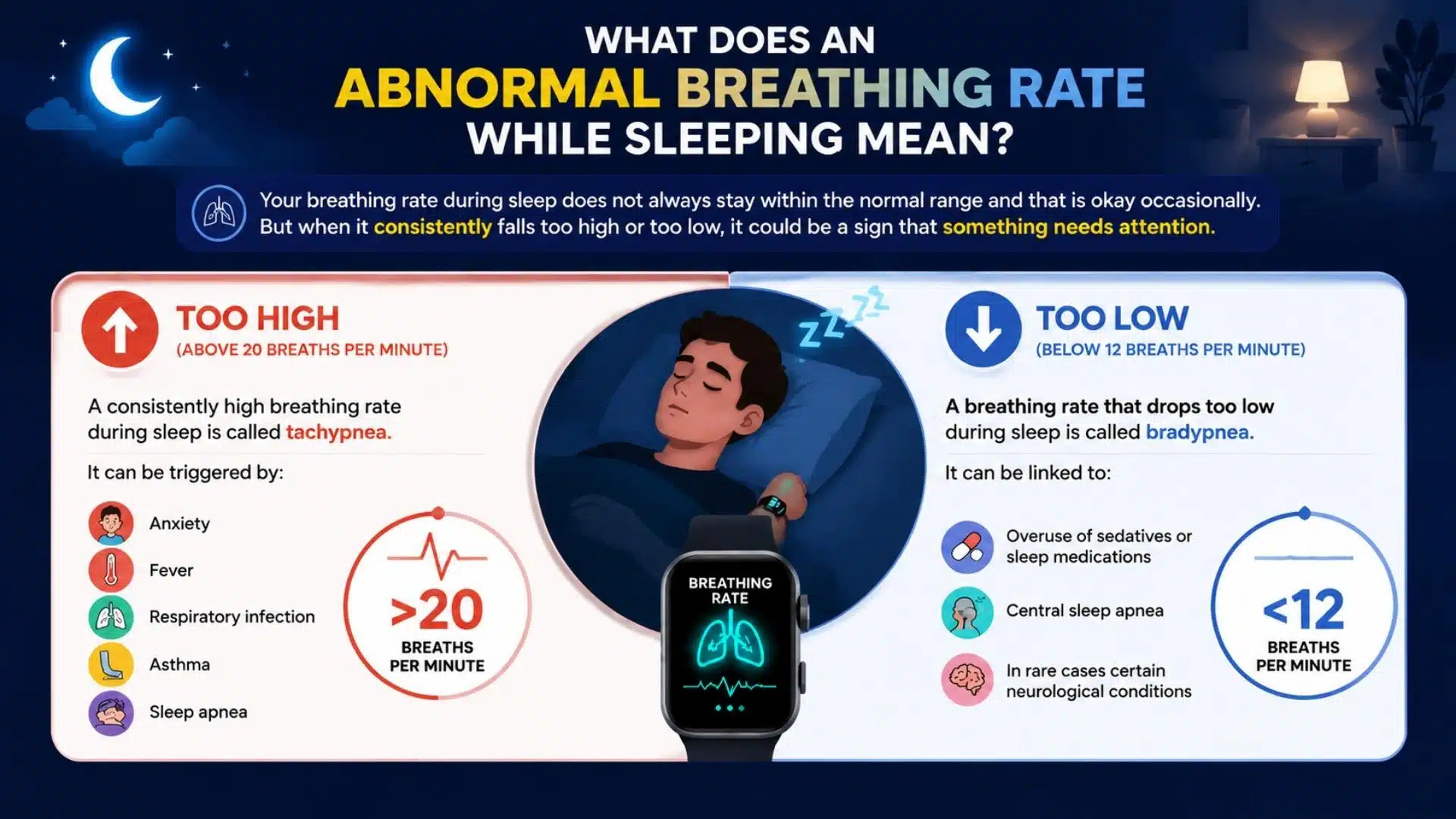
Sleep apnea, especially obstructive sleep apnea (OSA), is a common disorder where the airway partially or fully collapses during sleep, causing pauses in breathing. These pauses, called apneas, lead to an increased respiratory rate to compensate, which can result in irregular readings on wearables.
A study published in the Journal of Clinical Sleep Medicine found that elevated nocturnal respiratory rates are associated with higher apnea-hypopnea index (AHI) scores, indicating more breathing events per hour. If your wearable consistently shows a respiratory rate above 18 or irregular patterns, it’s worth asking your doctor about a sleep study.
Key symptoms to watch for include loud snoring, waking with headaches, excessive daytime sleepiness, and dry mouth in the morning, especially when paired with an elevated respiratory rate. These signs suggest the need for clinical evaluation.
How to Track Your Breathing Rate While Sleeping
The good news is that tracking your breathing rate while sleeping has never been easier. You do not need a hospital or a sleep lab to get a basic reading. Here are the most common ways to do it.
- Wearable Fitness Trackers: Devices like Fitbit, Garmin, and WHOOP automatically track your breathing rate every night. You simply wear them to bed and check the data in the morning through their app.
- Smartwatches: Apple Watch and Samsung Galaxy Watch also measure sleep respiratory rate. Most show you an average breaths per minute reading along with your other sleep stats.
- Oura Ring: A popular option for people who find wrist trackers uncomfortable. It tracks breathing rate through your finger and gives a detailed nightly breakdown.
- Manual Method: If you do not have a wearable, ask someone to count your breaths for one full minute while you are asleep. It is less precise but gives a rough idea.
Tip: Track for at least 7 days before drawing conclusions. One night’s reading can easily vary.
Wrap Up
Your breathing rate while sleeping is a small number that carries significant meaning. It tells you how well your body is recovering at night, whether something is off, and in some cases, it can flag a health issue before you even feel it.
From understanding what is normal for your age group to knowing how sleep stages affect your breathing, a little awareness goes a long way.
You do not need anything complicated to get started. Just pay attention to the number your fitness tracker shows every morning and track it consistently over a week.
If you found this helpful, bookmark this page for reference or share it with someone who tracks their sleep. Your breathing rate tonight might just be telling you something important.
Frequently Asked Questions
How Many Breaths per Minute While Sleeping Is Normal for Adults?
For healthy adults, 12 to 20 breaths per minute during sleep is considered completely normal.
Is It Bad if My Breathing Rate While Sleeping Is 22?
Occasionally hitting 22 is fine. But if it stays consistently above 20, consult a doctor.
Can Stress Affect My Breathing Rate While Sleeping?
Yes. High stress keeps your nervous system active, which can elevate your breathing rate during sleep.