



Standing in a store aisle holding two sheet sets, both silky, both shiny, priced almost the same, is more confusing than it should be.
One says satin. The other says sateen. You read the labels twice and still walk away guessing. This happens more than people admit.
The sateen vs satin difference is real, but it is not obvious from the packaging. Sleep on them for one night, and you will feel it. In very simple terms, sateen works better for daily bedding, while satin is often better for a polished, special-use feel.
The way each one sits against your skin, how it handles heat, and how long it lasts after washing, these things vary more than the labels suggest.
Understand those differences, and choosing the right one becomes simple.
Sateen vs Satin: Quick Comparison
Not sure which one you are looking at? Have a quick look at these key differences.
| Feature | Sateen | Satin |
|---|---|---|
| Material | Cotton | Silk / Synthetic |
| Feel | Soft, slightly warm | Smooth, slippery |
| Shine | Subtle | Glossy |
| Best for | Everyday bedding | Luxury, hair care |
| Best Thread Count | 300–600 TC ideal | Fiber type matters more than TC |
| Breathability | Good, breathes better than synthetics | Varies, silk breathes well, polyester does not |
| Durability | High, gets softer with washing | Moderate, can snag and pill over time |
| Care | Machine washable | Delicate, often needs hand washing |
Sateen is a cotton fabric woven in a specific pattern. Satin is not a material at all; it is a weave that can be applied to silk, polyester, or other fibers. That single distinction explains most of the differences between the two.
What is Sateen?
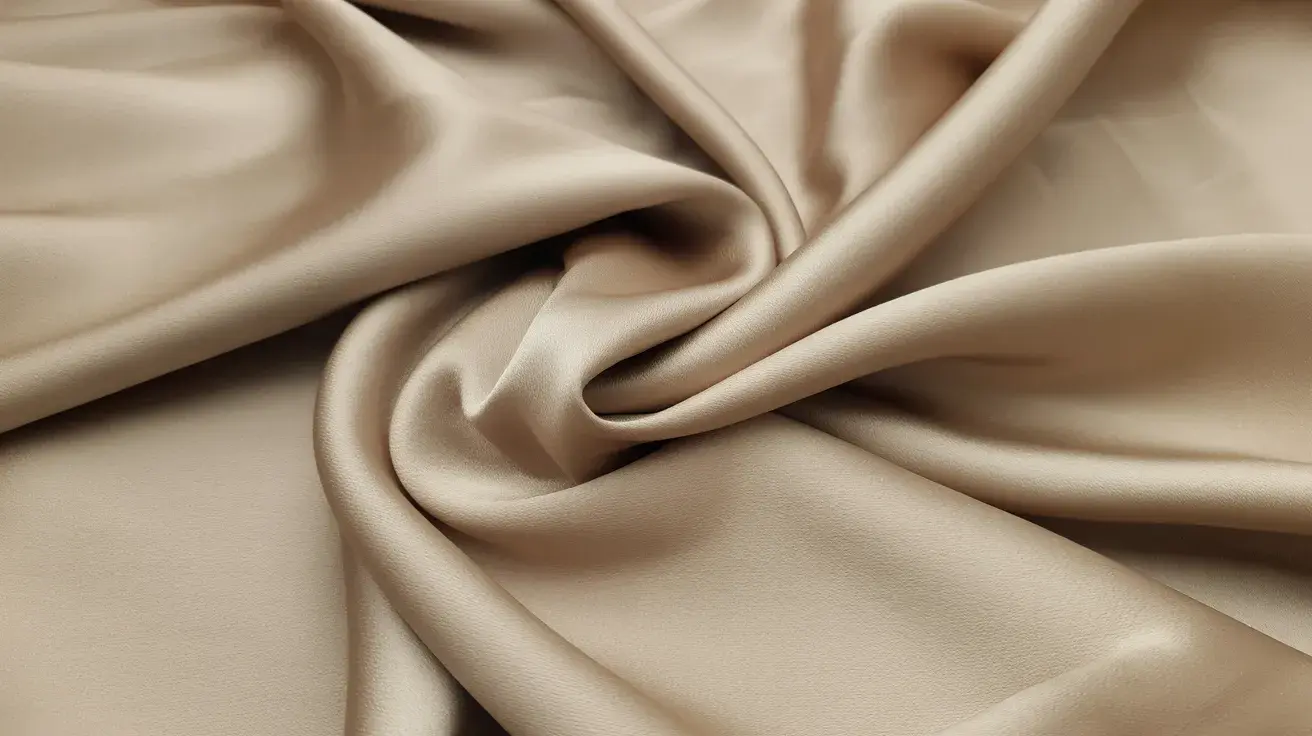
Sateen is a cotton fabric made using a specific weaving technique in which more threads sit on the surface than beneath. That structure is what gives it the soft, slightly lustrous finish most people notice right away.
What are sateen sheets, exactly? It is a cotton bedding woven with the same surface-heavy pattern.
The result is a sheet that feels noticeably smoother than regular cotton but without the slippery, high-gloss look that puts some people off.
In real life, sateen feels warm and broken-in almost immediately. It does not have that stiff, crisp quality standard cotton carries.
Run your hand across it, and it gives, soft, a little weighty, and comfortable against bare skin. That is exactly why it became the go-to choice for everyday bedding.
What is Mercerization and Why Does It Matter to Sateen? Higher-quality sateen is treated with a sodium hydroxide solution before weaving. This causes each cotton fiber to swell, making it stronger, softer, and more receptive to dye. Most budgets skip this step, which is why two sheets at the same thread count can feel completely different in hand. When buying sateen, look for “mercerized cotton” on the label; it is a small detail that makes a real difference. |
What is Satin?
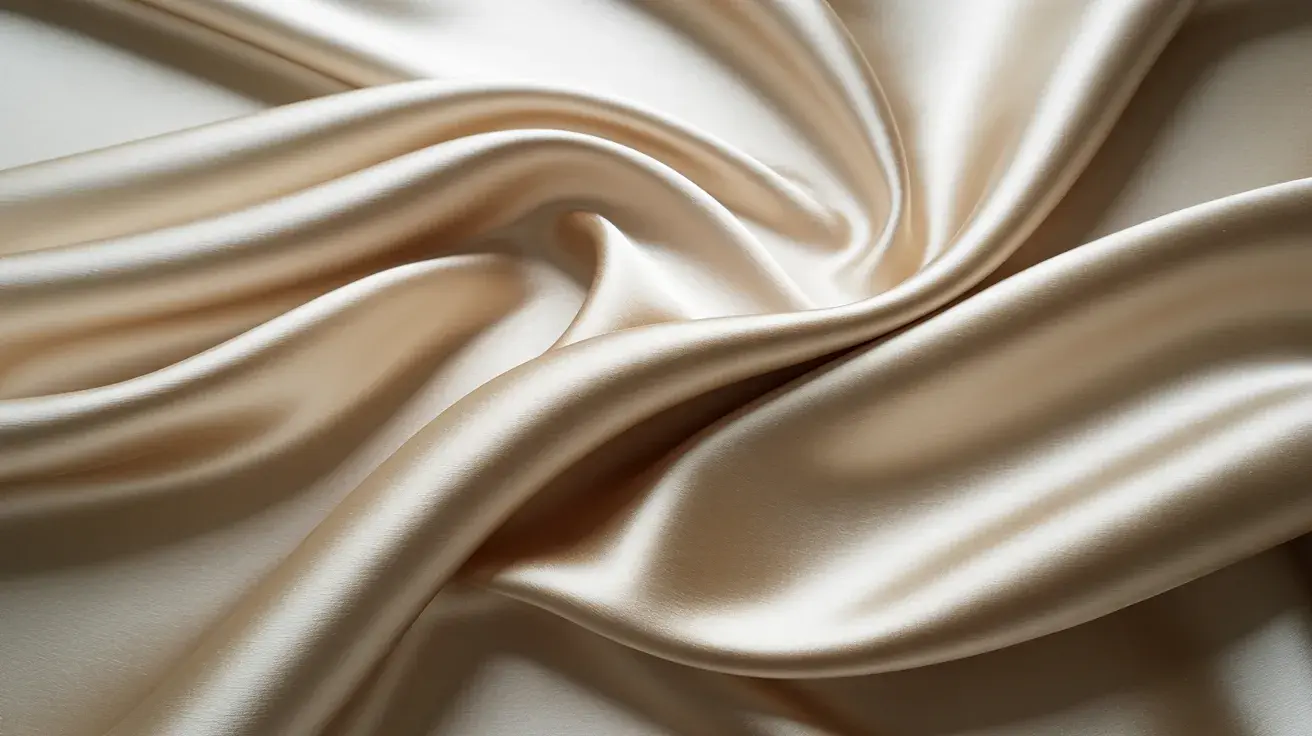
Satin is not a material. That surprises a lot of people.
It is a weave structure, a method of interlacing threads that pushes most of the fabric surface to the front. That front-heavy construction is what creates the glossy, light-catching finish satin is known for.
The actual fiber underneath can be silk, polyester, nylon, or a blend. Silk satin sits at the premium end, soft, temperature-regulating, and expensive.
Polyester satin costs far less and delivers the same high shine, though the feel against the skin is noticeably slipperier and less breathable.
That glassy, smooth surface is what makes satin popular for lingerie, evening wear, and hair care products, not necessarily for sleeping through the night.
Sateen vs Satin: Key Differences Explained
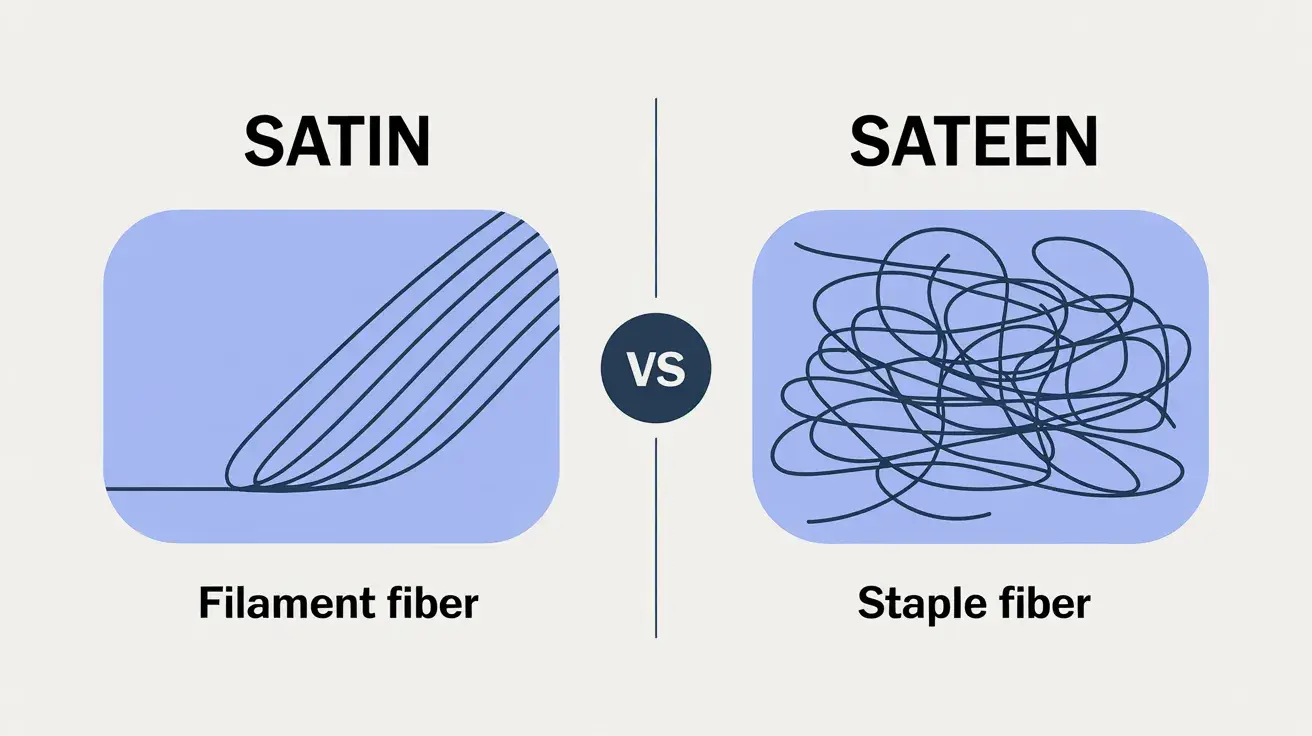
Sateen and satin share a surface-level similarity that makes them easy to mix up. Look closer at the weave, the material, and the way each one behaves, and the differences become hard to ignore.
1. Weave Structure
Both sateen and satin use the same basic weaving idea, with more threads exposed on the surface than tucked underneath. This is called a float weave, and it is what gives both fabrics their smooth, soft-to-the-touch quality.
The difference is in the thread used. Sateen uses short-staple cotton threads. Satin uses long, continuous filament fibers, such as silk or polyester. Same weave logic, very different outcome in feel and performance.
2. Material Composition
Sateen is always cotton. That is not a style choice; it is what defines it. The cotton fibers are combed, mercerized, and woven tightly to produce that smooth surface.
Satin has no fixed material. It is a weave applied to whatever fiber is available, silk for luxury, polyester for affordability, nylon for stretch. The fabric you end up with depends entirely on what sits beneath that glossy surface.
3. Feel and Texture
Sateen feels soft the way a well-worn cotton shirt does, warm, slightly substantial, and comfortable without trying too hard. It gives a little under your hand and settles into your skin rather than sliding across it.
Satin feels slick. It moves against the body rather than with it. That cool, glassy texture is pleasant in small doses but can feel less cozy over a full night of sleep, particularly if the fabric is polyester rather than silk.
4. Shine and Appearance
Sateen has a low-level sheen, a quiet, diffused glow that looks polished without being loud. In most bedroom settings, it reads as elevated cotton rather than anything flashy.
Satin reflects light directly. The surface acts almost like a mirror, which is striking on a dress or pillowcase but can look out of place in a relaxed, lived-in bedroom. If shine is the goal, satin delivers it fully.
5. Breathability and Temperature
Sateen breathes reasonably well for a dense cotton weave. It runs warm, the tight thread structure holds body heat, making it a solid choice for cooler months but less comfortable for hot sleepers in summer.
Satin is more complicated. Silk satin breathes well and adjusts to body temperature naturally. Polyester satin does neither; it traps heat, resists moisture, and can leave you waking up warmer than expected despite its cool initial touch.
Explore: Cooling sheets suitable for hot sleepers
Pros and Cons at a Glance
Both sateen and satin have a soft, smooth feel, but they behave differently in terms of comfort, care, and everyday use.
| Type | Pros | Cons |
|---|---|---|
| Sateen | Soft and comfortable against the skin. Breathes better than synthetic fabrics. Easy to machine wash and maintain. Gets softer with every wash | Runs warm, so it may not suit hot sleepers. Can develop a slight shine over time. A heavier weight may not suit everyone |
| Satin | Smooth, elegant finish. Gentle on hair and skin. Looks luxurious and high-end. Great for special occasion bedding | A slippery texture can feel unsettling in bed. Delicate and needs careful washing. Polyester versions can trap heat easily |
Ultimately, sateen wins for everyday comfort and easy care, while satin shines when aesthetics and luxury take center stage. Your ideal choice comes down to how you sleep, how you wash, and what you value most in your bedding.
Sateen Vs Satin: Best Uses for Each Fabric
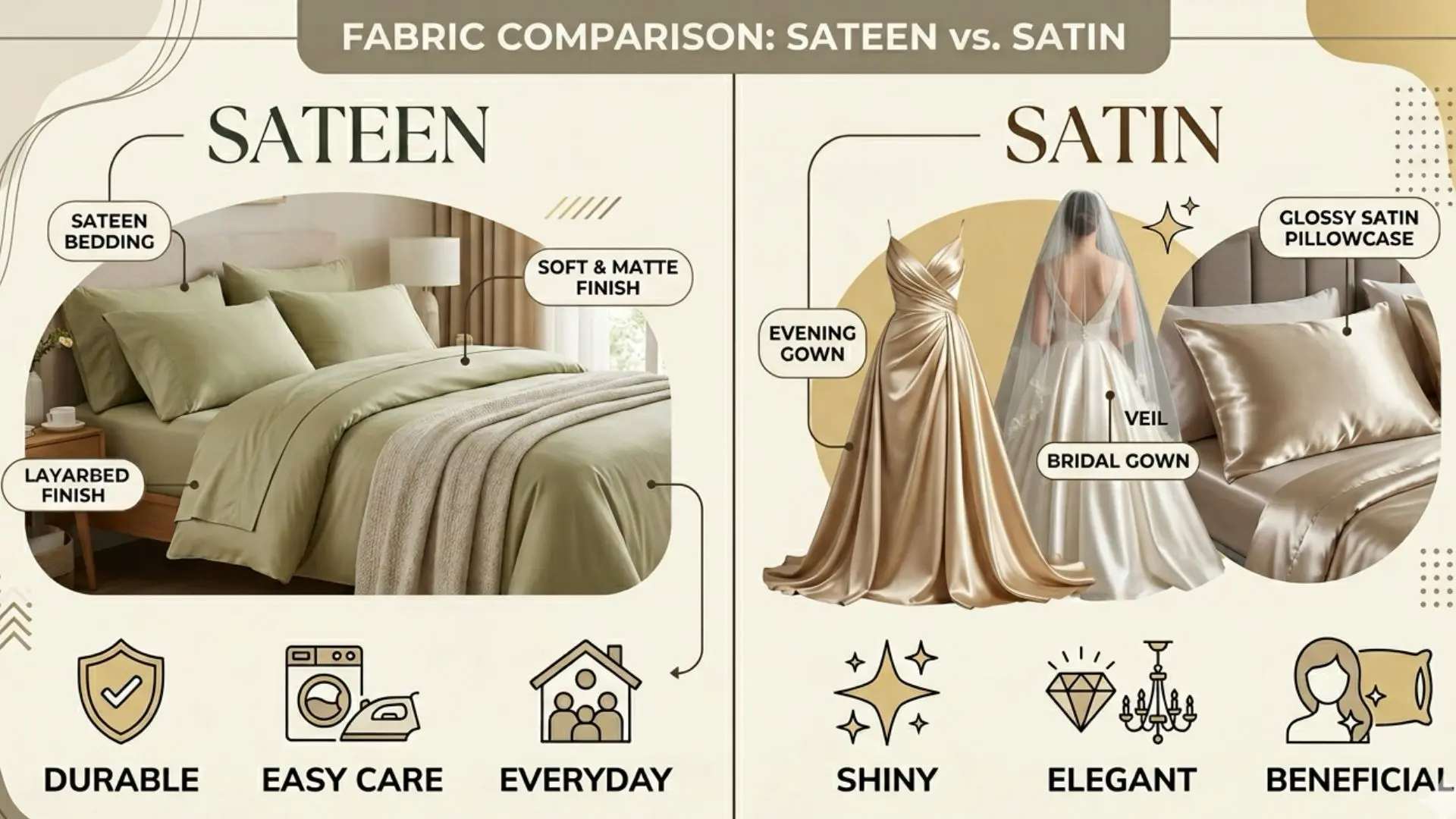
Sateen and satin are not interchangeable; each one performs better in specific situations. Knowing where each fabric belongs makes the choice a lot easier.
Sateen
Sateen belongs in the bedroom, and not just because it looks good there. Its durability and easy care make it the practical choice for everyday sheets, pillowcases, and duvet covers. You can wash it regularly, sleep on it nightly, and it retains its softness with little fuss. If you want bedding that works hard without demanding attention, sateen is built for that.
Satin
Satin earns its place where appearance and texture matter most. It is the fabric behind elegant evening wear, bridal dresses, and occasion pieces that need that high-gloss finish. In the bedroom, satin pillowcases are genuinely useful; the low-friction surface reduces hair breakage and is gentle on skin overnight. Outside of that, satin is better reserved for moments rather than daily wear and tear.
Find out: Between Sateen and Percale, which sheets should you go for?
Which Fabric Feels Better for Everyday Use?
Comfort is personal, but everyday use has practical demands that go beyond just how a fabric feels in the shop.
For Daily Sleeping
Sateen holds up. After a few washes, sateen still feels soft, sometimes even softer than when you first bought it. The cotton fibers settle with use rather than wearing thin.
Satin, particularly polyester satin, can pill, snag, and lose that fresh-out-of-the-bag smoothness faster than expected. For a sheet you sleep on every night, sateen is the more dependable choice.
For Hot Weather
This one depends on what your satin is made from. Silk satin genuinely stays cool and adjusts to your body temperature through the night. Polyester satin, however, feels cool for the first few minutes before trapping heat.
Sateen runs warm by nature, so neither is perfect for a hot summer night, but silk satin edges ahead if breathability matters to you.
For Low Maintenance
Sateen wins without much debate. It is machine washable, dries well, and requires no special handling. Satin, especially silk satin, needs cold water, gentle cycles, and often air drying.
For most people managing a regular laundry routine, that extra care quickly becomes tiresome.
For a Luxury Feel
Satin is unmatched here. That glassy, cool-to-the-touch surface feels like an occasion every time you get into bed.
If you want bedding that looks and feels like it belongs in a high-end hotel, satin delivers that in a way sateen simply does not.
Common Mistakes People Make While Picking the Fabric
Picking between sateen and satin sounds straightforward until you realize how many people end up with the wrong one. These are the slip-ups you should know before you buy.
- Assuming Satin Always Means Silk: Satin is a weave, not a material. Most satin products at regular price points are polyester, not silk. Always check the fiber content label, not just the weave name.
- Ignoring Breathability Completely: The shine gets attention. The breathability does not feel too warm until the third night. Breathability should be one of the first things you check, especially if you sleep hot.
- Choosing Based on Shine Alone: A glossy sheet looks beautiful in a photo. In an actual bedroom with real lighting and daily use, that mirror finish can start to look out of place. Sateen’s quieter sheen tends to age better in most home settings.
- Not Checking Thread Count in Context: A high thread count on sateen usually signals quality. The same number on polyester satin means very little. The fiber underneath matters just as much as the number on the label.
Avoiding these mistakes does not require expert knowledge. It just takes a few extra seconds to read the label before you buy.
Final Verdict
For most people, sateen is the smarter everyday choice. It is soft, durable, easy to care for, and gets better with each wash. If you share a bed, run a busy household, or simply want sheets that hold up without any fuss, sateen is where your money is better spent.
Satin earns its place if you want something that feels like a small luxury. A satin pillowcase for your hair, a sheet set for a guest room, or bedding you pull out when the occasion calls for it, satin delivers that elevated feel in a way sateen never tries to.
- Want everyday comfort and durability? Go with sateen.
- Want a luxury feel and a polished finish? Satin is your answer.
Frequently Asked Questions
Does Sateen or Satin Last Longer?
Sateen holds up better over time; regular washing actually improves its softness rather than breaking it down. Satin, particularly polyester satin, tends to snag and pill faster with frequent use.
Is a Satin Pillowcase Good for Your Skin?
Satin pillowcases create less friction against skin overnight, which can help reduce sleep creases and irritation. Silk satin delivers the most benefit, but even polyester satin performs better than a standard cotton pillowcase for skin contact.
Is Sateen the Same as Cotton?
Sateen is made from cotton, but it is not the same as regular cotton. The difference is in the weave; sateen uses a float weave, which makes it noticeably smoother and softer than everyday cotton.
Can You Machine-Wash Satin Sheets?
Polyester satin can handle a gentle machine wash cycle, but silk satin generally needs hand washing or a very delicate setting to avoid damage. Sateen, by contrast, handles regular machine washing without any special treatment.