





You’ve fixed the sheets. The duvet looks smooth. But the bed still looks off, too flat, too bare, or maybe you’ve piled on seven pillows, and now it looks like a mess.
That’s the problem most people run into. Either they use too few pillows and the bed looks unfinished, or they go overboard, and it looks like a lot of effort for no real payoff.
A simple way to fix this is the 2-2-1 setup. It’s not the only option, but it’s one of the easiest ways to get a balanced look without trial and error. It’s a simple layering formula, three layers, five pillows, that gives your bed a clean, balanced look without overthinking it. By the end of this post, you’ll know exactly how to use it and style it.
What is the 2-2-1 Pillow Rule?
It’s a simple way to arrange pillows so your bed looks balanced without feeling overdone. It’s a three-layer system that gives structure without making things look crowded. Here’s how it’s a three-layer system:
- 2 sleeping pillows, your everyday pillows, placed at the back against the headboard
- 2 decorative shams, placed in front of the sleeping pillows, slightly upright, knowing the difference between a pillow sham vs a pillowcase helps here
- 1 accent pillow, one small pillow centered at the front
That’s it.
The reason it works is simple. The 2+2 at the back creates symmetry and structure. The single pillow at the front creates a focal point, something for the eye to land on. The two pairs at the back create symmetry, while the single front pillow breaks that symmetry slightly, so the setup doesn’t feel too rigid.
It’s not about having more pillows. It’s about having the right number in the right place.
How to Place Them, Step by Step
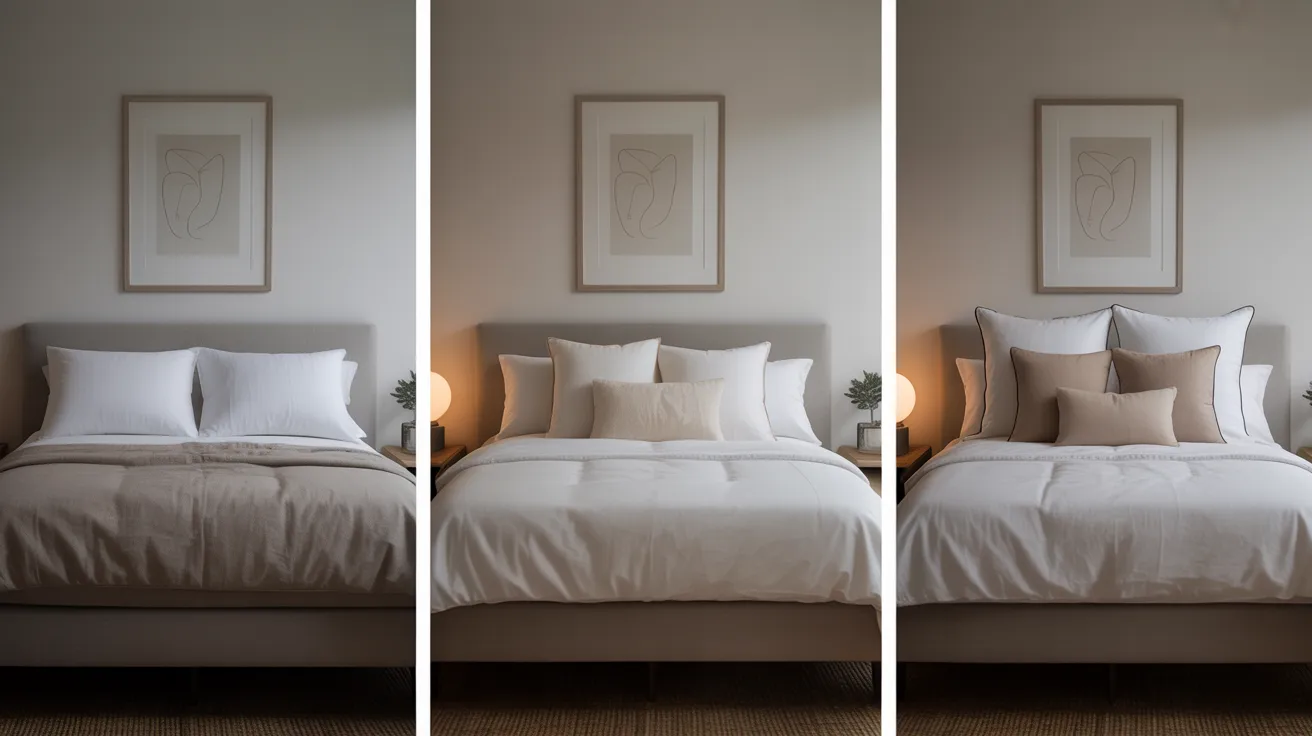
This is where most people overcomplicate things, but it’s actually very simple. Follow these steps in order, and the setup will come together easily.
Step 1, Back layer: Place your two sleeping pillows flat against the headboard. These are your everyday pillows, and pillowcases can turn yellow over time, so keep them clean.
Step 2, Middle layer: Place your two shams in front, leaning slightly forward. They should be the same height or a little shorter than the sleeping pillows. This is where you can start playing with texture or a subtle pattern.
Step 3, Front layer: Place your one accent pillow centered in front of everything. Go smaller than the shams. Pick something with a different texture, color, or pattern; this pillow is what finishes the setup and gives the eye a place to land.
The key idea is a gentle height drop from back to front, with a texture or color shift at each layer. You don’t need to match everything; you just need it to coordinate.
Layout Examples You Can Copy
Here’s exactly how the 2-2-1 rule looks when you apply it to real beds. Use these layouts as a reference so you know exactly where each pillow goes.
1. Standard Queen Layout (2-2-1)
Back: 2 sleeping pillows flat against the headboard
Middle: 2 shams slightly upright, touching or slightly overlapping
Front: 1 accent pillow centered
This is the cleanest version of the rule. Everything lines up, nothing feels crowded, and the center pillow creates a clear focal point.
2. Minimal Version (Less Styled Look)
Back: 2 sleeping pillows
Middle: 2 soft shams (not overly stiff)
Front: 1 small, simple accent pillow
This works if you don’t want a heavily styled look but still want structure.
3. King Bed Adjustment (2-2-2)
Back: 2 king pillows
Middle: 2 large shams
Front: 2 smaller accent pillows side by side
A single pillow on a king can look lost. Adding a second keeps the width balanced.
4. What Not to Do (Broken Layout)
Front: multiple pillows stacked or spread everywhere
No clear center point
Pillows all the same size
This removes the order completely. Instead of layers, you get a messy load.
Does it Work for Every Bed Size?
Most of the time, it works, but not always.
For a queen bed, this usually works best. Five pillows fit the width perfectly, and the whole thing looks balanced without being too much.
For a king bed, it works, but it can feel a little sparse. The bed is wider, so two accent pillows (2-2-2) often look better than just one. It’s a small tweak, but it makes a noticeable difference.
For a twin bed, skip this rule entirely. Five pillows on a small bed is just too much. A simple 1-1 or 2-1 setup works far better here. Less is more on a twin.
Common Mistakes to Avoid
One of the most common mistakes is using an accent pillow that’s the same size as the shams. It flattens the whole layered effect and makes everything look like one big pile.
Another thing people get wrong is matching everything too perfectly. When all the pillows are the same color, fabric, and pattern, the bed ends up looking staged rather than styled. A little contrast goes a long way.
Ignoring your bed size is also a mistake. Forcing five pillows onto a twin bed or under-filling a king just throws off the proportion. The rule should fit your bed, not the other way around.
Lastly, don’t add extra pillows just to fill space. More pillows don’t mean better. If anything, it makes the bed harder to deal with every day and takes away from the clean look you’re going for.
Quick Checklist Before You Finish Your Bed
Take a few seconds to check if your setup actually works, and ask yourself these quick questions.
- Does the front pillow clearly stand out?
- Are the back layers taller and fuller than the front?
- Is there enough contrast between layers?
- Does the setup actually fit your bed size?
If you can answer yes to these, your setup is doing exactly what it should.
Conclusion
The 2-2-1 rule is simple, and that’s what makes it work. Two sleeping pillows, two shams, one accent pillow, and your bed already looks more put-together than most.
It works best when you adapt it to your bed size and style, not when you follow it blindly.
Start with the structure, then make it your own. That’s really all there is to it.