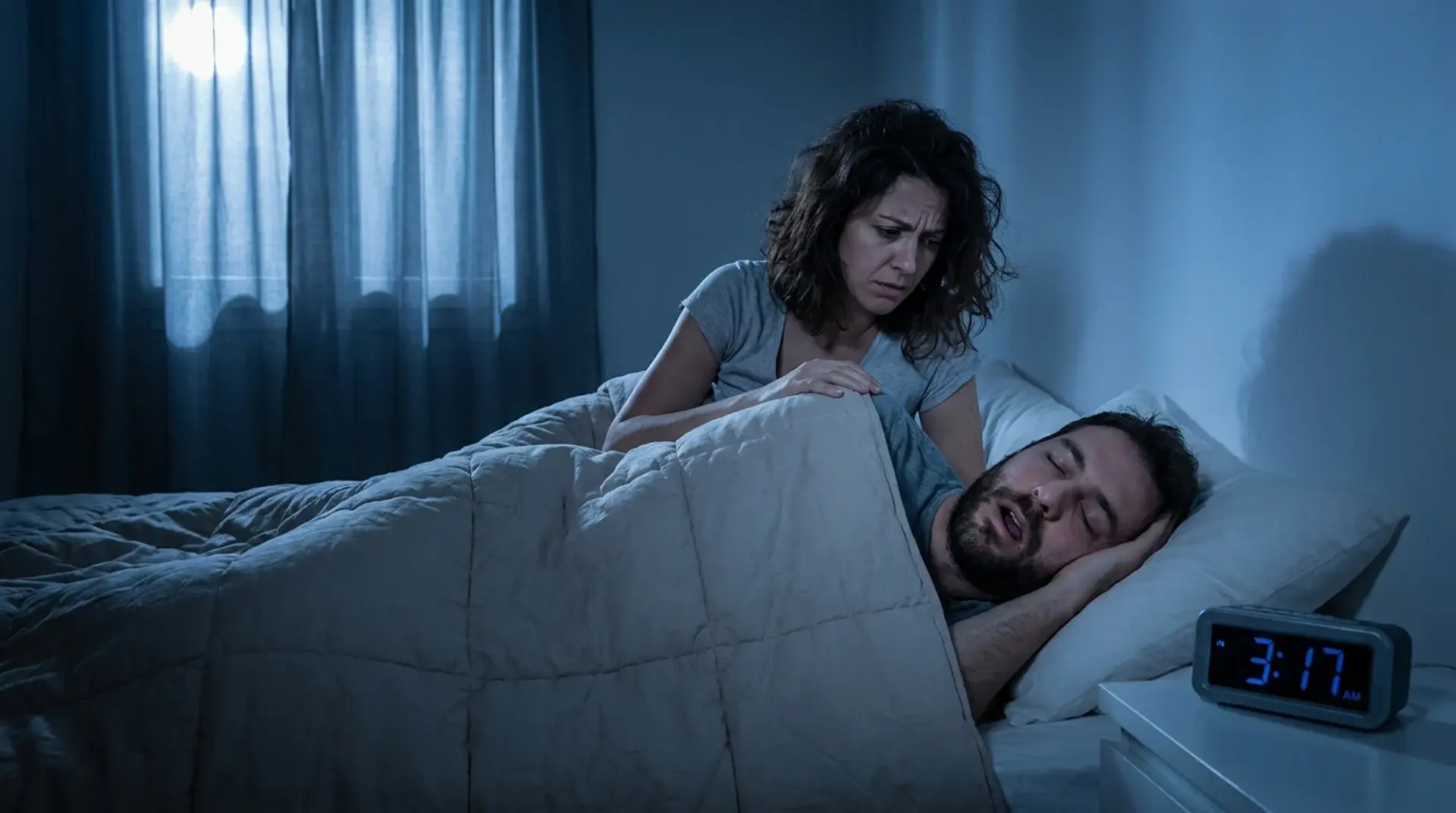

Every parent knows the worry of standing in a dark hallway, listening to their child struggle to breathe at night. The snoring, the gasping, the restless tossing, it is exhausting to watch and even harder to fix.
Sleep apnea in kids is more common than most people realize, and the way a child sleeps can actually make a big difference.
Finding the best sleeping position for a child with sleep apnea is one of the simplest things you can try before bigger interventions come into play.
I put together everything you need to know about sleep positions, what helps, what does not, and how to make nights a little easier for your child.
What Is Sleep Apnea in Children and Why It Matters?
Sleep apnea in children, also called pediatric sleep apnea, is a condition where breathing repeatedly stops and starts during sleep. The most common cause is a physical blockage in the airway.
Enlarged tonsils or adenoids can press against the throat, and when muscle tissue relaxes at night, the airway narrows even more. This makes it hard for air to flow freely.
These interruptions in breathing wake the brain up just enough to restart breathing, but not enough for the child to fully wake up.
Over time, this broken sleep takes a real toll. Kids with untreated sleep apnea often struggle with focus, mood swings, slow growth, and low energy throughout the day.
Causes of Sleep Apnea in Children
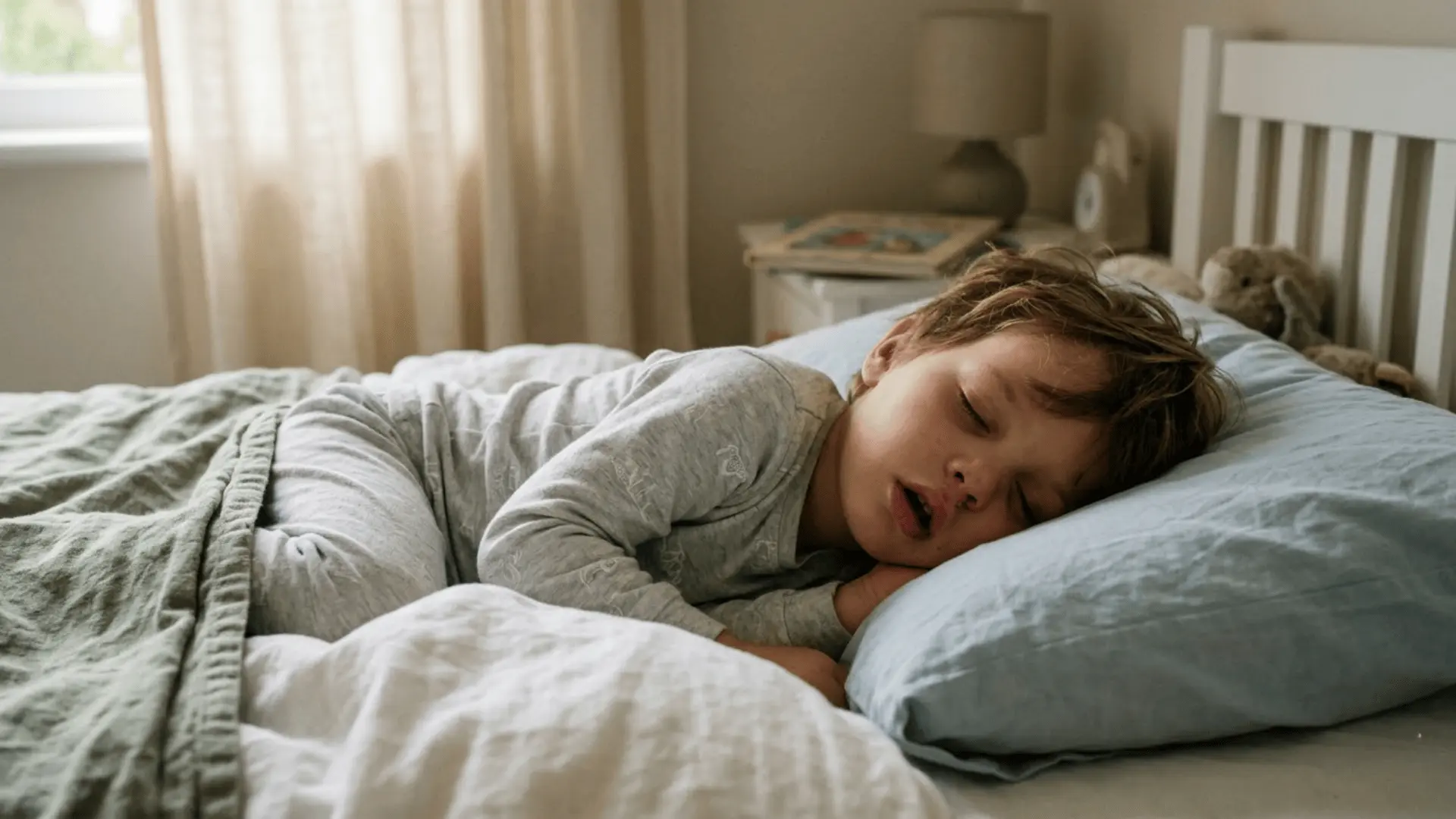
Sleep apnea happens when a child’s airway becomes partly or fully blocked during sleep. Several factors can make it harder for children to breathe at night.
Understanding the common causes can help parents notice potential issues early and seek help from a doctor.
- Enlarged Tonsils or Adenoids: Swollen tonsils or adenoids can block airflow and lead to snoring or pauses in breathing.
- Obesity or Excess Throat Tissue: Extra weight around the neck or throat can narrow the airway, making breathing more difficult during sleep.
- Chronic Nasal Congestion or Allergies: Ongoing stuffy noses or allergies can reduce airflow, causing the child to breathe harder during sleep.
- Structural Differences in Jaw or Airway: Some children have a smaller jaw, high palate, or narrow airway that makes breathing harder.
- Neuromuscular or Genetic Factors: Conditions affecting muscle tone or inherited traits can compromise airway stability and increase the risk of sleep apnea.
These causes often overlap, and many children may have more than one factor contributing to sleep apnea. Early recognition and consultation with a pediatrician can help find the right treatment and improve nighttime breathing.
Common Symptoms of Sleep Apnea in Kids You Might Notice
Sleep apnea does not always look the same in every child, but there are some signs that often appear. If you know what to watch for, you can catch it early and get the right help.
- Loud Snoring or Gasping: Noisy breathing during sleep, sometimes followed by a sudden gasp for air.
- Pauses in Breathing: Brief moments where breathing stops completely before starting again.
- Restless Sleep and Daytime Struggles:Tossing and turning at night, plus irritability or trouble focusing during the day.
- Unusual Sleep Positions: Neck stretched out, or head tilted back to keep the airway open.
If you notice more than one of these signs regularly, it is worth bringing it up with your child’s doctor. Catching sleep apnea early can make a big difference in how well your child sleeps, grows, and functions day to day.
Best Sleeping Positions for a Child with Sleep Apnea
The right sleeping position can make a noticeable difference for children with sleep apnea. Certain positions help keep the airway open and make breathing easier throughout the night.
1. Side Sleeping
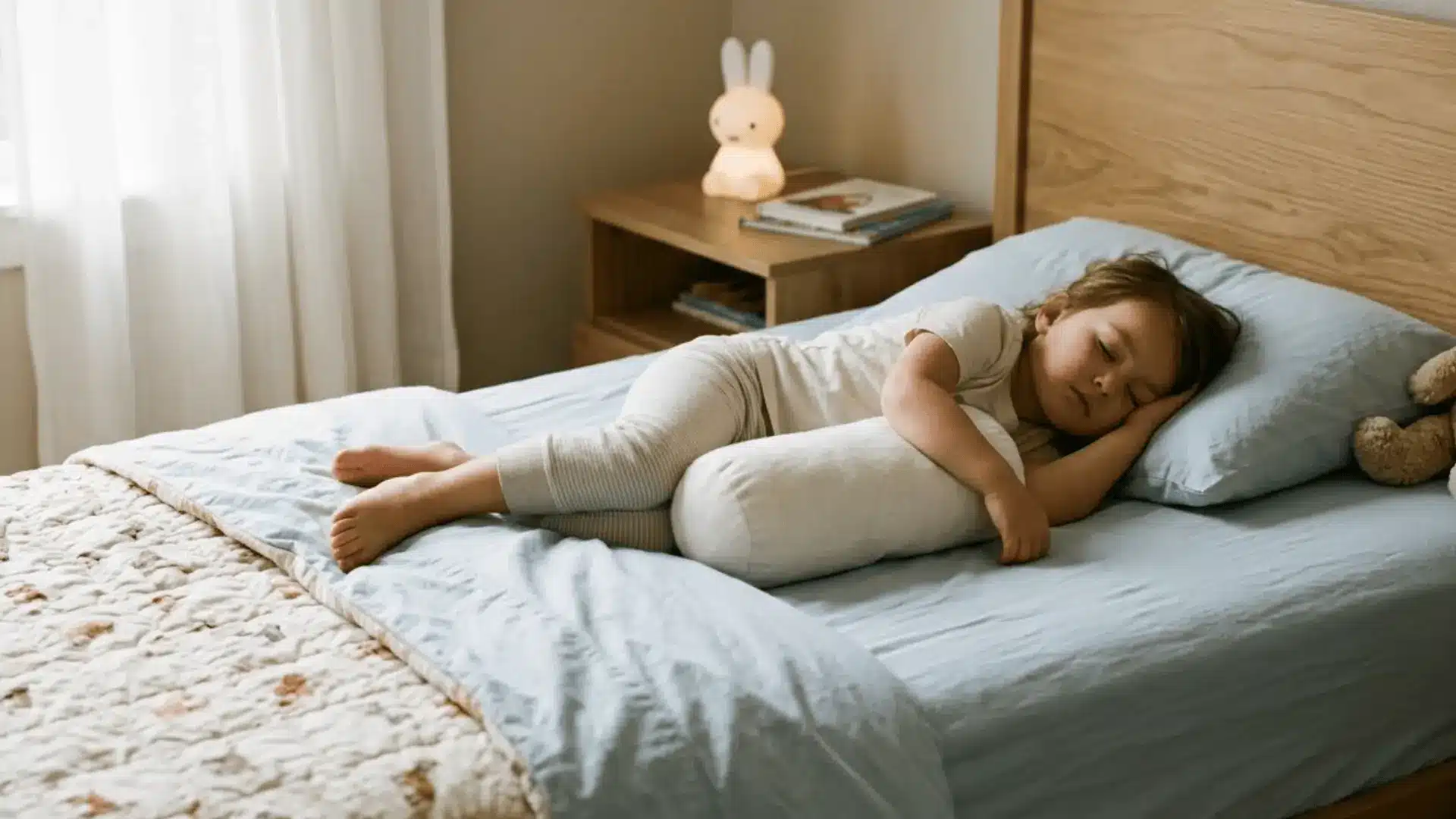
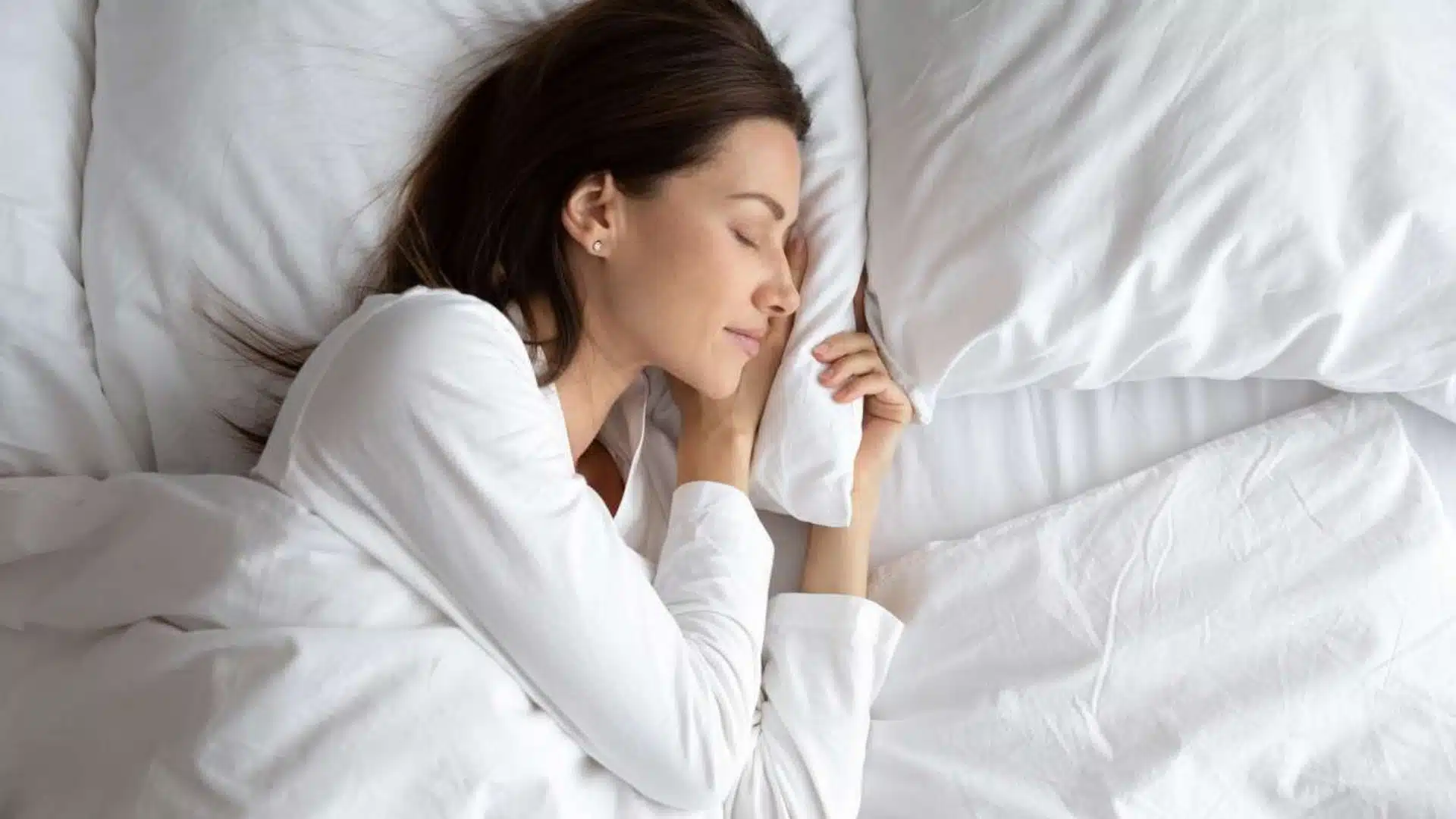
Side sleeping helps keep the airway open and reduces the chance of throat collapse. Children are less likely to snore or pause in their breathing when resting on their side.
Parents can use a small body pillow or rolled blanket to prevent rolling onto the back. This position works well for toddlers and school-age children who can maintain the side posture throughout the night.
2. Elevated or Semi‑Inclined Sleep
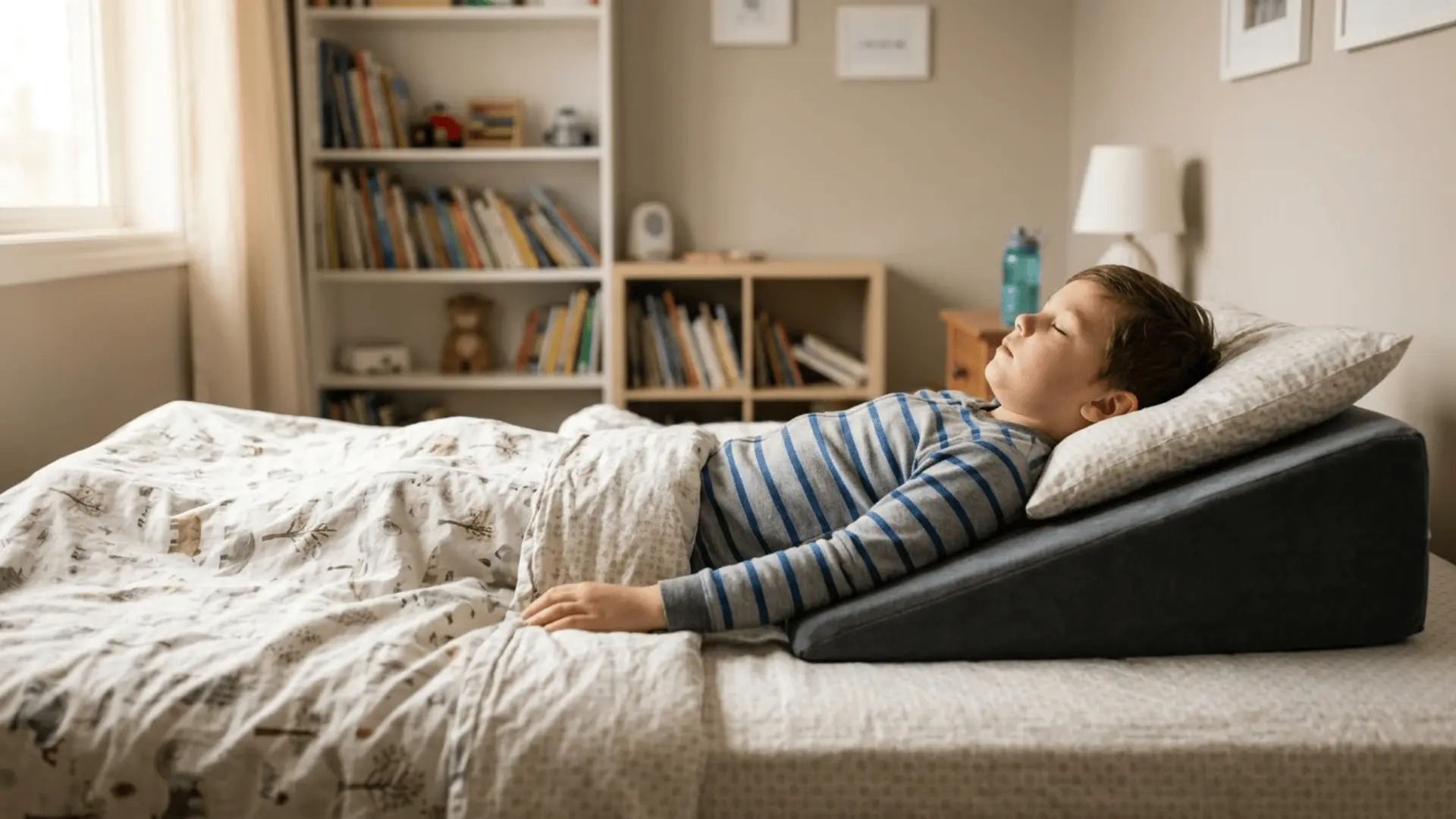
Raising a child’s head and upper body slightly can help reduce airway obstruction and make breathing easier. A wedge pillow or a gently inclined mattress can provide support, but stacking soft pillows should be avoided to reduce the risk of suffocation.
Children who tolerate a mild incline often sleep more comfortably and experience fewer breathing pauses. This position can be particularly useful for school-age children.
3. Stomach Sleeping
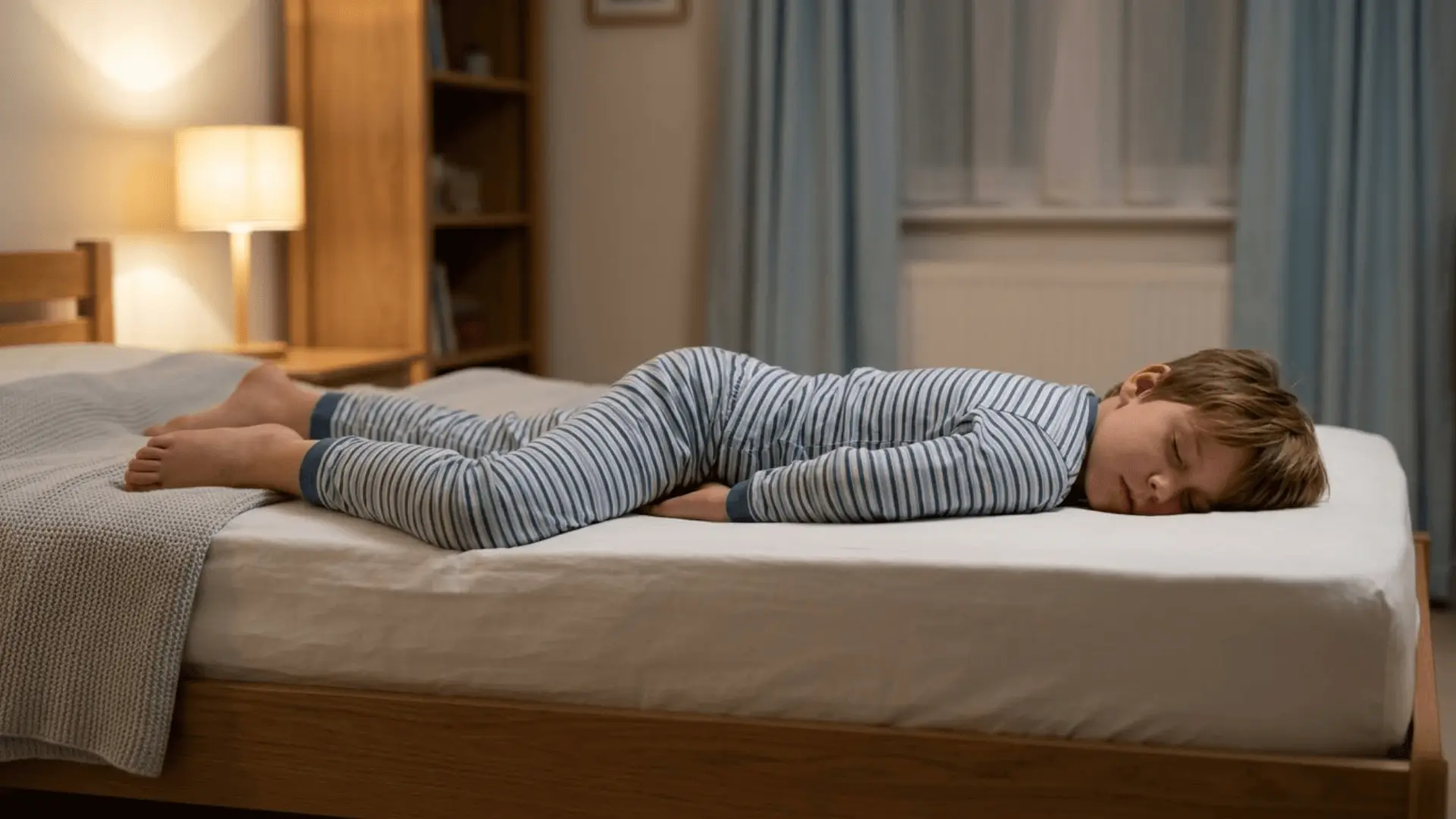
Some children naturally roll onto their stomachs, which can sometimes help keep the airway open. Stomach sleeping should only be used for older toddlers and school-age children, as it is unsafe for infants under 12 months due to SIDS risk.
The mattress must be firm, and loose blankets or pillows should be avoided, especially since safe blanket use depends on a child’s age and sleep readiness.
Parents should monitor the child to ensure safety while using this position.
If Sleeping Positions Aren’t Enough – Medical Options to Know
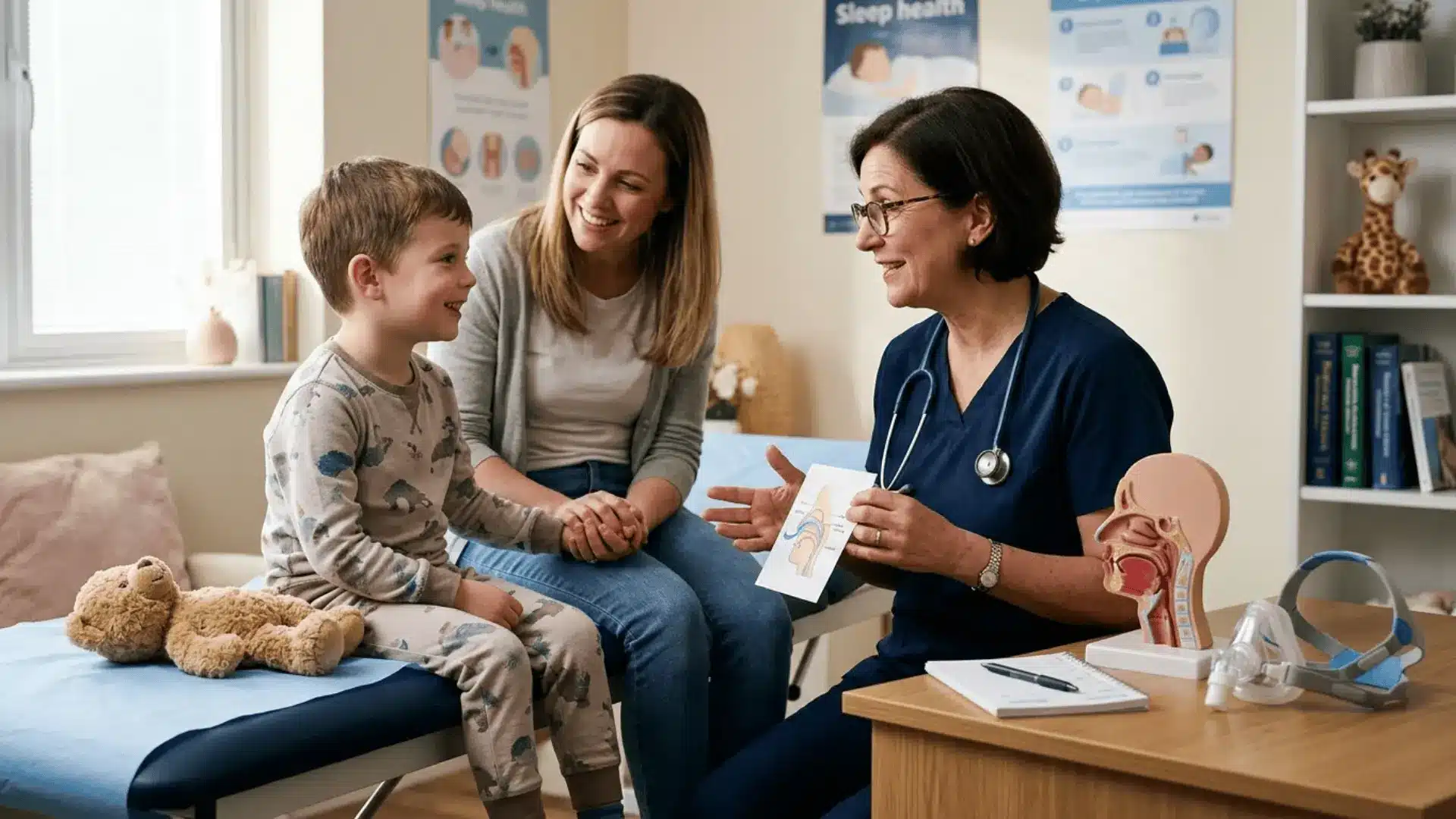
Improving sleep position is just one part of a broader home-remedy approach; families can also try other gentle changes. Medical treatments can help improve breathing, reduce snoring, and support overall health.
1. Tonsil & Adenoid Removal – Common and Effective in Children
Enlarged tonsils or adenoids can block a child’s airway during sleep, causing snoring and pauses in breathing. Removing them is often effective in reducing sleep apnea symptoms.
The procedure is common, safe, and most children recover quickly. After surgery, children usually experience better sleep, more energy during the day, and improved attention, making it one of the first options doctors recommend.
2. CPAP Therapy – How It Works and When It’s Used
CPAP, or Continuous Positive Airway Pressure, delivers gentle air pressure through a mask to keep the airway open during sleep. It is usually prescribed for children whose apnea is moderate or severe, or for those who cannot undergo surgery.
While it may take time to get used to, consistent use can improve sleep quality, reduce snoring, and support better growth and daytime alertness in children.
3. Oral Appliances & Orthodontic Devices
Custom oral appliances help keep the airway open by adjusting the position of the jaw or tongue. They are typically recommended for school-age children with mild to moderate sleep apnea.
Worn while sleeping, these devices can reduce snoring and improve breathing. Most children adjust well to wearing them, making it a non-surgical option that supports better sleep and overall health.
Tips for Parents: Making Sleep Easier Every Night
Managing sleep apnea in kids goes beyond just finding the right sleeping position. A few simple changes to your child’s nightly routine can help them settle down faster and sleep more soundly.
- Build a Calming Bedtime Routine: A warm bath, light reading, or quiet time helps signal the body that sleep is coming.
- Skip Heavy Meals Before Bed: Finish dinner at least two hours before lights out to keep breathing more comfortably.
- Cut Screen Time Early: Turn off devices at least an hour before bed to help the brain wind down.
- Track Symptoms and Loop in a Doctor: Keep a simple sleep log and share it with your child’s pediatrician if snoring or gasping persists.
Small habits add up over time. The more consistent you are with these routines, the better chance your child has of getting the restful sleep their body needs.
Final Thoughts
Sleep apnea can feel overwhelming, but small changes really do add up. From adjusting how your child sleeps to building a better bedtime routine, every step you take brings them closer to more restful nights.
The best sleeping position for a child with sleep apnea is usually side sleeping, but every child is different, and what works for one may need tweaking for another.
I always recommend keeping your child’s pediatrician in the loop as you try new things.
With the right support and a little patience, better sleep is absolutely within reach. Have you tried any of these sleeping positions with your child?
Drop a comment below, I would love to hear what has worked for your family.
Frequently Asked Questions (FAQs)
Can Sleep Apnea Affect My Child’s Growth?
Yes, untreated sleep apnea can disrupt growth hormone release at night, which may slow normal growth and affect overall development.
Is Sleep Apnea Hereditary in Children?
Genetics can increase risk; children with a family history of sleep apnea or enlarged tonsils/adenoids may be more likely to develop the condition.
Can Allergies Make Sleep Apnea Worse?
Yes, allergies causing chronic nasal congestion or swollen nasal passages can narrow the airway, making snoring and breathing pauses more frequent at night.