




Finding the right comforter size for a queen mattress can be surprisingly confusing.
Stores and online listings often list “queen” comforters with very different measurements, making it hard to know which will actually fit.
Some options offer generous coverage, while others barely extend over the sides. Choosing the right dimensions is essential for comfort, appearance, and proper warmth.
A comforter that’s too small leaves mattress edges exposed, while one that’s too large can bunch or drag on the floor.
Understanding typical queen comforter measurements and how they relate to your mattress size makes it much easier to pick the perfect fit.
What Is a Queen Mattress?
Before we talk comforters, let’s establish the baseline. A standard queen mattress measures 60 inches wide by 80 inches long, which matches standard queen bed dimensions used across most bedding guides.
This has been the standard for decades, and most manufacturers stick to these exact dimensions.
Knowing these measurements is essential because they serve as the foundation for choosing the right bedding.
Here’s the thing, though: your mattress width and length are just the starting point.
Comforters need to be significantly larger to provide proper coverage, balanced drape, and enough overhang on both sides.
That’s where things get less standardized, since comforter dimensions vary depending on brand and style.
Queen Comforter Size Chart
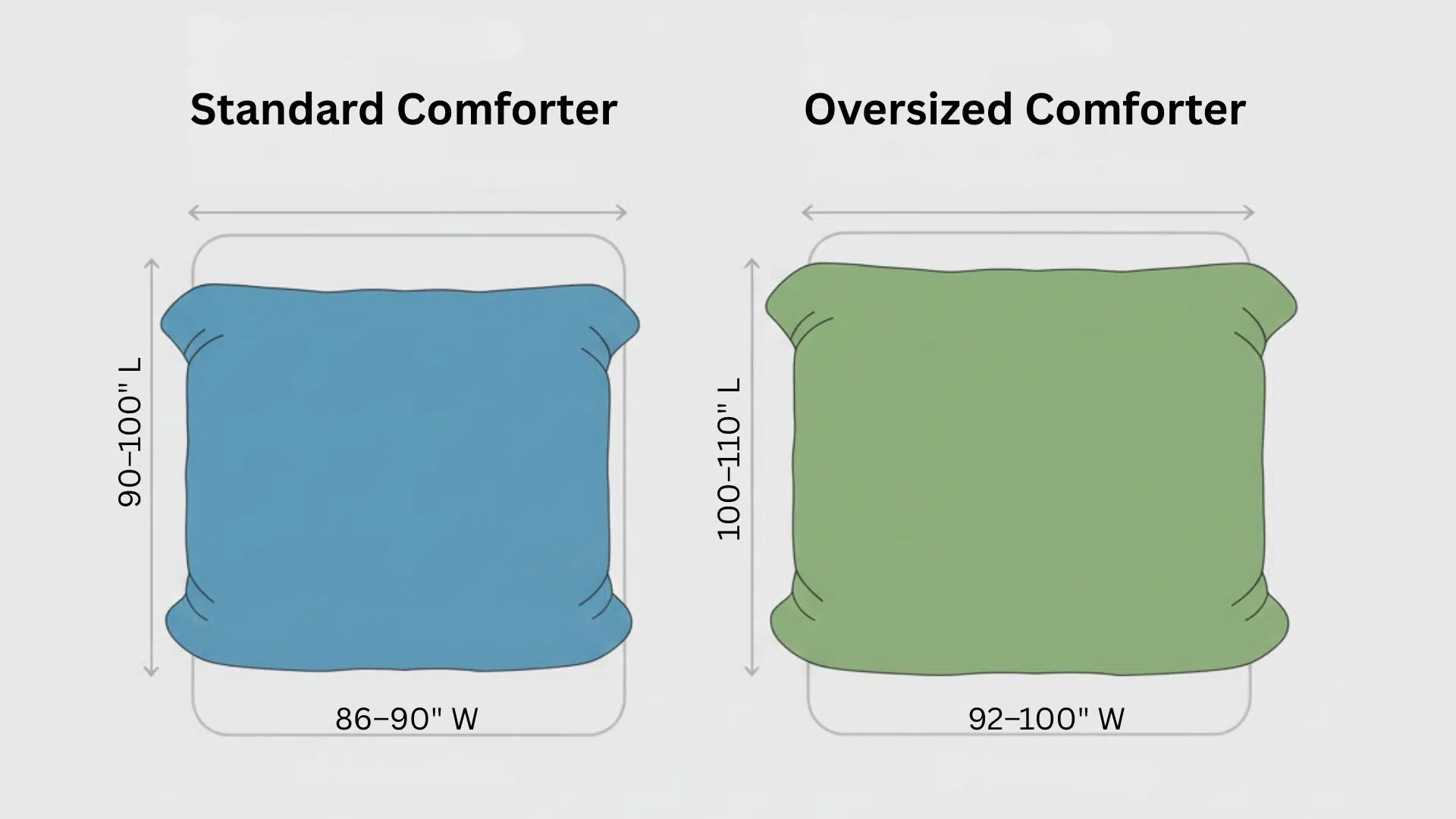
Choosing the right comforter size becomes much easier when you compare mattress measurements with standard and oversized comforter dimensions side by side.
| Bed Type | Mattress Dimensions | Standard Comforter Range | Oversized Comforter Range |
|---|---|---|---|
| Queen | 60″ × 80″ | 86–90″ W × 90–100″ L | 92–100″ W × 100–110″ L |
| Full/Queen | 54–60″ × 75–80″ | 81–88″ W × 86–96″ L | 88–92″ W × 96–100″ L |
Recommended overhang for queen beds typically includes 13–15 inches per side and 10–20 inches at the foot, depending on how much drape you prefer.
Full/queen comforters on the narrower side, especially those 81–86 inches wide, often provide limited coverage for a full 60-inch queen mattress, particularly on thicker or pillow-top designs.
Understanding these measurements helps you choose a comforter that fits well, looks balanced, and provides comfortable coverage every night.
Complete Comforter Size Chart: All Bed Types
Understanding how queen comforters compare to other sizes helps put things in perspective. Here’s a complete breakdown of standard comforter dimensions for all bed types:
| Bed Type | Mattress Size | Standard Comforter Size |
|---|---|---|
| Twin | 39″ × 75″ | 66-68″ W × 86-88″ L |
| Twin XL | 39″ × 80″ | 66-68″ W × 90-92″ L |
| Full (Double) | 54″ × 75″ | 81-84″ W × 86-88″ L |
| Queen | 60″ × 80″ | 86-90″ W × 90-100″ L |
| King | 76″ × 80″ | 102-108″ W × 90-100″ L |
| California King | 72″ × 84″ | 104-110″ W × 96-102″ L |
Comforter sizes widen with each size up, lengths often match, widths vary by mattress type, and California king shapes differ.
How Queen Comforters Compare to Full and King Sizes
Understanding how queen comforters differ from full and king sizes helps prevent sizing mistakes and ensures proper coverage, drape, and overall fit.
1. Full Size vs Queen Comforter
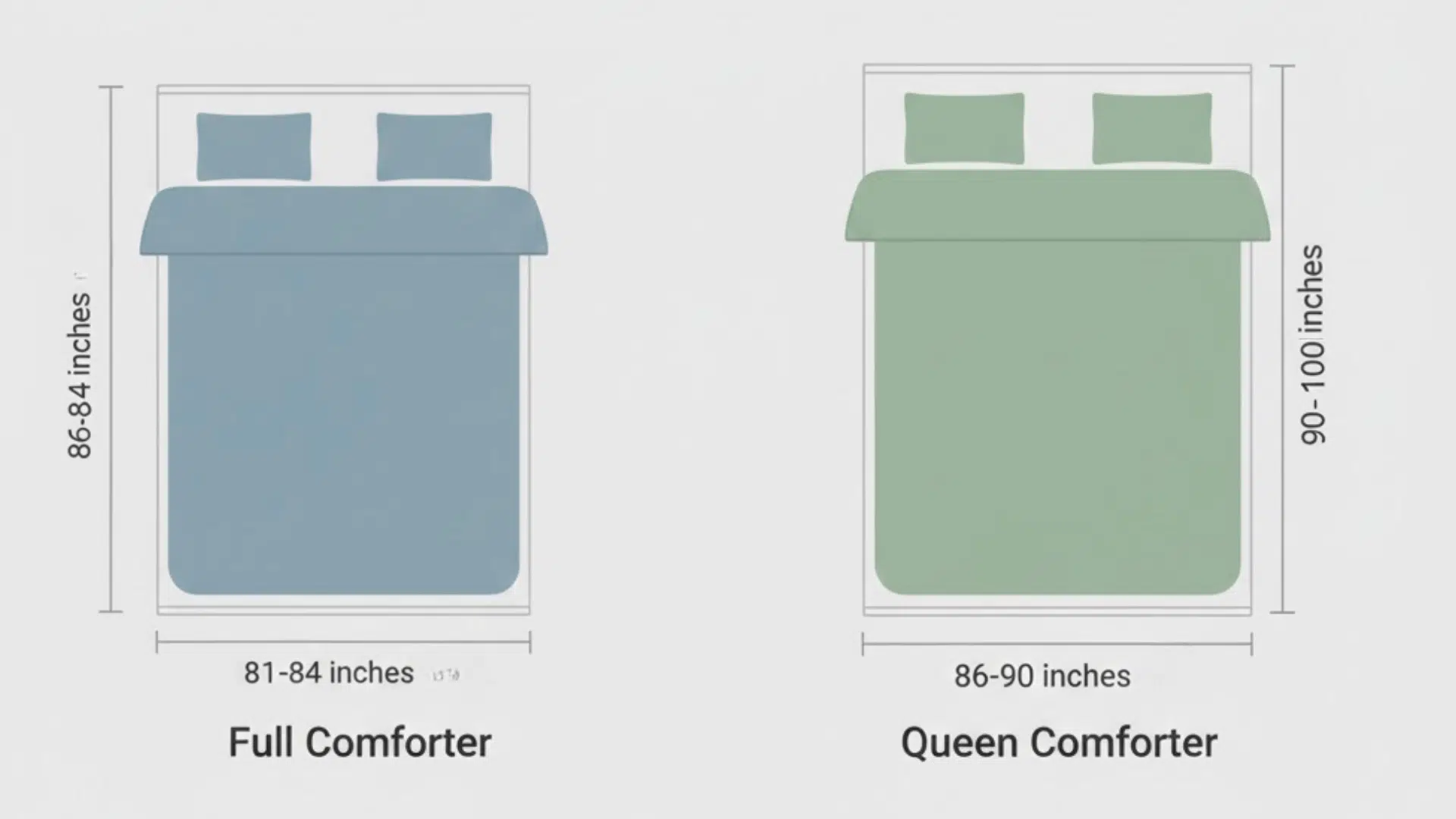
Many shoppers confuse full and queen comforters because they’re often sold as “full/queen,” even though the full version is noticeably narrower.
A full comforter is usually around 81–84 inches wide, while a queen measures about 86–90 inches wide. That extra width significantly improves side coverage and overall fit on a queen mattress.
2. King vs Queen Comforter
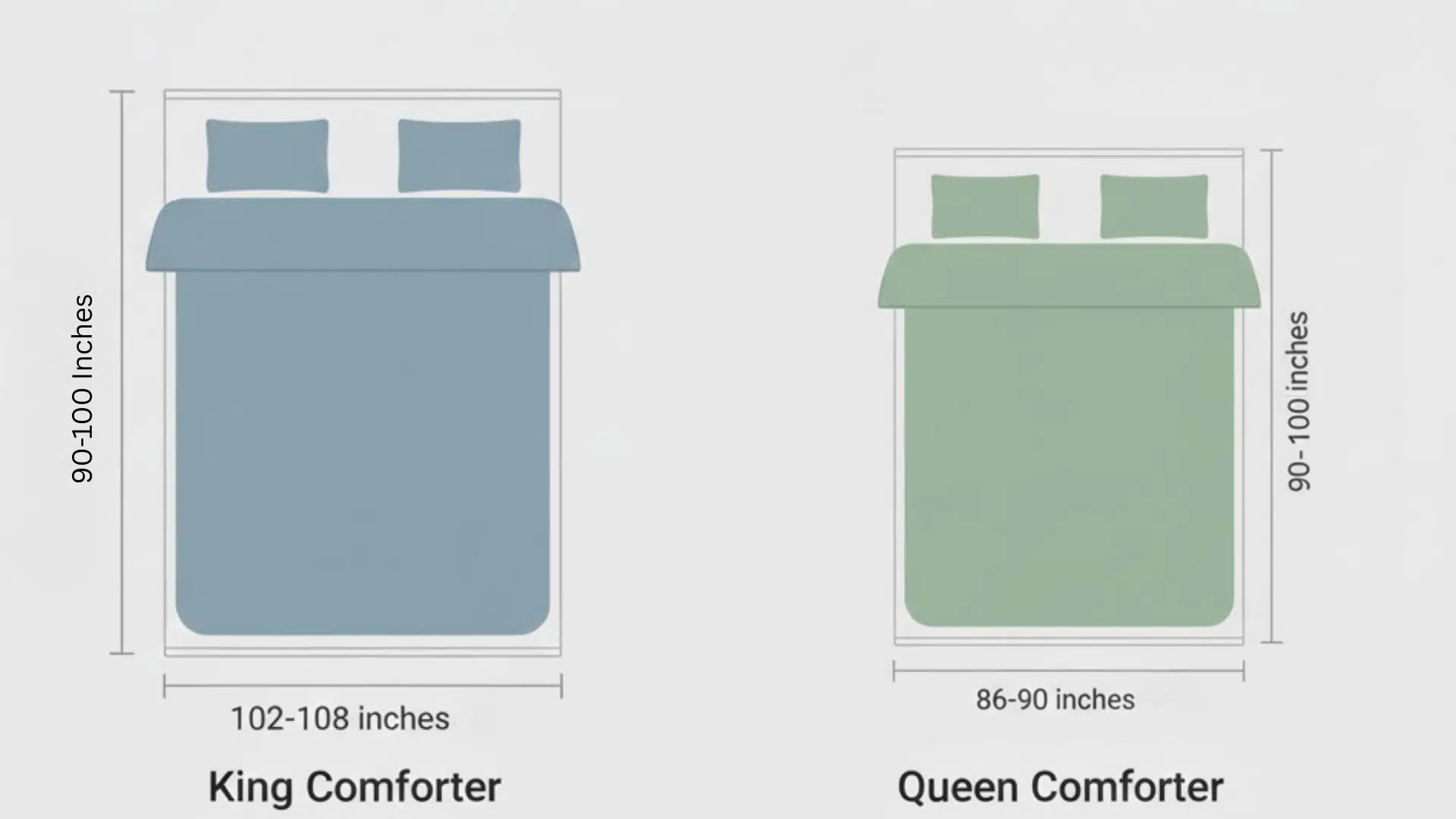
Queen and king comforters are commonly mixed up because their lengths are similar, but king sizes are much wider.
A queen typically measures 86–90 inches wide, while a king ranges from about 102–108 inches. This extra width creates a dramatic drape on a queen bed, though it can appear oversized or touch the floor.
Why Comforter Sizes Aren’t Always Standard?
Many shoppers get confused because comforter dimensions vary significantly depending on brand, mattress, and style preferences.
- Manufacturers follow unique sizing guidelines, creating noticeable variation in comforter proportions and overall bedding coverage.
- “Full/queen” labeling aims for versatility, often resulting in reduced drape and a more limited overall fit.
- Mattress thickness varies widely, and some comforters suit thinner beds while others accommodate deeper, modern designs.
- Style preferences differ: tailored looks require minimal fabric, while luxury designs require more generous material.
Review measurements carefully to ensure your comforter provides the appearance, coverage, and consistency needed for a balanced, comfortable bedroom setup.
How to Measure Your Bed and Determine the Right Comforter Size

Measuring your bed ensures you choose a comforter that provides proper coverage, drape, and balance. A few quick measurements prevent sizing mistakes and guarantee a better fit.
Step 1: Measure Your Mattress
Start by measuring the width and length of your mattress from edge to edge. This gives you the foundation for choosing the correct comforter size.
A standard queen should measure 60 inches by 80 inches, and confirming this helps avoid mismatches.
Step 2: Measure Mattress Thickness
Check how tall your mattress is, including any toppers, pads, or pillow-tops. Modern mattresses vary greatly in height, which affects how the comforter drapes down the sides.
Knowing this measurement helps you choose a comforter with the right amount of coverage.
Step 3: Decide Your Desired Overhang
Determine how much drop you want on each side and at the foot of the bed. Overhang preference varies depending on style, room size, and mattress height.
Choosing minimal, standard, or generous drapes ensures your comforter looks intentional and fits your aesthetic.
Step 4: Calculate Minimum Comforter Width
Use your mattress width and preferred side drop to calculate the minimum comforter width. Add the drop amount to each side, plus a few extra inches for mattress depth.
This measurement guarantees the comforter provides balanced coverage without appearing too short.
Step 5: Calculate Minimum Comforter Length
Measure the coverage you want at the foot of the bed, then add it to the mattress length.
Include extra inches for mattress height to prevent the comforter from appearing skimpy. This ensures proper drape and a clean, finished look.
Common Mistakes and How to Avoid Them
Many shoppers choose the wrong comforter simply because sizing details get overlooked. Understanding these common mistakes helps you avoid disappointment and achieve the perfect fit.
- Buying a Comforter That’s Too Small: Measure your mattress carefully and add your preferred overhang to ensure the comforter provides full, balanced coverage on all sides.
- Choosing a Comforter That’s Too Large: Consider room size, bed height, and desired drape so the comforter enhances your space without overwhelming or dragging excessively.
- Trusting Size Labels Instead of Measurements: Always read actual dimensions in inches and compare them to your mattress to ensure accurate coverage before purchasing.
- Ignore Mattress Thickness and Bed Height: Measure the total mattress depth, including toppers, so the comforter maintains proper drape and doesn’t appear short or poorly fitted.
- Forgetting Your Bed-Making Style: Think about whether you tuck, layer, or drape your bedding, then choose a comforter size that suits your daily routine.
Correcting these mistakes ensures your comforter fits beautifully, improves sleep comfort, and enhances your bedroom with the look and coverage you prefer most.
Wrapping Up
A well-fitting queen comforter makes your bedroom look pulled together and keeps you comfortable through the night.
The key takeaway? Measure before you buy. Don’t rely on labels alone. Take five minutes to measure your mattress dimensions, height, and desired overhang.
When you match the right dimensions to your bed, you’ll get the coverage you need and the look you want.
No more exposed mattress edges, no more excess fabric pooling on the floor, just a comforter that fits your queen bed perfectly.
Now that you’re armed with the measurements and know what to look for, you can shop with confidence. Get that comforter that finally fits right.
Frequently Asked Questions
How Often Should I Replace a Queen Comforter?
Most comforters last five to seven years, depending on fabric quality, daily use, and maintenance habits.
Do Certain Fabrics Make a Comforter Look Fuller on the Bed?
Yes, loftier fills and textured materials create a plush, elevated appearance without requiring oversized dimensions.
Can the Bed Frame Style Impact Which Comforter Size Looks Best?
Absolutely, taller frames or footboards benefit from longer drops, creating a balanced and visually intentional drape.
Will a Heavier Comforter Stay in Place Better Overnight?
Heavier comforters shift less during sleep, offering steadier coverage and significantly reducing nighttime blanket adjustments.