



If you’ve ever searched for the difference between a double vs. a full bed and ended up more confused than when you started, trust me, I get it.
I’ve been in the same spot, thinking why there are two names for one mattress size, and which one actually fits real-life needs.
In this article, we’ll walk through everything in a clear, down-to-earth way so you can finally understand what these terms mean, how they compare, and what matters for your room and sleep style.
You’ll get simple answers, no clutter, and a clear path to choosing the size that feels right for you. Let’s make your decision easier from the very first step.
Is a Double and Full Bed the Same Size?
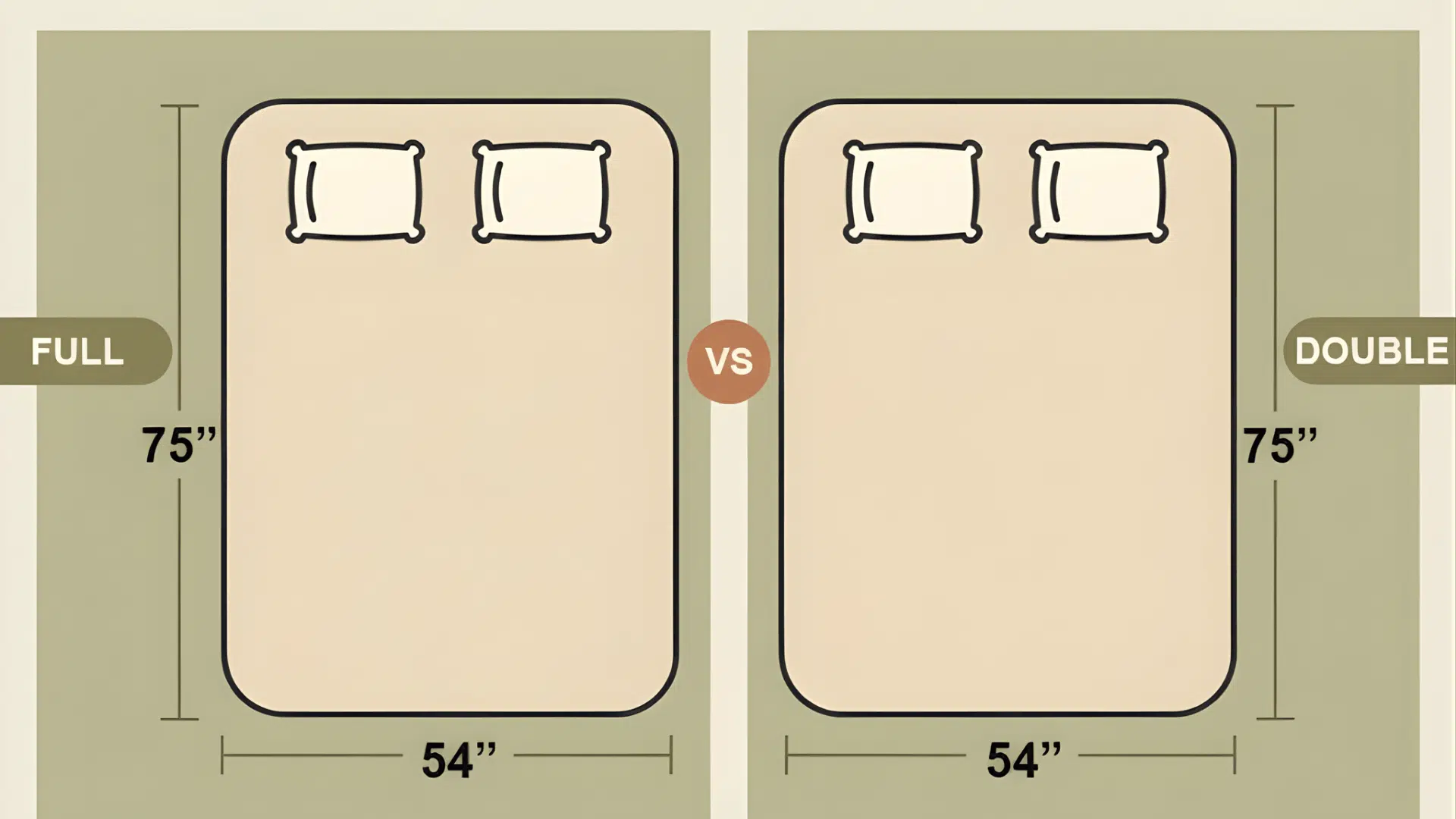
Yes, a full bed and a double bed are the same size. Both measure 54 inches wide and 75 inches long. These two names exist because people used different terms at different times.
In the past, this size was called a “double” because it was wider than a twin and meant for two people.
As mattress sizes became more standardized, U.S. retailers shifted to the word “full.” It sounded clearer, worked better on sizing charts, and helped shoppers compare mattress types more easily.
Hotels, however, kept the older naming system. They still use terms like “twin room” and “double room,” which is why you’ll often see “double” in hotel listings.
Even then, it still refers to the same 54″ × 75″ mattress size. So, whether you see full or double, it’s the exact same bed size with two different names
Double vs. Full Bed: Key Differences
Choosing between these two names can be confusing since stores and hotels use them differently. This section explains what each name means and how the size is used:
1. Dimensions
A full bed and a double bed are the same size. Both measure 54 inches wide and 75 inches long.
Most stores use the full name because it fits modern sizing charts. The name double is older and was used to describe a bed meant for two.
Hotels and older listings still use double, but it refers to the same size.
When planning your room, picturing the 54″ × 75″ outline helps you see how the mattress will fit. A quick tape outline or sketch makes the setup easier.
2. Usage
This mattress size works well for single adults, teens, and small rooms. It offers more space than a twin without taking up too much floor area.
Since the size is identical, usage does not change whether you call it full or double. It fits well in guest rooms, studio apartments, and smaller bedrooms.
Sharing this size can feel tight for two adults. Each person gets about 27 inches of space, and the 75-inch length may feel short for taller sleepers.
Many couples choose a larger mattress for better comfort. This size is a practical choice for one person and short-term guests.
3. Room Size
This mattress size usually works well in rooms that are about 10 × 11 feet or slightly larger. It leaves enough space for basic furniture without making the room feel crowded.
Smaller rooms can still fit this size, but you may need to limit the amount of extra furniture. Measuring the room first helps you see how much open space you’ll have left.
4. Layout Recommendations
Before setting up the room, it helps to plan where the bed and other pieces will go. This keeps the space easy to move around. Here are simple layout tips:
- Place the bed along the longest wall
- Keep one side open for walking
- Use smaller nightstands to save space
- Avoid blocking windows or doors
- Keep the center of the room open to make it feel larger
5. Bedding Compatibility
Bedding for this mattress size is simple to shop for because both names use the same measurements. Sheets, comforters, and mattress protectors labeled 54″ × 75″ will fit correctly.
Some older bedding sets may still use the older name, but they still match the same size. As long as the package lists the correct measurements, the bedding will fit without issues.
Double/Full vs. Other Mattress Sizes
Comparing mattress sizes side by side makes it easier to see what fits your space and sleep needs. This table shows the most common sizes, their measurements, and who they work best for:
| Mattress Size | Width × Length (in) | Width × Length (cm) | Best Room Size | Price Range | Best For |
|---|---|---|---|---|---|
| Twin | 38″ × 75″ | 96 × 191 cm | 7′ × 10′ | Low | Kids, small rooms, bunk beds |
| Twin XL | 38″ × 80″ | 96 × 203 cm | 7′ × 10′ | Low–Mid | Taller teens, dorms |
| Full / Double | 54″ × 75″ | 137 × 191 cm | 10′ × 11′ | Mid | Single adults, teens, guest rooms |
| Full XL | 54″ × 80″ | 137 × 203 cm | 10′ × 12′ | Mid–High | Tall single sleepers |
| Queen | 60″ × 80″ | 152 × 203 cm | 10′ × 12′ | Mid–High | Couples, main bedrooms |
| King | 76″ × 80″ | 193 × 203 cm | 12′ × 12′ | High | Couples, families, large rooms |
| California King | 72″ × 84″ | 183 × 213 cm | 12′ × 14′ | High | Tall sleepers, large bedrooms |
Pros and Cons of a Full/Double Bed

A full or double bed has its strengths and limits, and knowing both can help you decide if it fits your needs. Here are the main pros and cons in a quick, easy list:
Pros:
- More space than a twin for one person
- Comfortable for single adults and teens
- Fits well in small rooms and apartments
- More affordable than larger sizes
- Bedding and frames are cheaper
- Easy to move and set up in tight spaces
Cons:
- Tight for two adults to share
- Each person gets only about 27 inches of space
- Length may feel short for tall sleepers
- Not ideal for families or co-sleeping
- Couples often upgrade to a queen later
These pros and cons make it easier to see where this mattress size fits best. Use them to decide whether it meets your comfort needs and room setup.
How to Choose Your Double/Full Bed
Choosing the right double/full bed depends on your space, comfort needs, and how you sleep. This table gives you a quick way to check what matters before you buy:
| Factor | What to Check |
|---|---|
| Room Size | Works best in rooms around 10 × 11 ft; leave space for walking and nightstands |
| Sleeping Habits | Good for still sleepers; tighter for those who move a lot |
| Height | Length is 75 in; taller sleepers may feel short |
| Sharing the Bed | Comfortable for one adult; tight for two long-term |
| Budget | More affordable mattresses, bedding, and frames than larger sizes |
This quick glance helps you see whether a double/full bed fits your needs. Use it to make a choice that feels comfortable and works well in your space.
Final Thoughts
Understanding the double vs full bed debate can feel confusing at first, but now you’ve seen how simple it really is once the names, sizes, and real-life use cases are clear.
With this guide, you walked through the basics in an easy-to-follow way, so you can choose what actually fits your room and sleep style.
My goal was to give you clarity without the overwhelm, and I hope it helped you see your options with confidence.
Before you make a final choice, think about your space, your habits, and what feels comfortable to you. A little clarity goes a long way in finding the right bed!