

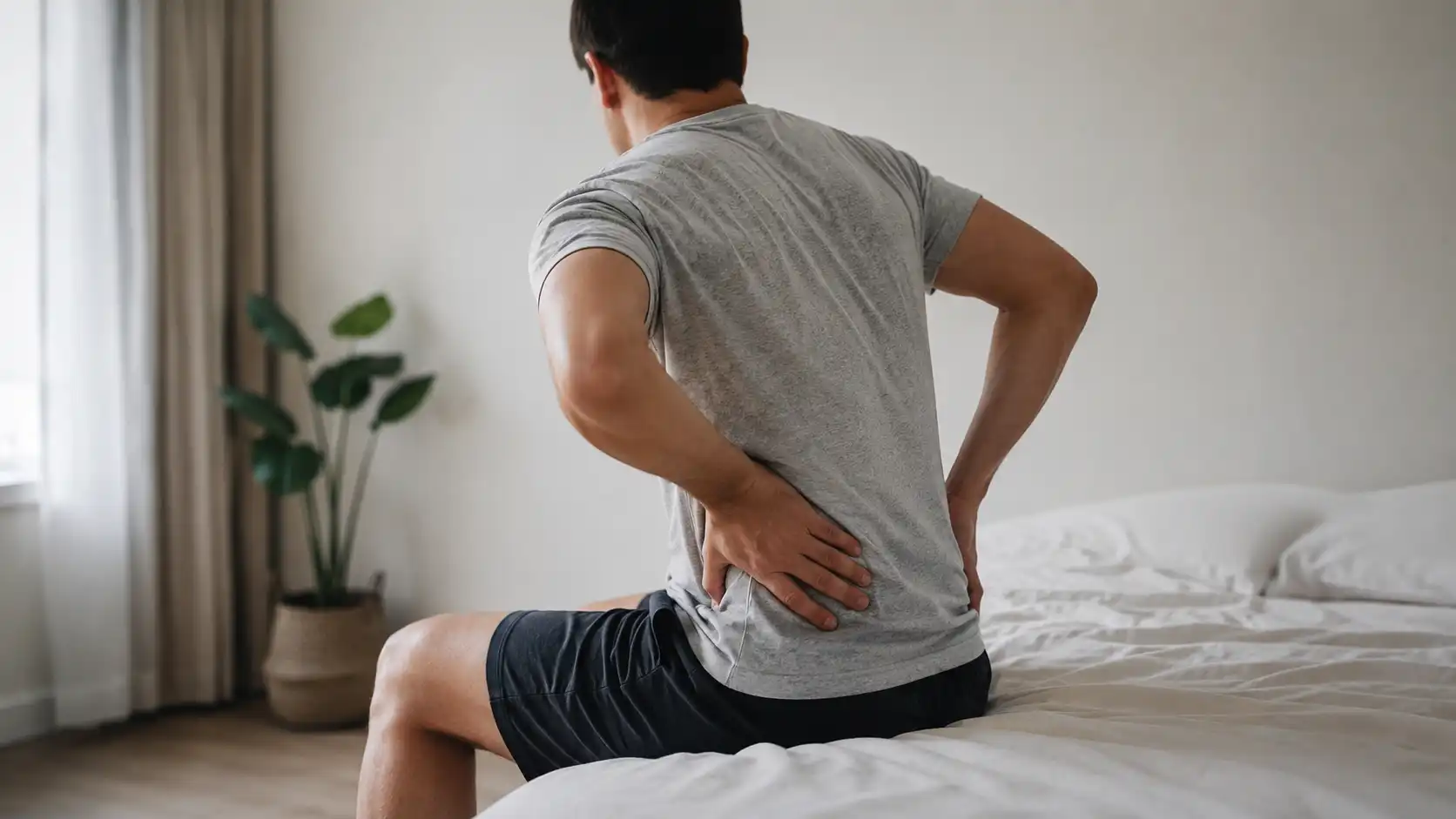

Hip pain at night is one of the hardest parts of pregnancy that no one warns you about. You shift, you adjust, you stack pillows, and somehow nothing works.
The truth is, the right sleeping positions for hip pain while pregnant can make a real difference. Small changes to how you lie down can take pressure off your joints and help you actually rest.
In your second or third trimester, knowing how to sleep when pregnant matters more than most people think, as it reduces tossing and turning throughout the night.
Why Hip Pain Happens During Pregnancy
Hip pain during pregnancy isn’t random. Your body is going through real, structural changes, and your hips are right in the middle of it all.
A hormone called relaxinloosens your ligaments and destabilizes your joints to prepare your pelvis for birth. This is helpful for delivery, but it also makes your joints less stable.
Add the weight of a growing belly to that, and your hips take on a lot more pressure than usual.
Your center of gravity shifts, too. So your posture changes, your muscles compensate, and tension builds up around your hip joints.
By the second and third trimesters, lying down can actually feel worse than standing. Your body is working hard, and your hips are feeling every bit of it.
Best Sleeping Positions for Hip Pain While Pregnant
Finding a comfortable sleep position gets harder as your belly grows. These nine positions can help take the pressure off your hips so you can actually get some rest.
1. Sleep on Your Left Side
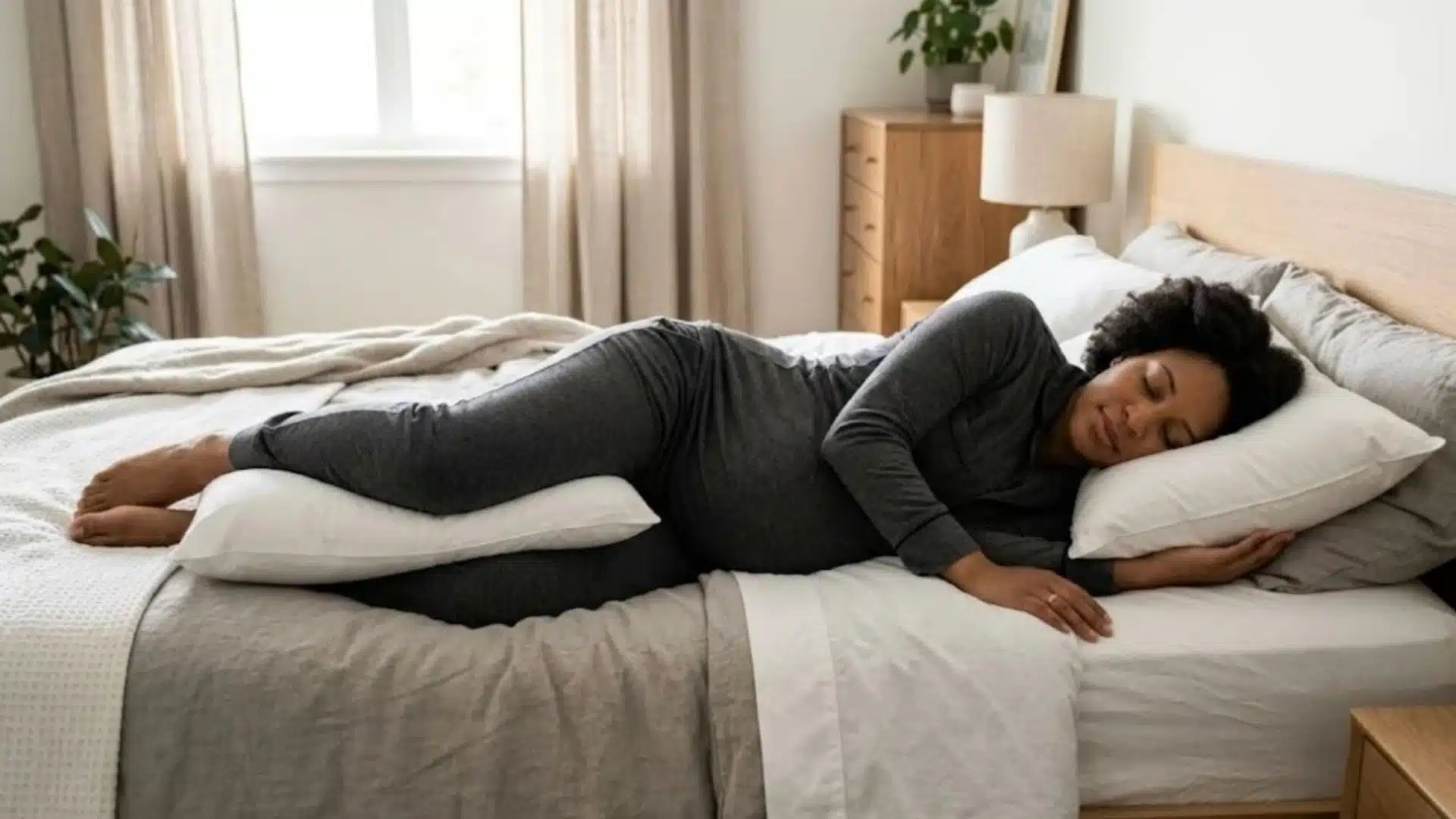
As per the US Department of Health and Human Services, left-side sleeping is one of the most recommended positions during pregnancy. It improves blood flow to your baby and takes stress off your lower back and hips.
- Lie on your left side with your body relaxed
- Keep your legs loosely stacked on top of each other
- Place a pillow between your knees to align your hips
- Rest your head on a supportive pillow at neck height
This position is simple but effective. Most doctors recommend it for a reason.
2. Pillow Between Your Knees
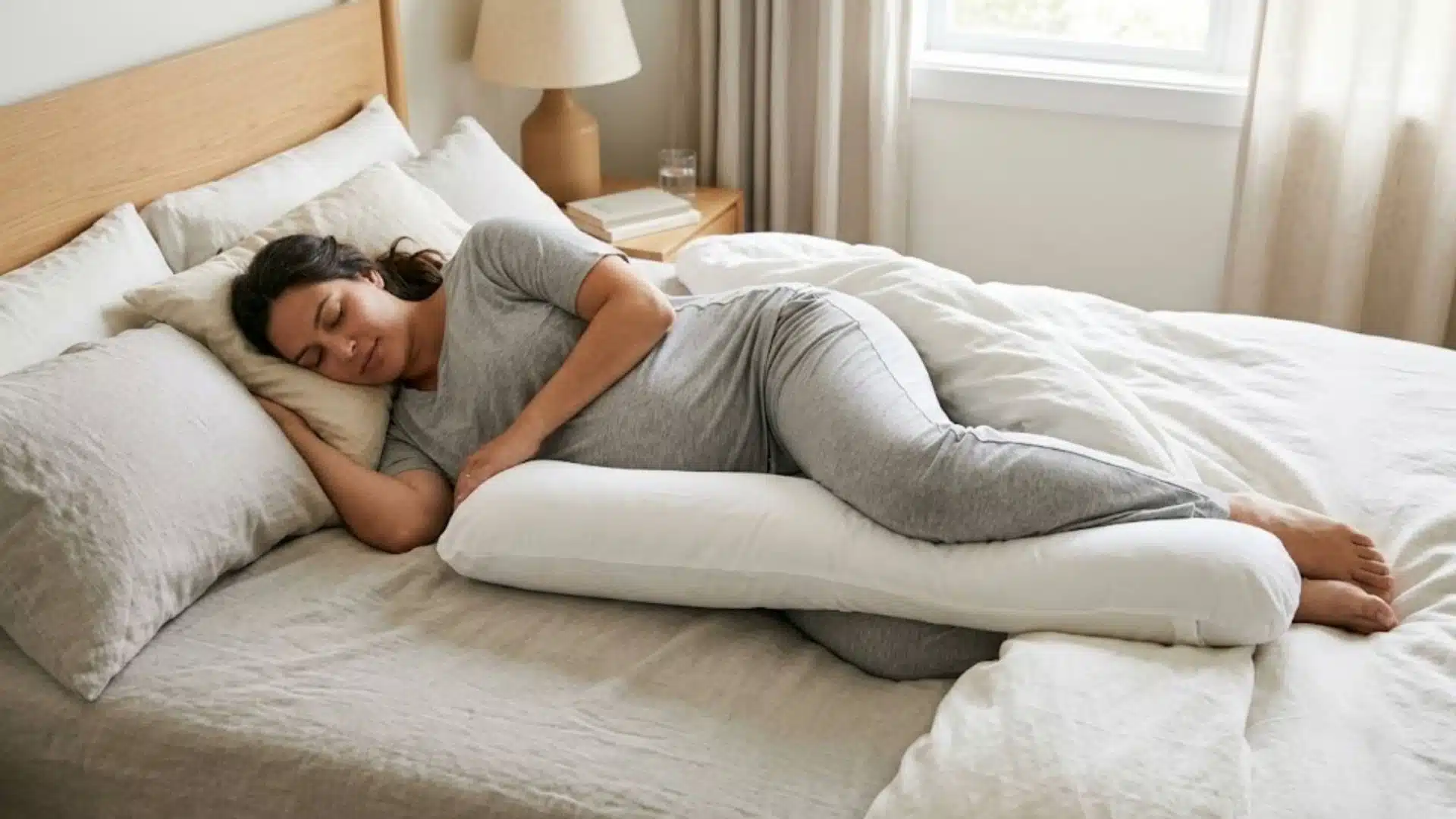
A pillow between your knees is a small change that makes a big difference. It keeps your hips level and stops your top leg from pulling your pelvis out of alignment.
- Lie on your side, either left or right
- Bend your knees slightly into a relaxed position
- Place a firm pillow between your knees and ankles
- Make sure the pillow fills the full gap so your hips stay even
Your hips and lower back will feel the relief almost right away. It’s one of the easiest fixes you can try tonight.
3. Full-Body Pregnancy Pillow

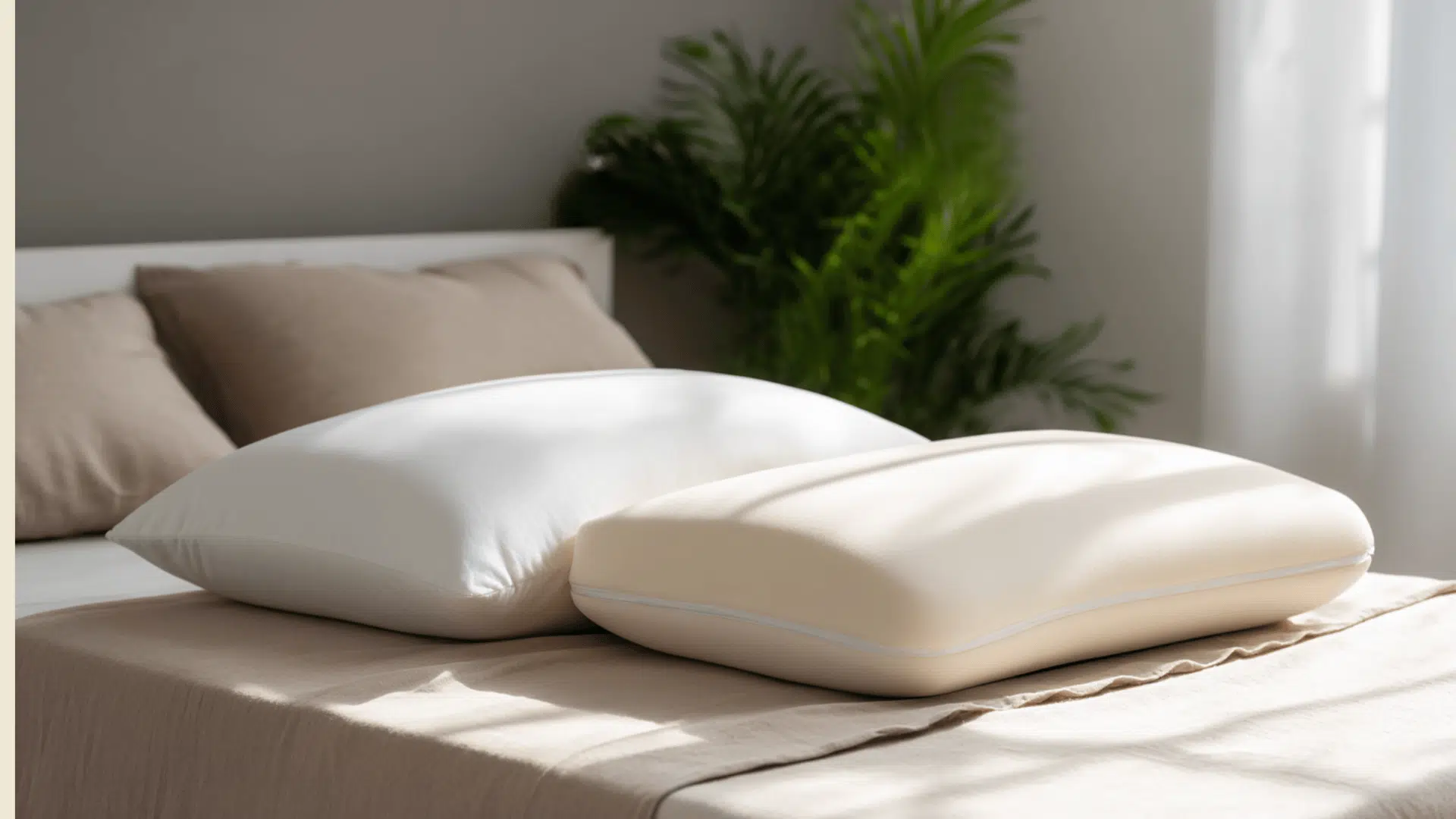
A full-body pillow gives your whole body something to rest against. It supports your belly, back, and hips all at once.
- Lie on your side and place the pillow along the full length of your body
- Tuck the front of the pillow under your belly for support
- Wrap your top leg over the pillow to keep your hips aligned
- Let the back of the pillow support your lower back, too
Once you try a full-body pillow, it’s hard to go back. It takes so much work off your hips while you sleep.
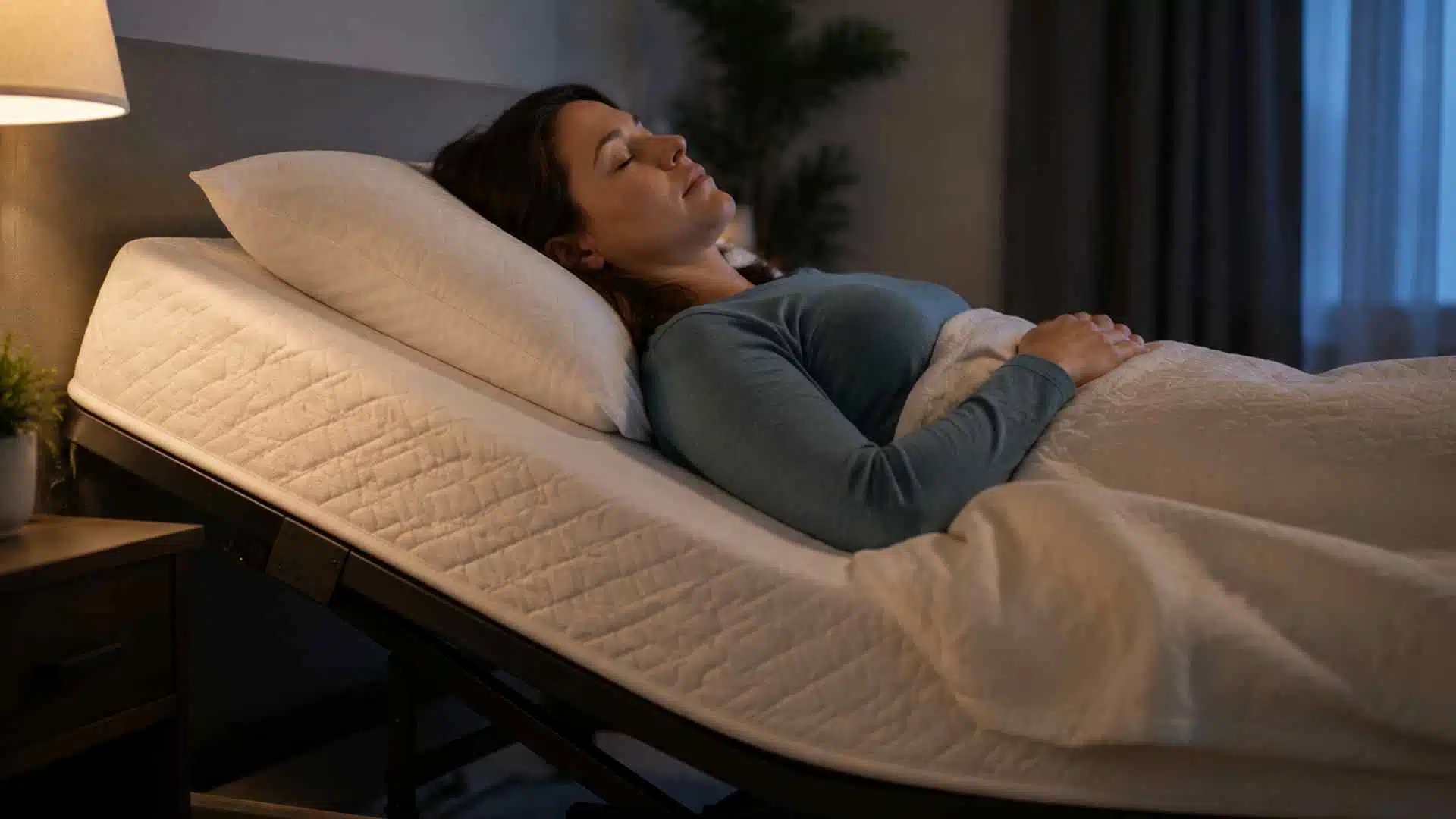
4. Semi-Reclined Position
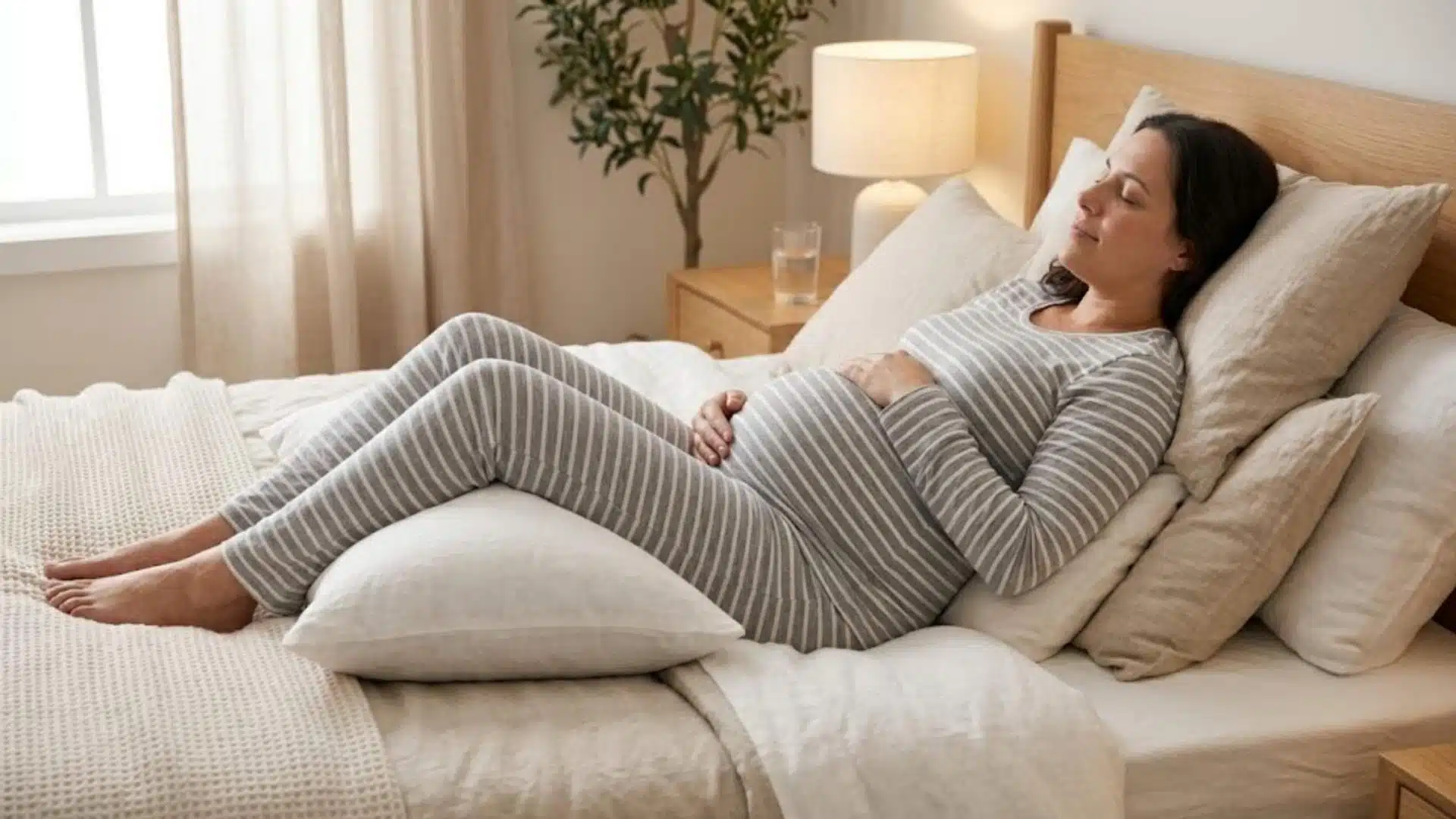
If lying flat feels uncomfortable, a slightly reclined position can ease the pressure. It shifts your weight back and gives your hips a break.
- Use a wedge pillow or stack two to three firm pillows behind your back
- Lean back at a 45-degree angle, not fully flat
- Keep a pillow under your knees to reduce hip strain
- Make sure your neck and head are supported, too
This works especially well in the third trimester when flat sleeping feels nearly impossible. Give your hips a gentler angle and see how much better you sleep.
5. Pillow Under Your Belly

Your belly needs support,t too, and without it, the weight can drag on your hips all night. A pillow underneath lifts the load.
- Lie on your side in a comfortable position
- Slide a small, flat pillow directly under your belly
- Let it support the weight without pushing your belly upward
- Combine this with a knee pillow for extra hip relief
It’s a subtle adjustment, but your hips will notice. Less belly drag means less strain pulling through your pelvis.
6. Right Side Sleeping (With Caution)
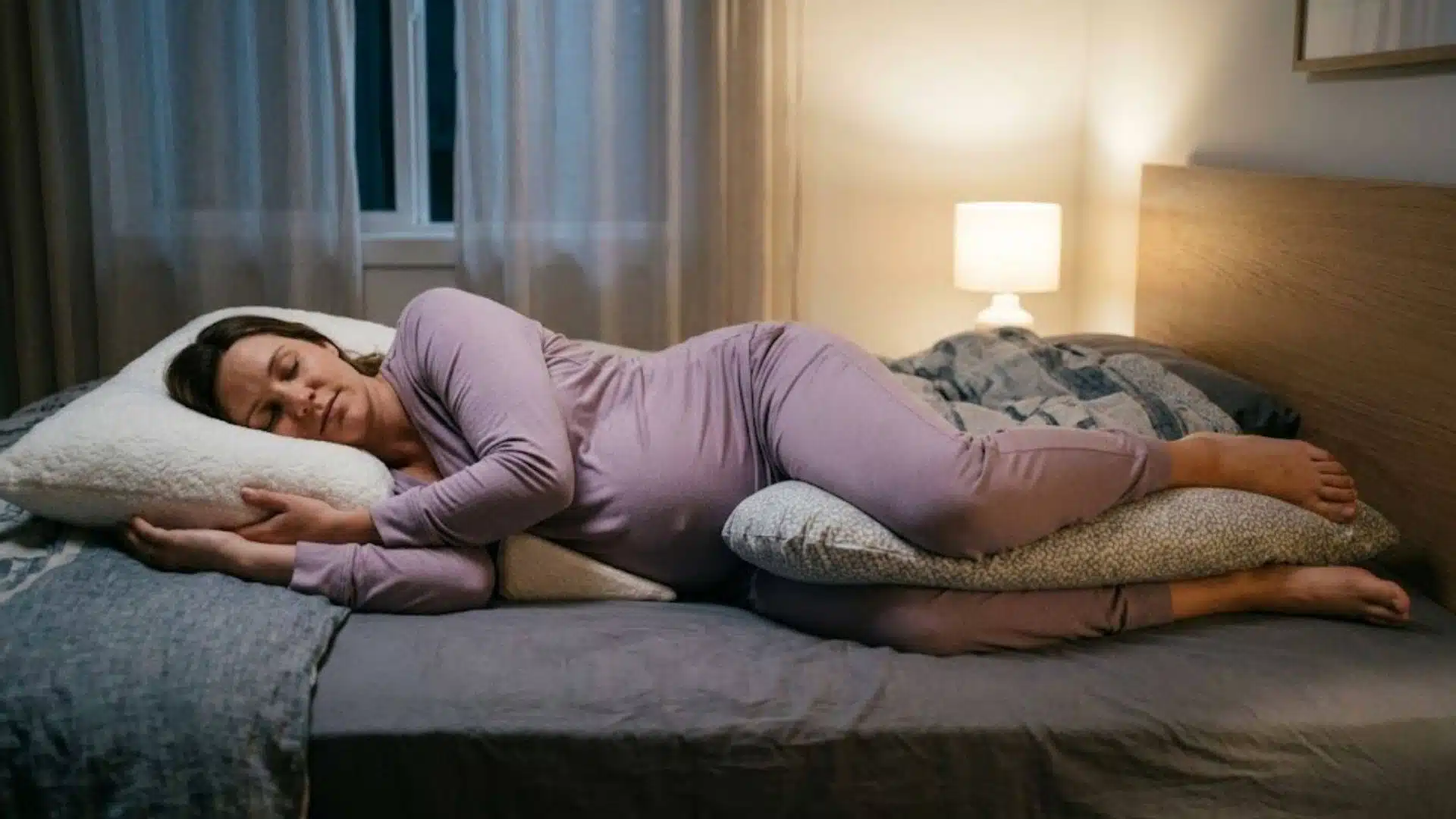
Left-side sleeping is ideal, but right-side sleeping is still far better than lying on your back. It can work well if you use the right pillow support.
- Lie on your right side with your body relaxed
- Place a pillow between your knees to keep your hips aligned
- Add a belly pillow for extra support if needed
- Switch back to your left side if you feel any discomfort
Rotate between sides through the night if your hip feels sore on one side. Staying on one side too long can actually add pressure instead of relieving it.
7. Fetal Position
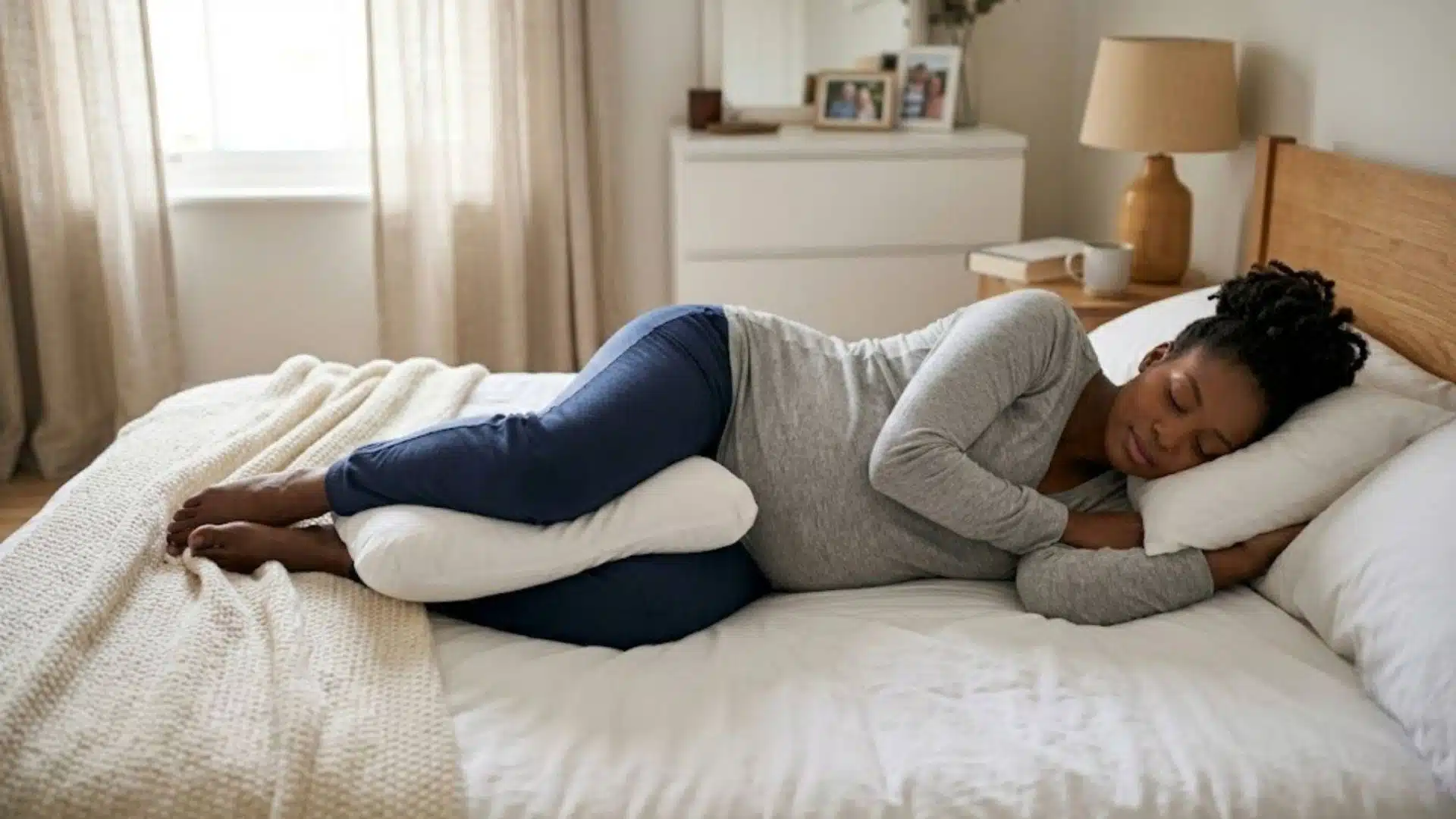
Curling into a gentle fetal position can relieve tension around the hips and lower back. Just make sure you don’t curl too tightly.
- Lie on your side and gently bend your knees toward your chest
- Keep the curve soft, not a tight tuck
- Place a pillow between your knees for hip alignment
- Rest your head on a pillow that keeps your spine neutral
This position feels naturally comforting for many pregnant women. Your body will often settle into it on its own through the night.
8. Elevated Hips With a Wedge Pillow
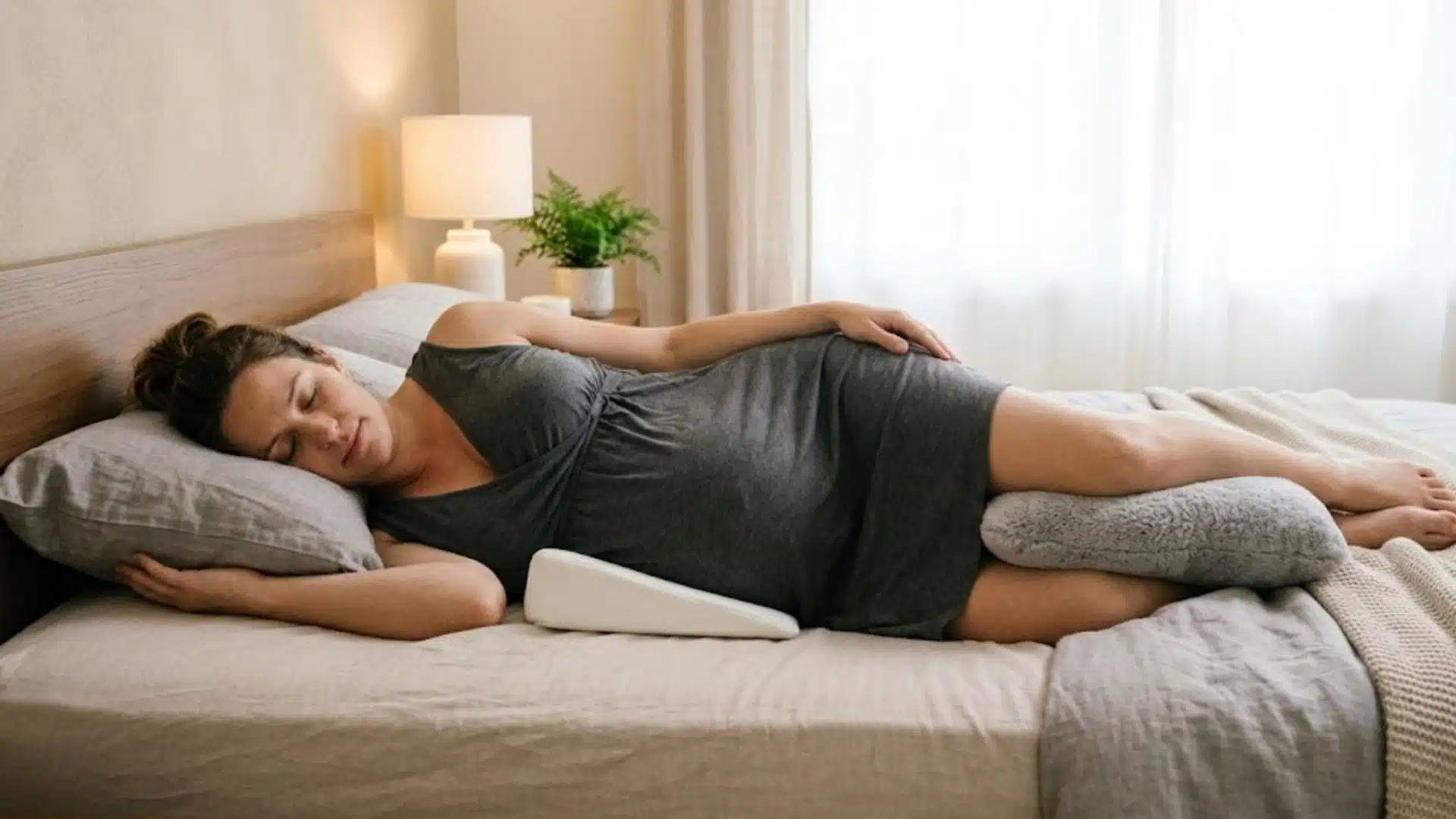
A wedge pillow under your hips can shift pressure away from the joints and give you a more neutral position. It’s a great option if hip pain wakes you up.
- Place a small wedge pillow under your hip and lower back area
- Lie on your side as usual and let the wedge tilt your pelvis slightly
- Adjust the angle until the pressure feels reduced
- Combine with a knee pillow for full hip support
It takes a little trial and error to find the right angle. But once you do, it can completely change how your hips feel in the morning.
9. Back Sleeping With Pillow Support (Early Pregnancy Only)
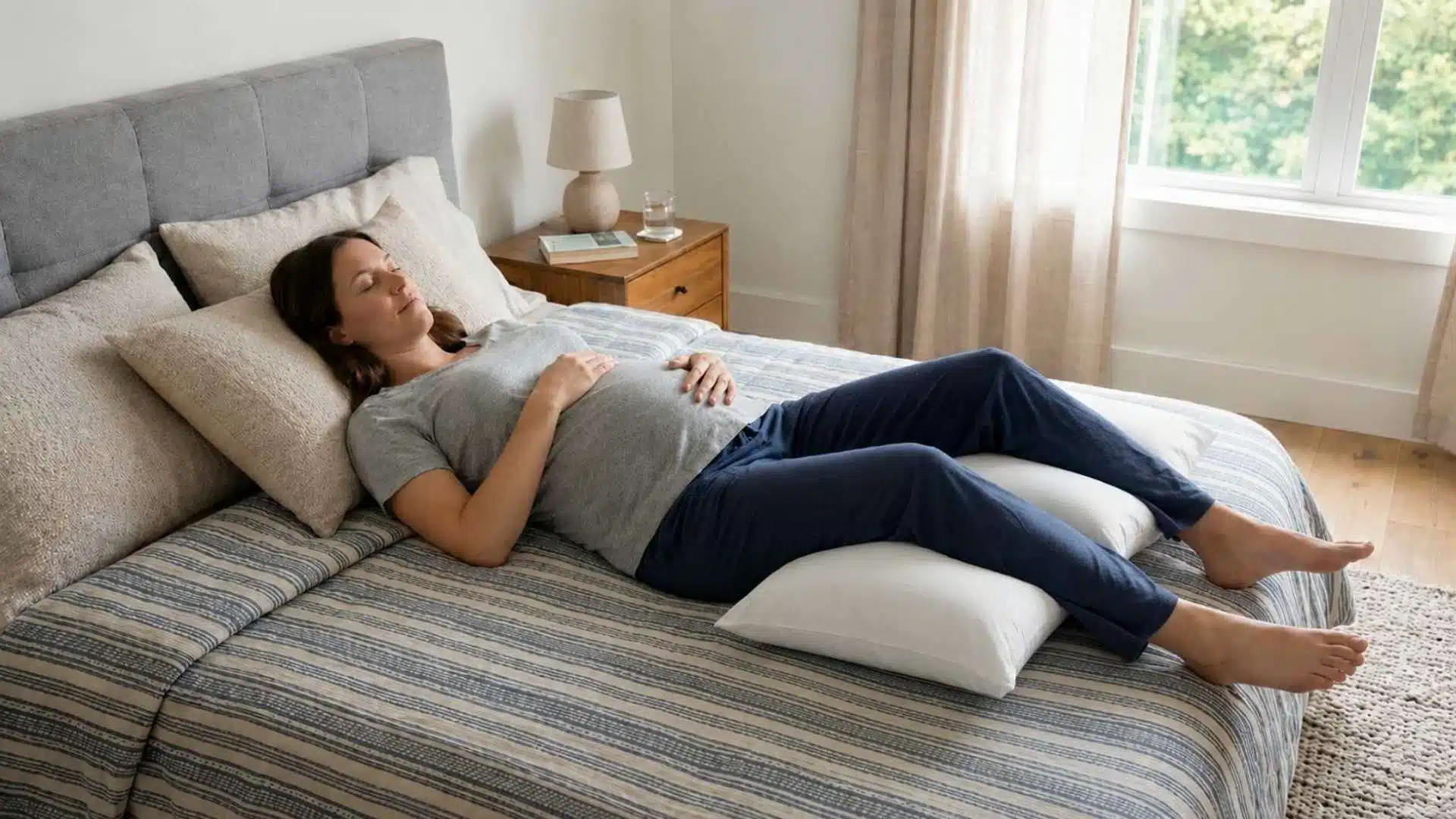
Back sleeping is generally not recommended after the first trimester. But with the right pillow setup, some women find it manageable in early pregnancy.
- Place a pillow under each knee to reduce lower back pressure
- Add a wedge pillow under your right hip to tilt your body slightly left
- Avoid this position after week 20 without checking with your doctor
- Stop immediately if you feel dizzy, short of breath, or uncomfortable
If you’re in your first trimester and back sleeping is the only way you rest, this setup can help. Just transition to side sleeping as your pregnancy progresses.
Best Pillow Support Combinations for Hip Pain Relief
Everyone’s body feels different during pregnancy, so the best setup depends on your sleeping style and comfort needs. These pillow combinations can help you create a more supportive sleep position.
| Combination | Best For | How It Helps |
|---|---|---|
| Knee Pillow + Belly Pillow | Side sleepers | Keeps the pelvis balanced while reducing the pulling pressure of belly weight on the hips. |
| Full-Body Pillow Setup | Third trimester discomfort | Supports the belly, back, and legs together while reducing the need for multiple separate pillows. |
| Wedge + Knee Support | Reclined sleepers | Creates a more comfortable angle and helps reduce pressure around the pelvis and hips. |
| Back support + Leg Support | Women who shift positions often | Helps maintain a stable sleeping posture and prevents unnecessary strain during the night. |
The goal is not to force one perfect sleeping arrangement but to find the support your body responds to best. Small pillow adjustments can make nights easier as your pregnancy progresses.
Dehydration makes muscles tighter and more prone to cramping, which can worsen hip discomfort overnight. Aim for consistent water intake throughout the day, not just before bed. |
Sleeping Positions to Avoid During Pregnancy
Some positions that worked well before pregnancy can now cause more harm than good. Here are seven you are better off skipping.
- Flat on Your Back: Lying flat places the full weight of your uterus on a major vein, the vena cava. This can reduce blood flow to your baby and leave you feeling dizzy or short of breath.
- Stomach Sleeping: As your belly grows, lying face down becomes uncomfortable and puts direct pressure on your abdomen. It also strains your lower back and hips in ways that build up over time.
- Right Side Without Pillow Support: Right-side sleeping is not off-limits, but doing so without a knee pillow can leave your hips uneven. That imbalance puts pressure on the joint throughout the night.
- Twisted or Half-Rolled Position: Sleeping with your upper body twisted while your lower half remains flat can stress your spine and hips. It might feel okay at first, but it gets uncomfortable fast.
- Legs Straight and Flat: Keeping your legs completely straight while side sleeping tightens the muscles around your hips. A slight bend in your knees takes that tension away.
- Unsupported Reclined Sleeping: Reclining without proper back and knee support puts uneven pressure on your pelvis. Without pillows holding you in place, your body sinks into awkward angles all night.
- Sleeping on the Right Side After 28 Weeks: Some research suggests that sleeping on the right side in late pregnancy may increase certain risks. After 28 weeks, left-side sleeping is the safer and more comfortable choice.
Avoiding these positions does not mean you will find the perfect spot straight away. But knowing what makes hip pain worse helps you make smarter choices every night.
Daytime Habits That Help With Hip Pain
Hip pain does not only show up at night. What you do during the day directly affects how your hips feel by the time you get into bed. Small daytime habits can reduce the buildup of tension before it becomes a problem.
| Habit | What to Do | Why It Helps |
|---|---|---|
| Stay Active With Gentle Movement | Take short walks and do light stretching daily | Keeps hip joints from stiffening up throughout the day |
| Watch How You Sit | Use a firm chair and avoid crossing your legs | Keeps your pelvis more neutral and reduces joint strain |
| Wear Supportive Footwear | Choose flat, cushioned shoes for daily wear | Reduces the shock that travels up through your hips with every step |
| Use a Pregnancy Support Belt | Wear a belly band during daily activity | Takes some of the weight load off your hips while you move |
| Take Movement Breaks | Shift positions every 30 to 45 minutes | Stops pressure from concentrating on the same joints for too long |
The effort you put in during the day pays off at night. Consistent daytime habits reduce the pain load your hips carry into sleep, making it easier to find a comfortable position and actually stay there.
Night Routine Tips to Sleep Better With Hip Pain During Pregnancy
A good night routine can make it much easier to fall asleep when your hips are acting up. Small habits before bed add up to real relief.
- Stretch Before Bed: A few gentle hip stretches in the evening loosen tight muscles before you lie down. Even five minutes make a difference.
- Set Up Your Pillows in Advance: Do not wait until you are already exhausted to figure out your pillow setup. Arrange everything before you get into bed so you are not shifting around for twenty minutes trying to get comfortable.
- Take a Warm Shower: Warm water relaxes the muscles around your hips and lower back. It is one of the easiest ways to fall asleep without extra effort.
- Avoid Lying Down Right After Eating: Lying down too soon after a meal can trigger acid reflux, which can worsen your hip pain. Give yourself at least an hour after eating before heading to bed.
- Sleep on a Firm Mattress: A mattress that is too soft lets your hips sink unevenly. A firmer surface keeps your body better supported through the night.
- Use a Pregnancy Pillow Consistently: Do not just use your pillow setup some nights and skip it on others. Consistency matters because your hips need the same level of support every single night.
- Switch Sides if You Wake Up: If your hip feels sore at 2 am, switch sides. Staying in one position all night concentrates pressure on the same joint for too long.
Building a routine takes a little effort at first, but your body adjusts quickly. Stick with it, and your hips will thank you by morning.
Best Sleeping Positions by Trimester
Your sleep needs change as your pregnancy progresses. What works in the first trimester may not work in the third, so it helps to know what suits each stage. Understanding various resting postures can help you make smarter choices at every stage of your pregnancy.
| Trimester | Best Position | Why It Helps |
|---|---|---|
| First Trimester | On any side, back sleeping is still okay | Your belly is small, and the vena cava pressure is low |
| First Trimester | Stomach sleeping is still possible | No significant belly yet, but start shifting habits early |
| Second Trimester | Left side with a knee pillow | Belly grows, hips need alignment support |
| Second Trimester | Semi-reclined with pillow support | Reduces pressure as weight increases |
| Third Trimester | Left side with a full-body pillow | Best blood flow, maximum hip and belly support |
| Third Trimester | Semi-reclined at 45 degrees | Helps with both hip pain and acid reflux |
Every trimester brings new challenges, and your body will tell you what it needs. Use this as a starting point and adjust based on what actually feels comfortable for you.
When Hip Pain Becomes a Concern
Some hip discomfort during pregnancy is normal, but not all of it is something you should push through. Here are the signs that mean it is time to call your doctor.
- Pain That Does Not Improve With Rest: If your hip pain stays just as bad even after lying down and using pillow support, that is worth mentioning to your doctor.
- Sharp or Shooting Pain Down Your Leg: This can be a sign of sciatica, a nerve issue that requires proper attention and should not be ignored.
- Pain on One Side Only: One-sided hip pain that keeps getting worse could indicate symphysis pubis dysfunction or another condition that requires a professional assessment.
- Swelling Around the Hip Joint: Some swelling during pregnancy is normal, but localized swelling around your hip joint is not something to brush off.
- Pain That Makes Walking Difficult: If hip pain is affecting you movement during the day, it has gone beyond typical pregnancy discomfort and requires medical attention.
- Numbness or Tingling in Your Hips or Legs: This is your nervous system signaling that something is being compressed. It is not a symptom to wait out on your own.
- Pain Accompanied by Fever or Bleeding: These symptoms together are a red flag and need immediate medical attention, no matter what trimester you are in.
Hip pain is common, but your instincts matter too. If something feels off or keeps getting worse, do not wait and see. Reach out to your healthcare provider and get it checked.
Conclusion: Finding What Works for Your Body
Hip pain during pregnancy is exhausting, but it does not have to ruin your sleep every night.
The right sleeping positions for hip pain while pregnant, combined with smart pillow support, can genuinely change how you feel in the morning.
Small adjustments add up. A pillow here, a position tweak there, and suddenly sleep feels possible again.
Every pregnancy is different, so give yourself grace as you figure out what works. Start with one or two changes tonight and build from there.
Got questions or a tip that helped you? Drop it in the comments below.
Frequently Asked Questions
How Many Pillows Should I Use for Hip Pain While Pregnant?
Most pregnant women find two to three pillows enough. One between the knees and one under the belly works well.
Does Hip Pain During Pregnancy Mean Something Is Wrong With My Baby?
Not usually. Hip pain is mostly caused by hormonal changes and added weight, not complications with your baby.
When Does Hip Pain During Pregnancy Typically Start Getting Better?
Hip pain often eases after delivery once relaxin levels drop and your body gradually returns to its normal alignment.