





Don’t you worry, girl. I got you. I’m a working woman too, and nighttime is basically the only slot I get to wash my hair.
By the time I towel off, it’s already late. My arms are done for the day. The blow dryer just sits there, untouched, because who has the energy for that. So I go to bed with wet hair and hope for the best.
If that’s you too, you’re not doing anything wrong. This isn’t a bad habit. It’s just what happens when work eats your whole day, and your shower gets pushed to 11 pm.
But wet hair at night doesn’t have to be a gamble. No more waking up looking like you slept through a storm. With a few smart bedtime habits, you can sleep comfortably and wake up with hair that actually cooperates.
How To Sleep With Wet Hair, The Short Version
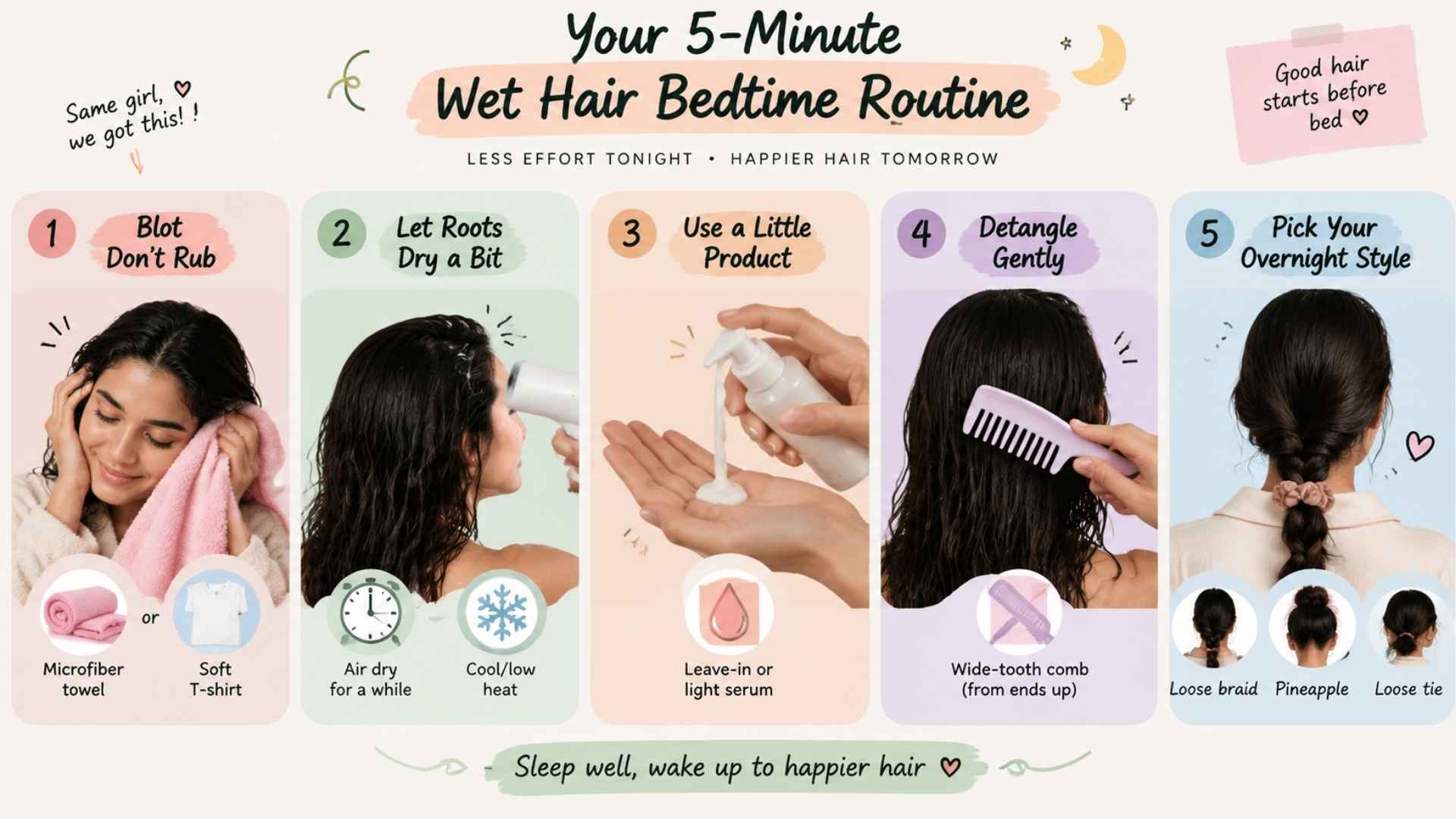
Short on time? Take a look at the whole routine in one glance, so you can screenshot it, save it, and actually use it tonight instead of scrolling for answers at midnight.
- Towel-dry first. Squeeze out the extra water with a microfiber towel or old cotton tee. Damp, not dripping.
- Give it a few minutes. Let your hair breathe for 10 to 15 minutes before you lie down.
- Pick a protective style. Loose braid, twist, or pineapple bun, based on your hair type.
- Switch to silk. A silk or satin pillowcase cuts friction and reduces tangles.
- Don’t skip your scalp. Fresh pillowcases matter just as much as fresh strands.
That’s it. Five small moves, zero extra time added to your night. Follow these and your hair does the work while you sleep — no drama, no crunchy frizz waiting for you at 7 am.
Why Wet Hair Misbehaves At Night
Wet hair is more fragile because water temporarily changes how the outer layer of each strand sits. The cuticle, which normally helps protect the inside of the hair, becomes slightly raised when hair is wet, making strands easier to stretch and damage.
Add hours of rubbing against a pillow while tossing and turning, and your hair can end up with more tangles, frizz, and roughness by morning. That doesn’t mean you can never sleep with wet hair.
It simply means your bedtime routine matters. Removing extra water, reducing friction, and avoiding tight hairstyles can help your hair handle those late-night washes better.
How to Sleep With Wet Hair for Your Hair Type
Every hair type reacts differently to overnight moisture. The right method depends on your texture, thickness, and what you want your hair to look like in the morning.
1. Straight and Fine Hair

Straight and fine hair can lose volume quickly when it stays wet overnight. The goal is to avoid weighing it down while keeping strands smooth.
What to do:
- Let roots dry slightly before sleeping
- Use a lightweight leave-in spray instead of heavy creams
- Keep hair loose to avoid dents and flat sections
- Avoid applying too much oil or serum before bed
What I feel: Fine hair needs a little extra care because too much product can turn a fresh wash into flat, sleepy strands.
2. Thick or Wavy Hair

Thicker hair usually holds moisture longer, so going to bed with soaking-wet strands can leave it damp for hours. Giving it extra drying time can make mornings much easier.
What to do:
- Let thick hair air-dry before tying it up
- Use a loose braid to create soft waves
- Avoid tight hairstyles that trap moisture
- Apply product mainly from the middle to the ends
Good to know: Wavy hair does not need a strict routine. A little patience and a loose braid can do most of the work.
3. Curly Hair

Curly hair can benefit from overnight protection because friction often leads to frizz and uneven curl patterns. The focus should be on keeping curls defined without flattening them.
What to do:
- Sleep with a loose pineapple style
- Use a soft scrunchie instead of tight elastics
- Avoid pressing wet curls flat against the pillow
- Add a small amount of curl cream if needed
Good to know: Curly hair has its own personality. The goal isn’t to control it, but to help it keep its shape overnight.
4. Coily and Highly Textured Hair

Coily hair often needs extra moisture and gentle handling because tight curl patterns can lose hydration more quickly. Avoid styles that create tension while the hair is wet.
What to do:
- Use gentle twists or loose protective styles
- Keep tension low around the scalp
- Avoid sleeping with tightly pulled wet hair
- Use a satin bonnet or pillowcase to reduce friction
Good to know: Healthy textured hair starts with gentle habits, especially since hair is most fragile while wet.
Are Frizz and Tangles Your Morning Enemies
These two usually team up, so fixing one helps fix the other. Both come down to friction and rough handling, so the fix is basically the same routine.
Do This | Why It Works |
|---|---|
Blot out excess water | Less moisture means less swelling, and less swelling means less frizz |
Detangle before bed | A wide-tooth comb through damp hair now saves you the pain later |
Add a light anti-frizz leave-in | Focus on the ends, where frizz and knots usually start |
Skip the brush | Brushing wet hair roughs it up and invites frizz |
Braid it or tie it loosely | Stops strands from moving and rubbing against each other all night |
Pick a smooth pillowcase | Rough fabric grabs hair, causing both frizz and tangles |
Handle your hair gently at night, and it stops fighting you in the morning. One routine, two problems solved, no extra steps needed.
Silk vs Satin Pillowcases for Wet Hair
When you sleep with wet hair, your pillowcase can either help or add extra friction.
A smoother surface allows your hair to move more easily as you toss and turn, which may help reduce tangles, frizz, and roughness.
Silk is a natural fiber, while satin refers to the way a fabric is woven and can be made from different materials.
Both silk and satin pillowcases feel smoother than many traditional cotton options.
You do not need the most expensive option to protect your hair. A good-quality satin pillowcase can still be a practical choice if you want a softer surface for your nighttime hair routine. The biggest win is reducing friction while your hair is still damp and more delicate.
What Not to Do When Going to Bed With Wet Hair
Even with the right bedtime routine, a few small habits can bring back the same problems you are trying to avoid. These mistakes are easy to fix once you know what to skip.
- Going to bed with fully soaked hair: Dripping-wet hair stays vulnerable for longer and can leave your pillow damp. Try removing extra water first and let your hair become slightly damp before sleeping.
- Using tight elastics or hairstyles: Tight ponytails, buns, or bands can pull on wet strands and create dents that are harder to fix in the morning. Choose loose braids, twists, or soft scrunchies instead.
- Skipping the towel step: Jumping straight from the shower to bed means your hair carries all that extra moisture overnight. A quick blot with a microfiber towel or soft T-shirt can make a big difference.
- Applying too much product before bed: Heavy creams or oils can weigh down your hair and make it look greasy instead of refreshed. Start with a small amount and add more only if needed.
- Brushing aggressively while hair is wet: Wet strands need gentle handling. Pulling through knots too quickly can create unnecessary breakage and frizz.
Small changes can completely change how your hair behaves overnight. The goal is not a perfect routine; it is avoiding the habits that make mornings harder than they need to be.
Is It Bad to Sleep With Wet Hair?
Sleeping with wet hair once in a while is unlikely to ruin your hair, but making it a regular habit without care can create problems.
When hair absorbs water, the strands swell and become more flexible, which means they can stretch more easily when exposed to friction or pulling. This is why tossing around on a pillow or tying wet hair tightly can increase the chance of tangles and breakage.
A peer-reviewed overview of hair structure explains how water temporarily weakens the hair shaft. A consistently damp, warm scalp and pillowcase can also create conditions where bacteria and fungus grow more easily, which may worsen dandruff or scalp irritation for some people.
When possible, letting hair dry partially before bed is a safer choice.
How to Fix Wet-Hair Bedhead the Next Morning
Waking up with messy hair after sleeping with damp strands does not mean your routine failed. Most morning problems only need a quick fix, not a complete wash or restyle. Start by checking what your hair needs instead of fighting against its natural shape.
For Frizz: Avoid brushing through dry, frizzy hair right away. Apply a small amount of leave-in conditioner or serum to the ends and smooth your strands gently with your hands.
For Flat Roots: If your roots look pressed down, let your hair finish drying completely. Then lift the roots with your fingers or gently flip your hair upside down for more movement.
For Messy Waves: Do not attack uneven waves with a brush. Use your fingers to separate sections and reshape the waves where needed.
For Curls: Skip brushing through curls after waking up. Lightly shake them out, add a little water or curl refresher, and reshape any sections that lost definition.
For Tangles: Start from the ends and slowly work upward with your fingers or a wide-tooth comb. Pulling from the roots can tighten knots and cause unnecessary breakage.
A little patience goes a long way. The goal isn’t to erase your overnight texture, but to bring it back into shape.
Can Sleeping With Wet Hair Make You Sick?
Wet hair itself does not give you a cold. Colds happen because of viruses, not because your hair is damp. However, sleeping with wet hair can feel uncomfortable and may leave your pillow damp, especially if it happens often.
My Wet Hair Bedtime Rule Is Simple
Late-night hair washing happens, especially after long workdays when the shower is the only quiet moment left. You do not need to panic if your hair is still damp before bed.
The real difference comes from how much water is left, how much friction your hair faces, and how gently you protect it overnight. Finding how to sleep with wet hair is less about following a perfect rule and more about finding what works for your texture.
Try a few methods and see what gives you your best next-day hair. Once you find the routine that fits your texture, it becomes second nature.
What Else My Wet Hair Late Night Girlies Ask
Can Sleeping with Wet Hair Cause Dandruff?
Wet hair does not directly cause dandruff, but a consistently damp scalp may worsen discomfort for people already prone to scalp issues.
How Long Does Wet Hair Take to Dry Overnight?
Drying time depends on hair thickness, length, porosity, room temperature, and airflow. Thick hair usually takes much longer than fine hair.
Should I Sleep with Wet Hair in A Bonnet?
A bonnet can protect hair, but avoid putting soaking-wet hair inside. Slightly damp hair works better for most overnight routines.
Can I Sleep with Wet Hair After Swimming?
Yes, but rinse out chlorine or salt first. Leaving pool or ocean residue overnight may leave hair feeling dry and rough.