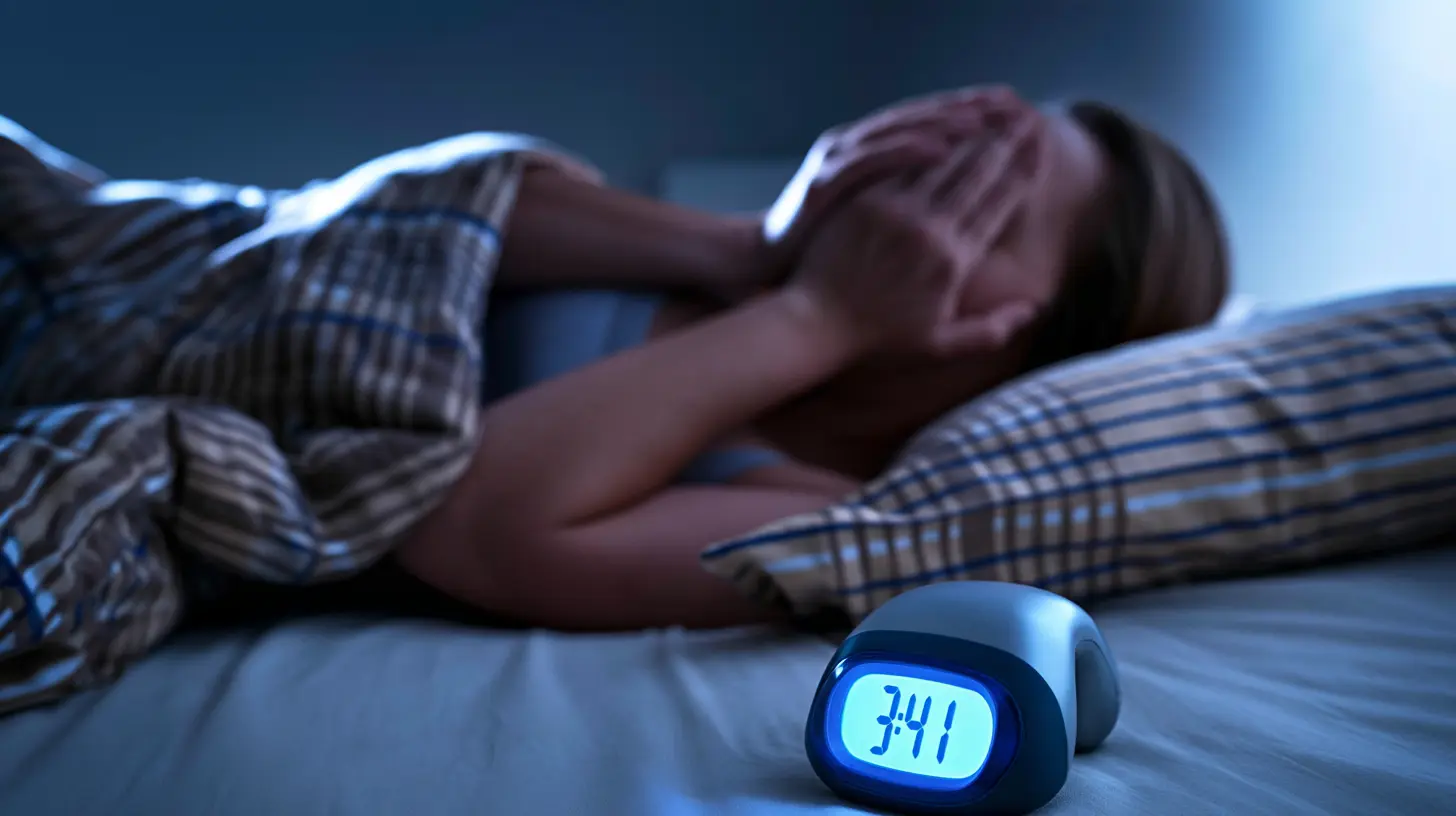

Sleep disorders do more than make it hard to fall asleep. They can change how long you sleep, when you feel sleepy, how you breathe at night, and how alert you feel during the day.
The main types of sleep disorders include insomnia, sleep-related breathing disorders, circadian rhythm disorders, hypersomnolence disorders, parasomnias, and movement disorders.
Familiar examples include sleep apnea, narcolepsy, restless legs syndrome, and sleepwalking.
Some have similar symptoms, but they affect sleep in very different ways. Knowing the basic categories makes those differences easier to understand.
What Are Sleep Disorders?
Sleep disorders are conditions that affect how well, how long, or when a person sleeps.
They can make it difficult to fall asleep, stay asleep, breathe normally during sleep, remain awake during the day, or maintain a regular sleep schedule.
Some disorders also cause unusual movements or behaviors during sleep.
The American Academy of Sleep Medicine’s International Classification of Sleep Disorders, Third Edition, Text Revision (ICSD-3-TR, 2023) groups sleep disorders by their symptoms, how they affect a person, and the body system involved.
Common categories of sleep disorders include insomnia disorders, sleep-related breathing disorders, central disorders of hypersomnolence, circadian rhythm sleep-wake disorders, parasomnias, and sleep-related movement disorders.
Each category affects sleep differently, so symptoms, diagnosis, and treatment can vary depending on the specific condition.
What Causes Sleep Disorders?
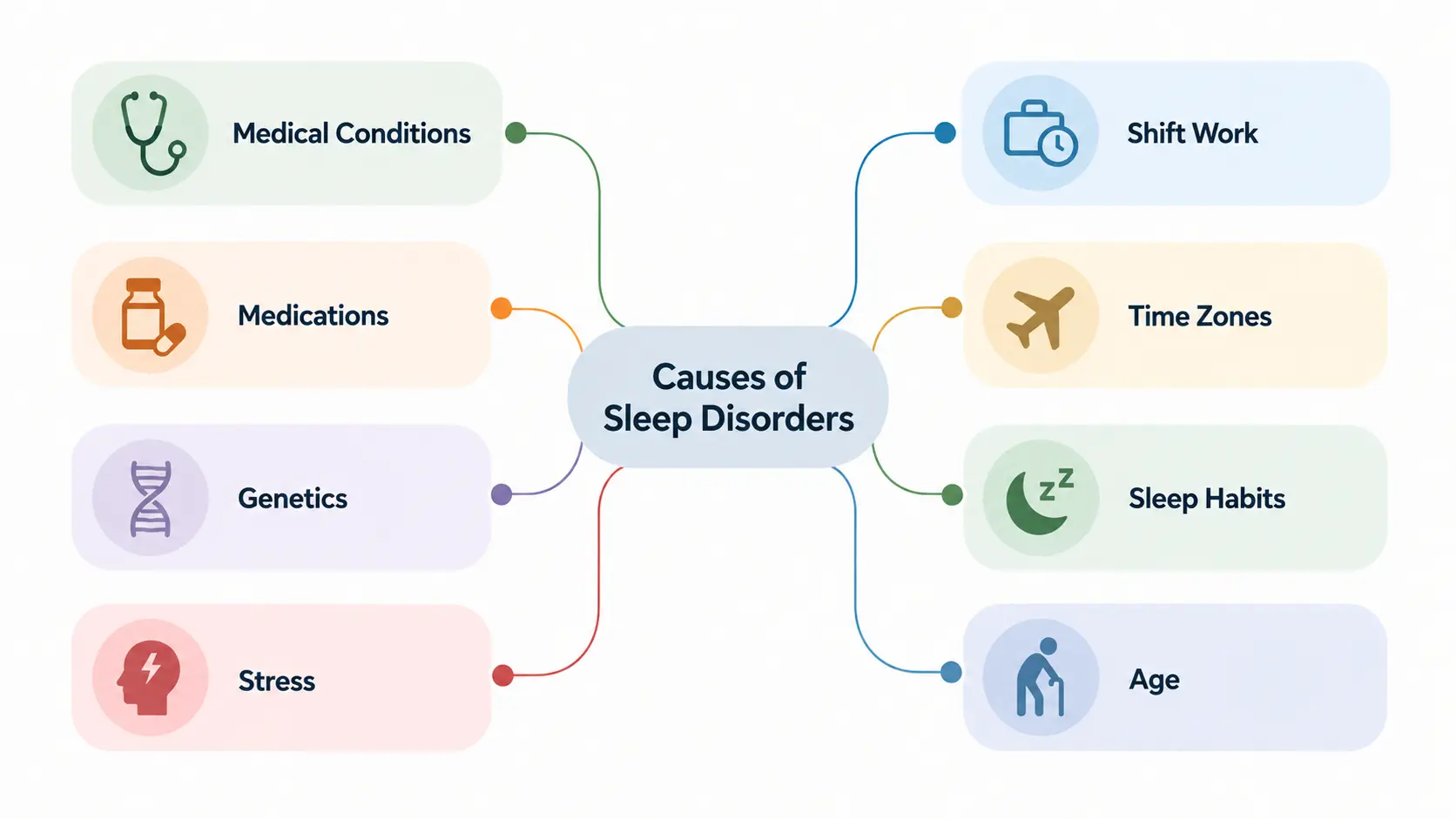
No single cause explains every sleep disorder. The reason often depends on the specific condition and the person experiencing it. Factors that may contribute include:
- Medical conditions: Problems such as chronic pain, breathing disorders, neurological conditions, or thyroid issues can interfere with normal sleep.
- Certain medications: Some medicines may affect sleep timing, increase alertness, cause daytime sleepiness, or make it harder to stay asleep.
- Genetic factors: Some sleep disorders can run in families, suggesting that inherited traits may increase a person’s risk.
- Stress: Ongoing stress, anxiety, or major life changes can make it harder to fall asleep or stay asleep.
- Night or rotating work schedules: Working at unusual hours can disrupt the body’s internal clock and make regular sleep difficult.
- Rapid travel across time zones: Crossing several time zones can temporarily shift the body clock away from the local sleep schedule.
- Sleep habits: Irregular bedtimes, long naps, late caffeine use, or too much screen exposure at night can interfere with healthy sleep.
- Age-related changes: Sleep patterns naturally change with age, which may affect sleep duration.
In many cases, more than one factor may contribute to a sleep disorder. The exact cause often becomes clearer after reviewing symptoms, sleep habits, medical history, and daily routines.
How Are Sleep Disorders Diagnosed?
Diagnosing a sleep disorder usually begins with a detailed medical history and a discussion about sleep patterns, including bedtime, sleep duration, nighttime awakenings, daytime sleepiness, and factors that may affect rest.
A healthcare provider may recommend keeping a sleep diary to identify patterns over several days or weeks, while a physical examination can help reveal possible medical causes.
Further testing depends on the suspected disorder. Polysomnography, or an overnight sleep study, can record brain activity, breathing, heart rate, and body movements during sleep, while home sleep apnea testing may assess certain breathing problems.
A Multiple Sleep Latency Test may evaluate excessive daytime sleepiness or suspected narcolepsy, although many sleep concerns can be diagnosed without overnight testing.
What Are the Main Types of Sleep Disorder?
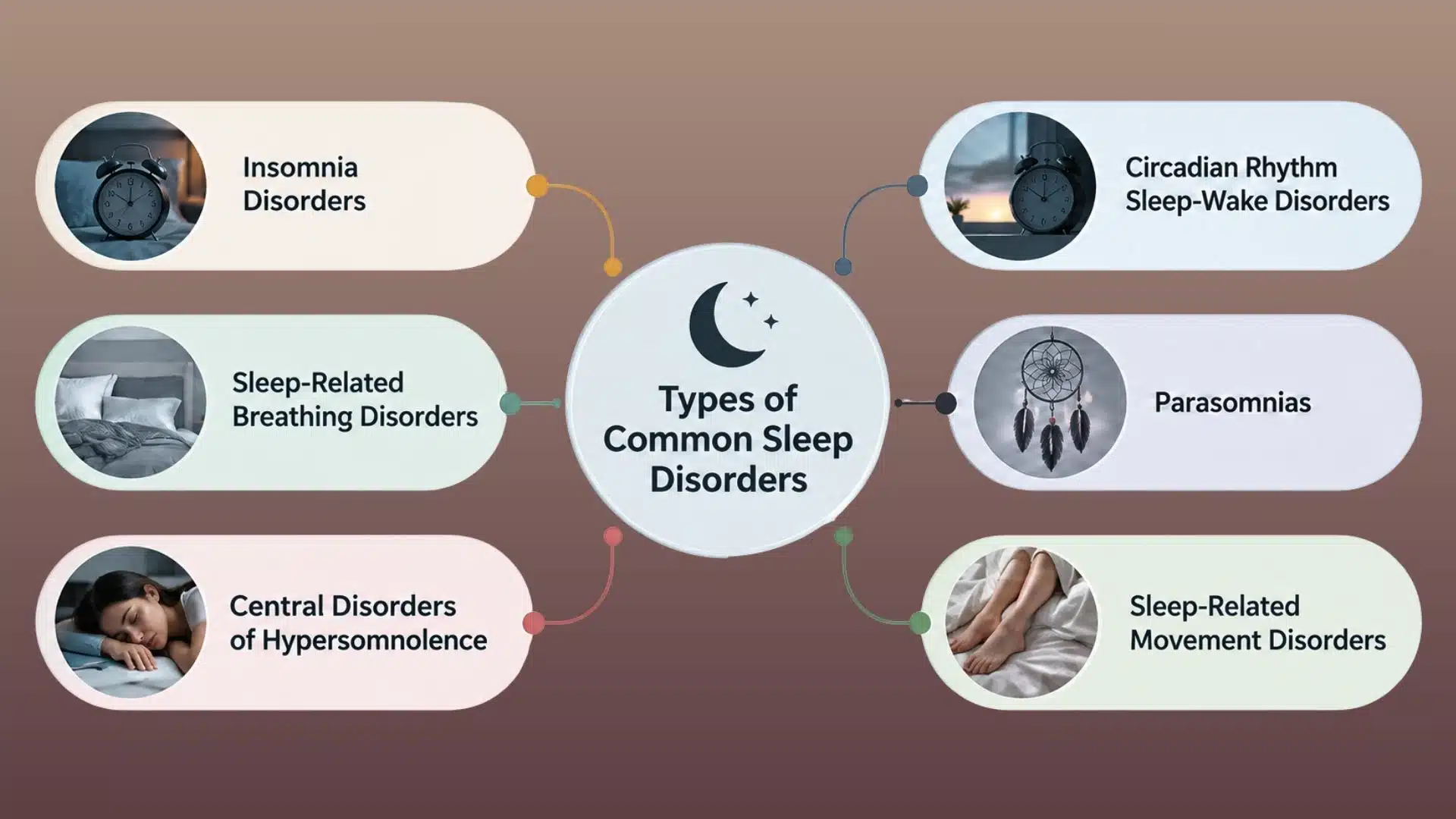
Sleep disorders are grouped by the part of sleep they mainly affect. One condition may keep you awake, whereas another may disturb your breathing, shift your body clock, or make staying awake during the day unusually difficult.
1. Insomnia Disorders
Insomnia is a sleep disorder that can make it difficult to fall asleep, stay asleep through the night, or return to sleep after waking too early.
These sleep problems can occur even when a person has enough time and a suitable environment for rest. Insomnia may also affect daytime functioning, leading to tiredness, irritability, difficulty concentrating, and reduced alertness.
Type | What It Means |
|---|---|
Short-Term Insomnia | Happens during stress, travel, illness, or major life changes and usually lasts for a limited time. |
Chronic Insomnia Disorder | Causes ongoing sleep problems for months, even when there is enough time and opportunity to sleep. |
Common symptoms:
- Taking a long time to fall asleep
- Waking several times during the night
- Waking earlier than intended
- Feeling tired or unrefreshed after sleep
- Difficulty concentrating or staying alert during the day
Treatment: Chronic insomnia is commonly treated with cognitive behavioral therapy for insomnia, or CBT-I. Treatment may also include improving sleep habits and addressing conditions that disrupt sleep.
2. Sleep-Related Breathing Disorders
In this type of sleep disorder, breathing problems repeatedly interrupt the normal sleep cycle. A person may spend enough hours in bed but still wake feeling tired or unrefreshed.
These repeated breathing disruptions can prevent deeper, restorative sleep and may also lead to frequent awakenings, poor concentration, daytime sleepiness, and reduced energy.
Type | What Happens |
|---|---|
Obstructive Sleep Apnea | The airway becomes blocked during sleep, causing snoring, gasping, choking, or pauses in breathing. |
Central Sleep Apnea | The brain does not consistently send the signals needed to control breathing during sleep. |
Common symptoms:
- Loud or frequent snoring
- Pauses in breathing during sleep
- Gasping or choking at night
- Waking with a dry mouth or headache
- Excessive daytime tiredness or difficulty concentrating
Treatment: Doctors may treat sleep apnea with CPAP or other positive airway pressure therapy. Doctors may also recommend oral devices, lifestyle changes, or other treatments.
3. Central Disorders of Hypersomnolence
These sleep disorders are mainly associated with excessive daytime sleepiness and difficulty staying alert.
A person may feel unusually sleepy even after getting enough sleep at night. Depending on the condition, symptoms can include sudden sleep episodes, long periods of sleep, trouble waking up, or difficulty staying alert throughout the day.
Condition | What Happens |
|---|---|
Narcolepsy | Causes severe daytime sleepiness and sudden sleep episodes. Some people also experience cataplexy. |
Idiopathic Hypersomnia | Causes excessive sleepiness even after long periods of sleep, with difficulty feeling fully alert. |
Common symptoms:
- Excessive sleepiness during the day
- Difficulty staying awake during normal activities
- Sudden episodes of falling asleep
- Trouble waking up or feeling fully alert
- Long sleep periods that may not feel refreshing
Some people with narcolepsy may also experience cataplexy, or sudden muscle weakness triggered by strong emotions.
Treatment: Narcolepsy and idiopathic hypersomnia may be treated with medications that improve daytime alertness, along with regular sleep schedules and other symptom-specific management.
4. Circadian Rhythm Sleep-Wake Disorders
Circadian rhythm sleep-wake disorders happen when the body’s internal clock does not match the sleep schedule a person needs to follow.
This mismatch can make it difficult to fall asleep, wake up, or stay alert at the right times. Different types can affect sleep timing in different ways, depending on work schedules, travel, or the body’s natural rhythm.
Type | What Happens |
|---|---|
Delayed Sleep-Wake Phase Disorder | Sleep and wake times happen much later than desired. |
Advanced Sleep-Wake Phase Disorder | Sleepiness starts very early, followed by unusually early waking. |
Shift Work Disorder | Work hours clash with the body’s natural sleep-wake cycle. |
Jet Lag Disorder | Crossing time zones temporarily disrupts the body clock. |
Irregular Sleep-Wake Rhythm Disorder | Sleep occurs in several periods instead of one regular nighttime block. |
Non-24-Hour Sleep-Wake Rhythm Disorder | Sleep and wake times gradually shift because the body clock does not stay on a 24-hour schedule. |
Common symptoms:
- Difficulty falling asleep at the required time
- Trouble waking at the desired time
- Daytime sleepiness
- Feeling alert when it is time to sleep
- Poor concentration when sleep timing is disrupted
Treatment: Circadian rhythm sleep-wake disorders may be treated with carefully timed sleep schedules, light therapy, and sometimes melatonin, depending on the specific disorder and sleep pattern.
5. Parasomnias
Parasomnias are sleep disorders that involve unusual behaviors, movements, emotions, or experiences during sleep or while moving between sleep and wakefulness.
They can occur during different sleep stages and may include sleepwalking, sleep talking, nightmares, sleep terrors, sleep paralysis, and acting out dreams. Symptoms can vary in frequency and severity from person to person.
Parasomnia | What It Means |
|---|---|
Sleepwalking | Walking or doing simple activities while still asleep. |
Sleep Talking | Speaking during sleep without being fully awake. |
Nightmares | Frightening dreams that can wake a person from sleep. |
Sleep Terrors | Sudden episodes of fear, screaming, or panic during sleep. |
Sleep Paralysis | Brief inability to move or speak while falling asleep or waking up. |
Acting out dreams through movements, talking, or other physical actions. |
Common symptoms:
- Walking, talking, or moving during sleep
- Screaming or showing intense fear while asleep
- Acting out dreams
- Brief inability to move while waking or falling asleep
- Confusion or unusual behavior during nighttime episodes
Treatment: Parasomnias may be managed by improving sleep safety, reducing known triggers, treating related sleep conditions, and using medication when episodes are frequent or potentially dangerous.
6. Sleep-Related Movement Disorders
Restless legs syndrome causes uncomfortable sensations in the legs, usually during periods of rest or inactivity.
Symptoms often become more noticeable in the evening or at night and can create a strong urge to move. Walking, stretching, or moving the legs may provide temporary relief, but the discomfort often returns once the person becomes still again.
Condition | What Happens |
|---|---|
Restless Legs Syndrome | Causes an uncomfortable urge to move the legs, usually while resting or trying to fall asleep. |
Periodic Limb Movement Disorder | Causes repeated, involuntary limb movements during sleep. |
Sleep-Related Bruxism | Involuntary grinding or clenching of the teeth during sleep, which can lead to jaw pain, headaches, and worn tooth enamel. |
Common symptoms:
- Strong urge to move the legs while resting
- Tingling, crawling, aching, or other uncomfortable leg sensations
- Symptoms that become worse in the evening or at night
- Temporary relief after walking or stretching
- Repeated leg or arm movements during sleep
- Jaw soreness, headaches, or tooth sensitivity on waking
Treatment: Restless legs syndrome may be managed with lifestyle changes, iron treatment when deficiency is confirmed, medication adjustments, or prescribed medicines for persistent symptoms. Sleep-related bruxism is often managed with a nightguard fitted by a dentist, along with addressing contributing stress or lifestyle factors.
How Are Different Sleep Disorders Treated?
Treatment depends on the type of sleep disorder, its cause, and how strongly it affects daily life.
Category | Common Treatment Approach |
|---|---|
Insomnia Disorders | CBT-I, improved sleep habits |
Sleep-Related Breathing Disorders | CPAP or other airway pressure therapy, oral devices |
Central Disorders of Hypersomnolence | Alertness-promoting medication, regular sleep schedule |
Circadian Rhythm Sleep-Wake Disorders | Timed sleep schedules, light therapy, sometimes melatonin |
Parasomnias | Sleep safety measures, trigger reduction, medication if needed |
Sleep-Related Movement Disorders | Lifestyle changes, iron treatment (RLS), nightguard (bruxism) |
Because sleep disorders have different causes and symptoms, treatment should be based on a proper diagnosis rather than trial and error.
A healthcare provider or sleep specialist can help identify the underlying problem and choose an approach that improves both nighttime sleep and daytime functioning.
When Should You See a Sleep Specialist?
A few restless nights are common, but ongoing or potentially dangerous sleep problems deserve medical attention.
Sleep medicine researchers note that it’s worth speaking with a healthcare provider or sleep specialist if sleep difficulties continue for weeks or months, daytime sleepiness affects work, school, or driving, or loud snoring occurs with gasping or breathing pauses.
Unexpected sleep episodes, repeated nighttime behaviors that could cause injury, or poor sleep despite having enough time to rest are also important warning signs.
A sleep specialist can review symptoms, identify possible causes, and recommend the most appropriate testing or treatment.
Final Thoughts
Sleep problems can affect far more than the number of hours spent in bed. They can influence energy, concentration, mood, safety, and how well the body functions during the day.
The important step is noticing when poor sleep becomes a pattern rather than an occasional inconvenience.
Tracking symptoms, sleep timing, breathing changes, unusual nighttime behaviors, or daytime sleepiness can provide useful clues.
Because different sleep disorders can look similar at first, working through a sleep hygiene checklist on your own is not always enough to tell them apart.
If symptoms continue, worsen, or interfere with daily life, a healthcare provider can help determine what is happening and recommend the most suitable next step.
Frequently Asked Questions
Can Two Sleep Disorders Happen at the Same Time?
Yes. A person may have more than one sleep disorder, which can make symptoms harder to separate.
Are Occasional Nightmares Considered a Sleep Disorder?
Not usually. Nightmares become more concerning when they happen repeatedly, disturb sleep, or cause significant daytime distress.
Can You Have a Sleep Disorder Even If You Sleep Eight Hours?
Yes. Sleep duration can look normal while breathing problems, poor sleep quality, or abnormal timing still disrupt rest.
Do All Sleep Disorders Cause Daytime Sleepiness?
No. Some mainly cause unusual nighttime behaviors, breathing changes, or movement problems without obvious daytime sleepiness.
Can Sleep Disorders Be Cured?
Some, like short-term insomnia or jet lag disorder, often resolve on their own. Others, such as narcolepsy or chronic insomnia, are usually managed rather than cured, with treatment aimed at controlling symptoms and improving daily functioning.