




If you wake up with a burning chest, a sour taste in your mouth, or a feeling of acid creeping up your throat, nighttime acid reflux is likely the cause.
Nighttime acid reflux affects millions of Americans, and one of the most effective non-drug strategies doctors recommend is simple: raise the head of your bed for acid reflux relief.
Raising the upper body slightly during sleep can help keep stomach acid down and reduce discomfort through the night.
The Difference Between Heartburn, Acid Reflux, and GERD
Most people use these three terms interchangeably, but they describe different things.
Heartburn is a symptom: the burning sensation in your chest when stomach acid briefly touches the esophageal lining. It happens to most people occasionally, usually after a heavy meal or a trigger food.
Acid reflux is the mechanical event itself, stomach acid flowing backward from the stomach into the esophagus. Heartburn is what you feel when that happens.
GERD, or gastroesophageal reflux disease, is the diagnosis given when acid reflux occurs more than twice a week and starts causing damage. It is a chronic condition that needs medical management, not just an antacid.
If nighttime symptoms are waking you up regularly, you are likely dealing with GERD, not just occasional reflux.
Why Acid Reflux Gets Worse When You Lie Down
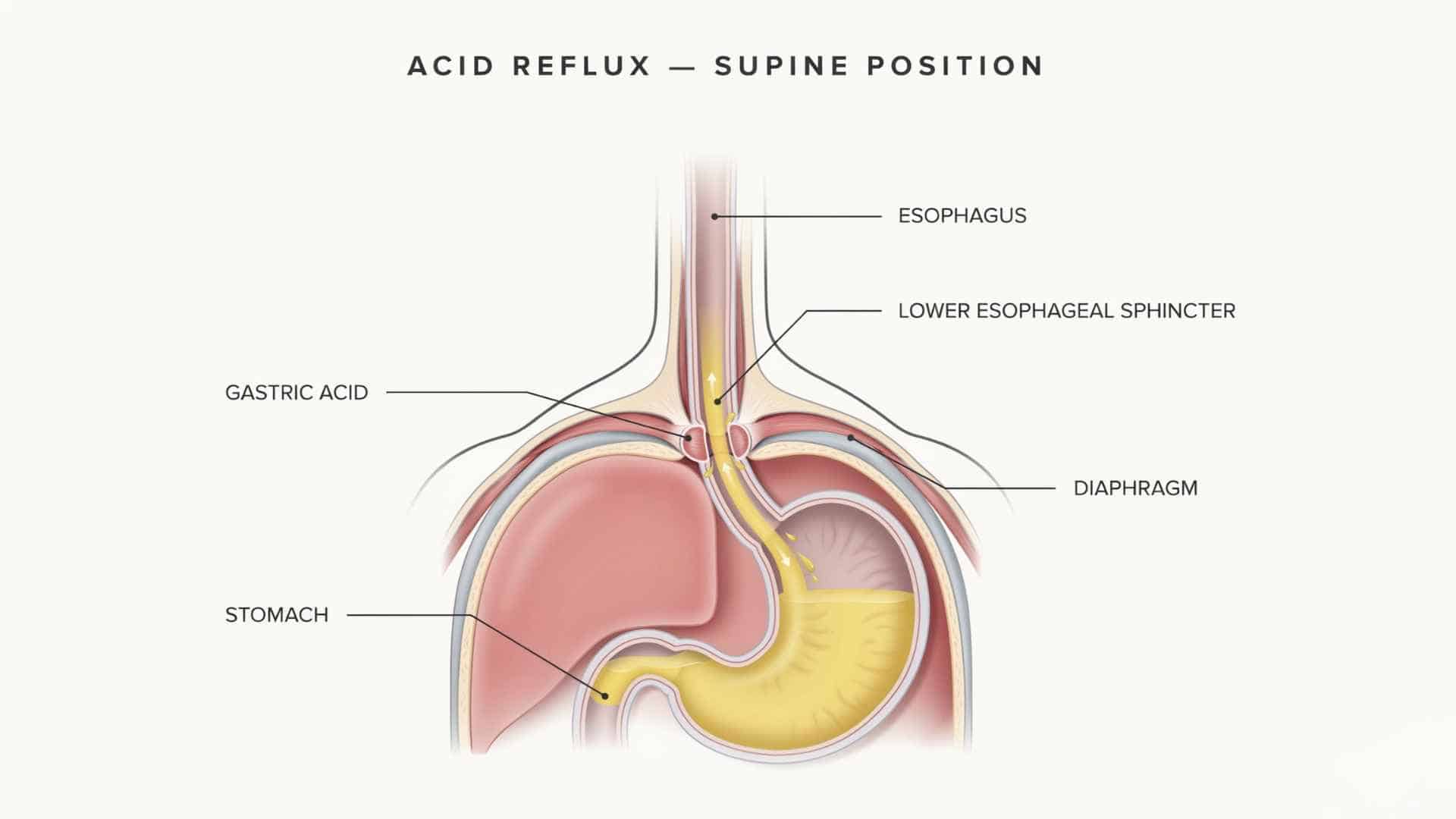
When you are upright during the day, gravity keeps stomach acid where it belongs. The moment you lie flat, that advantage disappears.
Your stomach and esophagus sit at roughly the same level, so acid can travel backward through the lower esophageal sphincter (LES) with very little resistance.
Another factor that makes nighttime reflux worse is that swallowing slows during sleep. During the day, every swallow pushes stray acid back into the stomach.
At night, that natural clearing mechanism is largely inactive, so acid can sit in the esophagus longer and cause more irritation.
Nighttime heartburn affects a meaningful share of the general population, with rates climbing sharply among people with GERD, where up to 79% report experiencing nighttime symptoms. Prolonged acid exposure at night can, over time, damage the lining of the esophagus.
Does Raising the Head of Your Bed Actually Help?
Yes, and the evidence is consistent.
A systematic review published in BMC Family Practice (2021) found that raising the head of the bed improved reflux symptoms across multiple clinical trials, with a clinically important reduction in symptom scores. The improvement was seen in both acid and non-acid reflux.
A board-certified gastroenterologist quoted by Health Central explained it clearly:
Raising the upper body creates a gentle downward slope from the chest toward the stomach, making it physically harder for acid to travel upward. Gravity does the work.
How Much Should You Raise the Head of Your Bed?

This is the most important number to get right.
The clinically recommended height is 6 to 8 inches (15 to 20 cm).
A study published in the Journal of Gastroenterology and Hepatology confirmed that this range reduces reflux while still allowing for comfortable sleep. Going below 6 inches is not enough to produce a meaningful effect.
One detail that many people miss: it is not just your head that needs to be raised. The junction between the stomach and esophagus sits at approximately the level of your lower shoulder blades.
For raising to work, your entire upper torso, including your shoulder blades, must be on the incline, not just your head and neck.
The 3 Methods for Raising Your Bed
This table clearly compares common ways to raise your bed, showing costs, best uses, and main drawbacks for each option.
| Method | Approximate Cost | Best For | Main Drawback |
|---|---|---|---|
| Bed risers or wooden blocks | $10 to $40 | Stable, raises the whole bed to support a full torso incline | Requires lifting the bed frame |
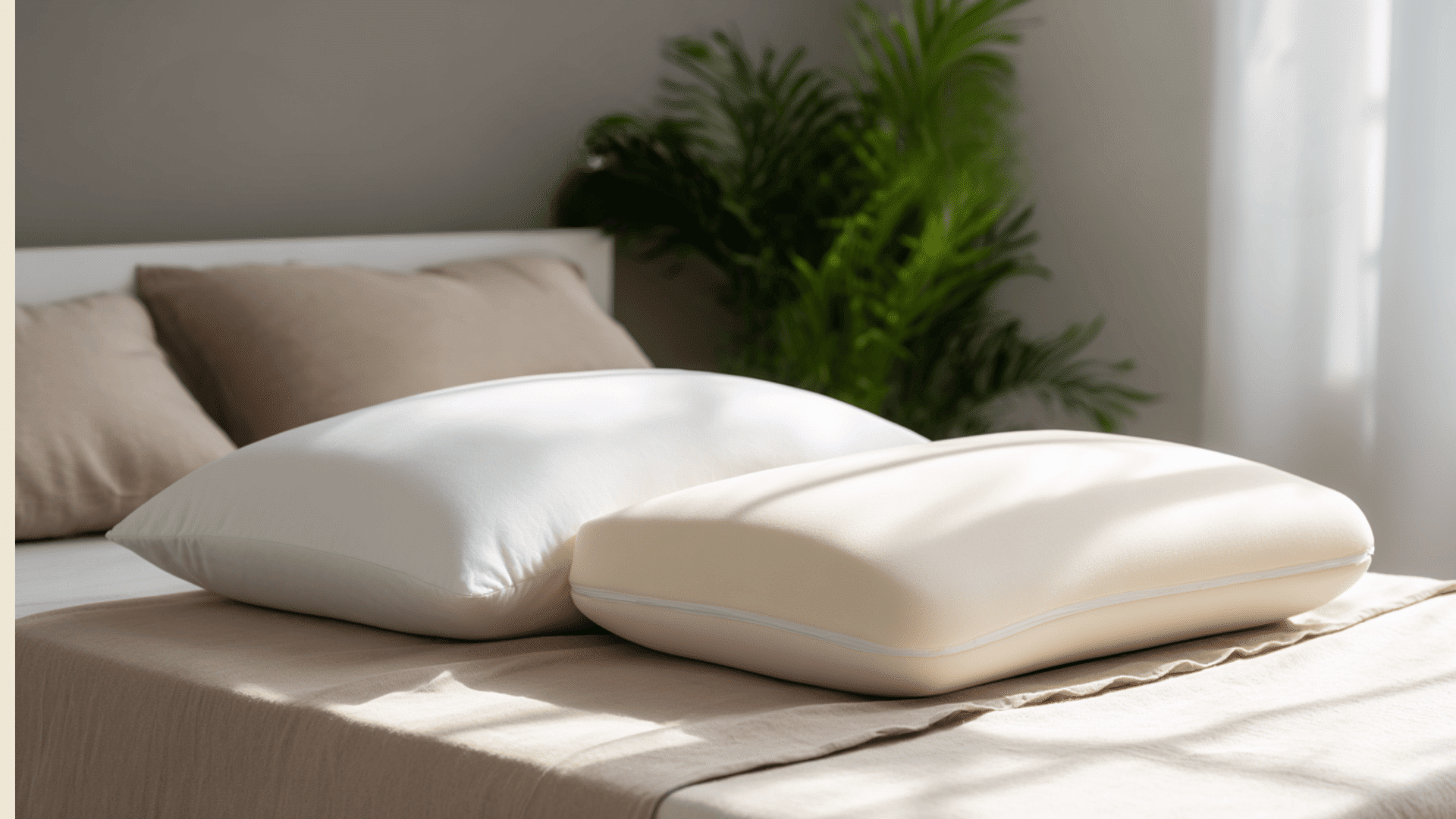
| Wedge pillow | $30 to $100+ | Portable incline option for upper body support | Risk of sliding; possible neck discomfort |
| Adjustable bed base | $300 to $2000+ | Precise, convenient control | Higher cost |
Choose the method based on budget, comfort needs, and convenience, ensuring a safe incline that supports better sleep and reduced snoring.
What Does Not Work
Common sleep adjustments for reflux relief vary in effectiveness, safety, and long-term comfort, so careful selection is essential for optimal results.
- Stacking regular pillows under your head: Stacking pillows only raises the head, not the torso, so reflux is unchanged. It can strain the neck and worsen symptoms. Mayo Clinic advises against this method for acid reflux relief.
- Raising just the mattress without the frame: Placing bricks or books under one side of the mattress creates an uneven, unstable surface that shifts over time. Using full-frame risers is safer, more stable, and far more reliable.
How to Choose the Right Wedge Pillow
Not all wedge pillows work equally well for reflux. Buying the wrong one means you either slide off it by 2 AM or end up bending at the waist, which can actually put more pressure on your stomach.
Here is what to check before buying:
| Check point | What to look for | Why it matters |
|---|---|---|
| Angle | 30 to 45 degree incline | Below 30° may not raise the torso enough for meaningful reflux relief |
| Height | 6 to 8 inches at the top edge | Matches clinical recommendation for reducing nighttime acid reflux |
| Material | Memory foam for side sleepers, firm polyurethane for back sleepers | Improves comfort and maintains proper spinal and torso support |
| Width | Wide enough to support the full upper back | Prevents raising the head only, which reduces effectiveness |
| Adjustability | Removable layers or adjustable incline | Allows gradual adaptation to sleeping on an inclined slope |
One practical check: lie on it in the store, or check the return policy when buying online. A wedge that feels fine for ten minutes can still cause neck or back pain after a full night, so give it a real trial before committing.
Nighttime Habits That Work Alongside a Raised Bed

Raising the head of your bed addresses the gravity problem. These habits reduce the amount of acid available to reflux in the first place.
1. Stop eating at least 3 hours before bed. Digestion slows at night. Lying down with a full stomach significantly increases the chance of acid moving upward.
Research suggests that eating closer to bedtime is associated with a higher risk of nighttime reflux symptoms.
2. Eat smaller meals in the evening. Large meals stretch the stomach and put more pressure on the LES. Smaller portions reduce that pressure.
3. Avoid these trigger foods and drinks close to bedtime:
- Caffeine (coffee, tea, energy drinks, cola)
- Alcohol
- Spicy foods
- High-fat or fried foods
- Chocolate
- Citrus and tomato-based foods
4. Wear loose clothing to bed. Tight waistbands and compression clothing increase pressure on the abdomen, pushing acid upward. Loose clothing removes that pressure source.
Small lifestyle changes combined with a raised bed can significantly reduce nighttime acid reflux and improve sleep quality.
How Long Before You Notice a Difference?Some people notice improvement within a night or two, especially with nighttime reflux. Others may need one to two weeks of consistent use before clear changes appear. The key is keeping the incline in place every night, not only during flare-ups. If symptoms do not improve after two to four weeks, even with proper habits, consulting a doctor is recommended for further evaluation and guidance. |
Sleeping Positions for Acid Reflux
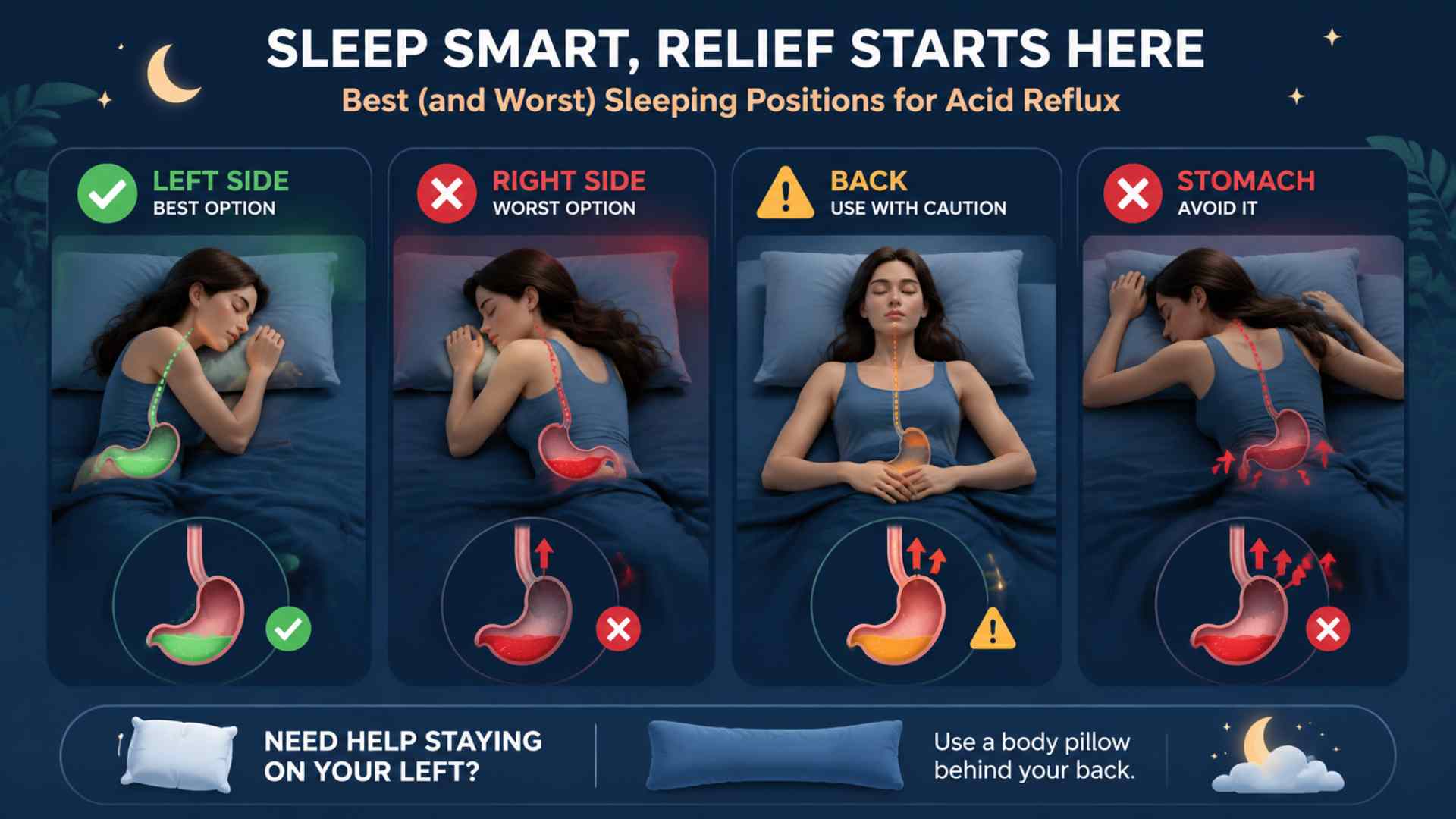
Raising the bed handles the gravity problem. Your sleeping position handles the anatomical problem. The two work best together.
Raising the bed handles the gravity problem. Your sleeping position handles the anatomical problem. The two work best together.
Studies show left-side sleeping reduces acid exposure more than right-side or back sleeping. The stomach’s position keeps it lower on the left, so gravity helps prevent acid from moving upward into the esophagus.
| Sleeping Position | Effect on Acid Reflux | Recommendation |
|---|---|---|
| Left side (best option) | Reduces acid reflux | Recommended for most people with nighttime reflux |
| Right side (worst option) | Can worsen acid reflux | Avoid if you experience frequent reflux |
| Back sleeping (use with caution) | May worsen reflux without support | Use a raised bed to reduce symptoms |
| Stomach sleeping (avoid) | Often worsens reflux significantly | Not recommended for acid reflux sufferers |
If you are used to sleeping on your right side or stomach, switching positions takes time.
Using a body pillow behind your back can help keep you on your left side through the night without conscious effort.
General Sleep Hygiene Tips Beyond Acid Reflux
While raising the bed and sleep position directly addresses the mechanics of acid reflux, overall sleep hygiene also plays a major role in how well your body recovers overnight.
Poor sleep habits can increase stress hormones, disrupt digestion, and indirectly worsen reflux symptoms.
- Keep a consistent sleep schedule: Going to bed and waking up at the same time every day helps regulate your circadian rhythm. A stable body clock supports smoother digestion and reduces nighttime physiological stress.
- Create a calm pre-sleep routine: Dim the lights 30 to 60 minutes before bed and avoid stimulating activities, such as heavy screen use or intense conversations. This helps your body shift into a relaxed, sleep ready state.
- Keep your sleep environment cool and dark: A room temperature of 18 to 22°C supports deeper sleep. Darkness signals melatonin production, which helps your body stay in restorative sleep longer.
- Limit caffeine and late-day stimulants: Caffeine can stay in your system for several hours. Avoid coffee, tea, and energy drinks at least 6 to 8 hours before bedtime to prevent sleep fragmentation.
- Manage stress before bed: Simple techniques like deep breathing, light stretching, or journaling can lower stress levels. Lower stress may reduce nighttime awakenings and support better digestion.
Together, these habits complement reflux-specific strategies by improving overall sleep quality and helping your body stay in a more stable, less reactive state overnight.
Body Weight and Acid Reflux
Carrying extra weight around the abdomen puts direct pressure on the stomach. That pressure pushes against the lower esophageal sphincter from the outside, making it easier for acid to escape upward, especially when lying down.
This is why people with higher BMI tend to experience more frequent and more severe reflux symptoms.
Losing even a modest amount of weight, 5 to 10 percent of body weight in women and closer to 10 percent in men, has been shown to significantly reduce GERD symptom scores in people who are overweight.
It will not eliminate the need for a raised bed or dietary changes, but it reduces the underlying pressure that makes those symptoms worse in the first place.
If weight is a contributing factor in your case, your doctor can help you set realistic targets as part of your reflux management plan.
Acid Reflux During Pregnancy

Pregnancy can bring unexpected acid reflux due to hormonal changes and growing uterus pressure, making digestion harder and nighttime discomfort more common for many women.
- Why It Happens: As the baby grows, the uterus pushes upward against the stomach. Rising progesterone levels also relax the lower esophageal sphincter, making it easier for acid to escape, especially in the second and third trimesters.
- Best Method: A wedge pillow is the most practical option during pregnancy. It does not require modifying the bed frame and can be repositioned easily as your body changes. Aim for the same 6 to 8 inch range if comfortable, adjusting as your body changes.
- Sleep Position: Left-side sleeping is strongly recommended. It reduces acid exposure and keeps the weight of the uterus off the major blood vessels running along the right side of the spine.
- Evening Habits: Avoid lying down within two to three hours of eating. Keep dinner small and skip spicy or fatty foods at night. These steps reduce stomach pressure before you lie down.
- When to Ask Your Doctor: If symptoms are severe or persistent, speak to your OB before taking any antacid or reflux medication, including over-the-counter options, as not all are safe during pregnancy.
These simple sleep and lifestyle adjustments can ease reflux during pregnancy, but persistent or severe symptoms should always be promptly discussed with a healthcare provider.
When to See a Doctor
Raising the bed is a helpful adjunct to treatment but is not a substitute for medical care in certain situations.
You should seek medical attention if you experience difficulty or pain when swallowing, unexplained weight loss, severe chest pain that radiates to the arm or jaw, vomiting blood, or black, tarry stools, or if symptoms occur more than twice per week despite lifestyle changes.
Repeated acid exposure can lead to Barrett’s esophagus, a condition in which the lining of the esophagus changes in response to chronic irritation, making early medical evaluation important.
Doctors may recommend over-the-counter or prescription proton pump inhibitors such as omeprazole or esomeprazole along with lifestyle adjustments.
Raising the bed works best as part of a broader management plan and should not be relied on as a standalone solution.
Final Thought
If nighttime heartburn is interrupting your sleep, learning how to properly raise the head of the bed for acid reflux is one of the best supported, low-cost steps you can take.
Raise the head of the bed by 6 to 8 inches using bed risers, a firm wedge pillow, or an adjustable base. Make sure your whole torso is on the incline, not just your head.
Pair that with left-side sleeping, avoid eating within 3 hours of bed, and cut back on known trigger foods. If symptoms continue despite these changes, see a doctor to rule out complications and discuss medical options.
Frequently Asked Questions
How Many Inches Should I Raise My Bed for Acid Reflux?
6 to 8 inches (15 to 20 cm) is the standard clinical recommendation. Less than 6 inches is generally not enough.
Which Side Should I Sleep on With Acid Reflux?
Left-side sleeping is recommended. It positions the esophagus above the stomach, making it harder for acid to move upward.
How Long Do I Need to Keep the Bed Raised?
There is no set endpoint. Most people with chronic GERD or frequent nighttime reflux keep the incline in place as part of their ongoing sleep setup.
Why Do Extra Pillows Not Work for Acid Reflux?
They only raise the head and neck, not the torso. The stomach-esophagus junction stays level, so acid can still travel upward.