
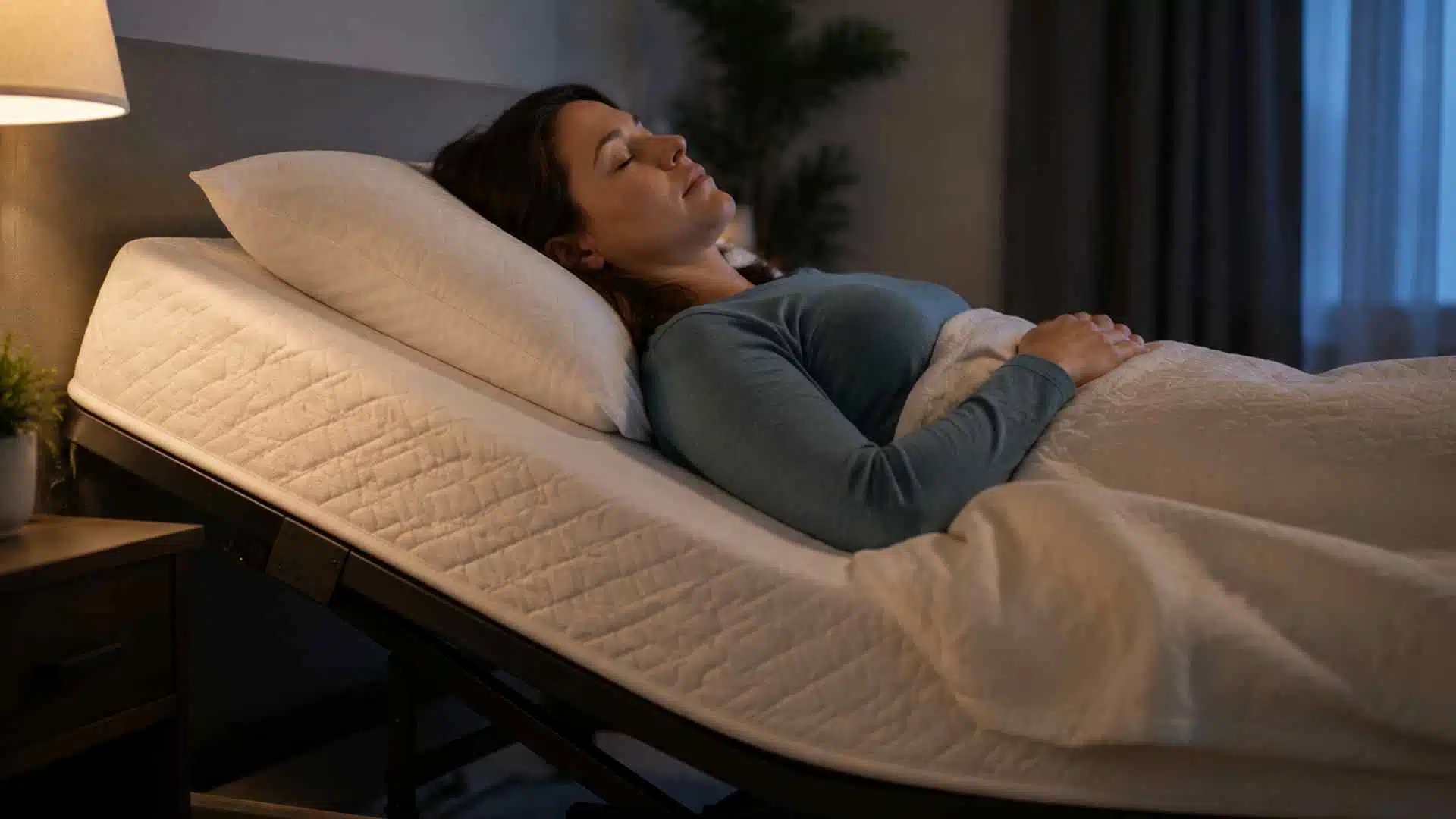



Pain from piriformis syndrome does not stop when you lie down; for many people, it gets worse, turning what should be restful sleep into a cycle of repositioning and discomfort.
The piriformis muscle sits deep in the buttock and can press on the sciatic nerve when irritated. That pressure often spikes at night when your body stays still, and tension builds.
Learn effective strategies for sleeping with piriformis syndrome, such as optimal positions, pillow arrangements, pre-bed stretches, and common pitfalls to avoid for a restful night.
What Is Piriformis Syndrome?
The piriformis, according to Columbiadoctors.org, is a small, flat muscle located deep in your buttocks. It connects your spine to your thighbone, helping with hip rotation and pelvic stability.
Piriformis syndrome occurs when this muscle tightens or spasms, pressing on the sciatic nerve underneath. This pressure leads to sharp, burning pain in the buttock and down the leg.
It is not the same as sciatica, though the two are often confused. Sciatica refers to irritation of the sciatic nerve from a spinal source, such as a herniated disc, while piriformis syndrome originates in the muscle itself.
Piriformis Syndrome Symptoms You Should Know
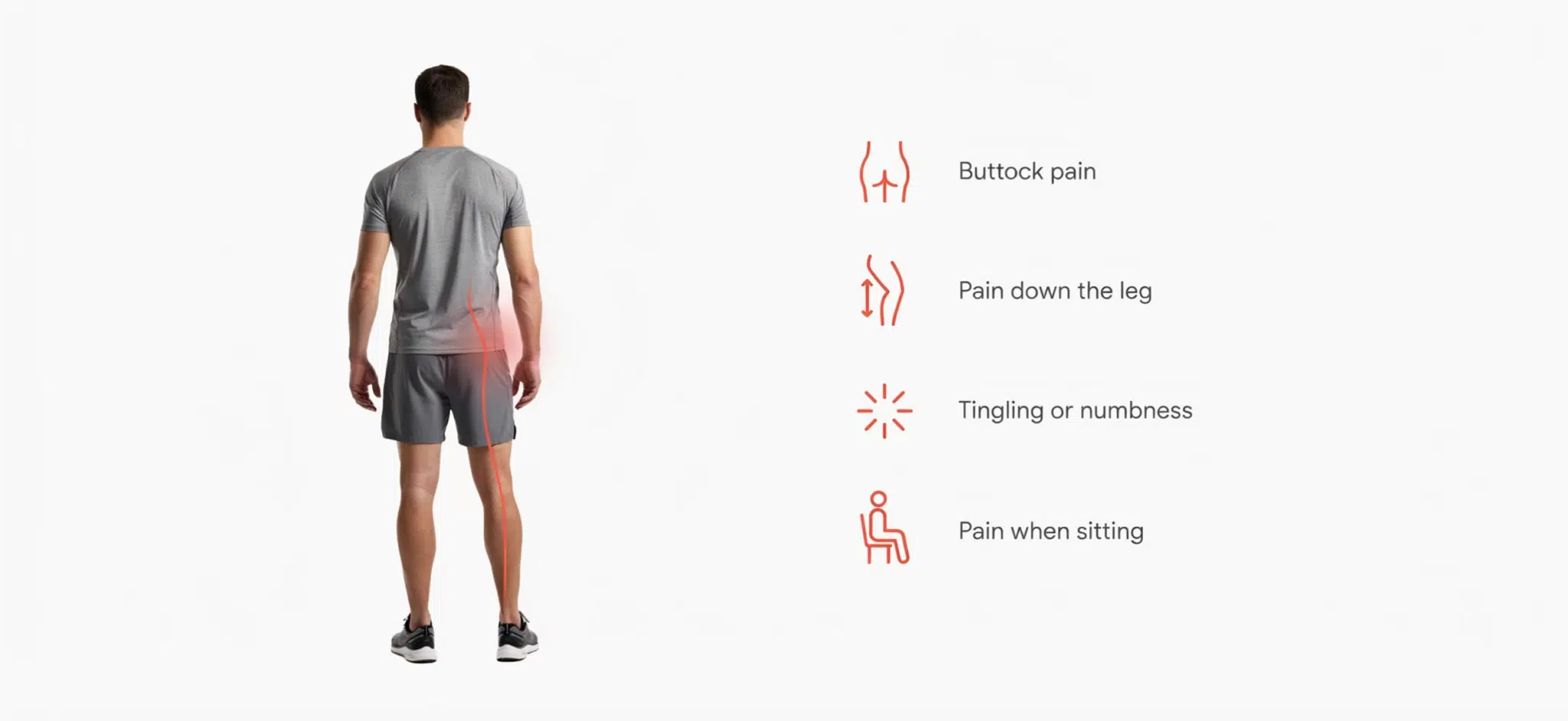
Symptoms can range from a dull ache to a sharp, shooting pain depending on how much the sciatic nerve is being compressed. Here is what most people experience:
- Pain in the buttock: A deep, aching pain on one side of the buttock is usually the first sign
- Shooting leg pain: Pain that travels down the back of the thigh, sometimes reaching the calf or foot
- Numbness or tingling: A pins-and-needles sensation along the back of the leg
- Hip stiffness: Reduced range of motion, especially when rotating the hip outward
- Pain when sitting: Symptoms that flare after sitting for 20 to 30 minutes, particularly on hard surfaces
- Pain during sleep: Discomfort that worsens when lying in certain positions, making it hard to fall or stay asleep
If you recognize several of these, especially the combination of buttock pain and leg symptoms, piriformis syndrome is worth discussing with a doctor or physical therapist.
Why Does Piriformis Syndrome Affect Sleep?
Lying down removes the muscle movement that keeps blood flowing. Without it, inflammation settles around the sciatic nerve and pain sharpens.
Your hip position during sleep determines whether the piriformis compresses the sciatic nerve or stays relaxed. Small alignment shifts change everything.
At night, there are no distractions. Cortisol also drops, reducing the body’s natural control of inflammation, making even moderate pain feel much worse.
What Causes Piriformis Syndrome?
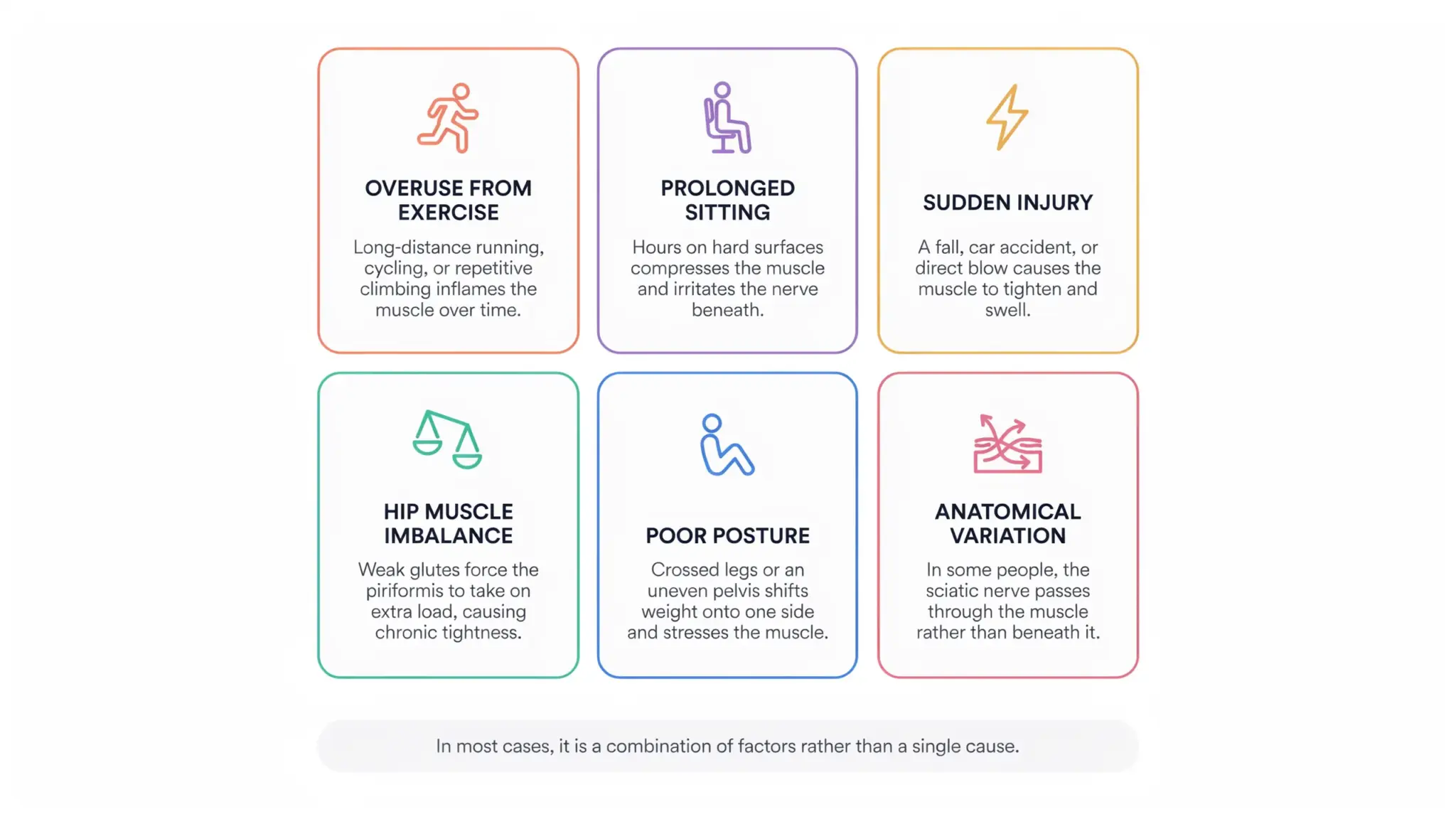
Piriformis syndrome usually develops from repeated stress or direct irritation to the muscle. In some cases, anatomy plays a role. Common causes include:
- Overuse from exercise: Long-distance running, cycling, or repetitive climbing can inflame the piriformis over time.
- Prolonged sitting: Sitting for hours without breaks, especially on hard surfaces, compresses the muscles and irritates the nerves beneath them.
- Sudden injury: A fall, car accident, or direct blow to the buttock can cause the muscle to tighten and swell.
- Hip muscle imbalance: Weak glutes force the piriformis to take on extra load, leading to chronic tightness.
- Poor posture: Sitting with crossed legs or an uneven pelvis shifts weight onto one side and stresses the muscles.
- Anatomical variation: In some people, the sciatic nerve passes through the piriformis muscle rather than beneath it, making them more prone to compression.
In most cases, it is a combination of factors rather than a single cause. Identifying which ones apply to you is the first step toward finding relief, including better sleep.
Best Sleeping Positions for Piriformis Syndrome
Not every sleep position works the same way when you have piriformis syndrome.
These three keep your hip in neutral alignment and take pressure off the sciatic nerve.
1. Side Sleeping (Best Overall)
Side sleeping on your unaffected side keeps your hips stacked and stops the piriformis from rotating inward over the sciatic nerve.
Place a firm pillow between your knees to hold hip-width spacing, keep your spine straight, and use a body pillow if you shift positions during the night.
This setup also helps with sciatica caused by nerve compression.
Pro tip: Keep the pillow thick enough so your knees stay hip-width apart all night without slipping or shifting position.
2. Back Sleeping
Back sleeping spreads your body weight evenly and keeps your hips in a neutral position, stopping the piriformis from shortening or rotating.
Lie flat with a pillow under both knees to ease lower back tension, and add a rolled towel under the affected buttock to relieve pressure on the sciatic nerve.
Pro tip: Add a rolled towel under the affected side for extra sciatic nerve relief throughout the entire restful night.
3. Modified Fetal Position
The fetal position works for piriformis syndrome as long as you avoid curling too tightly.
Lie on your unaffected side, draw your knees gently toward your chest, and place a pillow between them.
Keep your spine relaxed rather than hunched, and stop at an angle where your hips feel open, not squeezed.
Pro tip: Stop curling once your hips feel open rather than squeezed to avoid extra strain on your lower back.
Pick the position that keeps your hips in neutral alignment and feels comfortable for hours.
Small adjustments with pillows and towels make a real difference in nerve pressure and pain.
Sleeping Positions to Avoid
Some positions feel comfortable at first but actually increase pressure on the piriformis and sciatic nerve. These are the ones to skip:
- Stomach sleeping: This pushes your hips into extension and creates rotational stress on the pelvis, putting direct strain on the piriformis muscle.
- Sleeping on the affected side: Lying on the painful side places your body weight directly on the inflamed muscle and compressed nerve.
- The hiked-up leg position: Sleeping with one knee pulled up while the other leg stays flat sharply rotates the hip and unevenly loads the piriformis.
- Side sleeping without a pillow between your knees: Even the correct side becomes problematic if your top leg drops inward, which internally rotates the hip and stretches the piriformis over the nerve.
- Sleeping with legs fully extended and flat: Sleeping with legs fully extended can lead to overnight shortening of the piriformis muscle, resulting in increased stiffness and pain upon waking in the morning.
Adjusting any of these positions can quickly alleviate nighttime pain and improve your overall comfort while sleeping.
How to Sleep with Piriformis Pain?
What you do in the hour before bed directly affects how much pain you feel once you lie down.
A short, consistent routine can calm the piriformis muscle before it has to hold a position for eight hours.
1. Piriformis Syndrome Stretches Before Bed
Spend five to ten minutes on three stretches before bed to calm the piriformis.
The figure-four stretch crosses one ankle over the opposite knee while pulling the bottom leg toward your chest.
The knee-to-chest stretch eases the lower back, and the seated stretch targets the buttocks while keeping the back tall. Stop at a deep pull, not sharp pain.
Pro tip: Hold each stretch for 30 seconds and repeat two to three times before sleep.
2. Heat and Cold Therapy Before Sleep
Heat works best before bed for piriformis pain; apply it for 10 to 20 minutes to relax the muscle.
Cold suits flare-ups or after activity, using an ice pack wrapped in cloth for 10 to 15 minutes to reduce swelling.
If pain shifts between burning and aching, use cold earlier in the evening and end with heat.
Pro tip: Wrap ice packs in cloth to protect skin during cold therapy sessions.
3. Sleep Hygiene Tips
Small changes support better sleep alongside piriformis pain. Keep a fixed bedtime and wake time to regulate your body’s rhythm.
Skip caffeine after midday since it lingers for six to eight hours and heightens pain awareness.
Keep your room cool and dark to support deeper, more restorative sleep stages, when tissue repair occurs.
Pro tip: A cooler bedroom temperature helps you reach deeper stages of restorative sleep faster.
4. Daytime Habits That Affect Nighttime Pain
Long stretches of sitting compress the piriformis for hours, and that tension surfaces once you lie down.
Short walks every 30 to 45 minutes, avoiding crossed legs, and stretching after exercise help prevent the muscles from tightening enough to irritate the sciatic nerve before bedtime.
Pro tip: Set a timer to stand and walk every 30 to 45 minutes daily.
A steady pre-bed routine paired with smart daytime habits gives the piriformis muscle less reason to stay tight, so you fall asleep faster and wake with less pain.
Treatment Options for Piriformis Syndrome
Managing piriformis syndrome during the day works alongside nighttime care to lower overall pain levels.
Physical therapists use dry needling, soft tissue mobilization, and spinal manipulation to release tension in the piriformis.
This reduces pressure on the sciatic nerve and often works faster than home stretching alone.
Between sessions, topical gels soothe the affected area without full-body effects, and short movement breaks prevent the muscle compression that builds into pain by night.
When conservative treatments and injections fail, doctors may recommend piriformis release surgery to cut or release part of the muscle, followed by physical therapy to rebuild hip strength and restore normal movement.
Common Mistakes to Avoid
Small habits that seem harmless can quietly make piriformis syndrome worse, especially at night. Watch out for these:
- Stomach sleeping: This is the single worst position for piriformis syndrome. It forces the hips into extension and puts rotational stress on the pelvis every hour you stay in that position.
- Using a pillow that is too thin: A flat or soft pillow between the knees collapses within an hour and leaves your hip rotating inward for the rest of the night.
- Applying ice right before bed: Cold causes muscles to contract. Using ice as your last step before lying down can increase stiffness rather than reduce it.
These are small fixes, but skipping them quietly undoes everything else you do right during the night.
When to See a Doctor?
Most cases of piriformis syndrome improve with consistent stretching, positioning, and activity changes within six to eight weeks. If yours has not, it is time to get a professional assessment.
Consult a doctor if leg numbness or weakness worsens, pain persists despite home treatment, or symptoms affect both legs. Urgent care is needed for bladder or bowel issues.
A doctor can rule out other causes of sciatic pain, refer you to a physical therapist with specific piriformis experience, or discuss whether imaging or further intervention is needed.
Final Words
Sleeping with piriformis syndrome comes down to three things: the right position, proper pillow support, and a consistent pre-bed routine that calms the muscle before you lie down.
Consistency matters more than perfection here. Sticking with the same position and routine for several weeks gives your piriformis muscle time to settle and the sciatic nerve room to recover.
If pain persists beyond six to eight weeks despite these changes, see a doctor or physical therapist for a targeted plan.
Frequently Asked Questions
Is Piriformis Syndrome the Same as Sciatica?
No. Sciatica originates in the spine. Piriformis syndrome results from the muscle directly compressing the sciatic nerve.
Does Piriformis Syndrome Affect One Side or Both?
It typically affects one side. Both sides being involved at once is uncommon but possible.
Can Piriformis Syndrome Get Worse If Left Untreated?
Yes. Without treatment, chronic tightness and nerve irritation can persist for up to two years.
Is Walking Good or Bad for Piriformis Syndrome?
Gentle walking is generally helpful. Long distances or uneven terrain can aggravate symptoms during a flare-up.