
RV beds rarely match the mattress sizes found in a regular house, which makes shopping for a replacement more confusing than expected.
Anyone searching for RV mattress sizes usually wants one simple answer: which measurements actually fit their travel trailer, fifth wheel, or motorhome.
Between twin, full, short queen, queen, and king options, small differences in length and width can mean the difference between a smooth fit and a mattress that hangs off the frame.
Knowing the exact dimensions, along with how RV short queen and RV king mattress sizes compare to home sizes, makes the buying process far less stressful and far more accurate.
RV Mattress Sizes Explained in Simple Terms
RV mattress sizes often catch first-time buyers off guard because they rarely match standard home mattress dimensions.
The length and width of RV sleeping spaces depend heavily on the layout of the vehicle, which is why manufacturers rely on sizing built around tight corners, slide-outs, and limited floor space.
RV beds are also shaped by space-saving layouts, lightweight furniture that can be moved easily, and fixed cabinetry along the walls.
These structural limits push manufacturers toward custom sizing rather than the standard measurements people expect for a regular home mattress, making careful measuring necessary before buying.
RV Mattress Size Comparison With Standard Beds
RV mattresses often run shorter than residential beds, with RV short queen models trimmed to 60 x 75 inches while the standard queen measures 60 x 80 inches. RV king mattresses follow the same pattern, often coming narrower or differently shaped than a standard king built for home bedrooms.
| Mattress Type | RV Size | Standard Size | Key Difference |
|---|---|---|---|
| Short Queen | 60 x 75 inches | 60 x 80 inches | RV version is shorter in length |
| Queen | 60 x 80 inches | 60 x 80 inches | Matches the standard queen exactly |
| King | 72 x 80 inches | 76 x 80 inches | RV version is narrower in width |
These size adjustments come down to space-saving interior design, clearance needed around cabinets and walkways, and keeping weight balanced while the vehicle is on the road.
Standard RV Mattress Sizes Chart You Should Know
Knowing the standard sizes helps when shopping for a replacement mattress or planning a renovation. RV mattresses come in several common variations, each built to match specific RV layouts, sleeping needs, and available floor space inside the vehicle.
| RV Mattress Type | Dimensions in Inches | Common RV Usage |
|---|---|---|
| RV Twin | 28 x 75 or 34 x 75 | Single sleeper areas, smaller campers |
| RV Full | 53 x 75 | Older travel trailers and compact campers |
| RV Short Queen | 60 x 75 | Most common in travel trailers and fifth wheels |
| RV Queen | 60 x 80 | Larger motorhomes and fifth wheels |
| RV King | 72 x 80 | Luxury motorhomes and Class A RVs |
| RV Bunk Sizes | 28 x 75 or 30 x 75 | Bunkhouse trailers for kids or guests |
Matching the correct size to your RV model prevents wasted money on returns and helps ensure proper fit, comfort, and support during travel.
RV Short Queen Mattress Size Explained in Detail
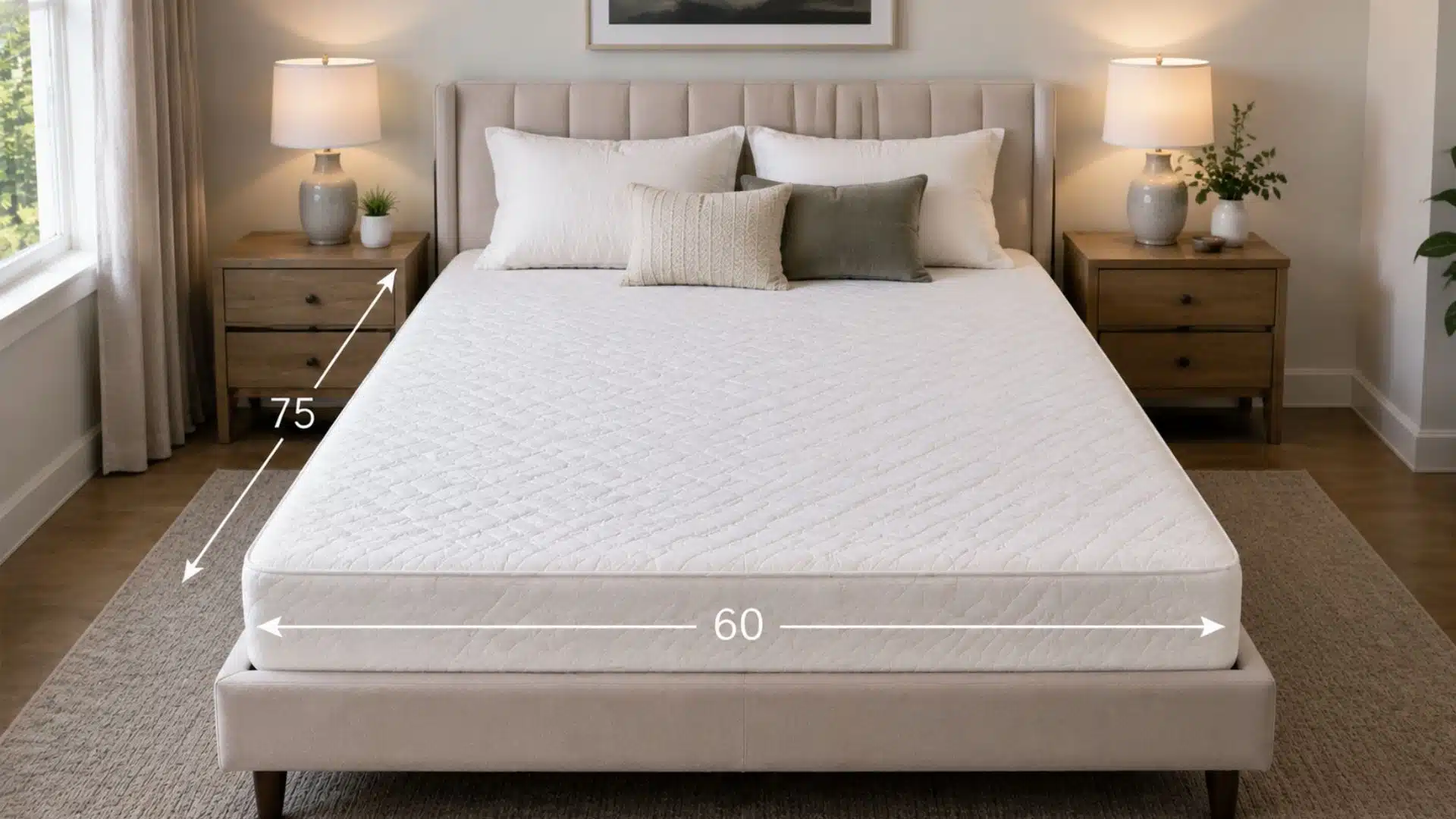
The RV short queen mattress size typically measures 60 x 75 inches, making it noticeably shorter than a standard queen mattress.
This sizing is most common in travel trailers, compact fifth wheels, and small RV bedrooms, where every inch of space matters.
Manufacturers rely on this size because it fits tighter sleeping areas without forcing major layout changes, while still offering enough room for most sleepers to rest comfortably during travel.
Pros and Limitations of the Short Queen Size
Before choosing this size, it helps to weigh what works well against what it falls short of, especially for taller sleepers or on longer road trips.
| Pros | Limitations |
|---|---|
| Fits tight RV spaces easily | Less legroom for taller sleepers |
| Comfortable for couples | Shorter length than standard queen |
| Widely available for replacement | Limited stretching room overall |
Choosing a short queen mattress comes down to balancing comfort with the space your RV actually offers for sleeping.
RV King Dimensions and Space Requirements Explained in Detail
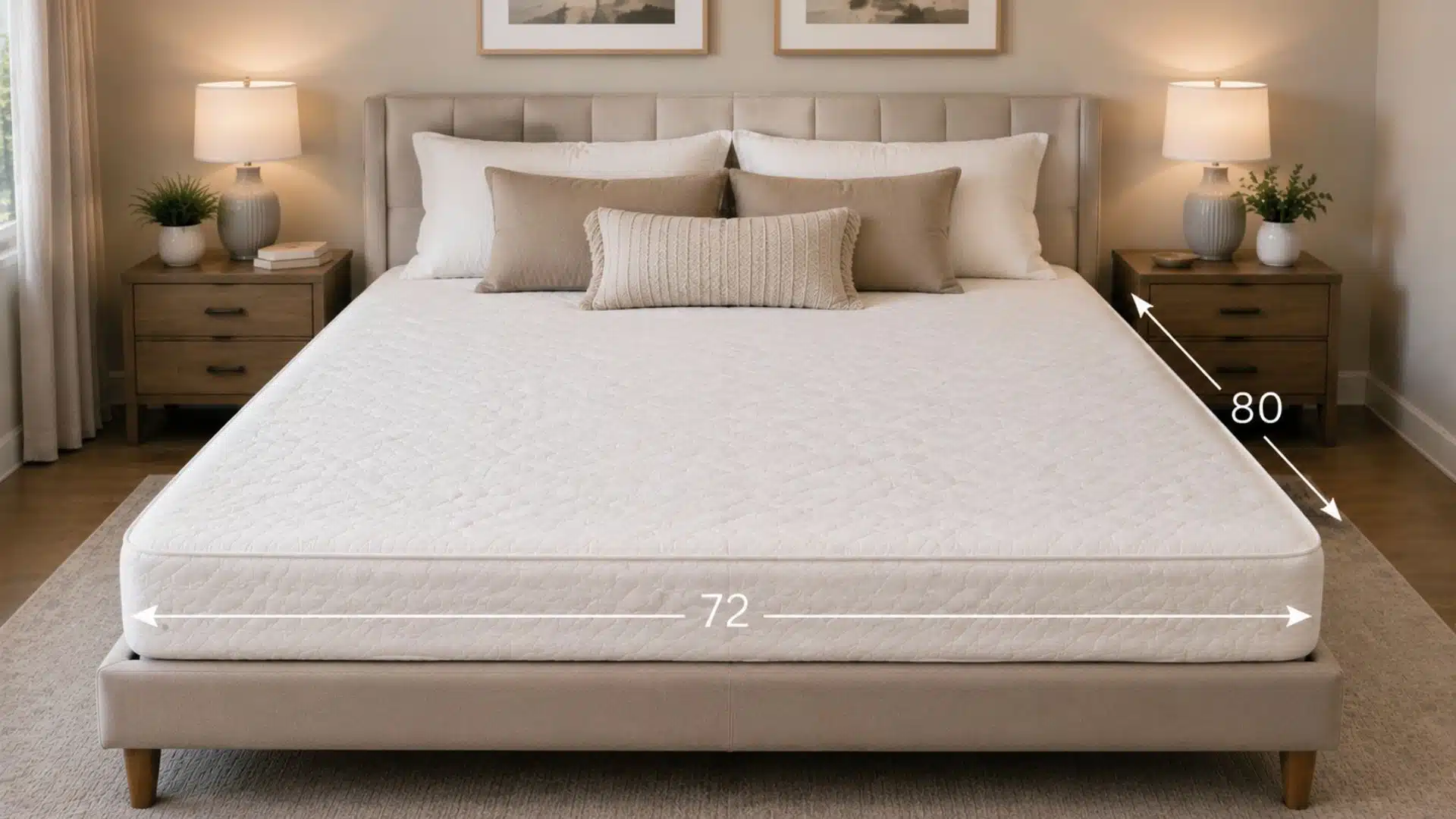
RV king dimensions typically measure 72 x 80 inches, making them noticeably narrower than a residential king mattress.
This sizing exists because most RV bedrooms need wider clearance around the bed, compatibility with slide-outs, and enough walking space to move comfortably without bumping into walls or furniture.
Pros and Limitations of RV King Dimensions
Before settling on this size, it helps to compare what it offers against where it may fall short inside a smaller RV bedroom.
| Pros | Limitations |
|---|---|
| Generous sleeping surface for couples | Narrower than a true residential king |
| Works well with larger motorhomes | Needs more clearance, limiting smaller RVs |
| Comfortable for longer trips | Fewer bedding options made to fit |
RV king dimensions work best in larger floor plans, since narrower bedrooms often struggle to accommodate the extra width.
RV Mattress Thickness and Height Guide
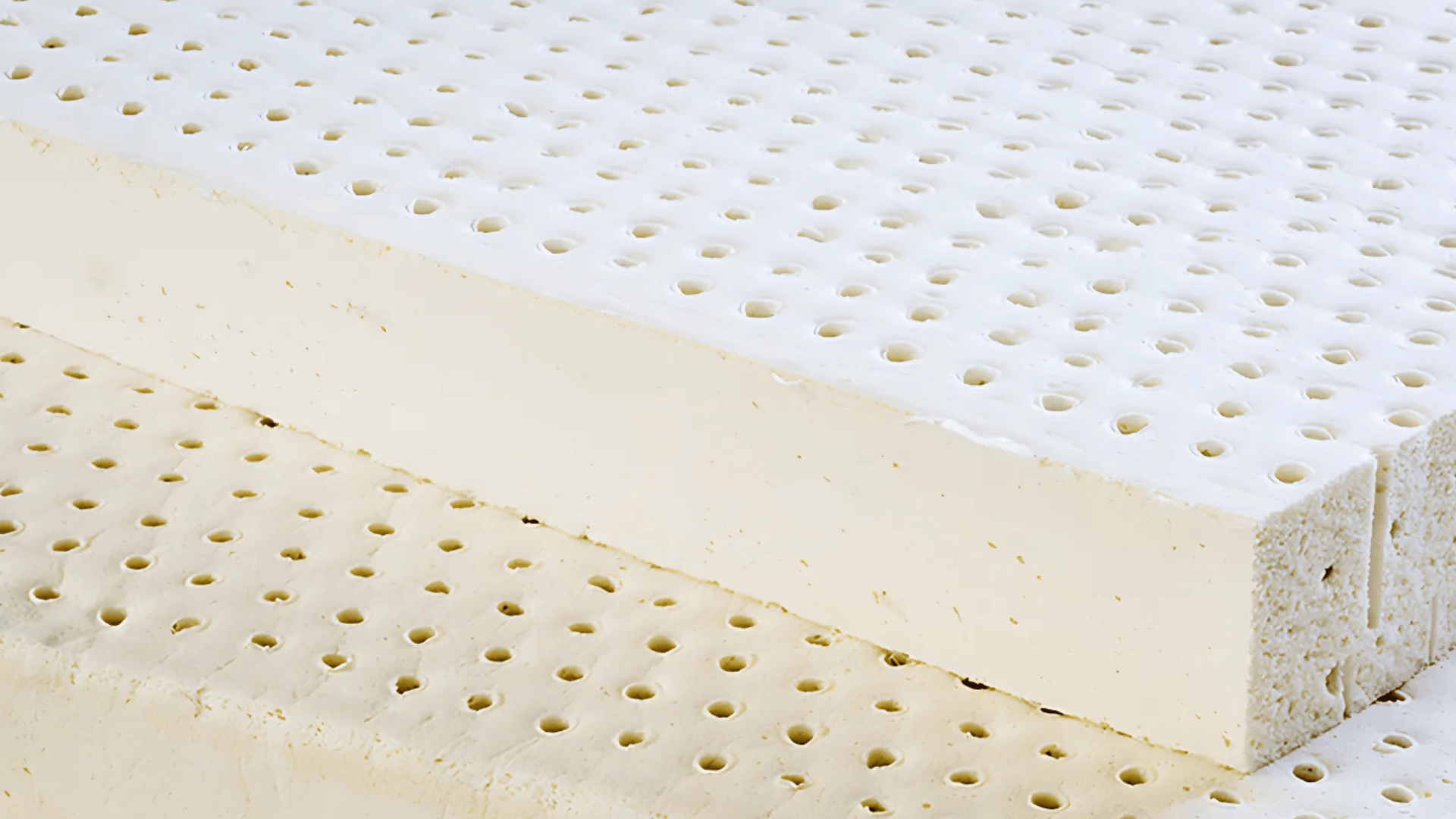
RV mattress thickness usually ranges from 4 to 12 inches, depending on the type. Thinner options are common for bunk beds, while thicker foam is used for main RV beds. Mattress thickness also affects comfort in ways worth checking before buying.
This thickness affects headroom inside slide-outs, changes how well sheets and bedding fit, and influences clearance around doors and storage compartments.
Choosing the right height comes down to comfort needs: low-profile mattresses suit bunk areas, medium-thickness mattresses for everyday sleeping, and high-density foam for longer travel comfort.
| Mattress Type | Thickness Range | Best Suited For |
|---|---|---|
| Bunk Mattress | 4 to 6 inches | Kids, guests, short trips |
| Standard RV Mattress | 6 to 9 inches | Everyday RV sleeping |
| High Density Foam | 9 to 12 inches | Frequent travelers wanting more comfort |
Picking the right thickness keeps you sleeping comfortably while still fitting properly within your RV’s space and storage limits.
Types of RV Mattresses and Their Dimensions
Beyond the queen and king options, several other RV mattress sizes appear across different layouts, each suited to specific sleeping areas, vehicle types, and space requirements in various RV models.
1. RV Twin and Bunk Mattress Sizes
Bunk mattresses are usually shorter and narrower than RV twin-size mattresses, since they fit into stacked frames rather than standard single-bed layouts, and stacked-frame sizing varies slightly between RV models.
These mattresses are built to be lightweight and compact, making them easy to fit into smaller frames without adding unnecessary bulk to the vehicle.
2. RV Full Mattress Size Overview
The RV full mattress size works well for solo sleepers who need more room than a twin but do not require a queen. This size is often found in older RV models, where bedroom layouts were designed around slightly larger single sleeping spaces.
3. Custom RV Mattress Sizes for Unique Layouts
Many RVs feature non-standard sizing, rounded corners, cut-corner designs, camper van conversions, and custom-built options tailored to those unique layouts.
These layouts require non-standard shapes because fixed cabinetry and curved walls do not always accommodate rectangular mattresses, necessitating custom sizing for a proper fit.
4. RV Bunk Mattress Size
Bunk mattress sizes support the compact sleeping areas found in family-style RVs.
Common measurements include 28 by 75, 30 by 75, 30 by 80, 32 by 74, 34 by 75, and 35 by 79 inches. These smaller frames suit children or shorter sleepers while keeping the cabin space open for other furniture and storage.
5. Truck Mattress Size
The truck mattress measures 42 by 80 inches, making it wider and longer than a standard RV twin. Manufacturers sometimes adjust these measurements slightly, so checking your frame before ordering is a smart step.
This size works well for solo sleepers who want a bit more shoulder room than a twin offers.
6. RV Twin Mattress & Twin XL Mattress Size
RV twin mattresses measure 38 by 75 inches, while the twin XL version measures 38 by 80 inches. Both sizes appear often in bunk setups along the open road. They suit single sleepers who value a compact frame without sacrificing the extra legroom the XL length provides.
7. Short RV Full Size Mattress aka Three Quarter Mattress
This mattress measures 48 by 74 or 48 by 75 inches and is built to save floor space in smaller RVs. It works best for a single sleeper but can hold two people if needed. The shortened design helps it fit into tighter bedroom layouts common in compact models.
8. Full-Size RV Mattress
The full-size RV mattress measures 53 by 75 or 54 by 75 inches, just an inch narrower than a standard home full mattress. That small reduction helps the mattress fit properly in RV frames while still leaving enough room for one person to sleep comfortably.
9. Standard Queen Mattress Size
The standard queen mattress size measures 60 by 80 inches, matching the dimensions found in most homes. This size suits couples who want the same sleeping space they are used to, along with enough room for a small pet to curl up beside them.
10. RV Short King Mattress Size
The RV short king measures 72 by 74 or 72 by 75 inches, trimming a few inches off a standard king in both length and width. This adjustment helps the mattress fit RV frames while still giving couples plenty of room to stretch during sleep.
11. Standard King Mattress Size
The standard king mattress measures 76 by 80 inches and is typically the largest size that fits comfortably inside an RV. It suits couples or solo sleepers who prefer extra space, though it works best in larger RV models with roomier bedroom layouts.
12. California King (CA RV King) Size Mattress
The California king measures 72 by 84 inches, matching the standard home size. The added length benefits taller sleepers who need more room to stretch out, making it a strong pick for larger RVs with the floor space to accommodate it.
How to Measure Your RV Bed Space Correctly
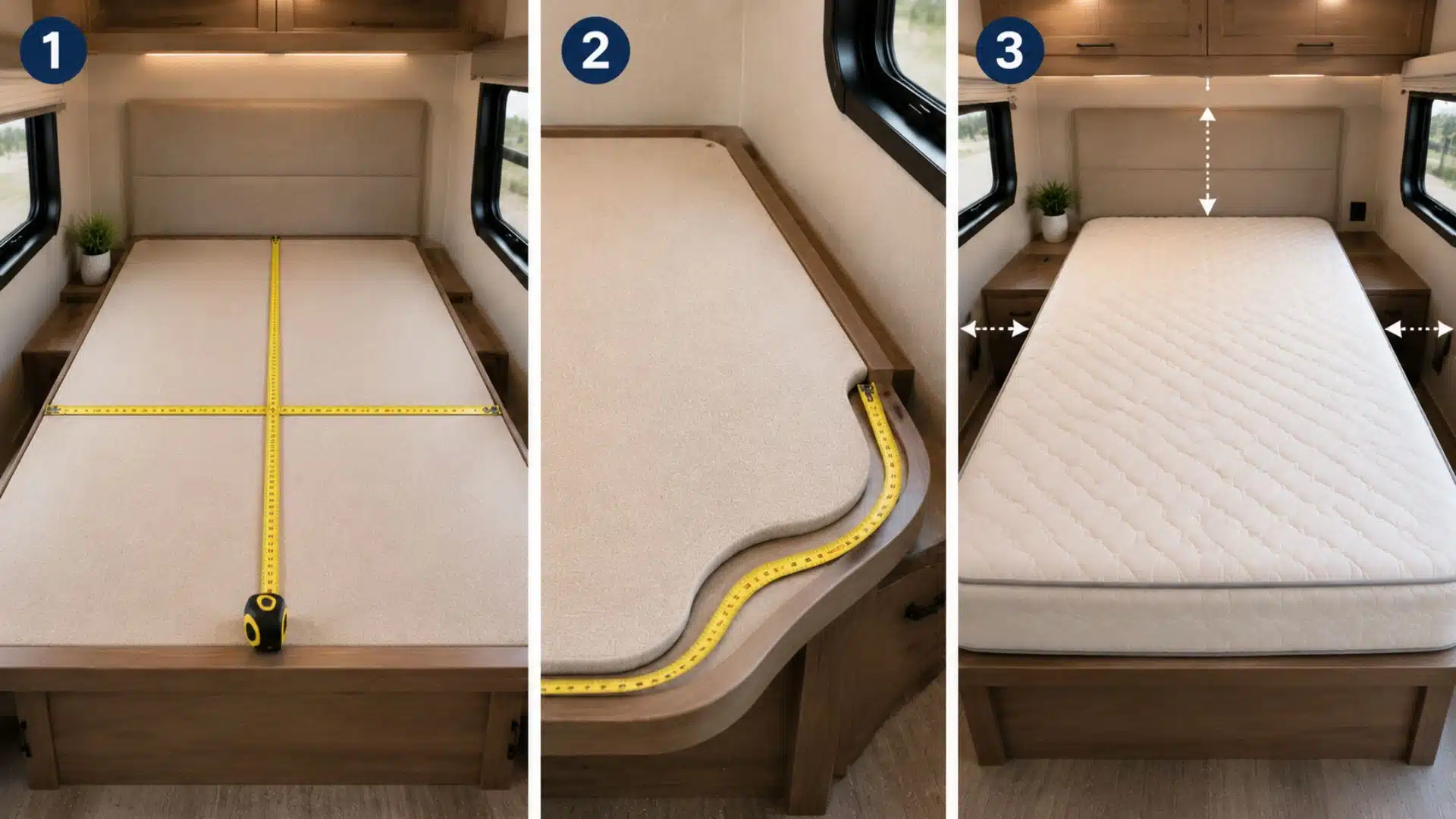
Getting accurate measurements before buying a new mattress helps avoid sizing mistakes, fitting issues, and unnecessary returns once the mattress arrives at your RV.
Step 1: Measure the Full Sleeping Area
Start by measuring the length and width of the sleeping area from wall to wall, recording the exact dimensions in inches. Taking these measurements twice helps catch small errors early, since even a slight miscalculation can lead to a mattress that does not fit properly inside the frame.
Step 2: Check Shape and Edge Design
Look closely for curved or cut corners in the bed space, since many RVs use irregular shapes rather than simple rectangles. If the edges are uneven, measure each section separately and note any non-standard shape requirements before choosing a replacement mattress.
Step 3: Confirm Clearance and Fit Limits
Measure the space surrounding the bed frame, including slide-out clearance if your RV has one. Make sure there is enough room left over for mattress thickness and bedding, so the finished setup does not feel cramped or overcrowded once everything is in place.
RV Mattress Sizes by RV Type and Floor Plan
Floor plan design plays a large role in mattress sizing, since bedroom placement, slide-outs, and cabinetry all shape how much space is left for a bed inside each RV type.
| RV Type | Common Mattress Size | Floor Plan Note |
|---|---|---|
| Class A Motorhome | Queen or King (60 by 80, 76 by 80) | Larger floor plans allow full-size beds |
| Class C Motorhome | Short Queen or Queen (60 by 75, 60 by 80) | Mid-size layouts often favor a short queen |
| Travel Trailer | Full or Queen (53 by 75, 60 by 75) | Common in rear or front bedroom layouts |
| Fifth Wheel | Queen or King (60 by 80, 72 by 80) | Elevated bedroom lofts often fit larger sizes |
| Camper Van or Class B | Twin or Custom (28 to 38 by 75) | Compact floor plans require custom or twin sizing |
| Bunkhouse Trailer | Bunk (28 to 35 by 75 to 80) | Multiple bunks fit tightly in secondary sleeping areas |
Matching mattress size to the floor plan keeps walkways clear, slide-outs functional, and sleeping areas comfortable, so checking your layout before buying helps prevent a mattress that never fits right.
How to Choose the Right RV Mattress Size
Picking the right mattress size depends on more than just preference. RV type, sleeping needs, and storage space all play a role in finding a mattress that fits comfortably and functions well over the long term.
Based on RV type and layout: Motorhomes, travel trailers, and camper vans each follow different sizing standards, so checking your specific RV type first helps narrow down which mattress dimensions will actually fit your sleeping area properly.
Based on sleepers and comfort needs: Solo travelers, couples, and family RV setups each require different sizing priorities, since comfort needs shift with the number of people who regularly sleep in the space.
Based on portability and storage needs: Foldable mattresses and lightweight foam options work best for RVs that need flexible storage, since they pack away easily without taking up valuable space when not in use.
Getting this decision right the first time saves money, prevents return shipping costs, and avoids settling for a mattress that never quite fits properly.
RV Mattress Buying Checklist Before Final Decision
Choosing the right mattress goes beyond size alone. Material, weight, and fit each affect comfort, durability, and the mattress’s performance in your RV over time.
| Checklist Category | What to Look For |
|---|---|
| Material and Comfort Level | Memory foam, hybrid construction, breathable covers |
| Weight and Handling | Easy to move for cleaning, lightweight for tight RV spaces |
| Fit, Shape, and Durability | Exact RV frame compatibility, corner design match, warranty, and longevity |
Running through this checklist before buying helps avoid mismatched sizes, uncomfortable nights, and mattresses that wear out faster than expected on the road.
Conclusion
Picking the right mattress for an RV comes down to matching measurements with the layout you already have, not the assumptions carried over from a standard bedroom.
Twin, full, short queen, queen, and king sizes each serve a different type of RV and traveler, so checking dimensions against your actual sleeping space saves both money and frustration.
Thickness, shape, and material add another layer worth checking before placing an order, especially for RVs with curved corners or slide-outs.
Taking the time to measure and compare options with the sizes covered here leads to a comfortable setup that fits the vehicle rather than fighting it.
Frequently Asked Questions
What Size Is a Standard RV Mattress?
Most standard RV mattresses measure 60 x 75 inches, slightly different from home mattress sizing.
Is RV Queen the Same as a Regular Queen?
No, RV queen mattresses are shorter than residential queen mattresses.
What Is the RV Short Queen Mattress Size?
The RV short queen mattress size typically measures 60 x 75 inches.
How Wide Are RV King Dimensions?
RV king dimensions are typically 72 inches wide, narrower than home king beds.
Can I Use a Regular Mattress in My RV?
Only if the dimensions match exactly, since most RV beds use custom sizing.