





Yes, it can. And it’s more common than you think.
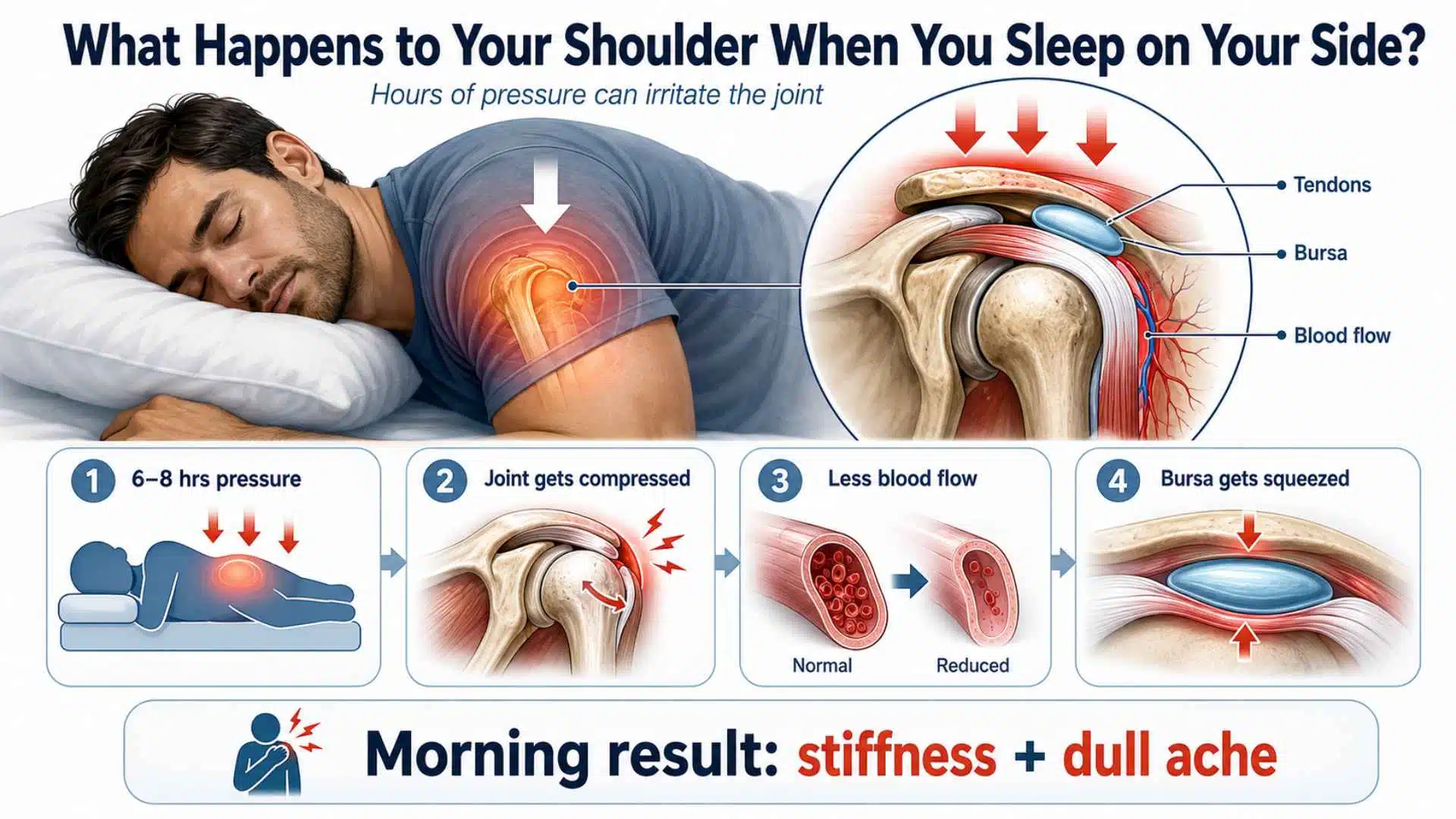
When you sleep on your side, your entire body weight presses down on one shoulder for hours. The shoulder joint is not built to handle that kind of sustained pressure.
Over time, this compresses the tendons, squeezes the fluid-filled sac inside the joint, and restricts blood flow to the area.
You wake up stiff, achy, or with a dull throb that takes an hour to ease.
Many people blame their age or an old injury. But the real culprit is often just their sleeping position. But it’s fixable.
Common Causes of Shoulder Pain from Side Sleeping
Side sleeping doesn’t always cause pain on its own. Most of the time, it triggers or worsens an existing issue in the shoulder. Here are the most common ones.
1. Rotator Cuff Strain or Tear
Your rotator cuff is a group of four muscles and tendons that hold the shoulder joint together. When you sleep on your side, these tendons get compressed against the bone repeatedly, night after night.
Over time, this leads to small tears or inflammation. The classic sign is a dull, deep ache that shows up right after waking and slowly eases as you move around during the day.
2. Shoulder Bursitis
The bursa is a small fluid-filled sac that reduces friction in your shoulder joint. Prolonged pressure from side sleeping inflames it.
When that happens, the pain is usually sharp and localized to the outer edge of the shoulder. It feels worst in the morning and tends to ease once you start moving. Ignoring it makes it harder to treat over time.
3. Shoulder Impingement Syndrome
Impingement occurs when the tendons in your shoulder are pinched between the bones. Side sleeping narrows that space even further, making it worse every night.
People with poor desk posture are especially prone to this, as rounded shoulders already reduce that gap. A telling sign is pain that travels down the upper arm, not just in the shoulder itself.
4. Frozen Shoulder (Adhesive Capsulitis)
Frozen shoulder causes the tissue around the joint to thicken and tighten. Pain and stiffness build slowly over weeks. Side sleeping puts direct pressure on an already restricted joint, significantly aggravating it.
It is most common in people between 40 and 60 years old and in those with diabetes. If your shoulder feels stiff before you even get out of bed, this could be why.
5. AC Joint Problems
The acromioclavicular joint sits right at the top of your shoulder, where the collarbone meets the shoulder blade. When you sleep directly on that side, your full body weight presses straight onto this joint.
That sustained pressure causes a localized ache that is hard to ignore. It often feels tender to touch and worsens if you sleep on the same side every night.
6. Poor Pillow Height or Mattress Support
Sometimes the shoulder itself is not the problem; the setup is. A pillow that is too flat drops your head down, creating tension all the way into the shoulder.
A pillow too high pushes your neck up and does the same. A mattress that is too firm does not let the shoulder sink in naturally, increasing the pressure on the joint throughout the night.
Who is More Likely to Get Shoulder Pain from Side Sleeping?
Side sleeping does not affect everyone equally. Certain factors make some people far more vulnerable to waking up with shoulder pain than others.
| Risk Factor | Why It Increases the Risk |
|---|---|
| Age 40 and above | Tendons lose elasticity with age and handle sustained pressure poorly |
| Athletes | Swimmers and overhead lifters already have stressed rotator cuffs before bedtime |
| Pre-existing rotator cuff issues | Any existing damage gets aggravated by nightly compression |
| Desk workers with poor posture | Rounded shoulders from screen time reduce joint space even during sleep |
| Pregnant women | Side sleeping is often the only option, putting the same shoulder under pressure every night |
| Old or very firm mattress | Does not allow the shoulder to sink in, increasing direct pressure on the joint |
If you fall into more than one of these categories, your risk goes up further. The pain is not random — there is always a reason behind it.
Solutions to Shoulder Pain from Sleeping on Your Side
The fixes are simpler than most people expect. Small changes to your position, pillow, and setup can make a significant difference starting from the very first night.
- Switch to sleeping on your back: To remove all pressure from the shoulder joint. Even 2–3 nights of back sleeping can noticeably reduce acute pain.
- Sleep on the non-painful side: Shifts pressure away from the affected shoulder. Place a pillow between your knees to keep the spine aligned.
- Fix your pillow height: Your head should stay level with your spine. Side sleepers need a thicker pillow — roughly 4–6 inches works for most.
- Use a body pillow in front of you: it prevents you from rolling forward and helps stabilize the shoulder joint throughout the night.
- Change your arm position: Never tuck the arm under the pillow. Rest it slightly forward on the mattress or against a body pillow instead.
- Apply ice or heat before bed: Ice for sharp, new pain. Heat for stiff, chronic pain. Always wrap in a cloth — never apply directly to the skin.
- Switch to a medium-soft mattress or add a topper: Your shoulder needs to sink in slightly. A topper is a cost-effective fix before replacing the full mattress.
None of these requires expensive equipment or major lifestyle changes. Start with one fix at a time. Most people notice a difference within a few nights of making even one adjustment.
Exercises to Relieve Shoulder Pain from Side Sleeping
Side sleeping can compress the shoulder joint and surrounding tissues, leading to stiffness and dull aches on waking. These exercises stretch and mobilize the shoulder to reduce irritation and improve movement.
1. Pendulum Stretch
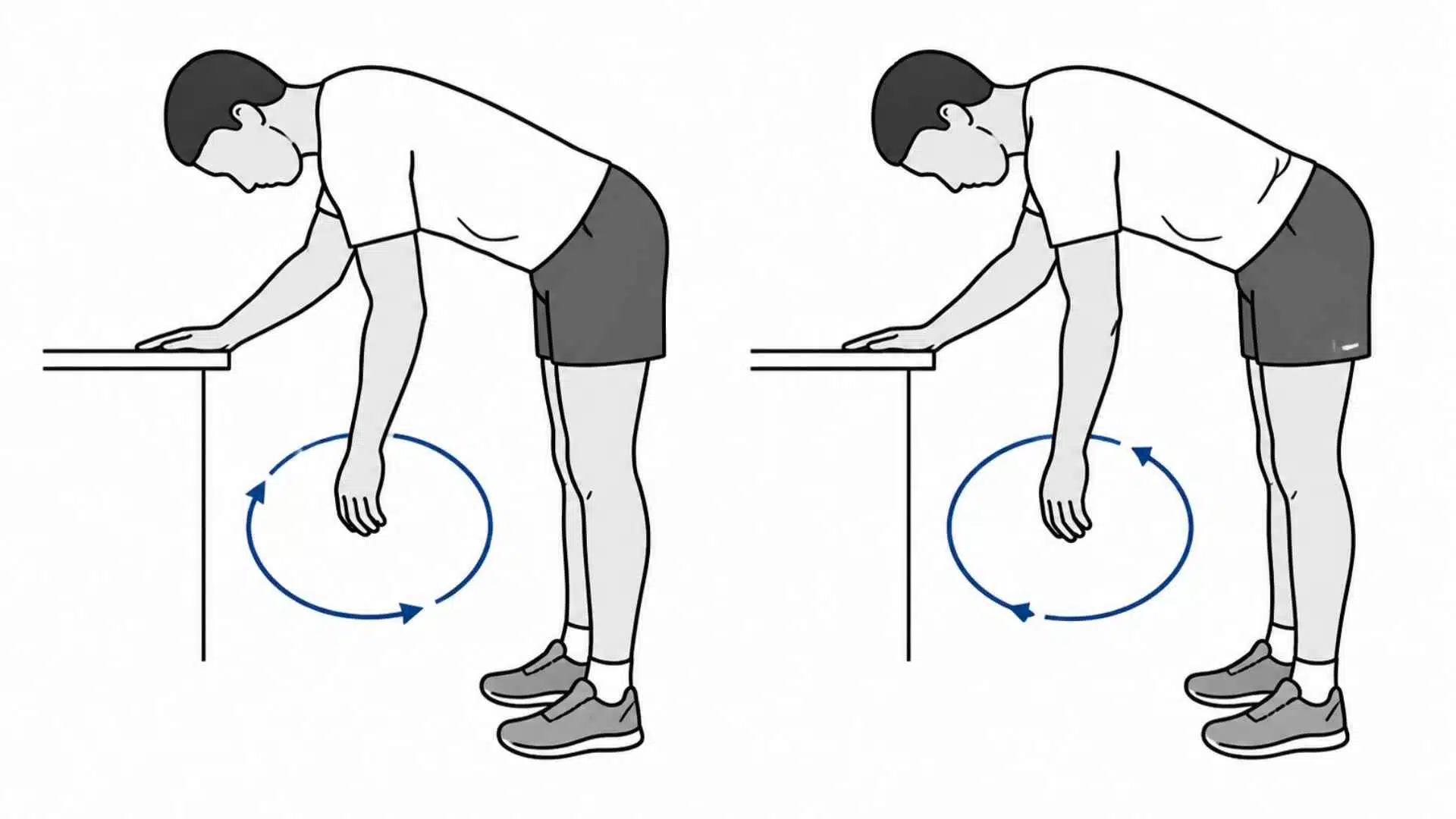
What it does: Relieves joint compression and promotes gentle mobility.
How to do it:
- Stand with your non‑painful hand supported on a chair or table.
- Lean forward slightly, letting the painful arm hang straight down.
- Gently swing the arm in small circles, 30 seconds clockwise, then 30 seconds counter‑clockwise.
Regular pendulum stretches help maintain joint flexibility and reduce morning stiffness gradually over time.
2. Cross‑Body Shoulder Stretch
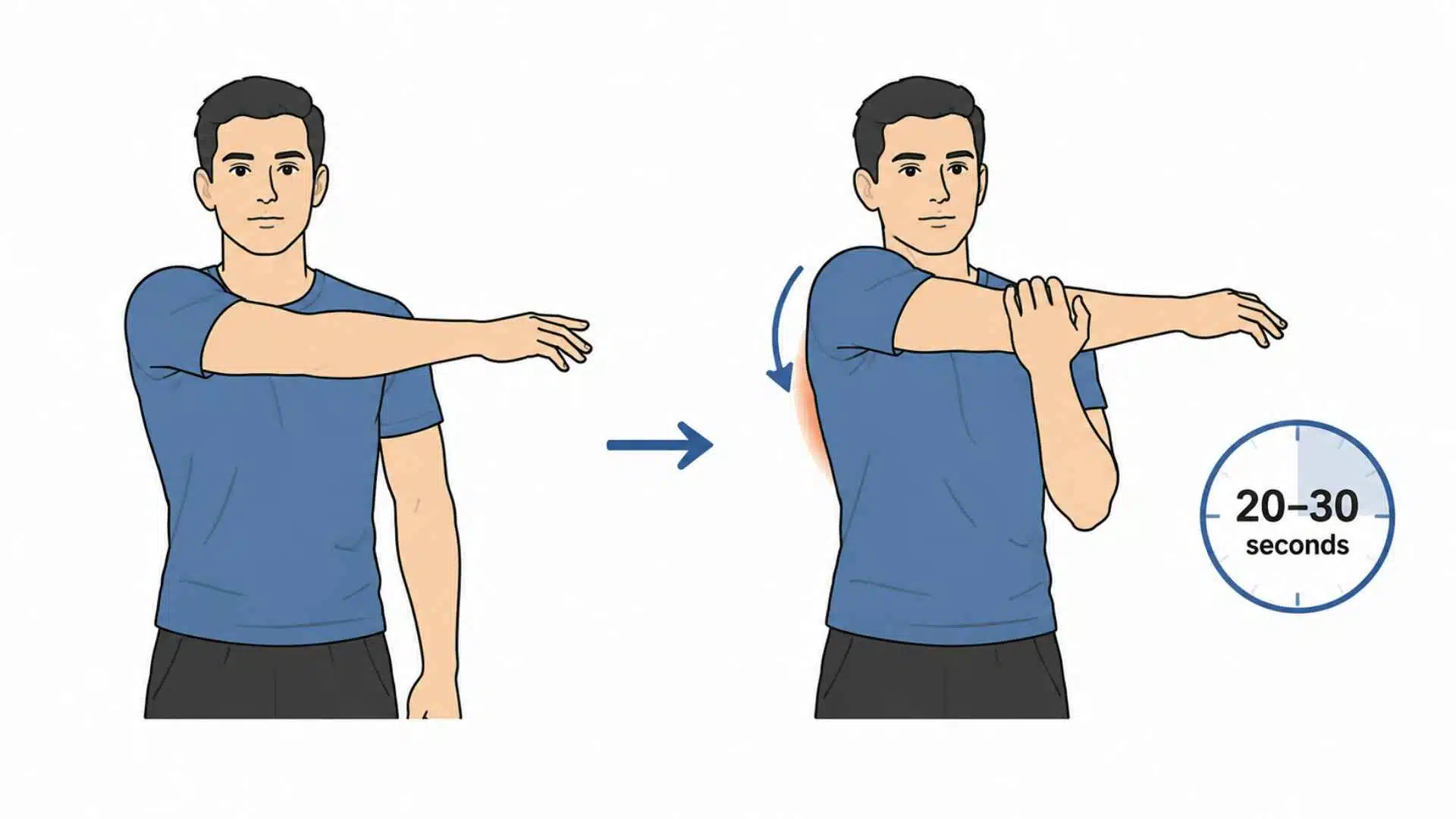
What it does: Stretches the back of the shoulder to ease tightness and improve range of motion.
How to do it:
- Stand or sit tall.
- Bring the affected arm across your chest.
- Use your opposite hand to hold the arm just above the elbow.
- Gently pull it toward your chest until you feel a stretch.
- Hold for 20–30 seconds, then switch sides if needed.
Doing cross-body stretches consistently supports shoulder mobility and helps prevent recurring side-sleeping pain.
3. Doorway Chest Stretch
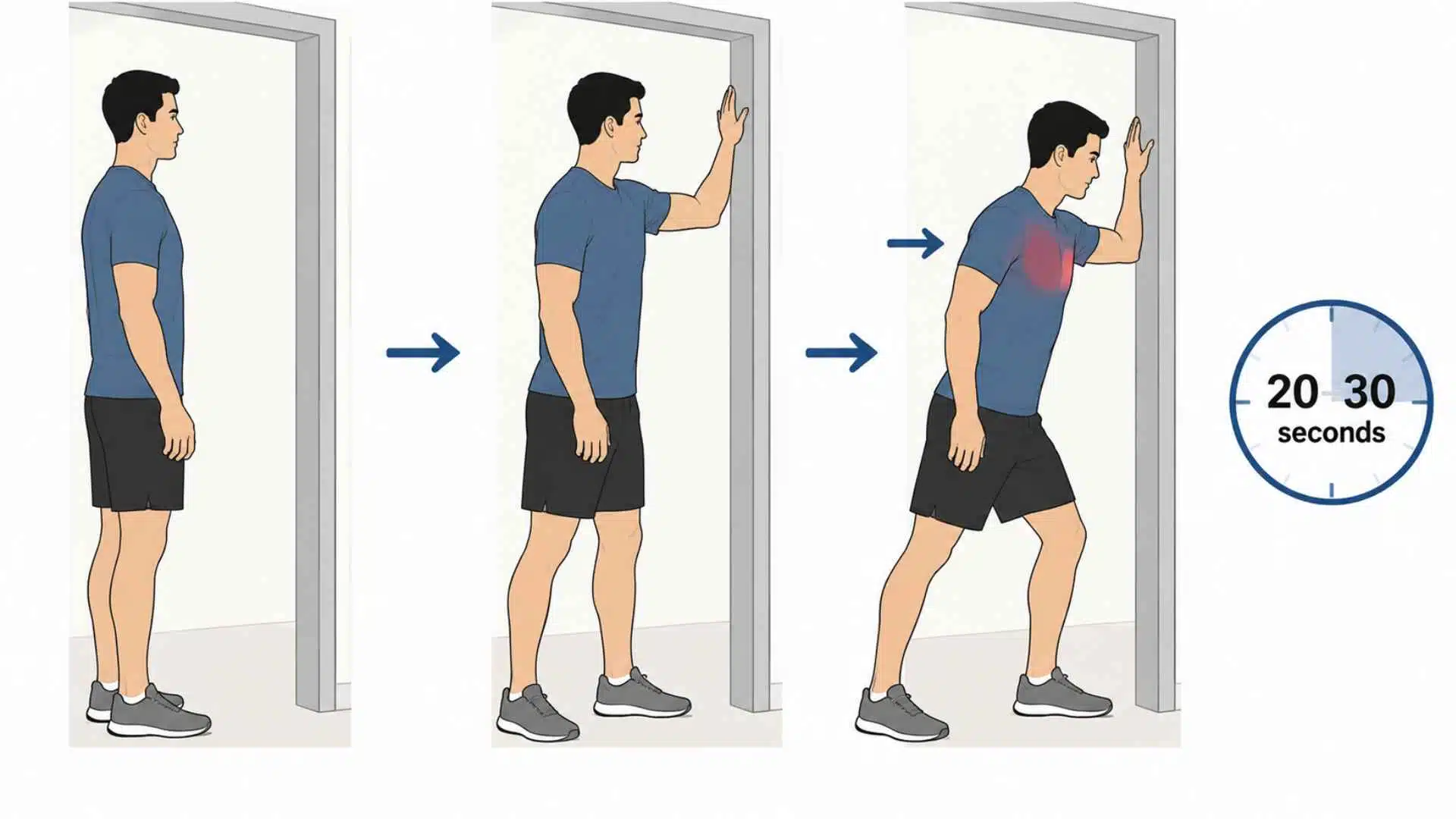
What it does: Opens the chest and counteracts forward rounding from side sleeping, which helps unload the shoulder.
How to do it:
- Stand facing a doorway.
- Place your hand and forearm on the door frame at shoulder height.
- Step one foot forward and gently lean into the stretch.
- Keep your shoulder down and relaxed.
- Hold for 20–30 seconds.
This chest stretch eases tension, improves posture, and relieves shoulder discomfort after sleeping on your side.
When to See a Doctor?
Position changes and pillow fixes work for most people. But sometimes the pain signals something deeper that needs professional attention. Do not ignore these signs.
- Pain lasts more than 2–3 weeks: If nothing improves despite changing your position and pillow setup, something structural may be wrong.
- Clicking or popping sounds in the shoulder: Occasional clicks are normal. Consistent sounds with pain are not. Get it checked.
- Pain wakes you up mid-sleep: Discomfort on waking is common. Pain that pulls you out of sleep is a different level of severity.
- You cannot lift your arm above shoulder height: This points to a possible rotator cuff tear or severe impingement, both of which need early diagnosis.
- Swelling, bruising, or warmth around the joint: These are signs of active inflammation or injury, not just sleep-related soreness.
Shoulder pain from sleeping is common, but not something to push through indefinitely. The earlier you get it assessed, the faster and easier the recovery will be.
Wrap Up
Shoulder pain from side sleeping is common, but often preventable with simple adjustments.
Correcting your sleeping position, using the right pillow, and incorporating targeted stretches like the pendulum, cross-body, and doorway chest stretches can significantly reduce discomfort.
Understanding the underlying causes, whether rotator cuff strain, bursitis, or poor mattress support, empowers you to address pain before it worsens.
Most fixes are simple, cost-effective, and noticeable within a few nights. Persistent or severe symptoms, however, require professional evaluation to rule out structural issues.
Take control of your sleep health and wake up pain-free.
Have you tried any of these adjustments? Share your experience or bookmark this page for easy reference later.
Frequently Asked Questions
Can Adjusting Sleep Duration Affect Shoulder Pain?
Sleeping too long on any side can increase pressure, so alternating positions may help reduce shoulder discomfort.
Do Certain Fabrics or Bedding Materials Impact Shoulder Comfort?
Softer, more adaptive materials like memory foam or latex can relieve shoulder pressure and improve overall sleep quality.
Can Daily Posture Outside of Sleep Influence Shoulder Pain at Night?
Yes, maintaining an upright posture and strengthening back and shoulder muscles can prevent nighttime shoulder strain from side sleeping.