


For many veterans, a PTSD diagnosis doesn’t come alone. Disrupted sleep, frequent nighttime awakenings, and breathing problems often follow, and obstructive sleep apnea is one condition that appears with striking regularity alongside post-traumatic stress.
The connection between PTSD and sleep apnea is backed by medical research, and the VA does recognize sleep apnea secondary to PTSD as a valid disability claim.
But understanding how that process works, what the VA requires, and why so many claims get denied is what separates a successful outcome from an avoidable setback.
Important 2025–2026 Update: File Before Rules Change The VA proposed changes to sleep apnea ratings in February 2022 and revised them in September 2024 (89 FR 74162). As of May 2026, the rule is still proposed, not final, and the VA has paused implementation following pushback from veterans organizations and lawmakers:
Action: If you have a sleep apnea diagnosis and haven’t filed, file now under the current criteria. |
What Does Sleep Apnea Secondary to PTSD Mean?
Secondary service connection is a category within the VA disability system. Under 38 CFR § 3.310, a veteran can receive disability compensation for a condition that was caused or made worse by an already service-connected disability.
The condition doesn’t need to stem directly from military service; it only needs to be medically linked to a condition that does.
When a veteran files for sleep apnea secondary to PTSD, they are claiming that their obstructive sleep apnea (OSA) developed because of, or was worsened by, their PTSD.
Since PTSD is among the most common service-connected conditions among veterans, many also experience sleep disorders that trace back to it.
The VA does allow secondary service connection for sleep apnea. Getting that connection approved, though, requires clear medical evidence, not just a diagnosis of both conditions sitting in the same file.
Can PTSD Cause Sleep Apnea?
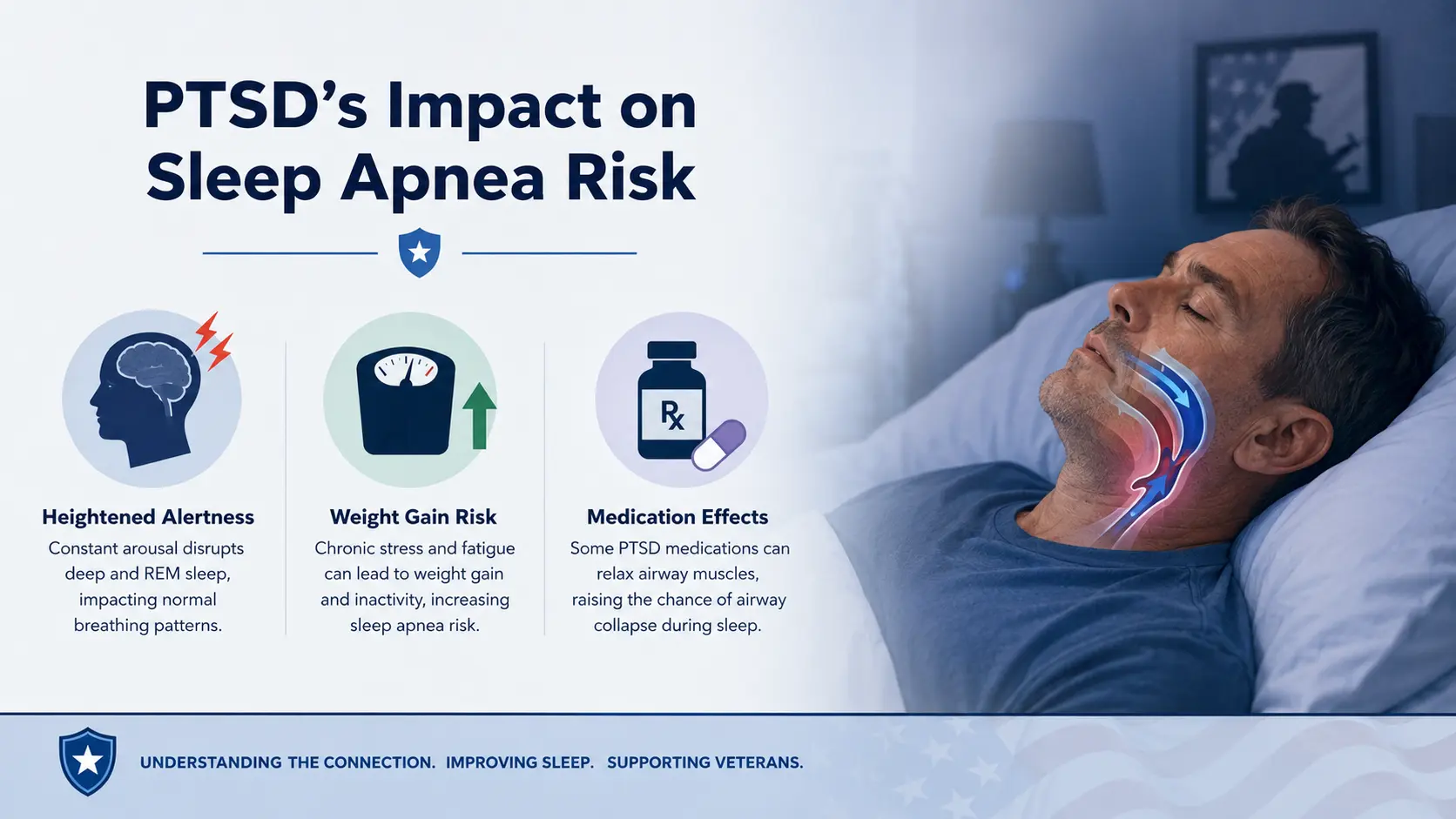
But PTSD creates conditions that raise a person’s risk of developing OSA or make existing sleep apnea worse. Medical research supports several explanations for this.
Chronic Hyperarousal
PTSD keeps the central nervous system in a state of persistent alertness. This constant arousal interferes with normal sleep architecture, particularly REM sleep, the stage during which breathing patterns are most tightly regulated.
When REM sleep is repeatedly broken, the respiratory patterns during that stage are also affected. Over time, this can worsen or contribute to sleep-disordered breathing.
Weight Gain Linked to PTSD
Chronic psychological stress activates the body’s cortisol response, which, over time, can contribute to weight gain. Many veterans with PTSD also experience reduced physical activity, irregular eating patterns, and fatigue that limits exercise.
Medication Side Effects
Veterans being treated for PTSD are often prescribed benzodiazepines, sedative-hypnotics, or certain antidepressants. Some of these medications relax the muscles in the throat and airway, increasing the likelihood of airway collapse during sleep, a defining characteristic of obstructive sleep apnea.
Research backs this connection: A 2015 study by Colvonen et al., published in the Journal of Clinical Sleep Medicine (Vol. 11, No. 5), examined 195 Iraq and Afghanistan (OEF/OIF/OND) veterans at a VA outpatient PTSD clinic. |
Symptoms of PTSD and Sleep Apnea That Often Overlap
Both PTSD and sleep apnea affect sleep quality and daytime functioning. Their symptoms can look nearly identical on the surface, which is one reason the connection between the two often goes undiagnosed for years.
- PTSD and sleep apnea can both cause poor sleep, daytime tiredness, and low energy.
- Nightmares, sudden awakenings, and broken sleep may occur with either condition, making the cause difficult to distinguish.
- Snoring and breathing pauses are stronger signs of sleep apnea, but restless PTSD sleep can hide these patterns.
- Both conditions can lead to anxiety, irritability, brain fog, and poor focus.
- When PTSD and sleep apnea happen together, symptoms often feel worse and may delay proper diagnosis.
Recognizing the overlap is important for getting the right treatment and better sleep.
A proper sleep evaluation can help identify whether PTSD, sleep apnea, or both are involved.
Know if sleep apnea is dangerous enough to be life-threatening.
How the VA Rates Sleep Apnea Secondary to PTSD
The VA rates sleep apnea under Diagnostic Code 6847 of the Schedule for Rating Disabilities. The rating is based on the severity of the condition and whether the veteran requires a breathing-assistance device, such as a CPAP machine.
Secondary service connection does not change the rating criteria; the same schedule applies whether sleep apnea is service-connected directly or secondarily.
Source Citing: VA Rating for Sleep Apnea Secondary to PTSD, by Chisholm Chisholm & Kilpatrick LTD
| Proposed Rating | Criteria |
|---|---|
| 100% | Ineffective treatment + end-organ damage |
| 50% | Ineffective treatment, no end-organ damage |
| 10% | Incomplete relief with treatment (CPAP) |
| 0% | Fully controlled, asymptomatic |
The 50% Rating and CPAP
Most veterans with obstructive sleep apnea who require a CPAP machine are rated at 50%. This is the most common outcome for veterans with a confirmed OSA diagnosis.
For veterans already rated for PTSD, adding a 50% sleep apnea rating through secondary service connection can result in a much higher total combined rating.
Given the pending rule change, filing sooner rather than later is strongly advisable for veterans who have not yet submitted a claim.
How Secondary Connection Affects Your Total Rating
Being rated for sleep apnea secondary to PTSD adds a separate disability percentage to the veteran’s overall combined rating.
Since PTSD is frequently rated at 50% or 70%, adding a 50% sleep apnea rating can make a meaningful difference in monthly compensation. The VA uses a combined ratings formula, not simple addition, to calculate the final percentage.
What You Need to Prove a VA ClaimA Diagnosed PTSD Condition: PTSD must already be established as a service-connected condition before a secondary claim can be filed. Without that approved service connection on record, the VA has no basis to evaluate sleep apnea as a secondary condition. A Confirmed Sleep Apnea Diagnosis: A formal OSA diagnosis is required; self-reported symptoms are not enough. This is typically obtained through a polysomnography test, either in a sleep lab or via a home sleep testing device, and must be signed off on by a qualified physician. A Medical Nexus Letter Connecting Both Conditions: A nexus letter is a written medical opinion from a licensed physician stating that the veteran’s sleep apnea is “at least as likely as not” caused or aggravated by their service-connected PTSD. |
Medical Evidence That Supports PTSD and Sleep Apnea Claims
The strength of a sleep apnea secondary to PTSD claim rests almost entirely on the quality of the medical evidence submitted. These are the main categories the VA considers.
Sleep Study Results
A polysomnography report shows objective data on breathing events per hour (Apnea-Hypopnea Index, or AHI), oxygen saturation levels, and sleep stage patterns.
An AHI of 5 or more events per hour combined with symptoms typically meets the diagnostic threshold for OSA. This report is the clinical backbone of any sleep apnea claim.
Nexus Letter
A well-written nexus letter goes beyond simply stating that two diagnoses exist.
It explains the medical reasoning behind why PTSD caused or worsened the veteran’s sleep apnea, references relevant clinical findings or published research, and uses VA-required language such as “at least as likely as not.” A generic letter rarely carries enough weight with VA raters.
VA Medical Records
Treatment records from VA healthcare providers are among the most credible documents a veteran can submit.
If a VA physician or mental health provider documented sleep complaints, breathing difficulties, or referred the veteran for a sleep study, those records directly support the link between PTSD history and sleep apnea development.
PTSD Treatment History
A detailed record of PTSD treatment, including therapy notes, medication changes, and symptom reports, helps establish the timeline and severity of the condition.
Records that mention sleep disturbances during active PTSD treatment strengthen the argument that sleep apnea developed in that clinical context.
Common Reasons Sleep Apnea Secondary to PTSD Claims Get Denied
Many veterans file with valid conditions but still get denied, and the reason is almost always missing or poorly prepared evidence, not the diagnosis itself.
- No Nexus Letter or Weak Medical Opinion: Having both diagnoses is not enough. The VA needs a qualified physician to explain why the two conditions are linked in that veteran’s specific case. A vague letter that simply lists both diagnoses rarely holds up.
- No Sleep Study on File: Without polysomnography data, the VA may reject the claim on the grounds that OSA has not been properly diagnosed. A physician’s clinical impression alone is not sufficient.
- Missing or Incomplete Documentation: Claims filed without supporting medical records, treatment history, or sleep study results give VA raters clear grounds for denial. The connection between PTSD and sleep apnea must be documented, not assumed.
Most of these denials are avoidable. Knowing what the VA expects before filing puts the veteran in a much stronger position.
Conclusion
The medical connection between PTSD and sleep apnea is real, and the VA does recognize it through secondary service connection.
Filing a successful claim comes down to evidence, a confirmed sleep apnea diagnosis, an established PTSD service connection, and a well-reasoned medical nexus letter that clearly explains how the two conditions are linked.
Veterans who approach this process with organized records and a qualified medical opinion give their claims the best chance of approval.
Frequently Asked Questions
Can PTSD Alone Cause Sleep Apnea?
PTSD doesn’t cause airway obstruction on its own, but the VA acknowledges it as a contributing factor in the development of OSA.
Does the VA Recognize Sleep Apnea Secondary to PTSD?
Yes. With proper documentation, the VA can approve sleep apnea as secondary to a service-connected PTSD diagnosis.
What VA Rating Can Sleep Apnea Secondary to PTSD Receive?
Veterans who use CPAP are most often rated at 50%. Ratings of 30% and 0% also apply based on symptom severity.
Do I Need a Nexus Letter for a Secondary Sleep Apnea Claim?
Not legally required, but in practice, a nexus letter is the most effective evidence for connecting sleep apnea to PTSD.