





Most people spend hours choosing the perfect mattress size or bed frame style. But one thing is almost always skipped: bed height.
It sounds like a small detail. It is not.
The average bed height affects how well you sleep, how the body feels each morning, and even how the bedroom looks. A bed that is too low can strain the knees and back. A bed that is too high can feel like climbing a ladder every single night.
Getting it right matters more than most people think.
Read on to understand what the average bed height actually means, what numbers to look for, and how to pick the right height for any body type, age, or lifestyle. The right bed height is closer than most people expect.
What Is the Average Bed Height
The average bed height is typically 18 to 25 inches from the floor to the top of the mattress, which is the most common range in modern U.S. households.
Taller setups above this range are usually created by combining a thicker mattress with a box spring or an elevated frame, from the floor to the top of the mattress, though this can vary depending on the bed frame, mattress thickness, and personal preferences.
Choosing the right bed height is more important than most people realize; it directly impacts comfort, ease of getting in and out of bed, and even sleep quality.
A bed that is too low may strain your knees and back, while a bed that is too high can make climbing in uncomfortable, especially for children or older adults.
The ideal height allows your feet to rest flat on the floor when sitting on the edge of the bed, with your knees at 90 degrees.
Most modern bed setups fall within this range because they balance comfort, accessibility, and ergonomic support for everyday use.
NoteBed height refers to the total distance from the floor to the top of the mattress, while mattress thickness only measures the height of the mattress itself. Both work together to determine your final bed height, and confusing the two can lead to choosing a setup that feels too high or too low. |
What Is the Standard Mattress Height?
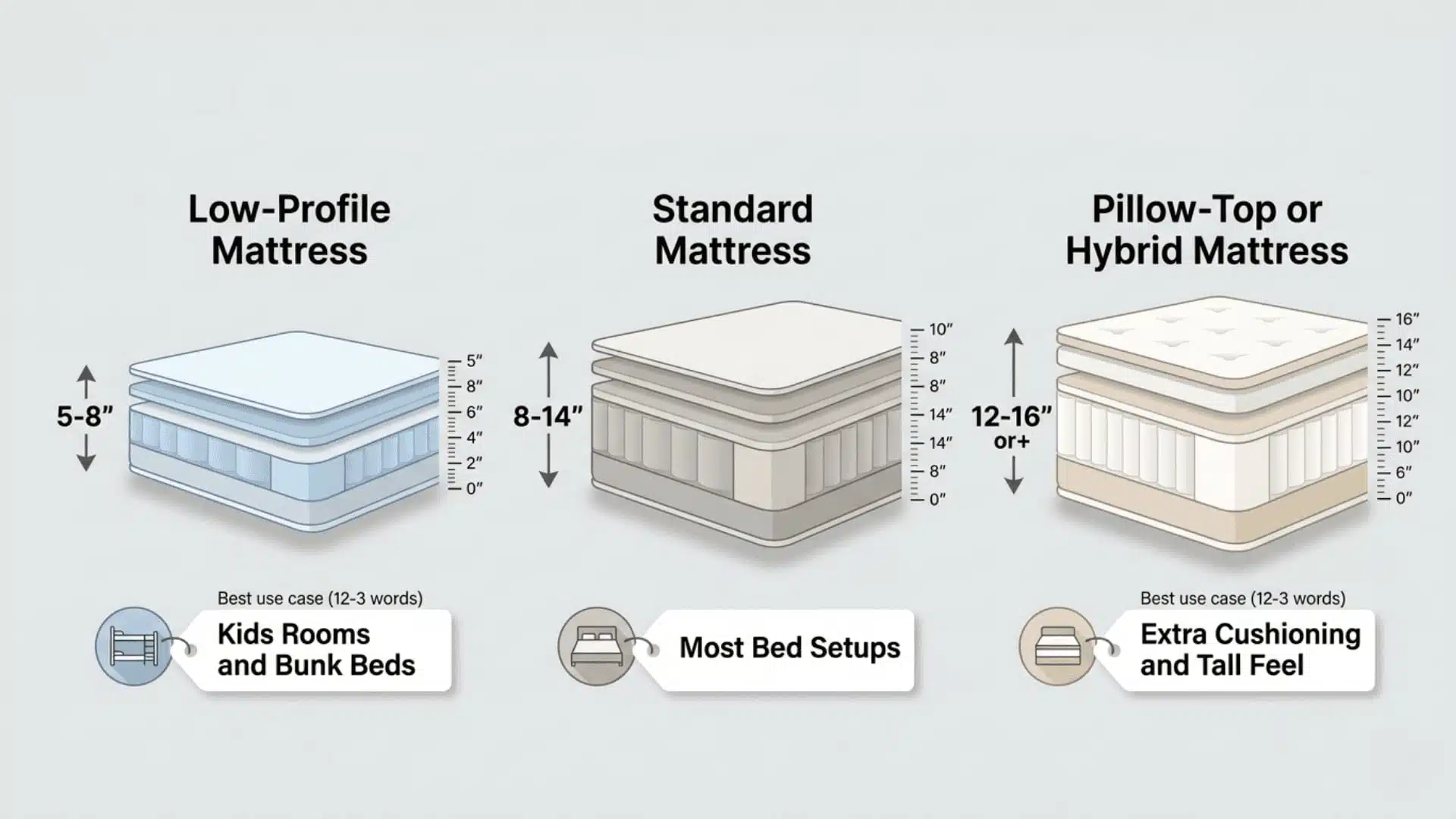
The standard mattress height is usually 8 to 14 inches, making it the most common choice for everyday use. This range offers a balanced mix of comfort, support, and practicality for most sleepers.
Mattress thickness also plays a key role in your total bed height; pairing a thicker mattress with a high frame can result in a tall bed, while a thinner mattress keeps things lower and more minimal.
Understanding the different mattress thickness profiles, from slim to extra thick, can help you nail that balance before you buy.
Here’s how different mattress types compare:
- Low-profile mattress: typically 5–8 inches, ideal for low bed frames, bunk beds, or kids’ rooms
- Standard mattress height: around 8–14 inches, suitable for most bed setups
- Pillow-top or hybrid mattresses: usually 12–16 inches or more, offering extra cushioning and a taller feel
Choosing the right mattress height ensures better comfort and makes it easier to get in and out of bed.
Why Bed Height Matters More Than You Think
Bed height is not only about appearance. It affects daily comfort, how easily you move, the strain on your body, and how well your bed fits your room.
- Spinal alignment and sleep quality: The wrong bed height can put extra pressure on your back, hips, and knees during everyday movement. Proper sleep posture and alignment are widely recognized as key factors in reducing musculoskeletal strain and improving sleep quality.
- Healthy sitting posture: A suitable height helps your body maintain a more natural position when sitting, standing, or lying down.
- Ease of getting in and out: Your feet should rest flat on the floor with knees at a comfortable 90-degree angle.
- Too high or too low problems: A bed that is too high or too low can lead to awkward movement and unnecessary joint strain.
- More important for mobility needs: The right height matters even more for seniors, people with arthritis, or anyone recovering from injury.
- Impact on bedroom design: Low beds create an open, modern look, while taller beds often feel more classic, cozy, and luxurious.
- Room balance matters: Bed height should feel proportionate to the ceiling height and overall size of the bedroom.
Choosing the right bed height improves both comfort and function, while also helping your bedroom look more balanced, intentional, and suited to your lifestyle.
Factors That Affect the Overall Bed Height

The overall bed height depends on multiple components working together, not just one. Understanding these factors helps you create a setup that feels comfortable, functional, and visually balanced.
1. Bed Frame Type (Platform vs Box Spring vs Adjustable)
The bed frame has a major impact on overall height. Platform beds usually sit lower, creating a sleek, modern appearance without the need for extra support.
In contrast, box spring setups add several inches, making the bed noticeably taller. Adjustable beds can vary in height depending on their base design and are often chosen for personalized comfort.
2. Mattress Thickness and Layers
Mattress thickness plays a key role in determining how high your bed feels. Thinner mattresses create a lower profile, while thicker options, especially those with multiple comfort layers, add more height.
A well-chosen height improves both comfort and long-term usability, and once you’ve nailed the height, making sure your sheets fit the mattress depth is the next step to a bed that actually stays put through the night.”
3. User Height and Mobility Needs
Your height and physical comfort should guide your bed height choice. Taller sleepers might also want to learn about oversized options, such as the Texas King, which adds 18 extra inches of length and is one of the biggest bed sizes available, worth considering.
Mobility is equally important, as a bed that aligns with your natural sitting position makes getting in and out easier and reduces joint strain.
4. Bedroom Style and Design Preferences
Bed height also contributes to the overall look of your bedroom. Lower beds are often associated with modern, minimalist interiors, while taller beds create a more classic, luxurious feel.
Choosing a height that matches your room’s style helps maintain visual balance and enhances the overall style.
Balancing these factors ensures your bed height feels right for both comfort and design, making your bedroom more functional and inviting.
What Is Considered a Tall Bed
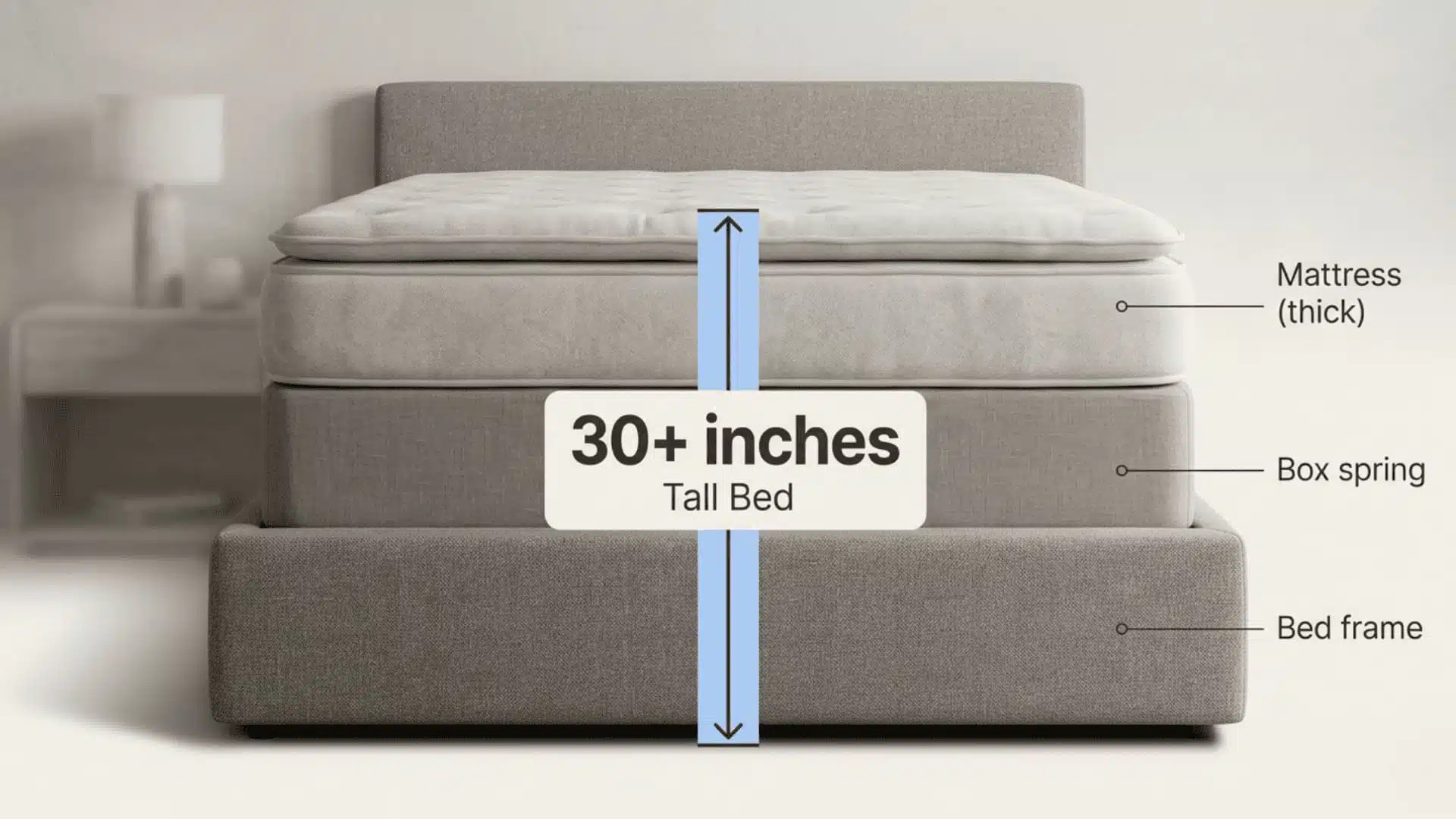
A tall bed is usually considered any bed that measures 30 inches or more from the floor to the top of the mattress.
This is higher than the common range and is often created by combining a thicker mattress with a taller frame, foundation, or box spring. In many bedrooms, a tall bed stands out right away, creating a more elevated, substantial look.
Many people prefer a tall bed because it adds a luxurious, hotel-like feel to the room. It can also be a practical choice for taller individuals, as the extra height makes sitting and standing feel easier and more natural.
Some homeowners also like tall beds because they can make traditional or spacious bedrooms feel more complete.
At the same time, a tall bed is not ideal for everyone. It may be harder for children, shorter adults, seniors, or people with mobility issues to use comfortably every day.
Choosing the Right Bed Height for You
Choosing the right bed height depends on comfort, body support, age, and mobility. The ideal bed should feel easy to use, safe to access, and comfortable every day.
- Follow the 90-degree knee rule: Sit on the bed’s edge with your feet flat on the floor. Your knees should form a 90-degree angle for the most natural sitting position.
- Choose a safer height for kids: Lower beds are usually better for children because they are easier to climb into and reduce the risk of falls.
- Pick a balanced height for adults: Most adults are comfortable with an average bed height that supports easy sitting, standing, and a more relaxed everyday sleeping setup.
- Consider extra support for seniors: Seniors often benefit from a bed height that reduces bending and makes getting in and out feel more stable and less tiring.
- Think about mobility and health needs: People with arthritis, back pain, knee issues, or injuries should choose a height that allows smoother movement and less physical strain.
The best bed height should support your body, suit your lifestyle, and make daily movement feel easier. A well-chosen height improves both comfort and long-term usability.
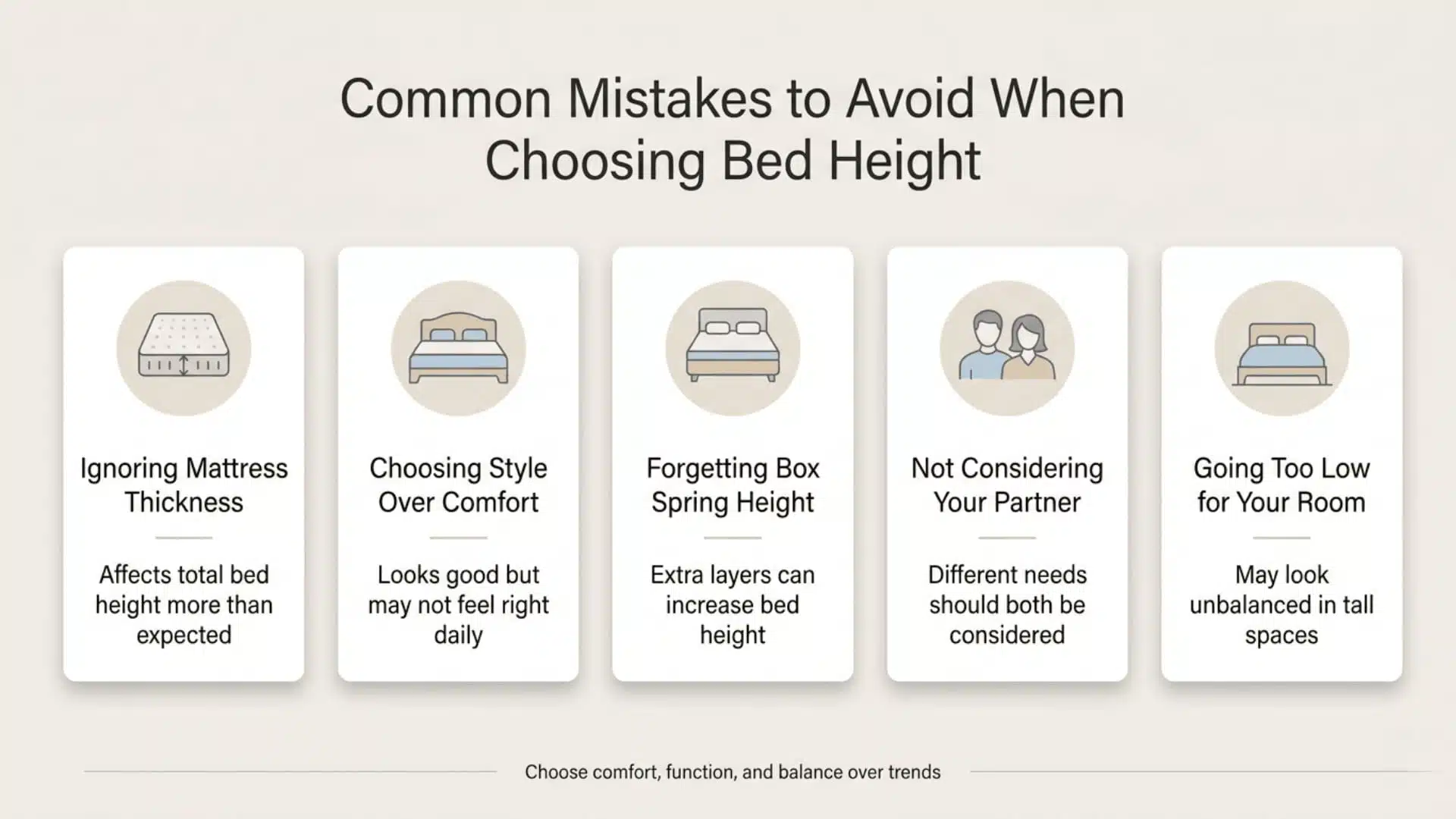
Bed Height Recommendations by Body Type and Need
Finding the right bed height becomes much easier when you match it directly to your body type, age, and physical condition. Instead of guessing, use these specific ranges as your starting point.
For Taller Individuals (6 feet and above)
A bed height between 25 and 30 inches works best for taller individuals. This range reduces the need to bend deeply when sitting or standing, keeping the knees and hips at a natural angle.
A thicker mattress paired with a standard or slightly elevated frame usually achieves this range without overcomplicating the setup.
For Shorter Individuals (5’3” and below)
Shorter individuals are most comfortable with a bed height between 18 and 22 inches.
Anything higher forces the feet to dangle, disrupting circulation and making getting in and out unnecessarily difficult.
A low-profile frame with a medium-thickness mattress typically falls within this range.
For Seniors and People With Limited Mobility
A height of 20 to 23 inches is generally considered the safest and most practical for seniors or anyone managing joint pain, arthritis, or post-surgery recovery.
This range allows the feet to rest flat on the floor with minimal bending at the knees, reducing strain during daily use.
For Children
Children’s beds should sit between 12 and 18 inches from the floor. Lower beds reduce fall risk significantly and make independent use easier as the child grows.
Bunk beds are an exception and require proper guardrails regardless of height.
For Average-Height Adults (5’4″ to 5’11”)
Most adults are comfortable within a range of 22 to 25 inches, which aligns well with standard bed heights and supports natural sitting and standing posture.
This aligns with the 90-degree knee rule and supports comfortable sitting, standing, and sleeping without placing unnecessary pressure on the lower back or joints.
How Bed Height Impacts Your Bedroom’s Overall Look
Bed height plays a bigger role in bedroom design than most people expect. It directly affects how the space looks, feels, and flows. A lower bed can make a room appear more open and spacious, especially in smaller bedrooms or spaces with lower ceilings.
On the other hand, a taller bed creates a more prominent focal point and often gives the room a more classic or luxurious feel. Matching your bed height with the room size and ceiling height helps maintain visual balance.
For example, low beds suit modern, minimalist interiors, while taller beds complement traditional or more formal designs.
Current style trends also reflect this contrast, with many contemporary homes favoring low-profile beds, while classic interiors continue to embrace taller, more structured setups.
Choosing the right bed height ensures your bedroom feels cohesive, comfortable, and visually well-proportioned.
Final Thoughts
Bed height is one of those details that seems minor until you get it wrong. The right common range supports your posture, protects your joints, suits your age and mobility, and ties your entire bedroom together visually.
Doesn’t matter, you’re drawn to a sleek low-profile platform bed or a tall bed that commands the room, the best choice always comes back to one simple test: sit on the edge, feet flat, knees at 90°. If that feels natural, you’ve found your fit.
Your mattress height, frame, and foundation all play a role, but your body has the final say.
Now we’d love to hear from you. What’s your current bed height, and does it actually work for you? Drop your answer in the comments below!
Frequently Asked Questions
Is 27 Inches Too High for A Bed?
Not for most adults. At 27 inches, your feet should still reach the floor comfortably. It only becomes an issue for shorter individuals or young children.
Is 30 Inches Too High for A Bed?
It can be. A 30-inch bed is considered tall and may require a step stool for shorter adults, seniors, or anyone with limited mobility.
Why Are Beds So High Now?
Modern beds are taller due to thicker mattresses, added comfort layers, and storage frames. Taller beds also give bedrooms a more luxurious, hotel-inspired look.