

Picking the right bunk bed sounds simple. But the wrong size can make a fun room feel cramped in a hurry. Bunk bed dimensions vary more than most people expect.
Most bunk beds are between 60 and 70 inches tall, though some designs can be slightly shorter or taller depending on the style.
A twin-over-twin takes up less floor space, a full-over-full needs more, and ceiling height matters too.
Before buying, checking the frame width, mattress size, room size, and safety clearance makes the decision much easier.
Bunk Bed Types And What Makes Each One Different
Bunk beds come in different layouts. Each one works better for certain rooms, ages, and sleeping needs. Knowing the type helps pick the right bunk bed dimensions from the start.
Twin Over Twin Bunk Beds
Best for kids’ rooms and tighter spaces, twin over twin bunk beds sleep two people, one on each level. They stand 65 to 70 inches tall.
The Max & Lily Low Bunk Bed is a great pick for younger kids as it sits closer to the ground.
Twin Over Full Bunk Beds
A practical pick for siblings of different ages, the top bunk fits one person and the bottom fits one to two. These beds stand 68 to 72 inches tall.
The DHP Miles Bunk Bed is sturdy, affordable, and fits most standard room sizes without taking up too much space.
Full Over Full Bunk Beds
A better fit for older kids, teens, and adult guests, full-over-full beds offer more sleeping space on both levels. They reach 70 to 75 inches tall.
The Dorel Living Full Over Full Bunk Bed offers strong support and works well for heavier sleepers, too.
Loft Bunk Beds
Loft beds have one sleeping level on top and an open space below for a desk, dresser, or storage. They stand 66 to 72 inches tall.
The Stompa Uno Plus High Sleeper is a well-rated option that comes with good clearance and a built-in ladder.
L-Shaped Bunk Beds
L-shaped bunk beds span two walls and require more floor space than standard stacked bunks. They sleep two people and stand around 65 to 72 inches tall.
The Lifetime Convertible L-Shaped Bunk Bed is a flexible pick that works well in larger rooms and can be rearranged easily as needs change over time.
Most bunk beds work with an 8 ft (96″) ceiling, but taller models may need more clearance depending on height.
Each bunk bed type comes with its own size requirements. Checking the dimensions of each style against the room size and ceiling height makes the buying decision much easier.
Bunk Bed Dimensions By Type: What To Expect
Getting the bunk bed dimensions right before buying saves a lot of trouble. The table below lists the most common bunk bed sizes and their typical assembled measurements.
| Bunk Bed Type | Top Mattress | Bottom Mattress | Assembled Size (LxWxH) |
|---|---|---|---|
| Twin Over Twin | 39″ x 75″ | 39″ x 75″ | 80″ x 42″ x 65″ |
| Twin Over Full | 39″ x 75″ | 54″ x 75″ | 79″ x 69″ x 65″ |
| Full Over Full | 54″ x 75″ | 54″ x 75″ | 82″ x 60.8″ x 65″ |
These numbers are common examples, not fixed sizes. Every manufacturer builds differently, so actual bunk bed dimensions can vary by a few inches.
The twin-over-full setup has a noticeably wider footprint due to the larger bottom bunk. Full-over-full beds work better for older kids, teens, and adults because they offer more sleeping width.
Height can also change depending on guardrail style, ladder type, and post design, so always check the product specs before buying.
Bunk Bed Dimensions And Size Guide For Adults
Bunk beds are not just for kids. Many adults use them too, and the size requirements are quite different. Knowing what to look for makes it easier to pick a bed that is actually comfortable for grown-up sleepers.
Are Bunk Beds For Adults A Different Size?
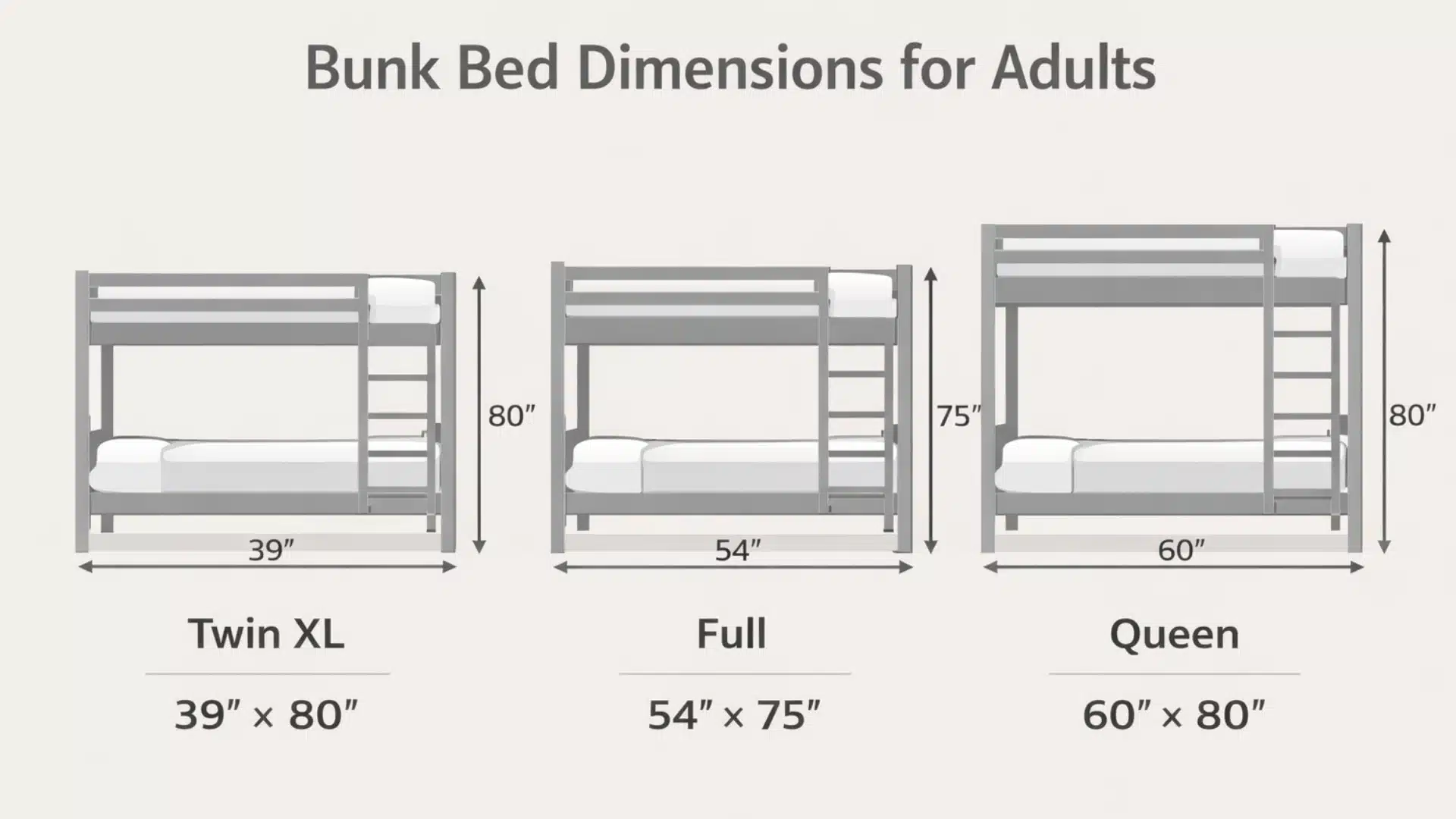
Adult bunk beds are built for larger mattress sizes, such as full, twin XL, or queen. They also need stronger frames and higher weight capacity than standard kids’ models.
A typical kids’ bunk bed simply does not offer enough support or sleeping space for most adults to sleep comfortably night after night.
Best Bunk Bed Dimensions For Adults
Full-over-full and twin XL setups work better for adults than a standard twin-over-twin. A full mattress measures 54″ x 75″, giving more width.
A twin XL measures 39″ x 80″, adding extra length. Both options are a noticeable step up from the standard twin size (39″ x 75″).
How Much Space Do Adults Need In A Bunk Bed?
Adults need more than just mattress length. Sleeping width, mattress length, and headroom all matter.
Taller adults do better with a twin XL at 39″ x 80″ instead of a standard twin at 39″ x 75″. The extra five inches in length makes a real difference for anyone over six feet tall.
Best Room Types For Adult Bunk Beds
Adult bunk beds work well in guest rooms, cabins, vacation homes, hostels, and short-term rentals. These spaces often need to sleep more people without taking up too much floor area.
A well-sized adult bunk bed allows two sleepers to fit comfortably in a room that might otherwise fit only one bed.
Picking the right bunk bed dimensions for adults comes down to mattress size, frame strength, and available room space.
Checking these three things before buying helps avoid a bed that feels too small or too cramped after just a few nights of use.
Bunk Bed Size & Room Requirements
Getting the right bunk bed starts with understanding the size requirements for both the bed and the room it goes in. A few simple checks before buying can save a lot of trouble later.
Things To Check Before Buying A Bunk Bed
Check your floor space, ceiling height, and weight limits before buying. Younger kids need lower beds with safety rails, while older kids need stronger frames.
Look for built-in storage in smaller rooms, and consider a convertible design so the bed stays useful as your child grows.
Best Bunk Beds By Need
Different sleepers need different setups. Small rooms work well with twin-over-twin beds. Adults need full-over-full or twin XL options.
Kids need safety rails, and budget shoppers can consider the DHP Miles Twin Over Full. Heavy-duty metal frames work best for heavier loads.
Room Measurements To Check Before Getting A Bunk Bed
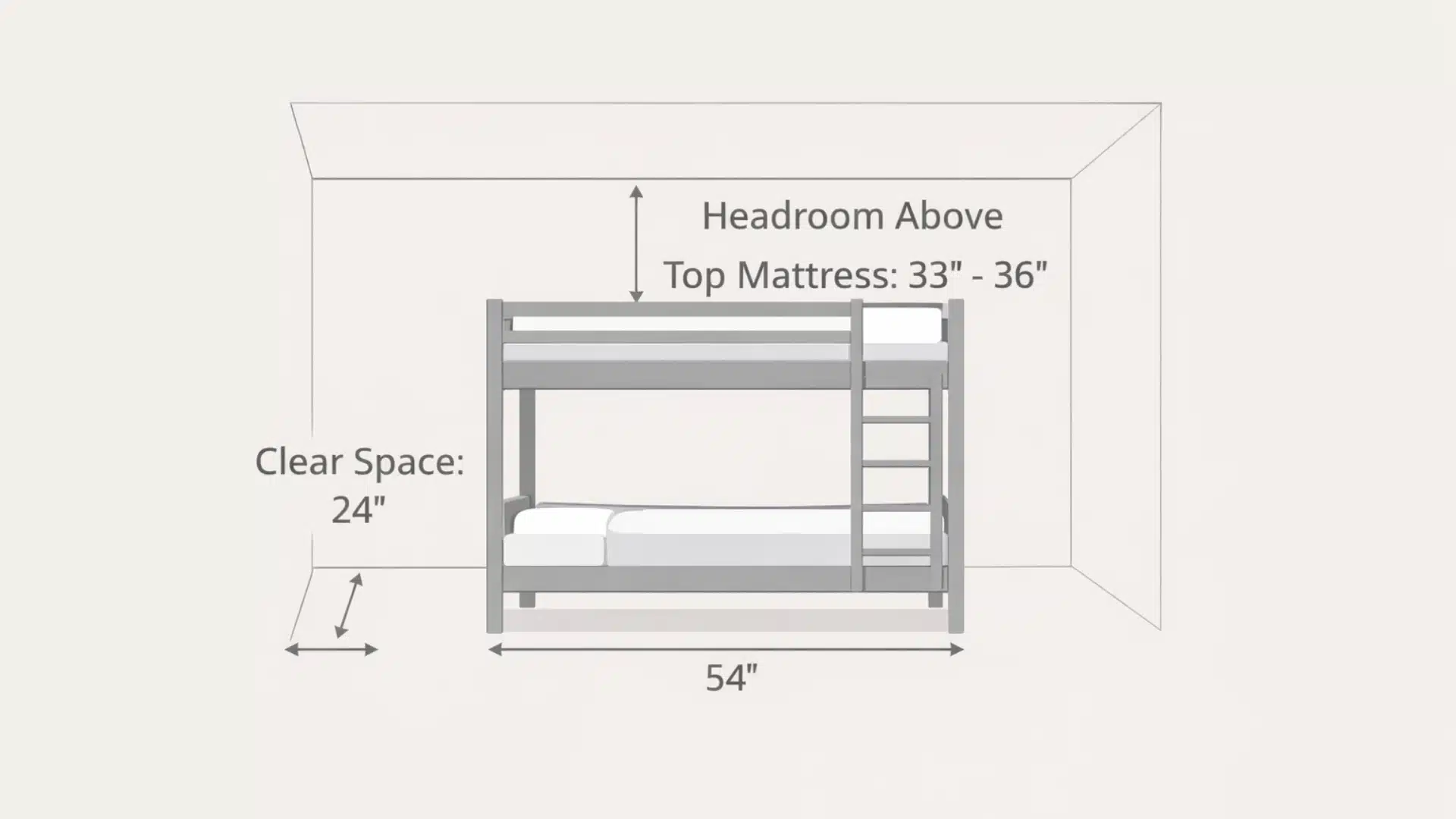
Always measure floor length, width, and ceiling height before ordering. The frame adds extra inches beyond the mattress size. Leave at least 24 inches of walking space around the bed.
Watch for ceiling fans, low windows, or large furniture that could make the setup awkward or unsafe.
Safety Clearances To Keep In Mind
The top bunk needs 33 to 36 inches of clearance from the ceiling so the sleeper can sit up easily. Leave around 33 inches between both mattress levels for comfort.
Keep the bed away from ceiling fans and light fixtures, and check that it meets CPSC safety standards.
Performing these size and safety checks before buying makes the process much easier. The right bunk bed should fit the room well, suit the sleepers using it, and stay safe and comfortable for years to come.
Bunk Bed Weight Capacity By Type And Material
Weight limits are just as important as bunk bed dimensions when choosing the right bed. Kids’ bunk beds vary by product, so always check the manufacturer’s listing rather than guessing.
Adult bunk beds generally support between 250 and 800 pounds per bunk, depending on the design and materials, with some heavy-duty models holding even more.
Metal and reinforced wood frames typically handle more weight than lighter kids’ models.
The top bunk usually has the stricter weight limit of the two, so checking that number carefully matters most, especially when adults or heavier sleepers will be using the upper level regularly.
What Mattress Works Best For A Bunk Bed?
Picking the right mattress is just as important as getting the bunk bed dimensions right. The table below covers the key points to help make the decision easier.
| Mattress Type | Size | Best Thickness | Best For |
|---|---|---|---|
| Twin | 39″ x 75″ | 6 inches (top bunk) | Kids, smaller rooms, tighter spaces |
| Twin XL | 39″ x 80″ | 6 inches (top bunk) | Taller kids, teens, and adults need extra length |
| Full | 54″ x 75″ | 6-8 inches (bottom bunk) | Older kids, teens, and adults need more sleeping width |
A few mattress mistakes are worth avoiding before buying. Using a mattress thicker than 6 inches on the top bunk can cut into headroom and make the bed feel unsafe.
Ignoring the frame’s weight limit is another common problem. Checking only the mattress size, rather than the fully assembled bed size, is also a mistake that often leads to a poor fit in the room.
It is also worth checking that the mattress fits the frame slats properly, since a poor fit can affect both comfort and safety.
Conclusion
Getting bunk bed dimensions right is not complicated once you know what to look for.
A bed that fits the room well, suits the sleeper, and meets basic safety clearances will always be a better long-term choice than one picked on looks alone.
The right size makes the room feel comfortable, keeps things safe, and avoids the hassle of returns or replacements down the road.
Found this helpful? Bookmark this page for the next time a bunk bed buying decision comes up!
Frequently Asked Questions
Can a Bunk Bed Fit in a 10×10 Room?
Yes, a twin-over-twin bunk bed can fit in a 10×10 room. Just make sure to leave enough space around the bed for walking and ladder access.
What Age Is Safe for the Top Bunk?
Most safety guidelines recommend the top bunk for children aged six and older. Younger kids are safer on the bottom bunk due to the risk of falling.
Do Bunk Beds Need a Box Spring?
No, most bunk beds do not need a box spring. They are built with slats or a solid base that supports the mattress directly.