




Have you ever wondered why do Japanese sleep on the floor instead of using beds like most other countries? This mesmerizing tradition goes much deeper than just saving space or money.
Japanese floor sleeping connects to ancient cultural values, smart home design, and surprising health benefits that modern science is just beginning to understand.
From traditional tatami mats to cotton futons, this practice has shaped Japanese homes for hundreds of years.
Today, people around the world are exploring why sleeping closer to the ground might actually be better for your back, your budget, and your overall well-being.
Let’s find out the reasons behind this unique sleeping tradition.
Cultural Roots Behind Sleeping on the Floor in Japan
Japanese floor sleeping reflects deep cultural values that shape daily life. Minimalism plays a huge role – Japanese homes traditionally use very little furniture, creating clean, open spaces.
This connects to their love of nature and simplicity, influenced by Zen Buddhism teachings. Space efficiency matters too, especially in small homes where rooms serve multiple purposes. Social rules guide futon use, like properly folding and storing bedding each morning.
Traditional homes had low tables and floor seating, making floor sleeping natural. Zen philosophy promotes simple living without excess possessions.
Families also change bedding with seasons, using lighter materials in summer and warmer ones in winter, showing how deeply this practice connects to natural rhythms.
The Origins of Futons & Tatami: Tradition Meets Daily Life
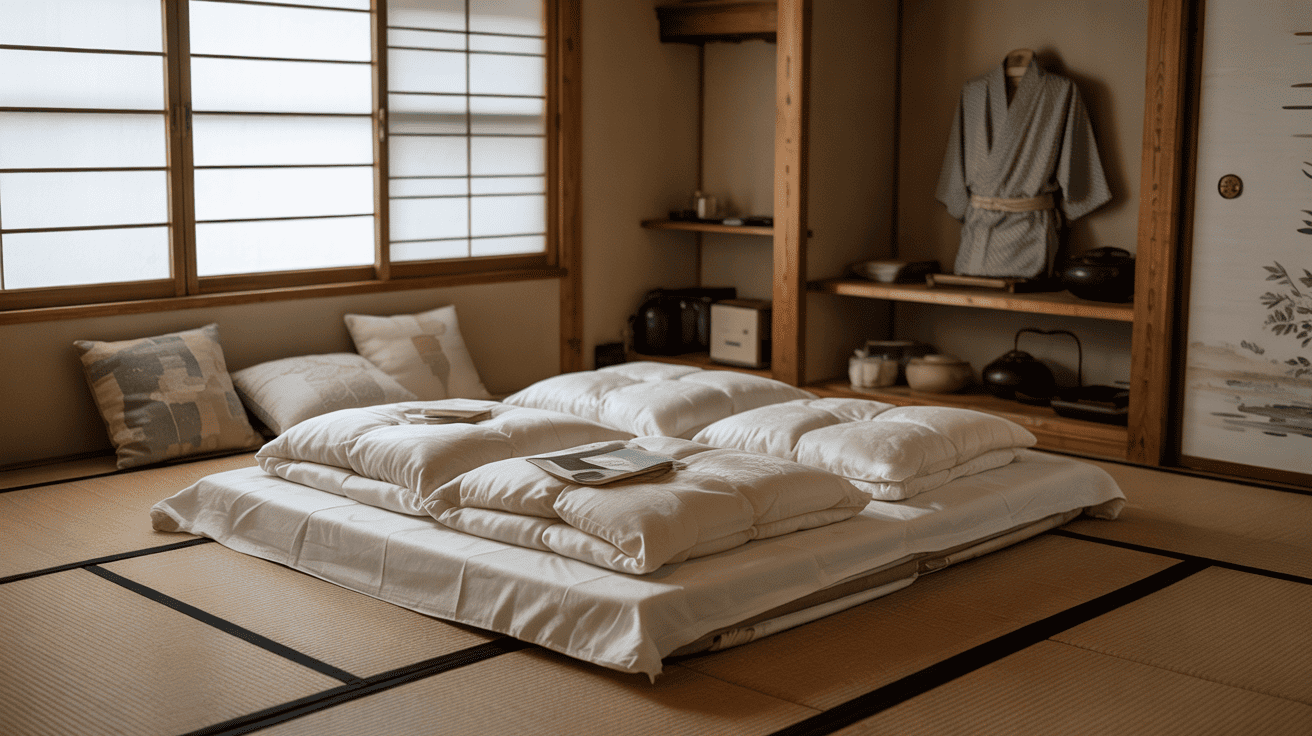
Futons are thin cotton mattresses designed for floor sleeping, while tatami mats are woven straw floor coverings that provide cushioning and insulation.
This sleeping system started with simple straw mats centuries ago and slowly evolved into today’s cotton-filled futons. The daily routine involves careful maintenance – futons must be aired in sunlight to prevent moisture and mold, then folded and stored in special closets called oshiire.
This daily ritual of setting up and putting away bedding transforms rooms from bedrooms to living spaces.
Unlike Western mattresses that stay in bedrooms, Japanese futons disappear during the day, allowing families to use the same room for eating, working, and relaxing.
Health & Comfort: Reasons Why Many Switch to Floor Sleeping
Many people around the world are trying Japanese floor sleeping because of the health benefits. The firm surface and traditional setup can help with common problems like back pain and overheating at night.
- Better back support – Sleeping on a firm surface helps keep your spine straight and reduces back pain
- Cooler sleep – Floor sleeping keeps you closer to cool air, which feels great in Japan’s hot, humid summers
- Improved posture – Your body learns to stay aligned without sinking into soft mattresses
- Less joint pressure – The even surface spreads your weight better than bouncy beds
- Better breathing – Many people find they sleep more deeply and breathe easier on firmer surfaces
These health benefits explain why this ancient practice is becoming popular worldwide, even outside Japan. The simple setup offers natural solutions to modern sleep problems.
Personal Stories: What People Say About Sleeping on the Floor
Sleeping on the floor might sound extreme to some, but for many people, both in Japan and abroad, it’s a choice rooted in comfort, culture, and health.
Below are real stories from individuals who’ve made the switch and haven’t looked back.
Futons are very, very comfortable. You will sleep like a baby… Beds are for the birds. When I left Japan, I slept on futons for a year, couldn’t go back! japan guide
“I switched to a Japanese futon after realizing my memory foam mattress made me sink and feel off. A year later, my posture is straighter, I feel taller, and overall feel better. Even Mike Mew talked about this, thin, firm bedding just works better for your body.” reddit
“I find the futon on the tatami floor to be extremely comfortable for sleeping, but it obviously will vary from person to person.” tripadvisor
These stories reflect more than just comfort; they reveal how going back to basics, as practiced in Japanese culture, can offer lasting benefits.
Whether it’s better posture, less back pain, or simply more restful sleep, sleeping on the floor continues to surprise those willing to try it.
How Floor Sleeping Reflects Japanese Values?
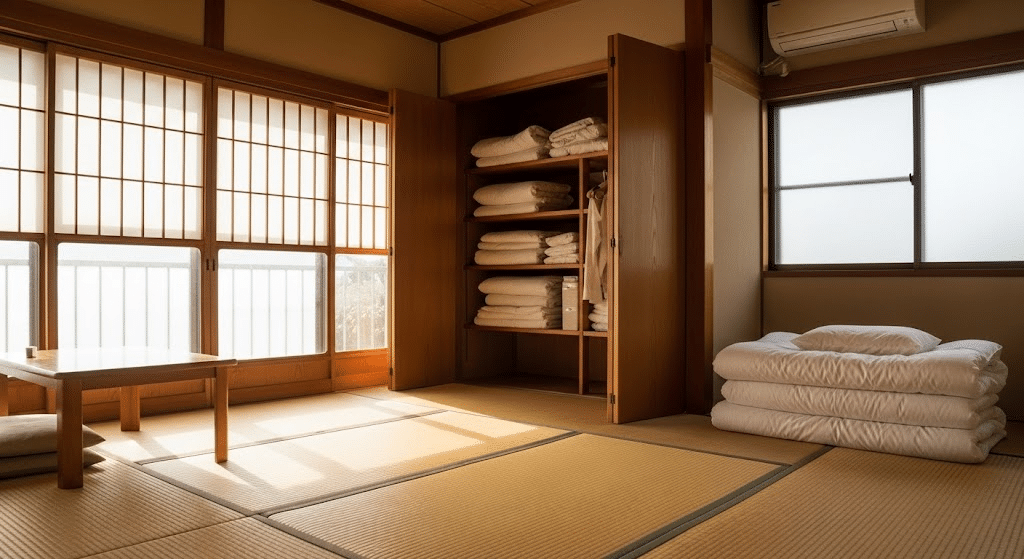
Japanese floor sleeping shows the deep connection between daily habits and cultural beliefs. Minimalism guides this practice, teaching that less stuff means more freedom and peace of mind.
Every morning, families fold their futons and put them away, turning bedrooms into multipurpose spaces.
This daily routine becomes a mindful practice, like meditation, where careful movements help people feel centered and ready for the day. Sleeping close to the floor keeps people connected to natural rhythms and simple living.
The low furniture and clean, empty rooms create calm spaces that reduce stress.
This way of living proves that comfort doesn’t need expensive furniture or complicated setups. Instead, Japanese culture finds beauty in simplicity, showing that the most meaningful practices are often the most basic ones.
Considering Floor Sleeping? What You Should Know First
If you’re thinking about trying Japanese floor sleeping, it’s important to understand both the benefits and challenges. Here’s what you need to know before making the switch.
| PROS | CONS |
|---|---|
| Better spinal support | Initial discomfort |
| Saves space and is lightweight | It may feel too firm for some |
| Easy to clean and hypoallergenic | Requires regular airing |
| Cooler sleep temperature | Need floor cushioning |
| Affordable option | Daily setup and storage |
Floor sleeping isn’t right for everyone, but many find the health and lifestyle benefits worth the adjustment. Consider your needs and living situation before deciding if this practice suits you.
Modern Adaptations: Who Still Sleeps on the Floor Today?
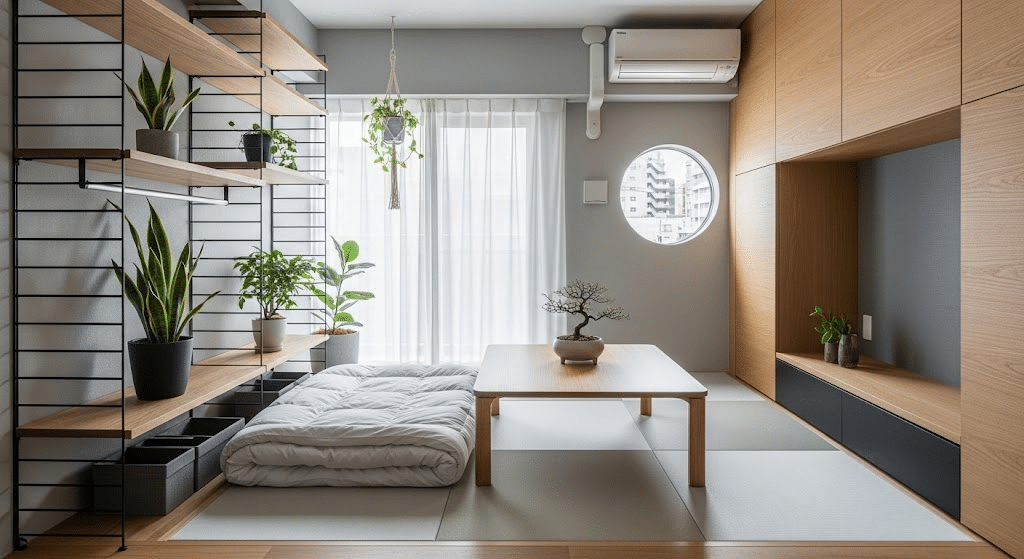
Floor sleeping remains popular in Japan today, though it has evolved with modern life. Many people still choose this traditional way of sleeping, while others around the world are exploring its benefits for the first time.
- City apartments – Urban Japanese use futons to save space in small homes.
- Traditional hotels – Ryokans offer authentic tatami and futon experiences.
- Minimalist homes – Japandi design brings floor sleeping to Western bedrooms.
- Health seekers – People try floor sleeping for back pain relief.
This ancient practice is finding new life in our modern world. Whether for health reasons, space saving, or cultural interest, floor sleeping continues to attract people who want simpler, more mindful living.
That’s a Wrap
Understanding why Japanese sleep on the floor reveals a blend of practicality, tradition, and wellness wisdom.
This ancient practice offers real benefits like better spinal support, space efficiency, and connection to minimalist values that many people crave in our busy modern world.
If you’re dealing with back pain, living in a small space, or simply curious about healthier sleep habits, Japanese floor sleeping provides a time-tested alternative to expensive mattresses and bulky bedroom furniture.
As more people explore these advantages, this traditional practice continues to find new fans worldwide, proving that sometimes the oldest solutions are still the best ones for modern living.
Have you tried floor sleeping, or are you thinking about it? Share your experiences in the comments below!