

The fashion world is buzzing with debates about fabric choices, and rayon sits right at the center of this conversation.
This semi-synthetic material, known for its silk-like texture and affordability, has captured both praise and criticism from consumers and environmental advocates alike.
As more people become conscious about their clothing choices, understanding rayon’s true impact becomes essential.
Is this popular fabric a sustainable option or an environmental concern? Let’s examine the facts and help you make informed decisions about rayon in your wardrobe.
What Is Rayon Fabric?
Rayon emerged in the late 1800s as an artificial silk alternative. Manufacturers create this semi-synthetic fiber by dissolving wood pulp through chemical processes, then spinning it into threads that mimic natural fibers.
Three main types dominate the market:
Viscose Rayon is the most common variety, known for its versatility and low cost. However, it requires intensive chemical processing.
Modal is made from beech trees; this version offers better durability and color retention than regular viscose.
Lyocell is produced using a closed-loop system that recycles chemicals, making it the most environmentally responsible option.
Fashion brands favor rayon for clothing, home textiles, and blended fabrics because it combines natural fiber qualities with synthetic durability.
The Benefits of Rayon Fabric
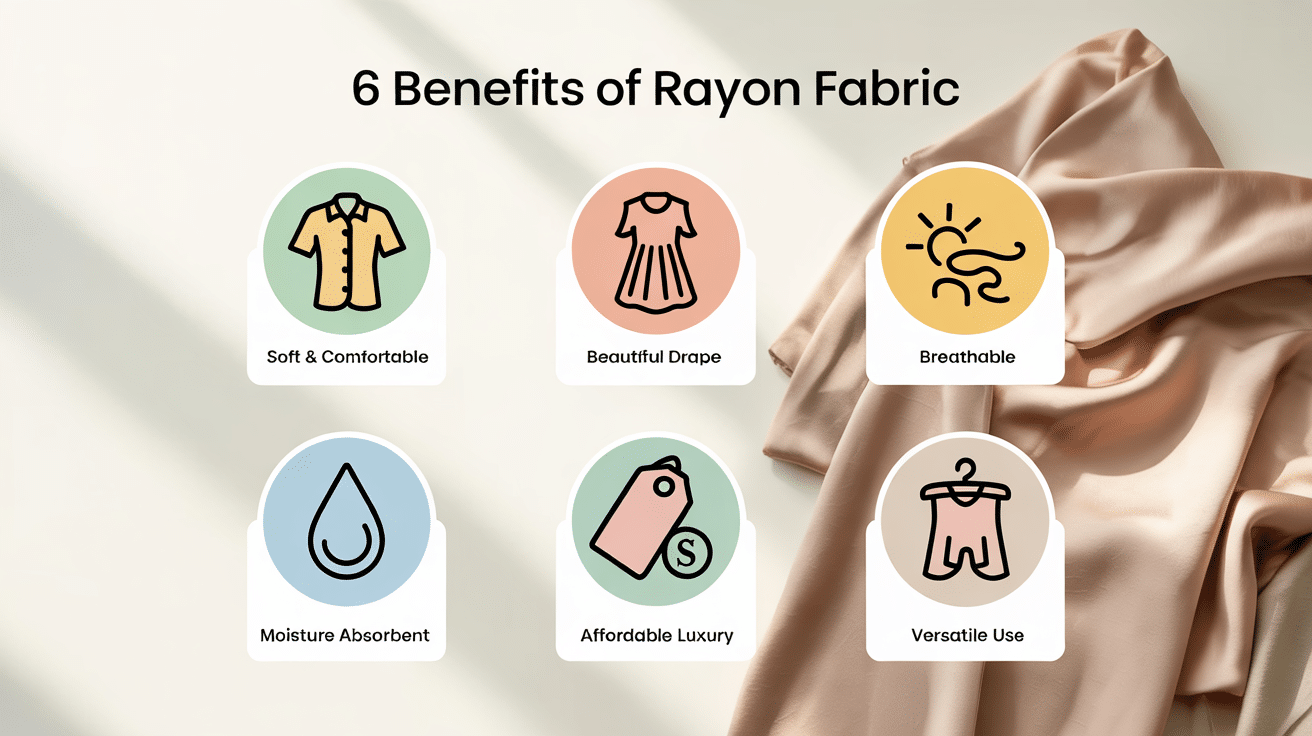
Rayon offers several advantages that explain its popularity in modern fashion:
- Feels smooth like silk, making it ideal for clothing that touches the skin directly.
- Rayon allows air to flow through, keeping you cool, especially in warm weather.
- It falls naturally and beautifully, making garments look flowy and elegant.
- Absorbs moisture and dyes well, leading to vibrant colors in fashion wear.
- Offers a luxurious appearance without the high price tag of natural silk.
- Easily blended with other fabrics and used for dresses, linings, blouses, and activewear.
These qualities make rayon a staple in both fast fashion and higher-end collections, appealing to diverse consumer needs and budgets.
Drawbacks of Rayon Fabric
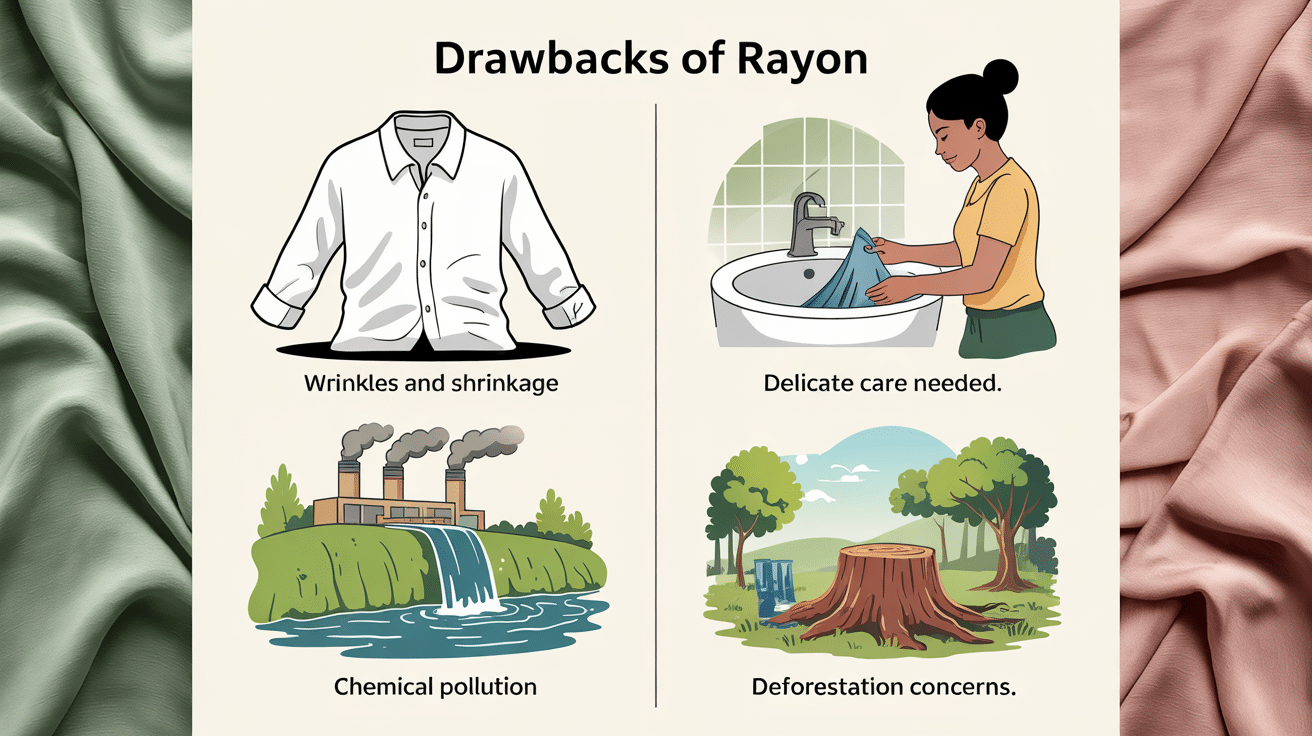
Despite its benefits, rayon comes with notable limitations:
- The fabric shrinks easily when exposed to heat or water. Many rayon garments require dry cleaning or careful hand washing, increasing maintenance costs.
- Wet rayon becomes weak and prone to tearing. This vulnerability affects the garment’s lifespan and limits washing options.
- Rayon wrinkles easily, requiring frequent ironing or steaming to maintain a polished appearance.
- Some individuals experience skin irritation from the chemicals used in rayon processing, particularly with lower-quality versions.
These limitations often frustrate consumers who expect durability and easy care from their clothing investments.
Environmental Impact of Rayon
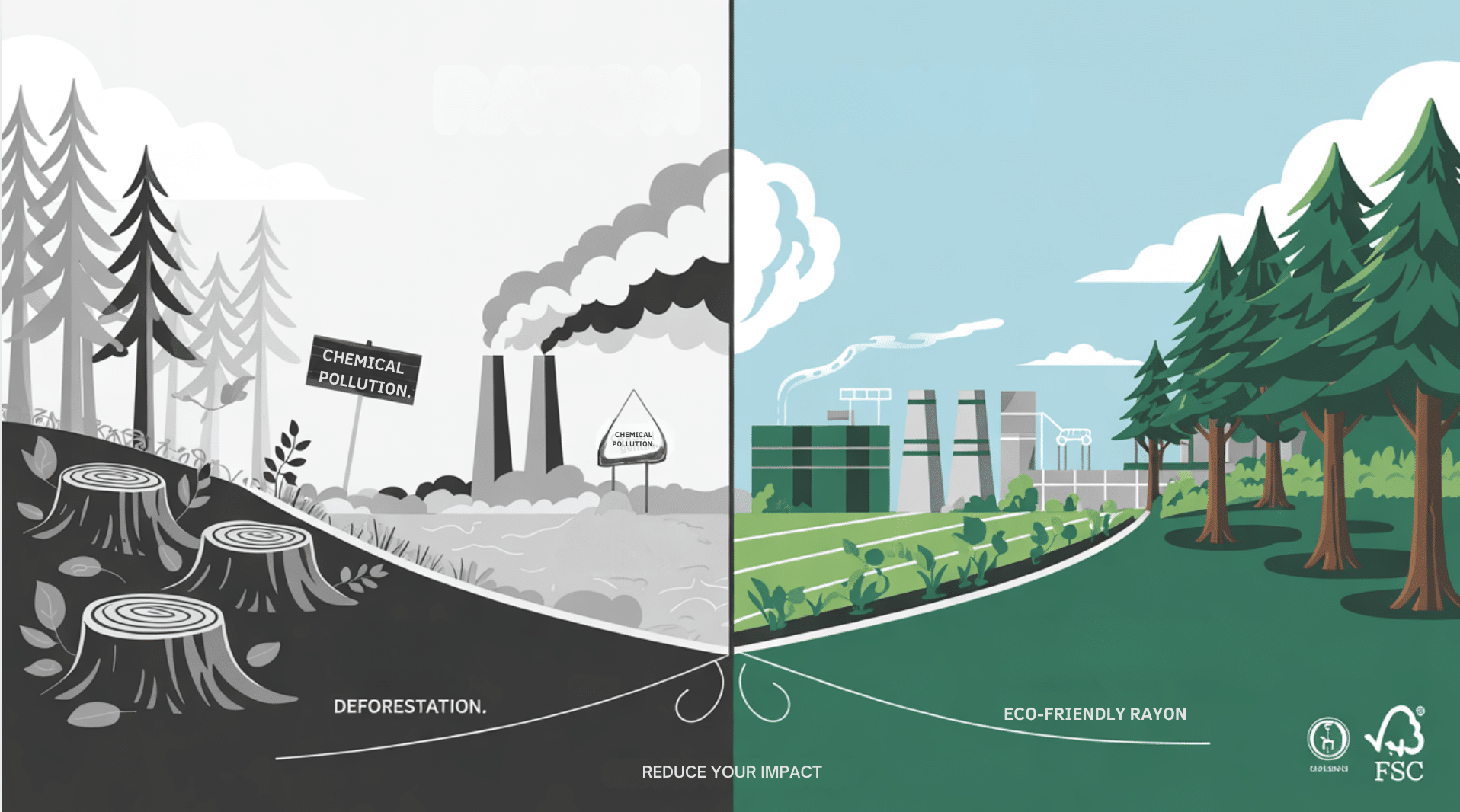
Rayon’s environmental footprint presents a complex picture with both concerning and promising aspects, while conventional production contributes to deforestation and chemical pollution, newer closed-loop technologies offer hope for more sustainable manufacturing processes.
Resource Consumption
Traditional rayon production contributes to forest loss, particularly in biodiversity-rich areas. Some manufacturers source wood from ancient forests, threatening ecosystems.
| Environmental Factor | Impact Level | Details |
|---|---|---|
| Water Usage | High | Processing requires large water volumes |
| Chemical Use | Very High | Carbon disulfide, caustic soda are needed |
| Energy Consumption | Moderate | Less than synthetic fibers |
| Land Use | Variable | Depends on wood sourcing practices |
The production process releases toxic chemicals into the air and water systems. Carbon disulfide, a key chemical, poses risks to workers and surrounding communities.
However, newer production methods and certifications offer more responsible alternatives for environmentally conscious consumers.
Health Considerations
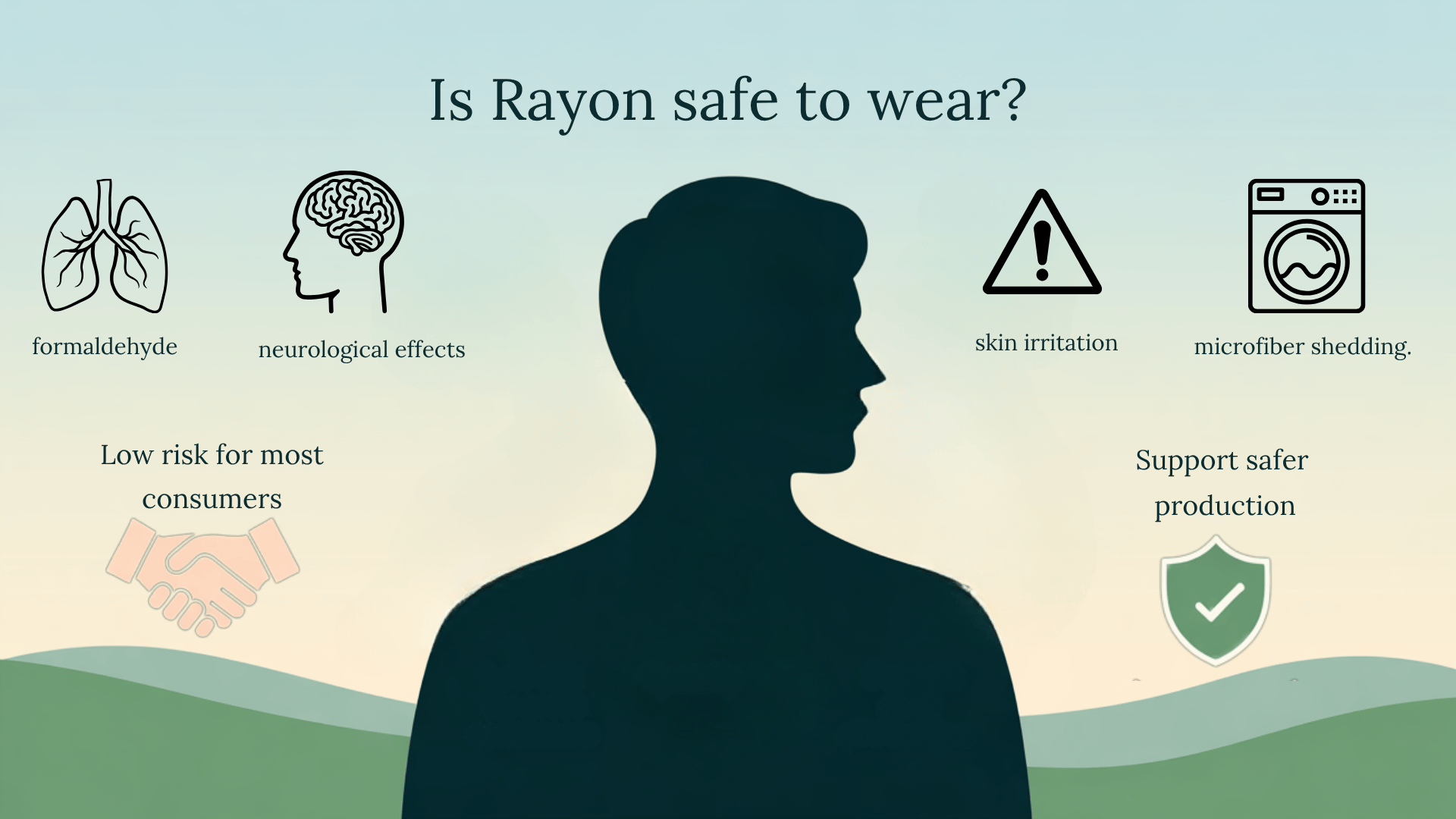
Rayon’s health implications vary depending on production methods and individual sensitivities:
Skin Reactions: While finished rayon garments rarely cause problems, some people experience irritation from residual chemicals or dyes. Those with sensitive skin should test new rayon items carefully.
Manufacturing Exposure: Workers in rayon facilities face serious health risks from chemical exposure, particularly carbon disulfide, which can cause neurological problems.
Formaldehyde Content: Some rayon products contain formaldehyde-based finishes that may trigger allergic reactions or respiratory issues in sensitive individuals.
Microfiber Shedding: Unlike natural fibres, rayon can shed microscopic fibres during washing, though research on health impacts remains limited.
For most consumers, wearing rayon poses minimal direct health risks, but supporting manufacturers with safer production practices benefits workers and communities.
Fashion Industry Perspective
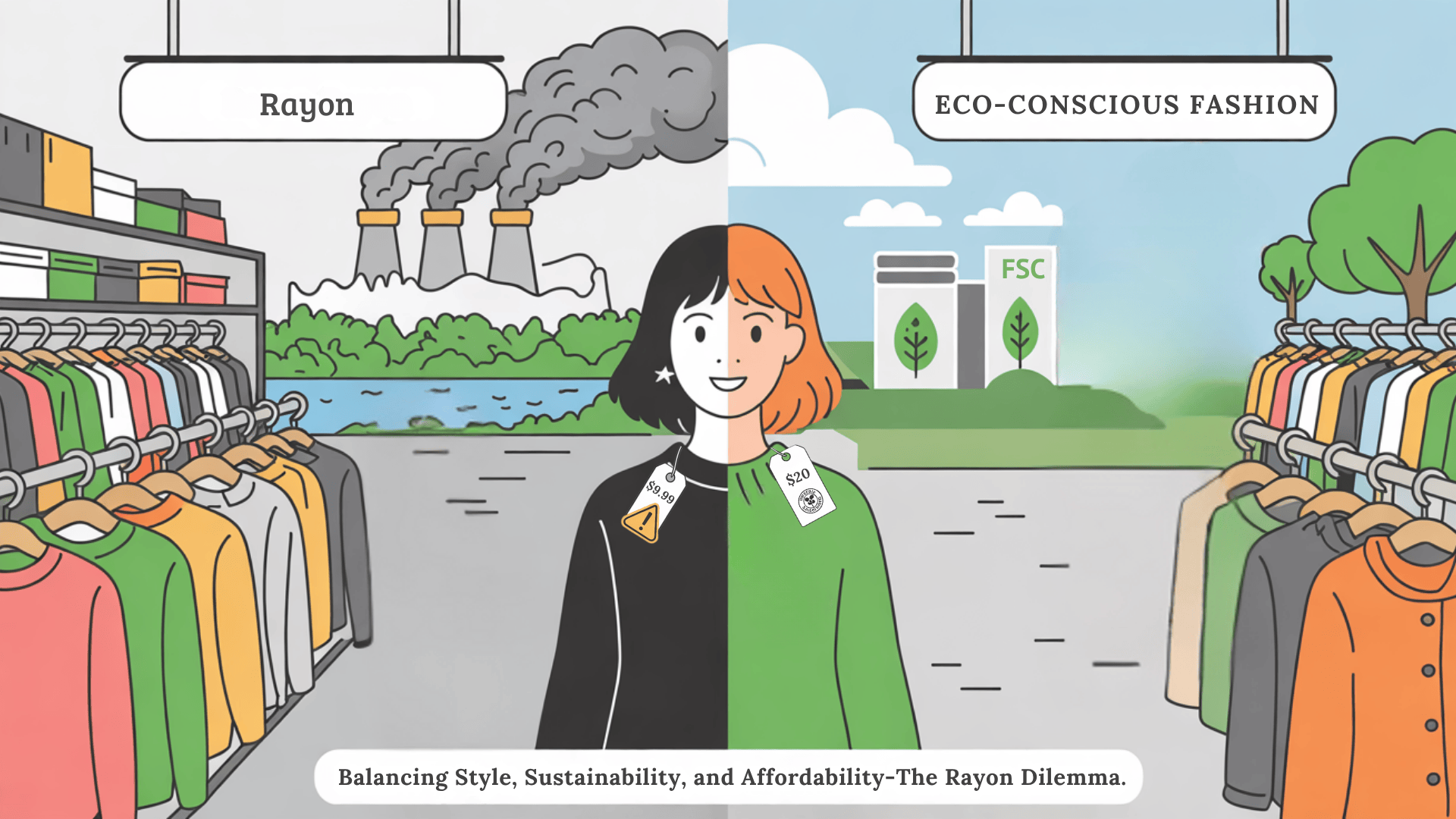
The fashion sector faces key challenges with rayon production. Fast fashion companies choose rayon for its affordability and silk-like qualities, making trendy clothes accessible but creating environmental issues.
Progressive brands like Eileen Fisher and Stella McCartney invest in cleaner production methods and responsible sourcing.
Certification programs help identify responsible producers, guiding consumer decisions. The sector must balance cost-effectiveness, fabric performance, and environmental responsibility.
Success requires adopting cleaner production technologies while maintaining affordability and quality standards that meet both consumer expectations and sustainability goals.
Comparing Rayon to Other Fabrics
Rayon typically requires less water than cotton during cultivation, but involves more chemical processing than natural fibers like linen or hemp.
Compared to synthetic materials like polyester, rayon offers better biodegradability but generally has a higher production-phase environmental impact.
1. Rayon vs Cotton
Rayon and cotton are both popular for their softness and comfort, but they differ in longevity and environmental footprint. Below is a quick comparison to help you understand where each fabric stands.
| Feature | Rayon | Cotton |
|---|---|---|
| Comfort | Breathable and soft | Breathable and soft |
| Durability | Less durable, especially when wet | Generally longer-lasting |
| Environmental Impact | Lower water use, but involves chemicals | Higher water use and pesticide-intensive |
| Care | Needs delicate care | Easier to wash and maintain |
2. Rayon vs Polyester
While both rayon and polyester are often found in affordable fashion, their textures, durability, and eco-footprints vary significantly. Here’s a breakdown to compare their key features.
| Feature | Rayon | Polyester |
|---|---|---|
| Feel | Soft, natural-like texture | Smooth, synthetic feel |
| Moisture Management | Absorbs moisture well | Moisture-wicking but less breathable |
| Durability | Prone to wrinkles and shrinkage | Highly durable, wrinkle-resistant |
| Environmental Impact | Derived from plants but chemically treated | Derived from petroleum, non-biodegradable |
3. Rayon vs Silk
Rayon is often considered a vegan alternative to silk due to its similar feel and drape. But how do the two really stack up when it comes to luxury, ethics, and performance?
| Feature | Rayon | Silk |
|---|---|---|
| Luxury Feel | Imitates silk’s softness and drape | Naturally luxurious and smooth |
| Cost | Affordable alternative to silk | Expensive and high-end |
| Animal Welfare | Plant-based, no animal harm | Involves silkworms, raises ethical concerns |
| Performance | Moderate temperature regulation | Excellent insulation and cooling ability |
Each fabric serves different needs, budgets, and values, making informed selection important.
Making Smart Rayon Choices
Rayon embodies the complex relationship between fashion, convenience, and environmental responsibility.
Traditional production methods raise legitimate concerns about deforestation, chemical pollution, and worker safety.
The fabric’s affordability, comfort, and versatility ensure its continued presence in our wardrobes. However, consumers hold the power to drive positive change through informed choices.
Choosing certified, responsibly made rayon and supporting sustainable brands allows us to enjoy this versatile fabric while reducing its negative impacts.
Start making a difference by researching brands’ sustainability commitments before your next purchase. Look for certifications like OEKO-TEX or FSC when shopping for rayon garments.