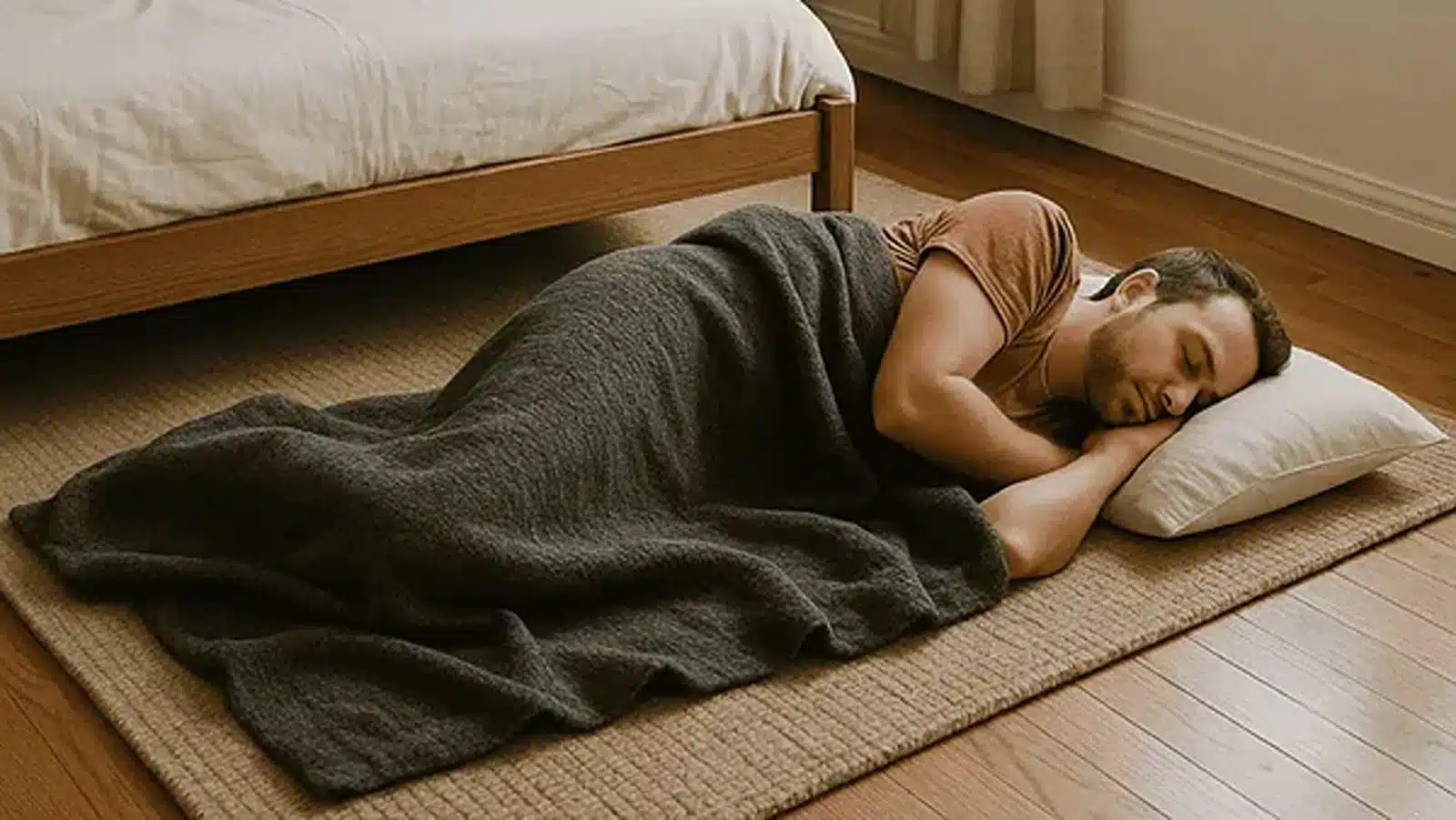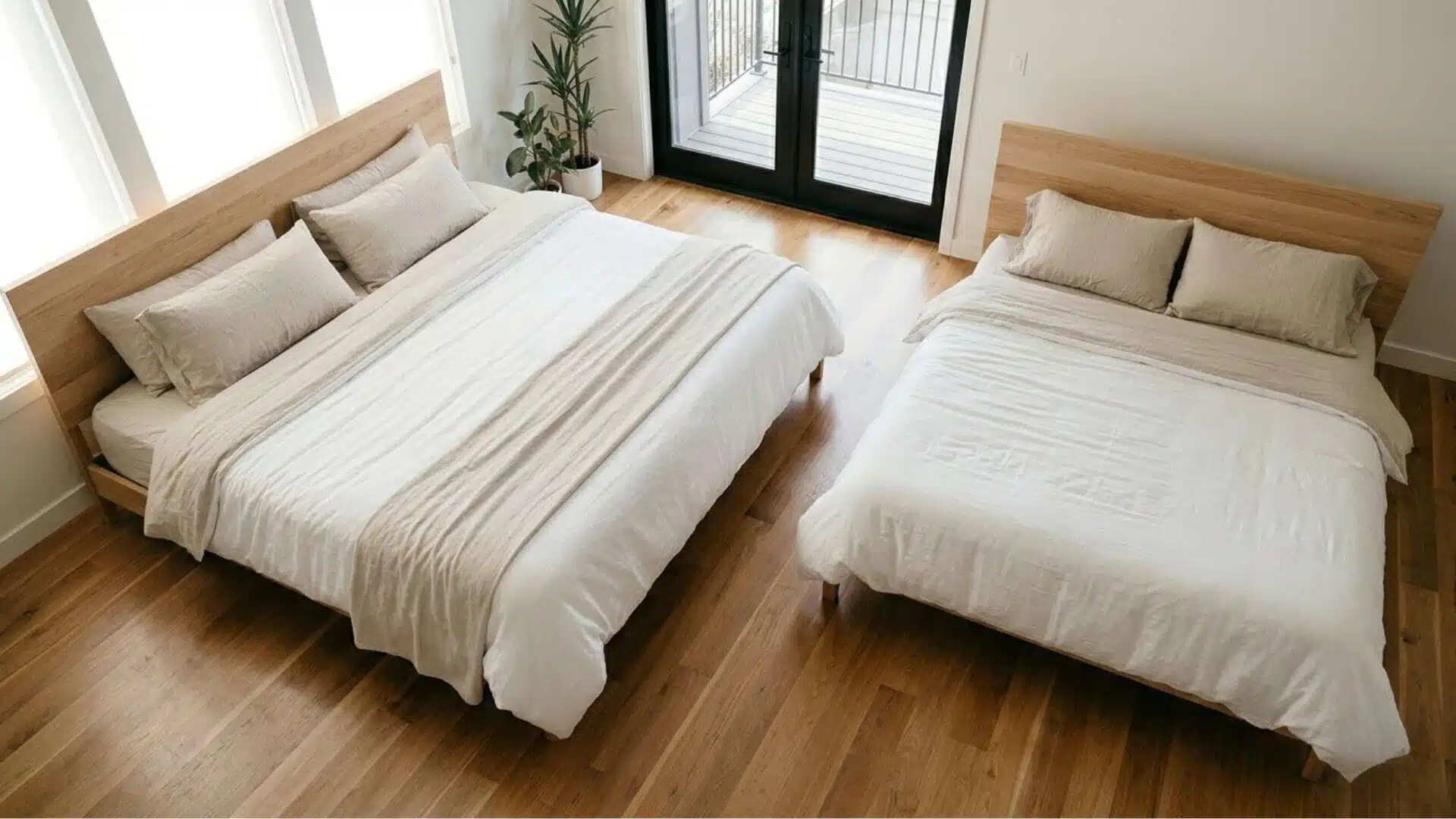




Sleeping on the floor may seem like a natural and healthy sleep option, but it does not suit everyone.
Some people link floor sleeping with better posture and firmer support, yet experts note that a rigid surface may not work well for every body type or sleeping position.
It can place extra pressure on the joints, disturb sleep, and even worsen existing aches.
Before giving up your mattress, it is worth weighing both sides. If you have already looked into floor sleeping benefits, the drawbacks covered here will give you a clearer picture of what to expect long-term.
Lack of Pressure Relief Can Cause Joint Pain
One of the biggest disadvantages of floor sleeping is the lack of cushioning. Unlike mattresses that adapt to your body and distribute weight evenly, a rigid surface concentrates pressure on specific joints.
This leads to pressure buildup in key areas such as the shoulders, hips, and knees. Side sleepers are especially at risk, as most of their body weight rests on smaller contact points.
Over time, this can lead to noticeable hip pain or shoulder discomfort. Instead of waking up refreshed, many people experience stiffness and soreness due to sleeping on a firm surface.
Sleeping on the Floor May Worsen Back Pain

A common belief is that a firm surface automatically improves back health, but that is not true for everyone. It depends on body structure, sleeping position, and existing conditions.
Since back pain has many causes, sleeping on the floor does not guarantee proper spinal alignment.
Poor sleep posture on a rigid surface can increase lower back strain. Some people may feel temporary relief, while others may experience more discomfort due to a lack of support.
That is why floor sleeping for back pain does not work the same for everyone, especially when it comes to whether it is actually safe for your body.
Reduced Sleep Quality Due to Discomfort
Sleep comfort plays a major role in how well you rest at night; your body may struggle to fully relax.
Frequent tossing and turning to relieve pressure points can interrupt your sleep cycle. When the body cannot stay relaxed, it struggles to maintain uninterrupted sleep cycles.
Even if you fall asleep quickly, staying in deep, restorative sleep becomes difficult. As a result, you may wake up feeling tired despite getting enough hours of sleep.
These side effects of sleeping on the floor can impact your energy levels, mood, and productivity throughout the day. Beyond sleep quality, physical comfort can also be affected over time.
Can Trigger Muscle Stiffness and Poor Circulation
Sleeping on a firm surface for extended periods can also affect circulation and muscle comfort.
Continuous pressure on certain areas can cause temporary numbness or tingling in the arms and legs.
Additionally, muscles may remain tense instead of being properly supported. This often results in stiffness upon waking.
Floor sleeping and circulation issues are more noticeable in older adults or those with mobility concerns, making it an uncomfortable long-term choice.
Cold Floors May Affect Comfort and Health
Another overlooked factor is temperature. Floors made of tile, marble, or concrete tend to retain cold, especially at night. This can make it harder to fall asleep and stay comfortable.
Cold floor health effects are not necessarily dangerous, but they can increase discomfort and aggravate joint stiffness.
In colder climates or during winter months, sleeping on the floor may feel particularly unpleasant and disruptive to your sleep.
This discomfort can be more noticeable on tile or concrete surfaces that retain cold for longer periods.
Not Suitable for Certain People
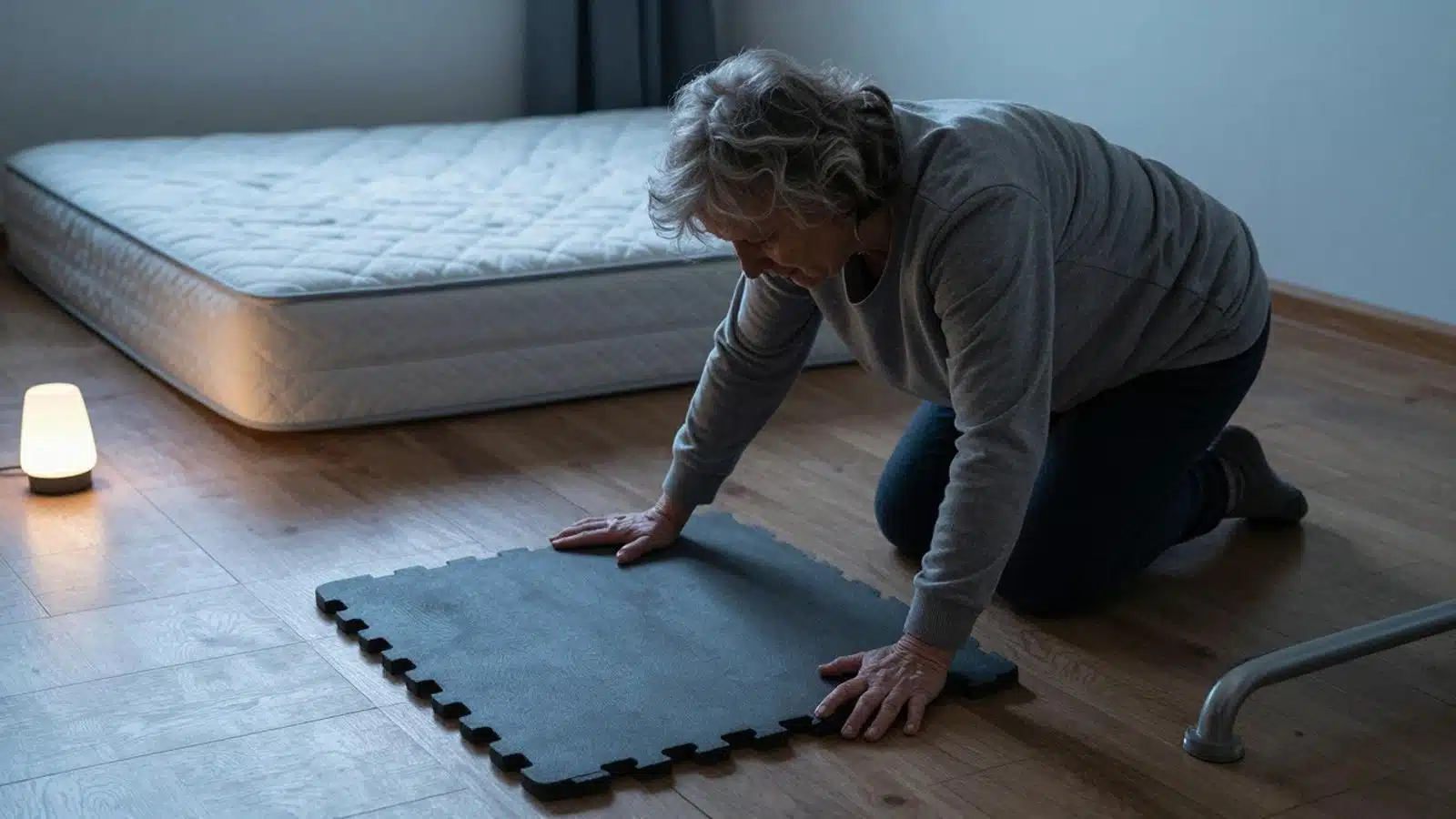
Sleeping on the floor is not recommended for everyone, especially people with arthritis, chronic pain, spinal conditions, or injuries.
A rigid surface may make it harder for the body to rest comfortably and can worsen existing discomfort.
Older adults and pregnant individuals may also find it difficult to get down to or up from the floor safely. In these cases, the risks often outweigh the potential benefits.
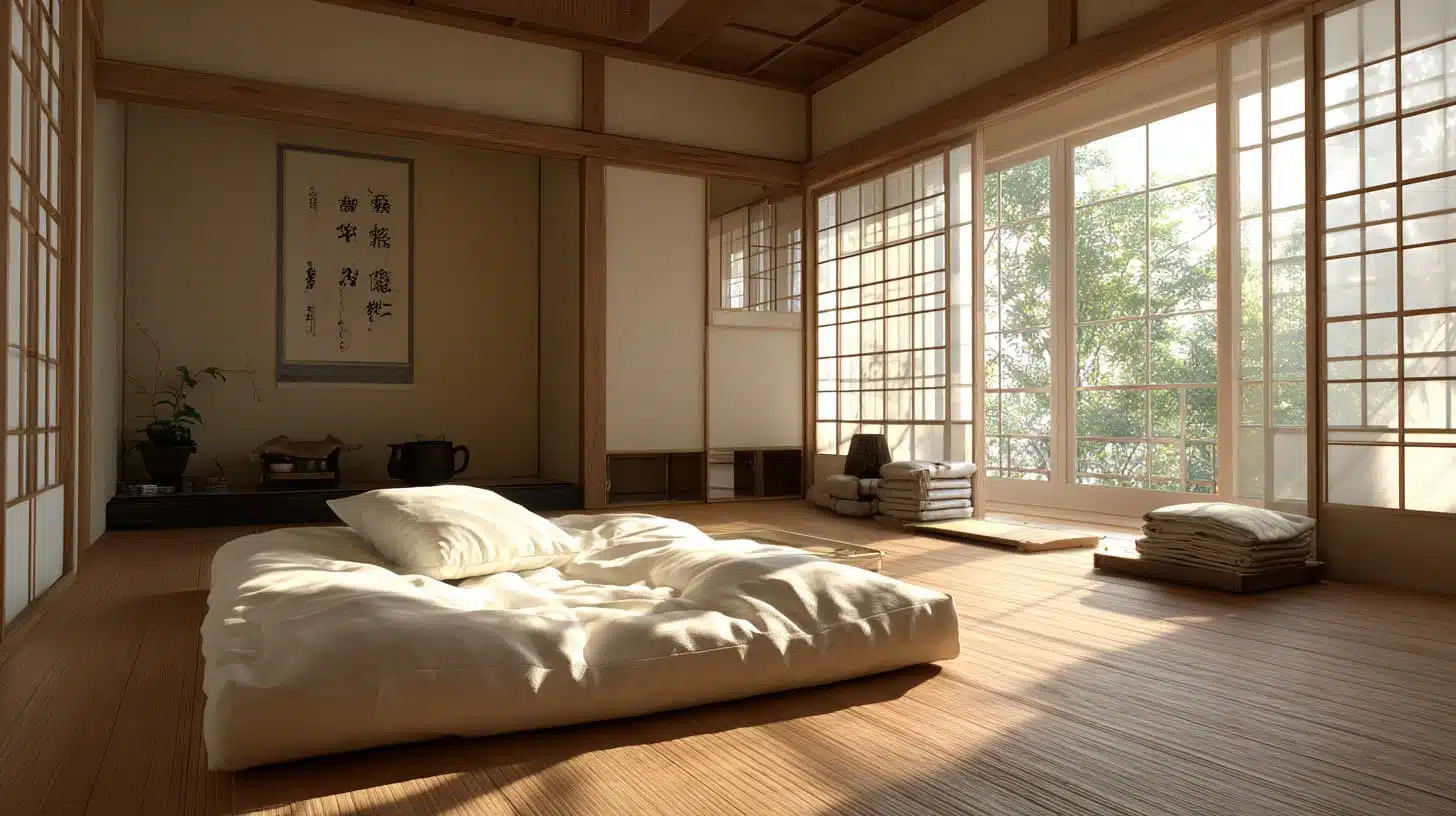
At the same time, floor sleeping has been part of everyday life in some cultures, usually with supportive bedding rather than a bare surface. Japanese floor beds are a good example of how the right materials can make a significant difference in comfort.
Hygiene and Allergy Concerns
Sleeping closer to the floor can expose you to more dust, dirt, and allergens. Even in clean rooms, dust, allergens, and pet dander tend to accumulate closer to floor level.
This can be problematic for people with allergies, asthma, or sensitive skin. Compared to an elevated bed, the floor increases direct contact with these irritants.
Keeping the sleeping area clean becomes essential if you regularly sleep on the floor.
Final Thoughts
While sleeping on the floor may seem simple and natural, it can have drawbacks that compromise comfort and sleep quality.
From joint pain and back discomfort to stiffness and poor rest, the disadvantages can outweigh the benefits for many people. Over time, poor support may affect both sleep and overall well-being.
A better sleep setup should support your body, maintain alignment, and help your muscles relax fully.
Options such as Japanese floor bedding show that comfort often depends on the materials and support beneath you, not just the surface itself.