



Waking up with a headache every morning is frustrating, especially when you went to bed feeling fine.
For a long time, I couldn’t figure out why my mornings felt so rough. It turns out, the answer wasn’t about stress or dehydration; it was happening while I slept. Can sleep apnea cause headaches?
It’s a question more people are asking, and the connection is stronger than most realize.
When your breathing stops repeatedly through the night, your oxygen levels drop, and your body pays the price by morning.
If you’re waking up with a dull, pressing headache more often than not, your sleep quality might be telling you something important.
Can Sleep Apnea Cause Headaches? Here’s Why It Happens
Sleep apnea is a condition where your breathing repeatedly stops and starts while you sleep. These pauses can last a few seconds or even longer, and they happen without you knowing.
Each time your breathing stops, your oxygen levels drop.
Your brain picks up on this and sends signals to wake you up just enough to breathe again.
Research shows that about one in three people with sleep apnea wake up with morning headaches, showing how common this symptom is.
This cycle can repeat dozens of times a night, breaking your sleep without ever fully waking you. Those repeated oxygen dips are a direct trigger for sleep apnea and morning headaches.
If you’re waking up with a dull, pressing headache, your breathing during sleep may be the cause.
What Does a Sleep Apnea Headache Feel Like?
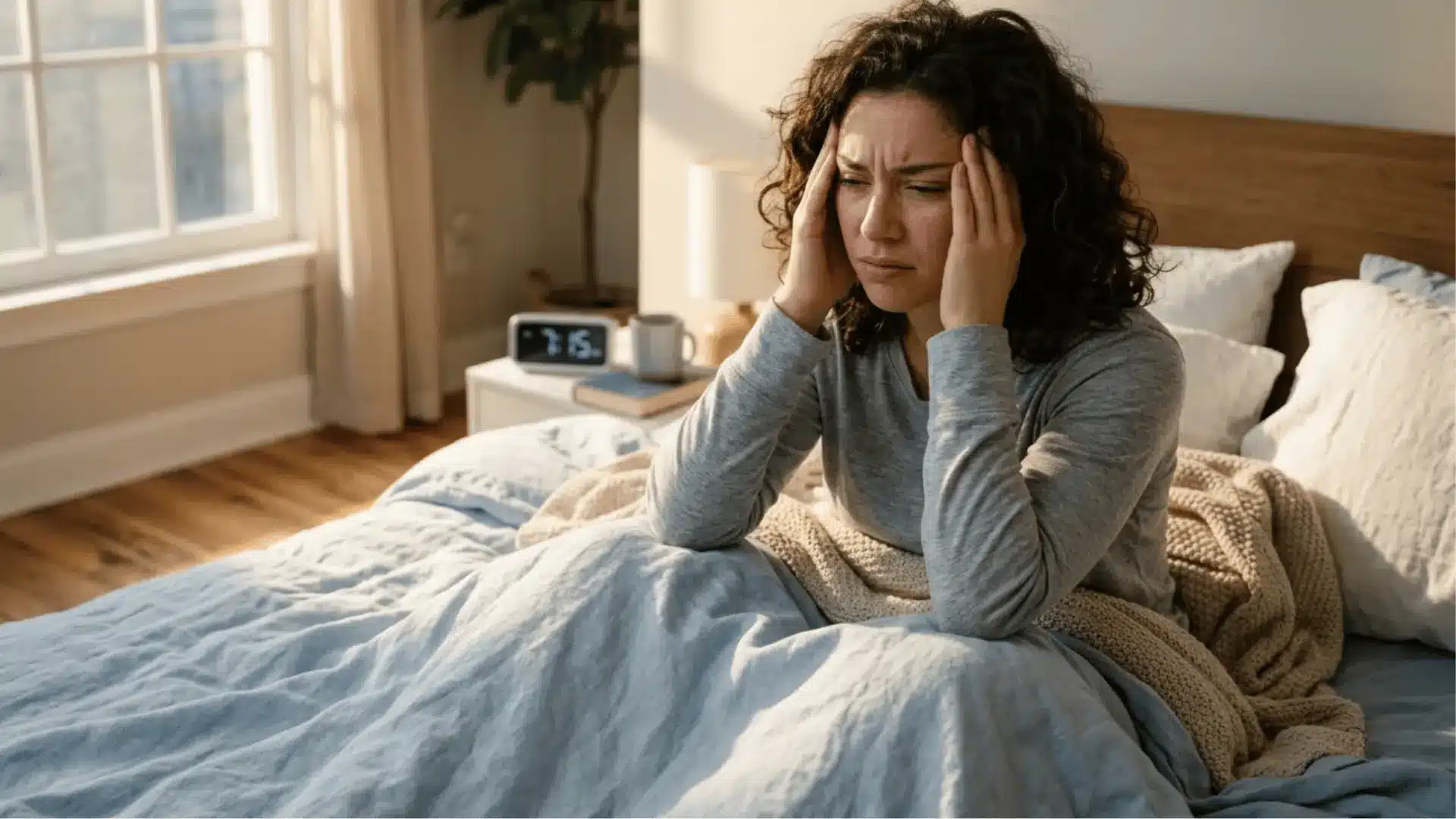
A sleep apnea headache has a pretty specific feel. Most people describe it as a dull, pressure-like pain that sits on both sides of the head rather than in a single spot.
It shows up right when you wake up and usually fades on its own within 30 minutes to a few hours. Unlike migraines, these headaches typically don’t come with nausea, light sensitivity, or visual changes.
They’re not sharp or throbbing, just a steady, heavy feeling across your head. If you notice this kind of headache happening most mornings and it clears up after you’ve been awake for a while, sleep apnea could be the cause.
Sleep Apnea Headache vs Migraine: What’s the Difference?
It’s easy to confuse a sleep apnea headache with a migraine, especially if you wake up with head pain. But the two are quite different in how they feel, when they happen, and how long they last.
| FEATURE | SLEEP APNEA HEADACHE | MIGRAINE |
|---|---|---|
| Pain type | Dull, pressure-like | Throbbing or pulsating |
| Location | Both sides of the head | Usually one side |
| Timing | Right after waking up | Can happen anytime |
| Duration | 30 minutes to a few hours | Several hours to days |
| Other symptoms | Rare | Nausea, light sensitivity |
If your headache starts in the morning, feels like steady pressure, and fades within a few hours, it’s likely linked to sleep apnea. Migraines, on the other hand, are usually more intense and often accompanied by other symptoms.
The Real Causes: How Sleep Apnea Triggers Headaches
Sleep apnea headaches are not random. They happen because of changes in your breathing and oxygen levels while you sleep. When your body doesn’t get enough oxygen, it can lead to pressure and pain in your head in the morning.
- Blocked Airway: Your throat muscles relax too much, which blocks airflow during sleep.
- Breathing Pauses: You stop breathing for short periods again and again through the night.
- Low Oxygen Levels: Less oxygen reaches your brain, which can cause stress and discomfort.
- Carbon Dioxide Buildup: Carbon dioxide levels rise, which can affect blood flow in the brain.
- Pressure in the Head: Blood vessels dilate, increasing pressure and causing a headache.
All of this happens while you are asleep, so you may not notice it right away. Over time, these changes can put stress on your body. The result often shows up as a dull, pressure-like headache when you wake up.
Signs Your Morning Headache Might Be From Sleep Apnea
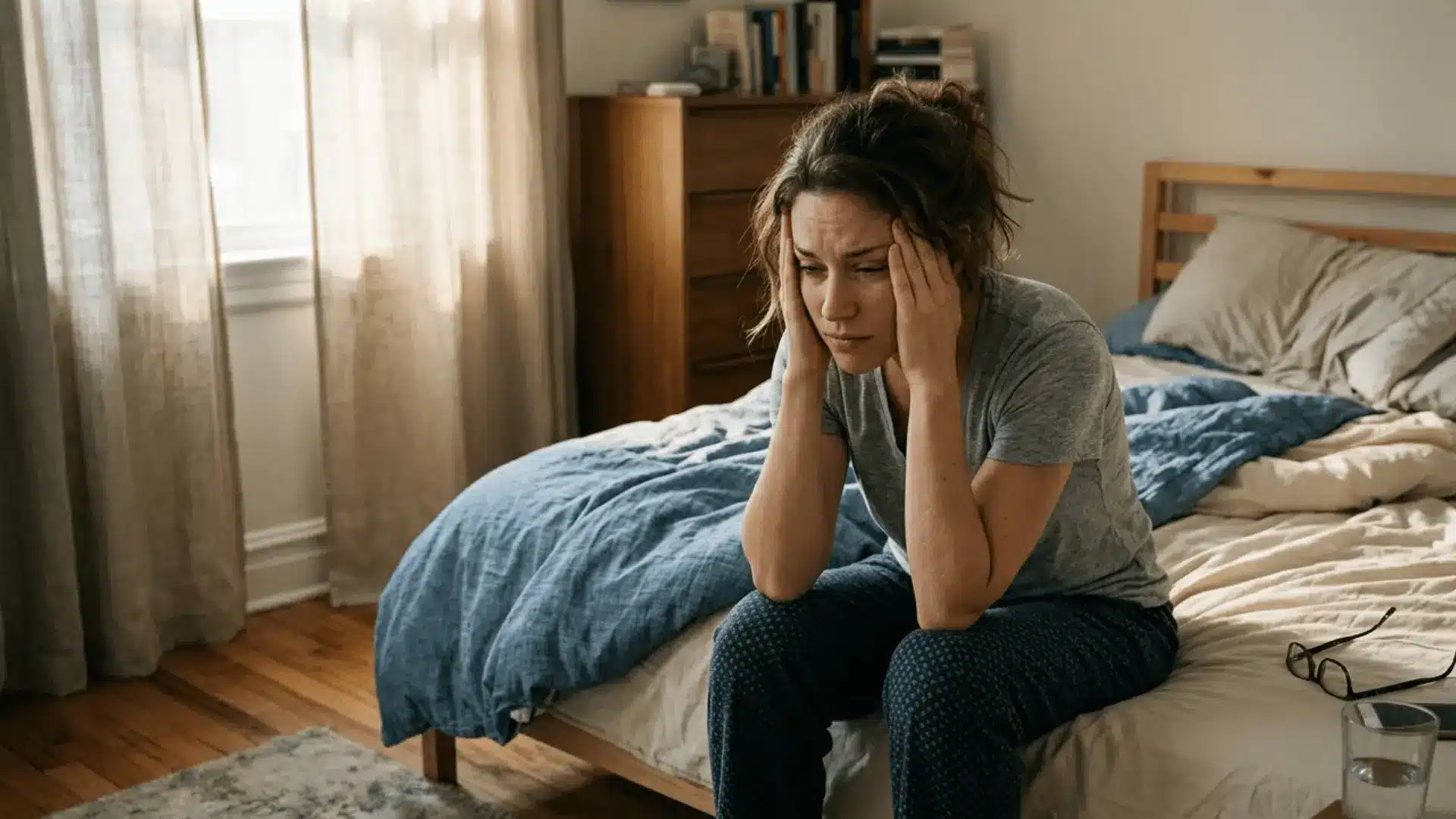
Not all morning headaches are caused by sleep apnea, but some clear signs can point in that direction. If you notice these symptoms often, your headaches may be linked to how you breathe during sleep.
- Frequent Morning Headaches: You wake up with head pain many days, like morning headaches from mild sleep apnea, especially right after getting out of bed.
- Loud Snoring: You snore heavily at night, sometimes loud enough for others to notice.
- Constant Tiredness: You still feel tired even after a full night of sleep.
- Gasping or Choking: You wake up suddenly, feeling like you can’t breathe for a moment.
- Dry Mouth: Your mouth feels dry or sticky when you wake up in the morning.
If these signs sound familiar, it could be more than just a simple headache. They may point to an underlying sleep issue that needs attention. It’s a good idea to pay closer attention to your sleep and consider seeing a doctor.
Who Is More Likely to Get Sleep Apnea Headaches?
Not everyone with sleep apnea gets headaches, but certain groups are more prone to them.
People with obstructive sleep apnea (OSA), the most common type, are at the highest risk since their airway physically collapses during sleep, causing more frequent oxygen drops; explore the serious risks of untreated sleep apnea.
Being overweight or obese adds extra tissue around the throat, which makes breathing harder at night. Loud, regular snoring is another strong sign that airway issues are already happening.
High blood pressure is also closely linked, as both conditions affect blood flow and oxygen levels.
A larger neck circumference, generally above 17 inches in men and 16 inches in women, can further narrow the airway and increase headache frequency.
How Long Do Sleep Apnea Headaches Last?
Sleep apnea headaches are usually short-lived compared to other headache types. Most people find that the pain fades within 30 minutes to a few hours after waking up.
This happens because once you’re awake and breathing normally, your oxygen levels start returning to normal, and the headache gradually lifts on its own.
Unlike tension headaches or migraines, sleep apnea headaches typically don’t get worse when you move around, bend over, or go about your morning routine. They tend to stay at a steady, manageable level until they pass.
However, if your sleep apnea goes untreated, these headaches are likely to keep coming back every morning.
How to Get Rid of Sleep Apnea Headaches?
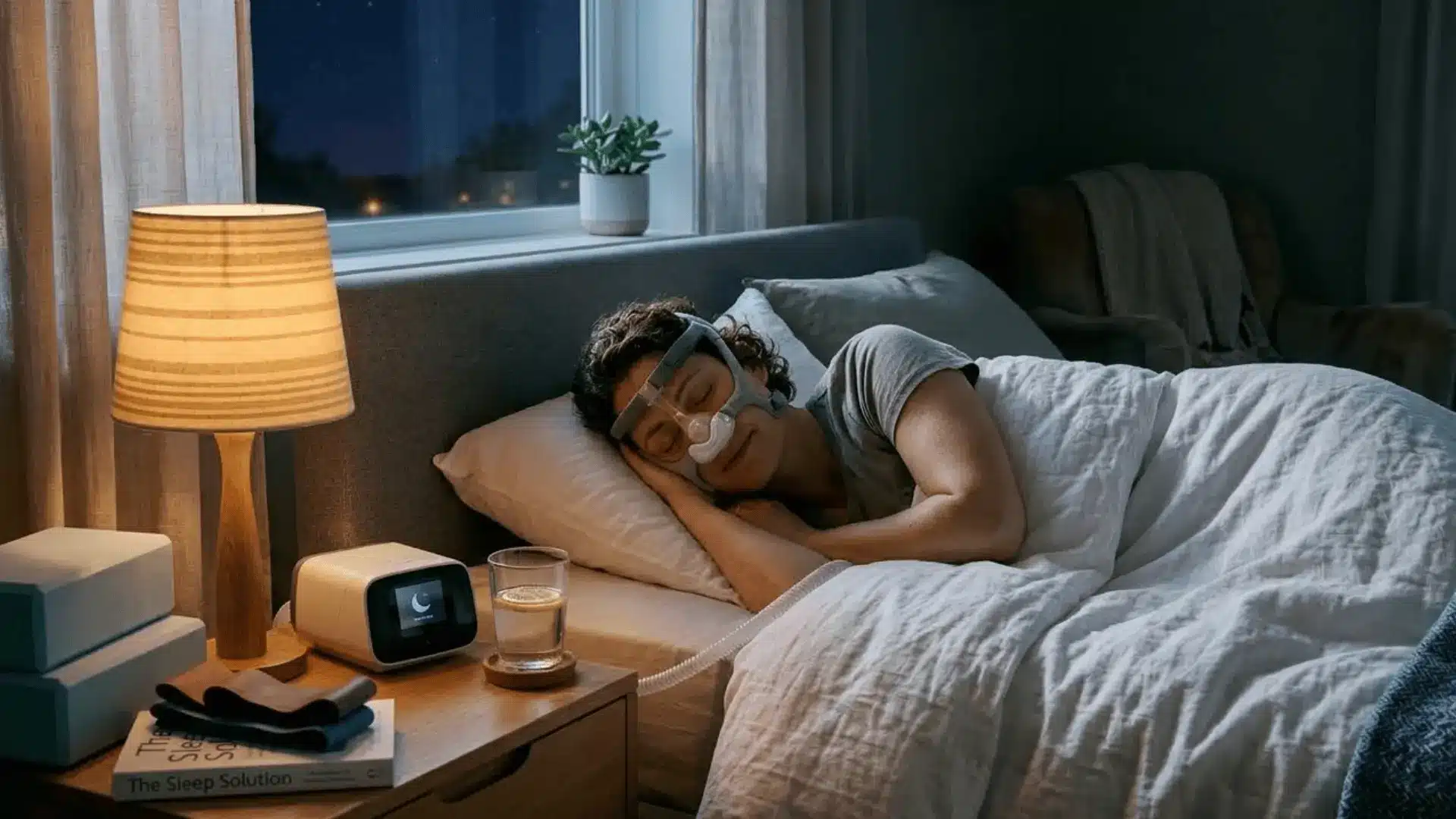
The best way to stop sleep apnea headaches is to address the problem while you sleep, with options from medical treatments to simple lifestyle changes like home remedies for sleep apnea.
- CPAP Therapy: Using a CPAP machine helps keep your airway open while you sleep, reducing headaches.
- Oral Appliances: Special mouth devices can help keep your throat open and improve breathing.
- Weight Management: Losing extra weight can reduce pressure on your airway and improve sleep.
- Sleep Position: Sleeping on your side rather than your back can help prevent airway blockages.
- Immediate Headache Relief: Stay hydrated, do gentle stretching, or use over-the-counter pain relief if needed.
By combining these approaches, many people see a noticeable drop in morning headaches. Treating the root cause and making small lifestyle changes can make a big difference in how you feel each morning.
When Should You See a Doctor?
Some morning headaches are harmless, but certain signs mean it’s time to talk to a doctor. If you’re waking up with a headache most days, that pattern alone is worth getting checked out.
Severe daytime fatigue that affects your focus or mood is another red flag, especially when paired with loud snoring or noticeable pauses in breathing during sleep.
If your headaches are getting more frequent or more intense over time, don’t ignore them. These symptoms together can point to untreated sleep apnea that needs a proper diagnosis.
A sleep study can confirm what’s going on and help you find the right treatment.
Final Thoughts
So, can sleep apnea cause headaches? The link between the two is something doctors and patients are paying much closer attention to now.
Once sleep apnea gets properly addressed, morning headaches often improve significantly. From lifestyle changes to CPAP therapy, there are real options that make a difference.
If this helped you connect the dots between your sleep and those stubborn morning headaches, share your experience in the comments below.
Have you noticed a pattern with your mornings? Or are you still figuring out what’s behind your headaches? Either way, drop your thoughts below; your experience might help someone else reading this, too.
Frequently Asked Questions (FAQs)
Can Treating Sleep Apnea Stop Headaches Completely?
Many people see significant improvement, but results vary depending on severity and consistency of treatment.
Can Sleep Apnea Cause Headaches During the Day?
Yes, if oxygen drops repeatedly at night, it can trigger lingering headaches or brain fog during the day.
Are Children Affected by Sleep Apnea Headaches?
Yes, kids with sleep apnea can also have morning headaches, often alongside behavioral or concentration issues.