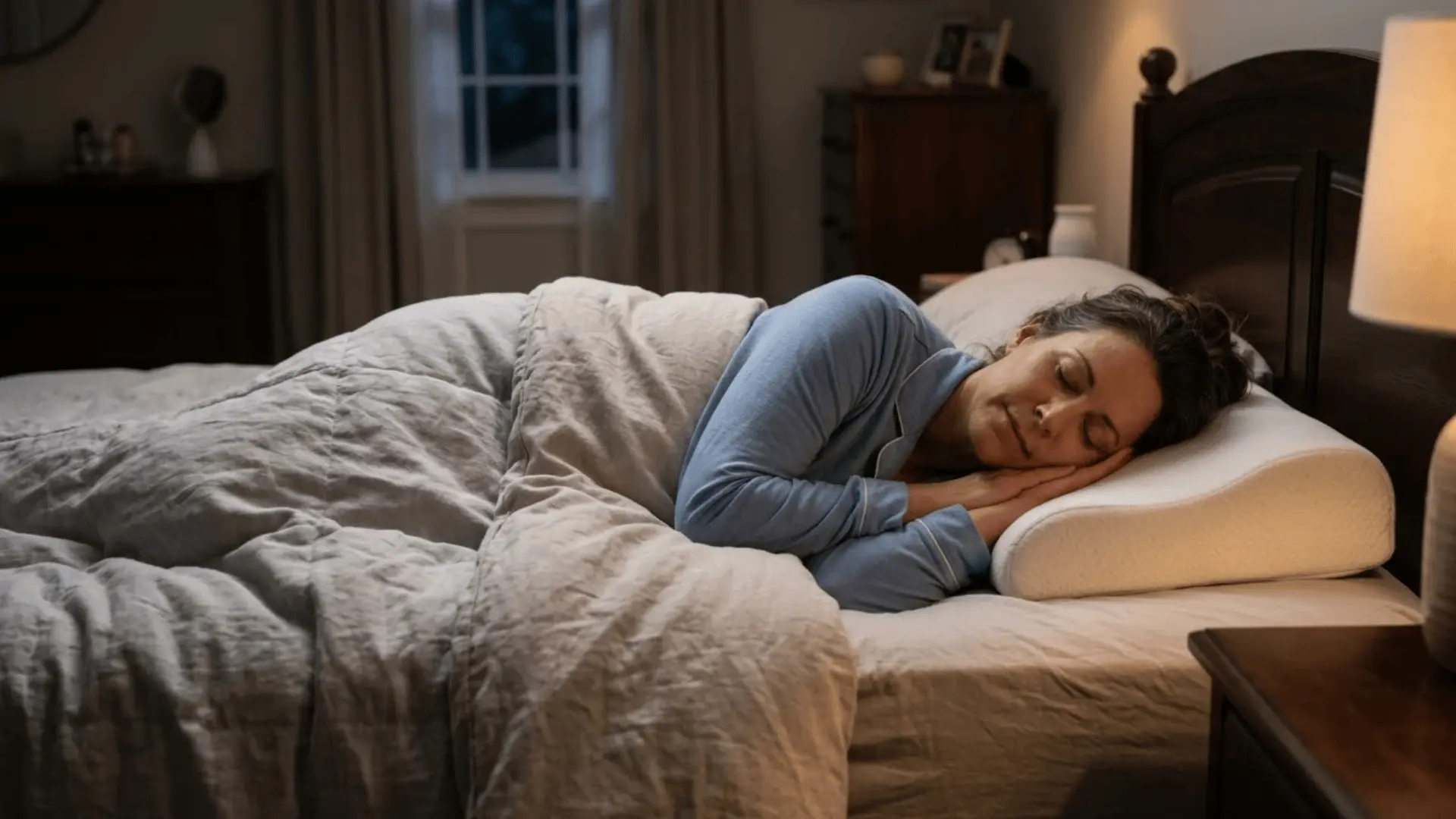





Most people blame a bad mattress or too much screen time when they can’t sleep well. But if you have a deviated septum, the real problem might be happening the moment your head hits the pillow.
A deviated septum narrows one side of your nasal passage, and lying down in the wrong position can make that blockage feel ten times worse.
I spent way too long waking up congested and exhausted before realizing my sleep position was part of the problem, which can often lead to tossing and turning throughout the night.
Knowing the best sleep position for deviated septum symptoms is one of the easiest, no-cost changes you can try tonight, and it might be exactly what your nights have been missing.
What a Deviated Septum Is and Why It Can Affect Your Sleep?
The septum is the thin wall of cartilage and bone that divides your two nostrils. When it shifts or leans to one side, it narrows one nasal passage, causing airflow to become uneven.
Many people have some degree of deviation without realizing it, but others experience real, daily symptoms.
These can include one nostril that often feels blocked, difficulty breathing through the nose at night, snoring, mouth breathing, and frequent sinus congestion or pressure.
Sleep can make nasal symptoms feel worse, and in some cases, underlying conditions like sleep apnea, which doesn’t always involve loud snoring, may go unnoticed.
When you lie down, the tissues inside your nose can swell slightly, further reducing airflow. Gravity also changes how mucus drains through your sinuses.
Because of this, your sleep position plays a bigger role in nighttime breathing than most people realize.
Best Sleep Positions for Deviated Septum
The way you sleep can influence how easily air moves through your nose at night. Certain positions help gravity keep nasal passages clearer and reduce pressure inside the sinuses.
1. Side Sleeping With the Clearer Nostril Up
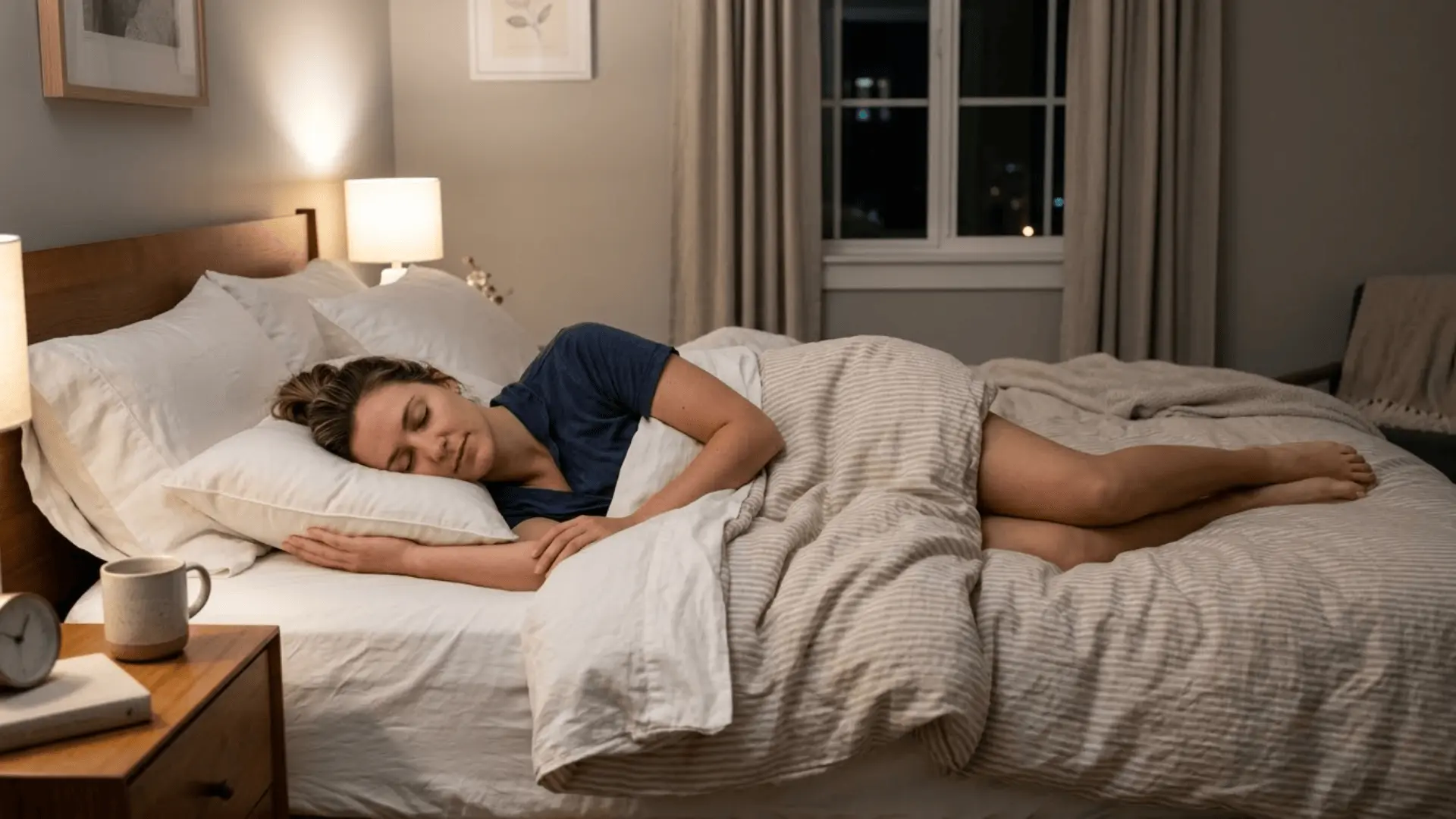
Sleeping on your side with the clearer nostril facing upward can help air move through the nose more easily. When the more open side stays on top, gravity may reduce pressure on the narrow passage.
This position also keeps mucus from settling in the upper nostril. Many people notice less stuffiness this way, especially if one side of the nose usually feels clearer than the other during the night.
Quick Tip: Use a firm pillow that keeps your head and neck in a straight line so the airway stays open.
2. Side Sleeping With the Blocked Side Facing Up

Another option is sleeping on your side with the less blocked nostril facing upward. When the congested side is on top, it may feel less compressed and can slowly begin to open as you rest.
Pressure from the pillow stays on the clearer side instead. This simple change can sometimes improve airflow and reduce the feeling of fullness in the nose during sleep.
Quick Tip: If congestion shifts during the night, try turning to the opposite side to see if breathing improves.
3. Back Sleeping With Your Head Slightly Elevated
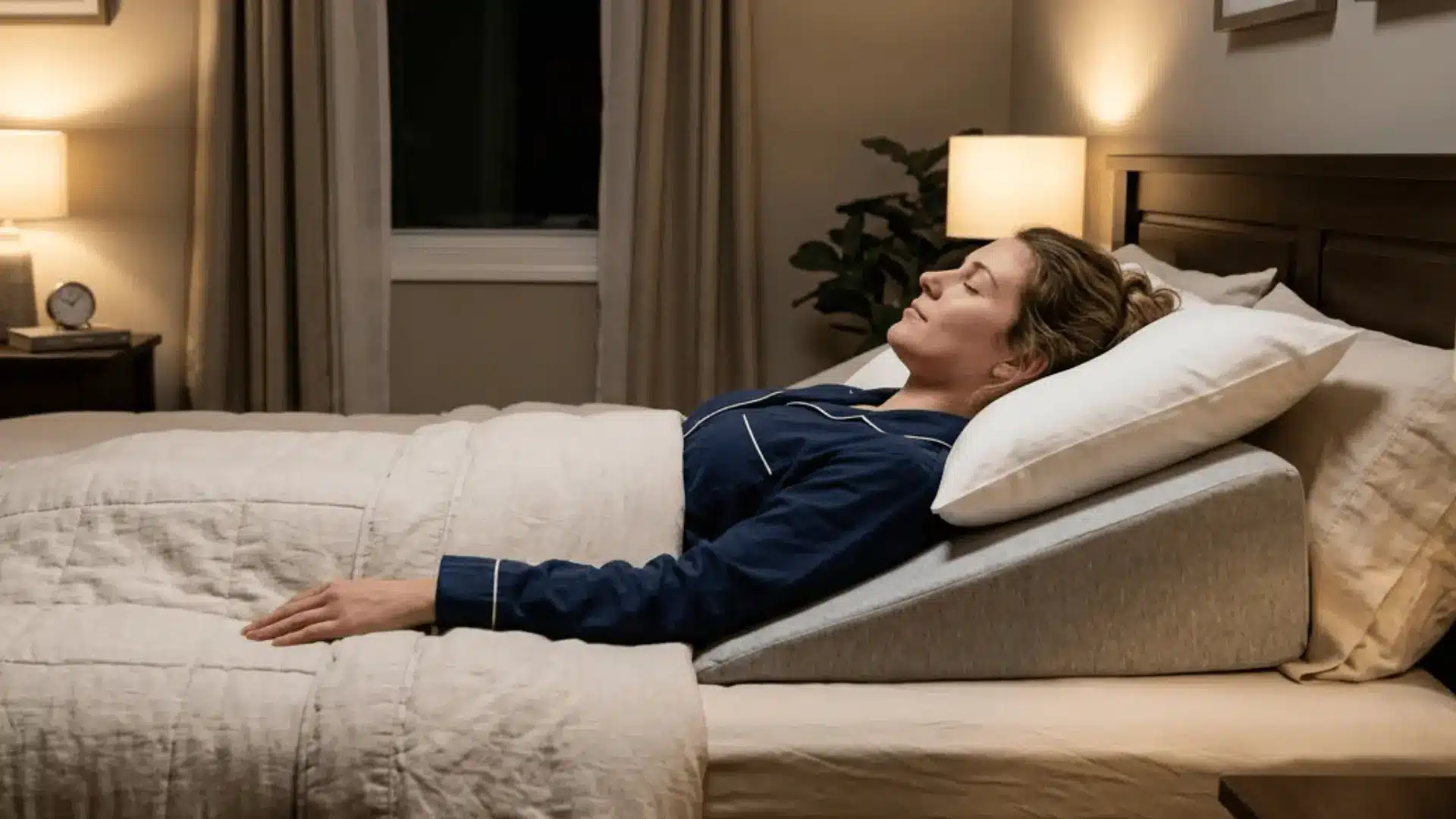
Sleeping on your back with your head slightly raised can help make breathing easier during the night. When the head is higher than the chest, mucus is less likely to collect in the sinuses.
This may also reduce swelling inside the nasal passages. Some people notice that breathing feels steadier because the airway stays more open while the head is gently lifted.
Quick Tip: A wedge pillow or two supportive pillows can help keep your head raised without bending your neck forward.
4. Side Sleeping With Slight Head Elevation
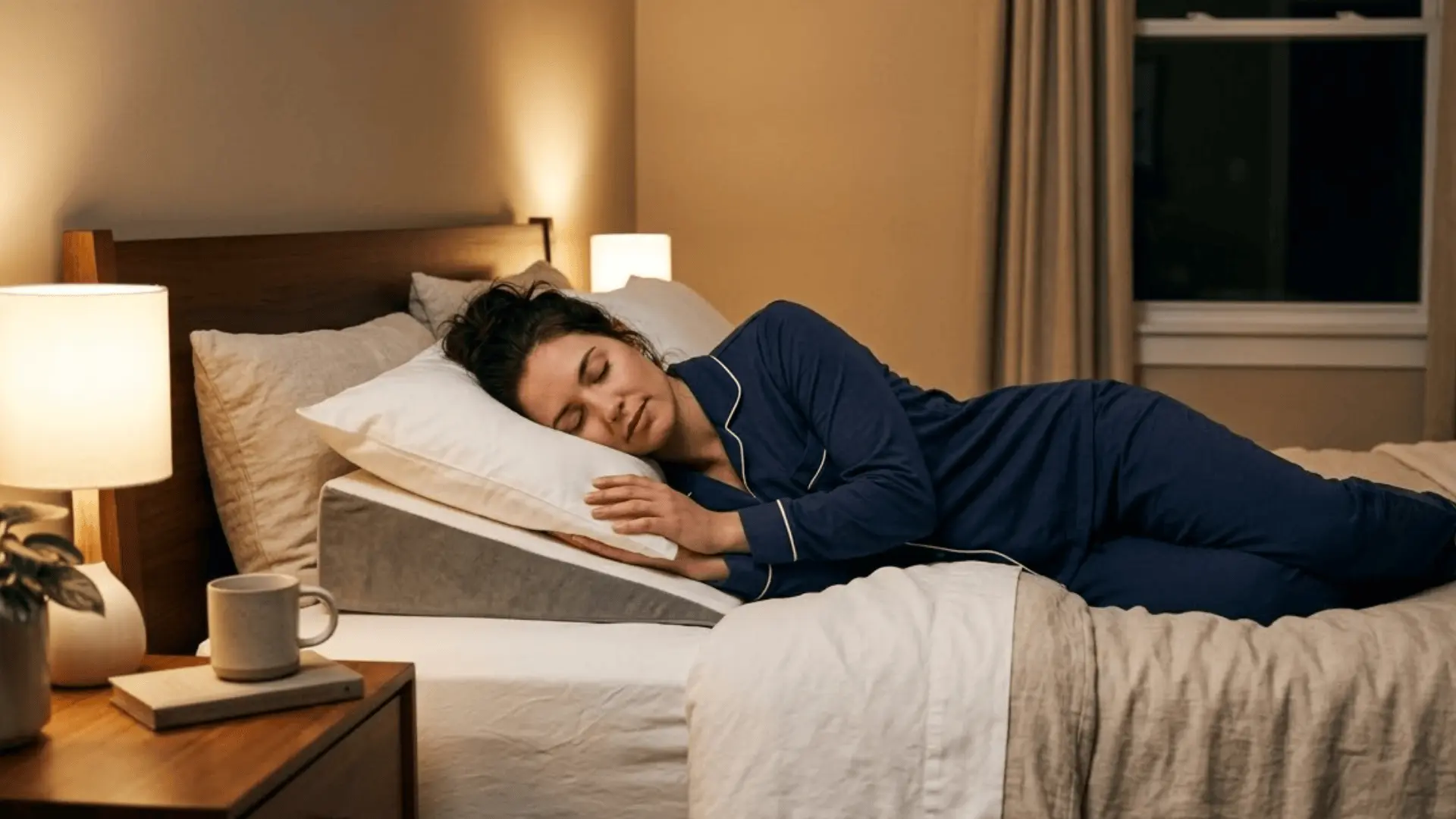
Side sleeping with a small amount of head elevation combines two helpful effects. The side position reduces pressure on one nasal passage, while the slight lift helps mucus move downward rather than build up.
This can make breathing feel clearer during sleep. It may be especially helpful on nights when congestion or sinus pressure feels stronger than usual.
Quick Tip: Place a small wedge pillow under your regular pillow to create a gentle slope for your head.
5. Reclined Sleeping Position
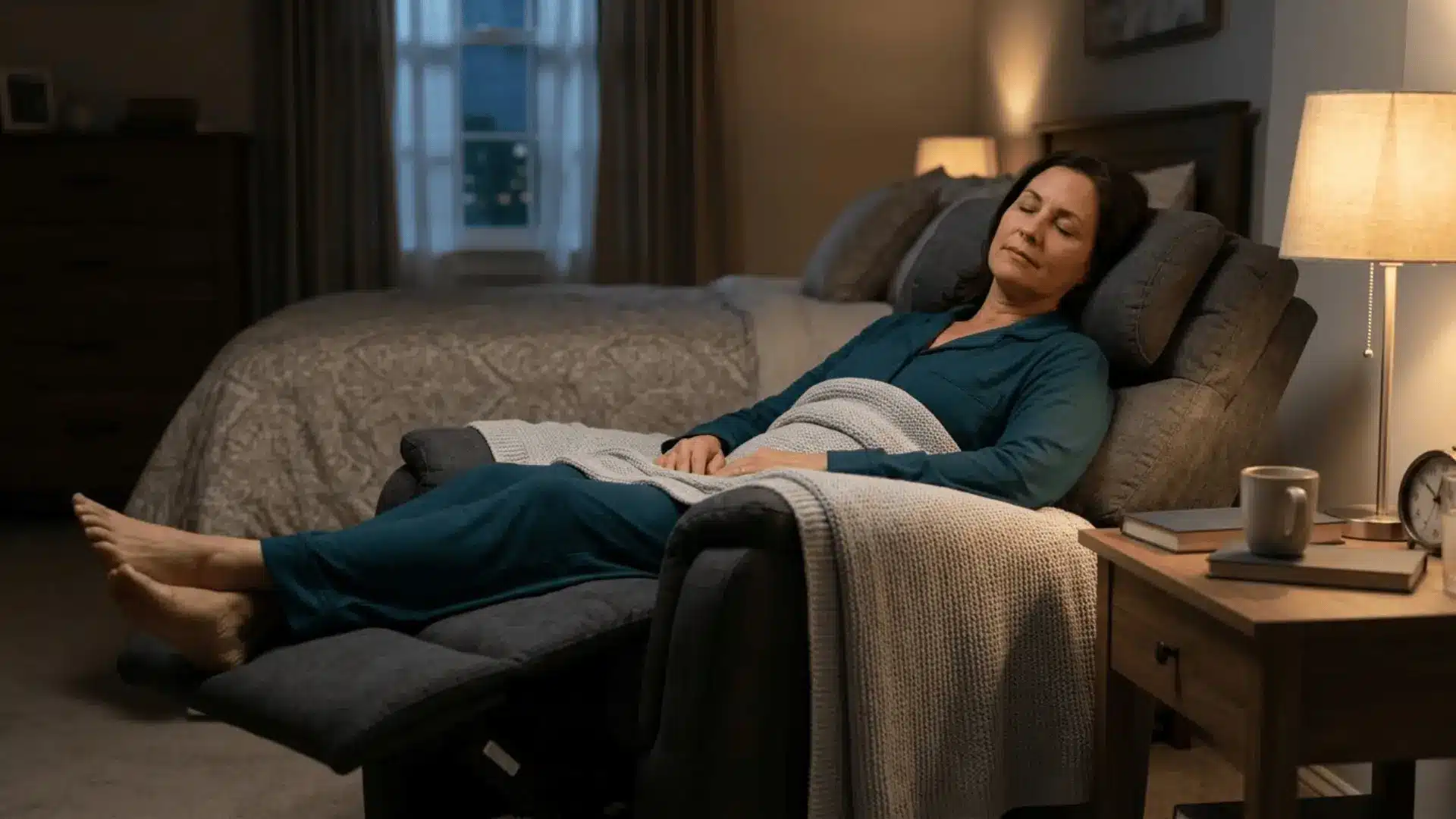
A reclined sleeping position keeps the upper body raised rather than completely flat. This posture allows gravity to help mucus move away from the nasal passages and sinuses.
Many people feel less pressure in the nose when the chest and head remain elevated. This position may be helpful during strong congestion or sinus irritation that makes breathing uncomfortable at night.
Quick Tip: An adjustable bed or wedge pillow can help maintain a steady reclined position throughout the night.
Sleep Positions That Can Make Breathing Worse
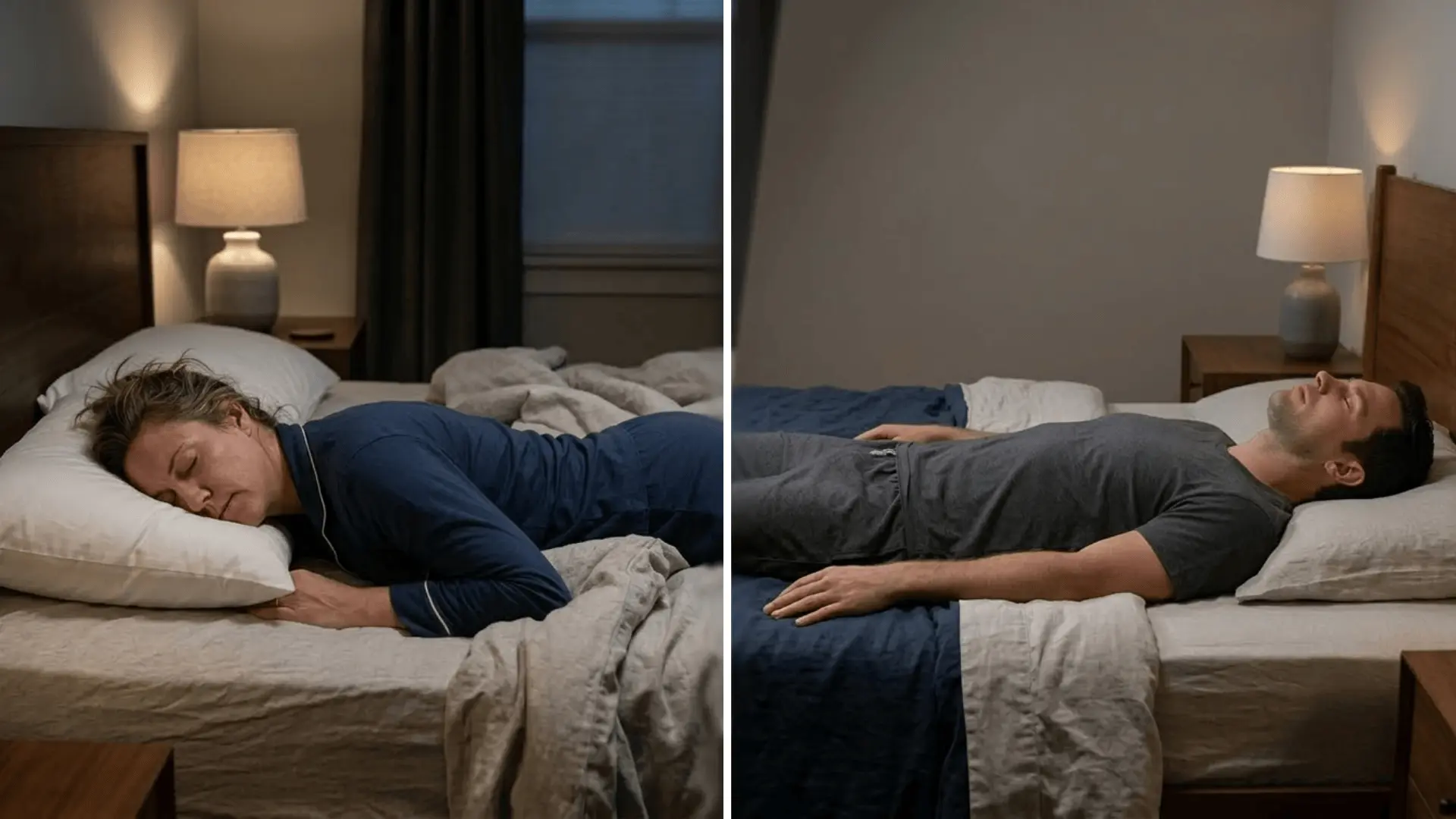
Some sleep positions can make a deviated septum feel much worse overnight. Stomach sleeping is one of the least helpful options.
It puts added pressure on your sinuses and forces your neck into an uncomfortable angle, which can restrict airflow and leave you waking up feeling more congested than when you went to bed.
Sleeping flat on your back is another position that often causes problems. When you lie flat, mucus can pool at the back of the nasal passages, preventing it from draining properly.
This often leads to increased congestion, more mouth breathing, and louder snoring. For people with a deviated septum, both of these positions make it harder for the body to breathe freely through the night.
Nighttime Habits That Support Sinus Drainage and Easier Breathing
A few simple habits before bed can help keep your nasal passages clearer during the night. When the nose stays moist and free of extra mucus, the sinuses can drain more easily.
- Use a Humidifier: Moist air helps prevent the nose from drying out and becoming irritated, which can support easier sinus drainage.
- Try Nasal Strips: These strips gently lift the sides of the nose and may help improve airflow through the nostrils.
- Rinse Your Nose Before Bed: A saline rinse can wash away mucus, dust, and allergens that cause nighttime stuffiness.
- Choose the Right Pillow Height: A supportive pillow keeps the head and neck aligned, which can make nasal breathing easier.
These habits work well with proper sleep positions and can help reduce sinus pressure during the night.
When to See a Doctor for Deviated Septum Symptoms
Sometimes changing your sleep position is not enough to fix breathing problems caused by a deviated septum. If one nostril feels blocked most of the time, it may be a sign of a deeper issue.
Trouble breathing through your nose during the day or at night can also be a reason to see a doctor.
Frequent sinus infections or ongoing sinus pressure may be another warning sign. Some people also notice thick mucus that does not clear easily.
Others may experience loud snoring or poor sleep because breathing feels difficult at night, sometimes linked to sleep apnea nightmares, and nighttime breathing disruptions.
A healthcare professional can check the inside of your nose and discuss possible treatment options. If symptoms are severe, a procedure called septoplasty may be suggested to straighten the septum and improve airflow.
Summing It Up
After trying different setups, I found that side sleeping with my head slightly elevated made the biggest difference for my breathing at night.
It’s a small change, but it adds up over time. The best sleep position for deviated septum relief isn’t one-size-fits-all, so don’t get discouraged if it takes a few nights to figure out what works for your body.
Pairing a good sleep position with saline rinses or a humidifier can also help. And if symptoms keep disrupting your sleep, a doctor’s visit is worth it.
I’d love to hear what has worked for you. Drop your tips in the comments below!