





You probably never thought much about the size of a standard pillow until the wrong one ended up on your bed. Too flat, too puffy, too wide, and suddenly, your sleep is off.
It is not just a number on a tag. It affects how you sleep, how your bed looks, and even how your neck feels in the morning. Most people pick a pillow by feel and forget about size completely.
But the right size matters more than you think. And once you know what to look for, you will never shop for a pillow the same way again.
What Is the Size of a Standard Pillow?
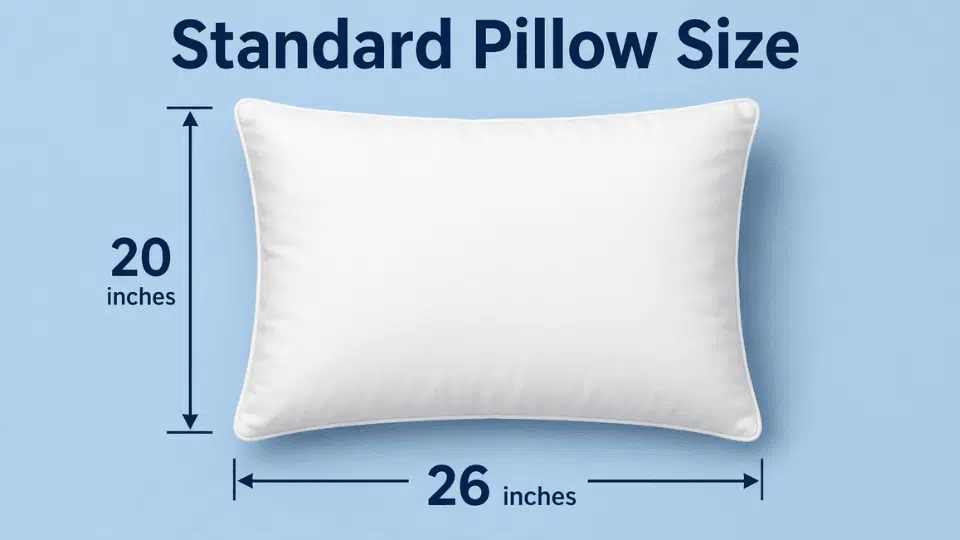
A standard pillow measures 20 x 26 inches. That is the size you will find on most single and twin beds, and it works well for average sleepers. It is neither too big nor too small.
If you sleep alone, it fits your bed without taking over the whole mattress. Most people focus only on the dimensions and stop there.
But the size should also match your sleeping style. A side sleeper needs more loft. A back sleeper needs less. Knowing the basics is just the starting point.
Standard Pillow Size vs. Other Pillow Sizes
Not all pillows are built the same, and that size difference can change how you sleep. A standard pillow works for many people, but other sizes exist for good reasons. Knowing the difference helps you pick smarter when choosing between different pillow sizes.
| Pillow Type | Dimensions (inches) | Best For |
|---|---|---|
| Standard | 20 x 26 | Twin/Full beds, average sleepers |
| Super Standard | 20 x 28 | Slightly longer, same beds |
| Queen | 20 x 30 | Queen beds, active sleepers |
| King | 20 x 36 | King beds, those who toss and turn |
| Body Pillow | 20 x 54 | Side sleepers, pregnancy support |
The right size comes down to your bed and your sleep style. Get both right, and everything else falls into place. Most people skip this step and wonder later why their sleep feels off.
What Mattress Size Goes With a Standard Pillow?

Your pillow size and mattress size should work together. A mismatch can make even a good bed look awkward. Here is a simple breakdown to help you match them right.
- Twin Mattress (38 x 75 inches): One standard pillow fits perfectly.
- Full Mattress (54 x 75 inches): Two standard pillows fit side by side comfortably.
- Queen Mattress (60 x 80 inches): Two standard pillows work, but queen pillows fit better and offer more width. It helps to understand queen pillow dimensions before making the switch.
- King Mattress (76 x 80 inches): Two standard pillows will look too small and out of place.
A standard pillow is adaptable, but it has its limits. Matching it to the right mattress keeps your bed looking neat and feeling balanced. Do not overlook this small detail because it makes a bigger difference than you expect.
Who Should Use a Standard Pillow?
A standard pillow is not a one-size-fits-all solution, and that is worth knowing before you buy. It clicks for some sleepers but not others. Here is a straightforward breakdown.
Use a Standard Pillow:
- Stomach sleepers who prefer a flatter, lower-profile pillow
- Children and teenagers on smaller beds
- Single sleepers who do not need extra width
- People who prefer a lightweight, easy-to-manage pillow
Avoid a Standard Pillow:
- Tall adults whose shoulders extend beyond the pillow width
- People with chronic neck or shoulder pain need specialized support
- Couples sharing a full bed who need more coverage
It is a practical, no-fuss option for the right sleeper. But if your needs are specific, a different size will better suit you.
Standard Pillow Sizes Around the World
Pillow sizes are not universal, and what counts as “standard” varies by region. Different countries have their own sizing norms. Take a look at how they compare.
| Country/Region | Pillow Name | Dimensions (inches) | Dimensions (cm) |
|---|---|---|---|
| United States | Standard | 20 x 26 | 51 x 66 |
| United Kingdom | Standard | 19 x 29 | 48 x 74 |
| Europe | Standard | 26 x 26 | 65 x 65 |
| Australia | Standard | 20 x 26 | 51 x 66 |
| Japan | Standard | 17 x 23 | 43 x 63 |
So before you order pillowcases from abroad, double-check the sizing. A small difference in numbers can mean a poor fit and a frustrating fix.
Tips to Measure Your Pillow Correctly
Measuring a pillow sounds simple, but a few small mistakes can throw off your numbers. Getting it right means better-fitting pillowcases and smarter purchases.
- Lay it flat: Always measure your pillow on a flat surface for accuracy. Measuring it while it is propped up or folded will give you numbers you cannot trust.
- Measure without the case: Remove the pillowcase before measuring to get the true size. The fabric adds bulk and can throw off your reading.
- Use a soft tape measure: A rigid ruler can miss curves and give you off readings. A flexible tape measure wraps naturally around the pillow and provides better results.
- Measure both length and width: Do not assume one side tells the whole story. Both dimensions matter, especially when buying pillowcases or pillow protectors.
- Check when it is fluffed: A compressed pillow yields smaller, less accurate numbers. Give it a good fluff before you measure, so you get the full size.
A little care in measuring goes a long way. It saves you from buying the wrong pillowcase and keeps your bed setup looking clean and put together.
The Bottom Line
Picking a pillow is easy. Picking the right one takes a little more thought, and that is exactly what you have done here.
Now you know that the size of a standard pillow affects more than just comfort. It ties into your mattress size, your sleep style, your body type, and even your pillowcase fit.
So do not just grab the first pillow you see. Use what you know, measure carefully, and choose with purpose. Your sleep quality depends on it more than you realize.
Ready to upgrade your sleep? Start by measuring your current pillow today.
Frequently Asked Questions
Is 20×26 a Standard Pillow Size?
Yes, 20 x 26 inches is the standard pillow size. It is the most common pillow size and fits well on twin, full, and queen beds.
What is the Best Pillow for Cervical Myelopathy?
The best pillow for cervical myelopathy is one that keeps the neck in a neutral and supported position. A cervical or memory foam pillow is often a better choice because it helps reduce strain on the neck.
What is the Most Common Pillow Size?
The most common pillow size is the standard, measuring 20×26 inches. It is widely used because it is easy to find, budget-friendly, and suitable for most beds.