
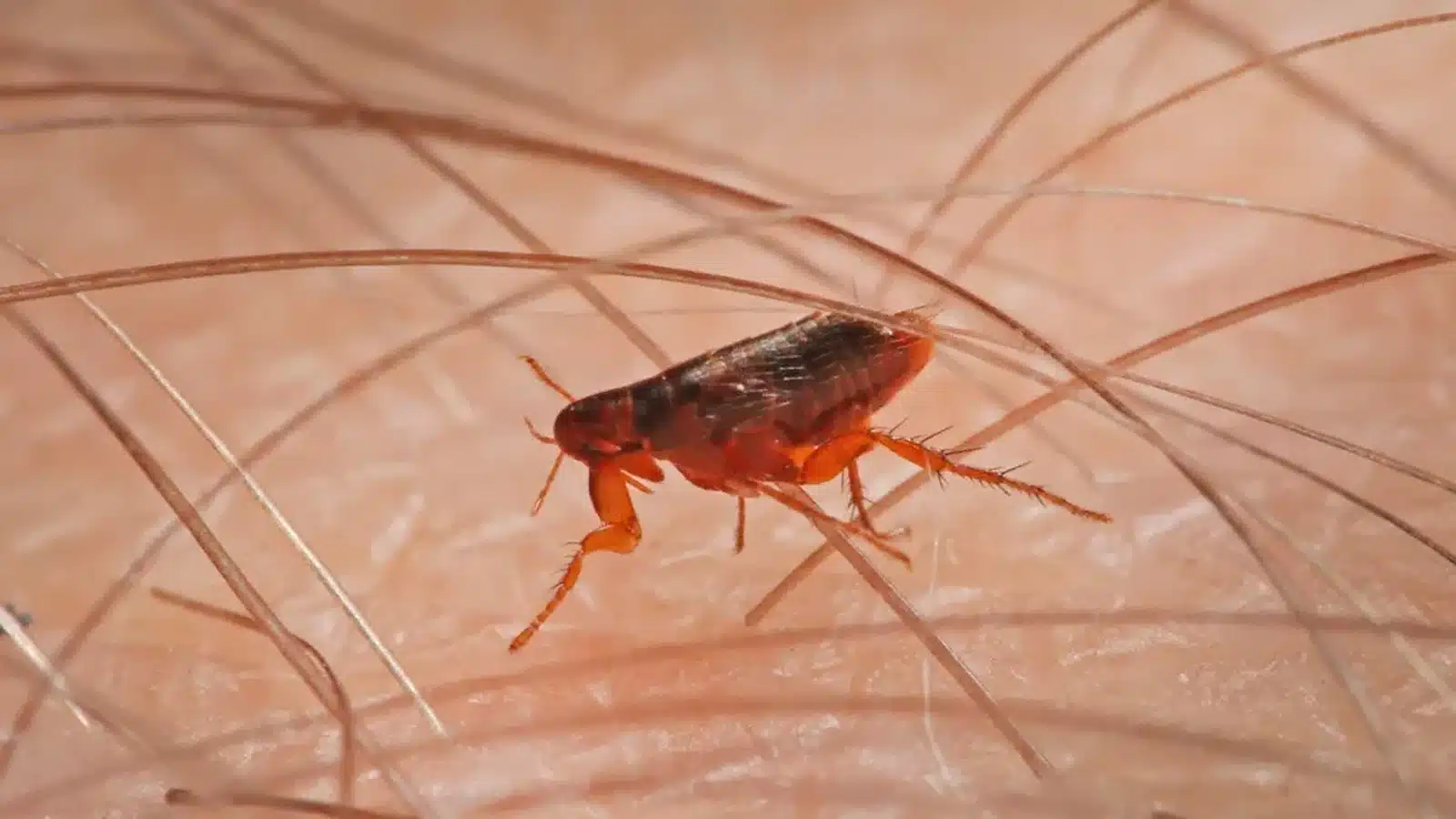

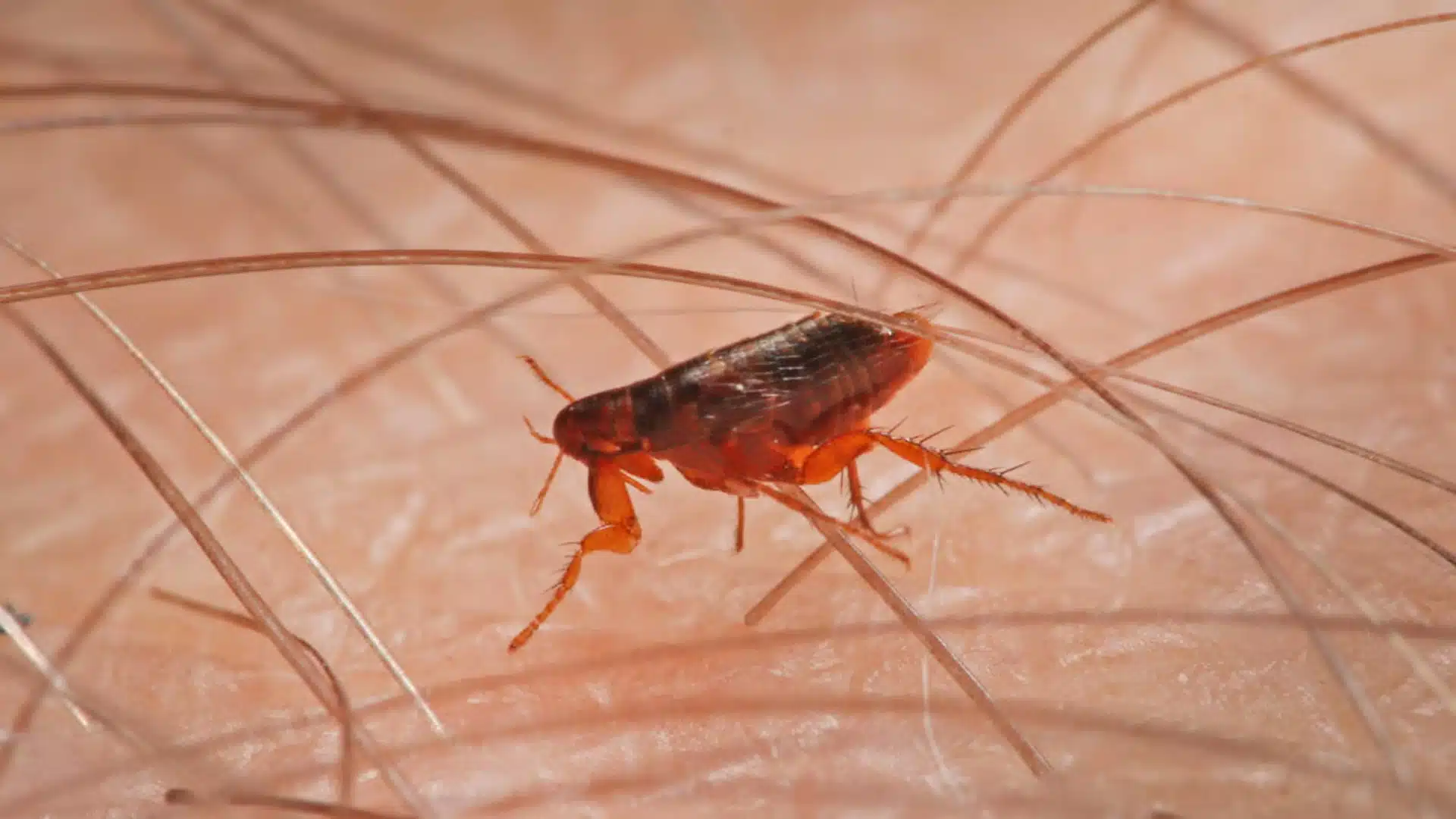
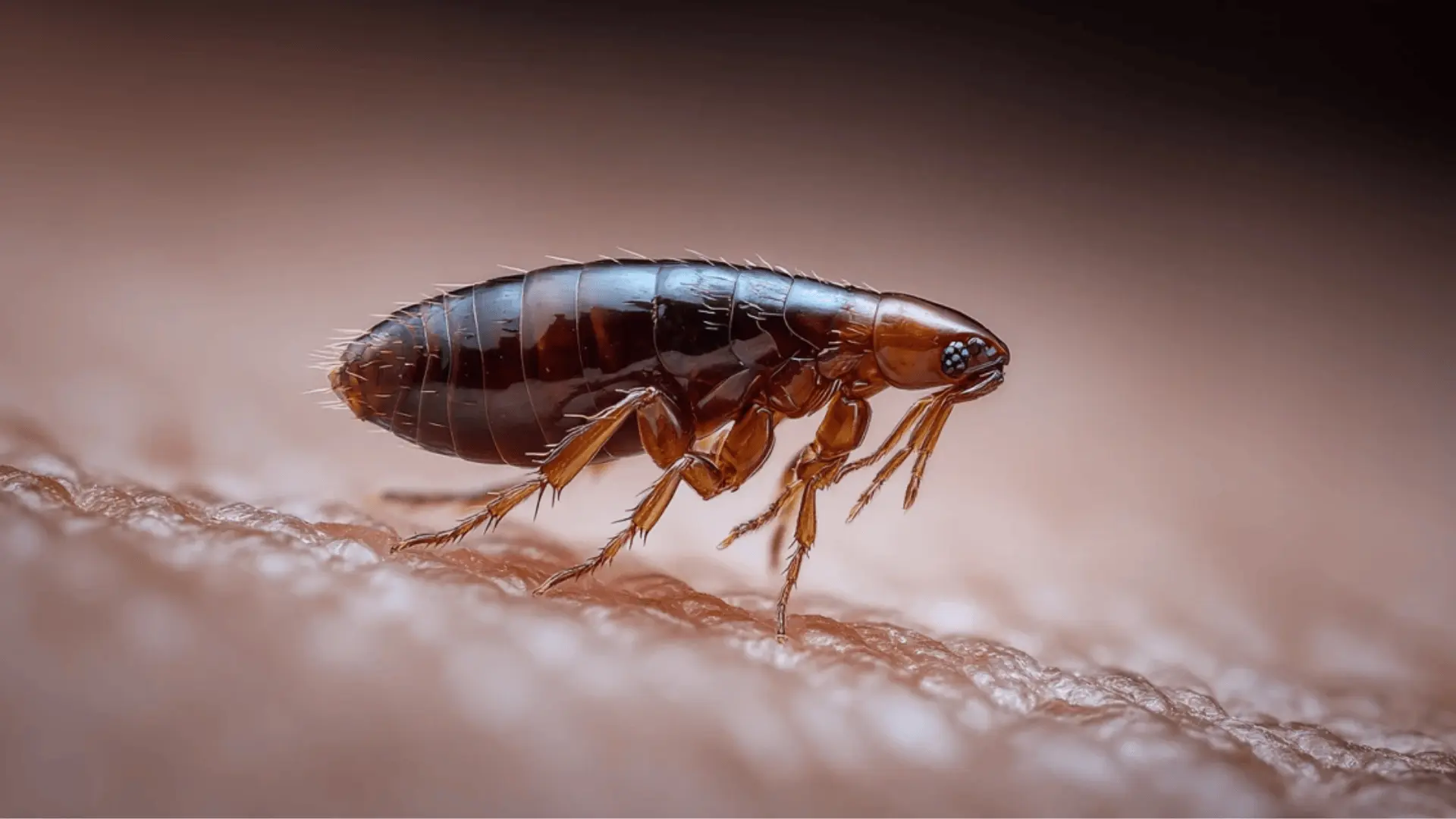
Fleas are real, and yes, they can be seen. So, what do fleas look like to the human eye? They are tiny, dark brown, wingless insects, roughly the size of a sesame seed.
They are easy to miss because they move fast and stay close to the skin. Most people notice the itch, the bites, or small dark specks on their pet before they ever spot the flea itself.
Knowing what to look for makes them much easier to catch early.
What Do Fleas Look Like to the Human Eye?
Adult fleas are tiny, usually around 1 to 3 millimeters long, about the size of a sesame seed. They are dark brown to almost black, with flat, narrow bodies that help them move quickly through fur.
Fleas have no wings, so they cannot fly, but they jump fast and far, which is often the first thing people notice. They are hard to spot because they are so small and rarely stay still.
Checking a light-colored surface or a pet’s fur up close gives the best chance of seeing one clearly.
What Do Fleas Look Like on Pets and In Your Home?
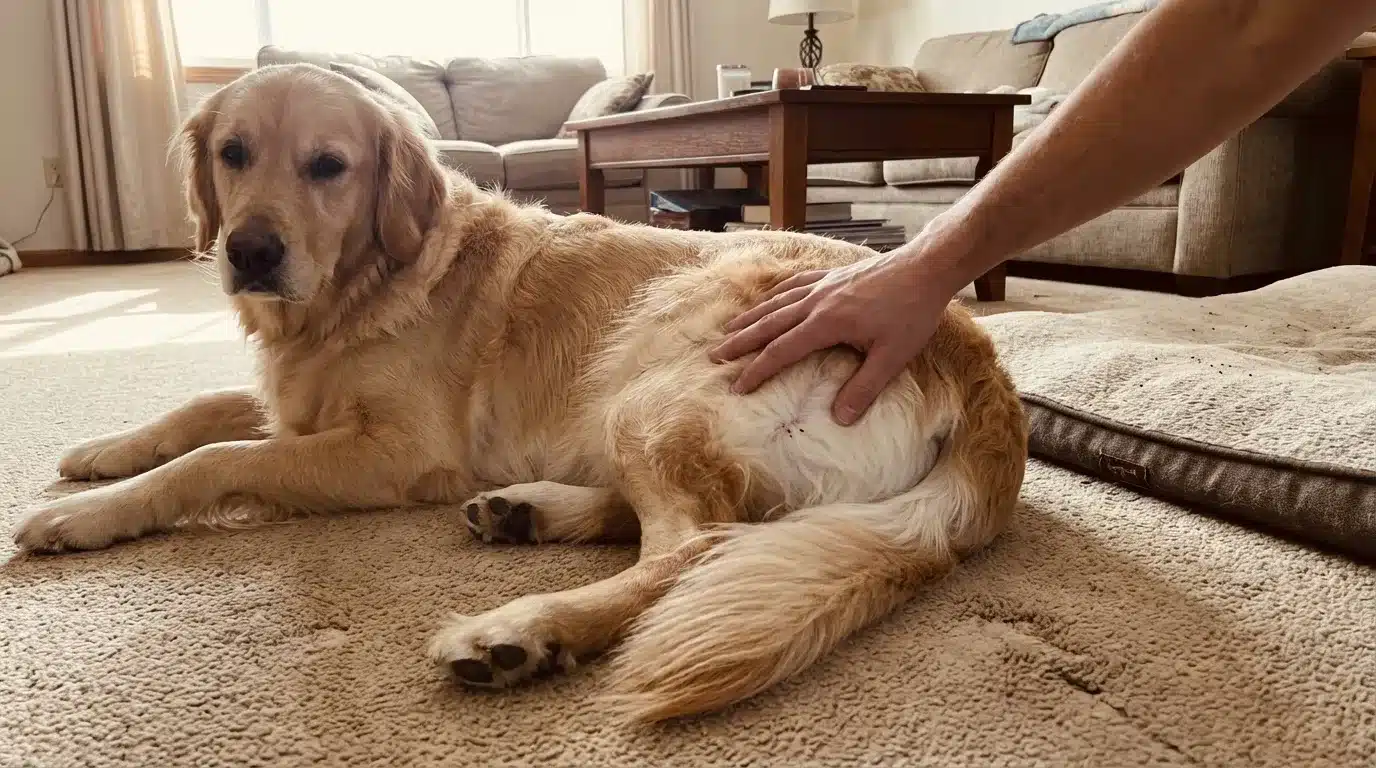
Fleas do not just stay on your pet. They spread quickly throughout the home, making it important to check both your animal and your living space.
What Do Fleas Look Like on Dogs or Cats?
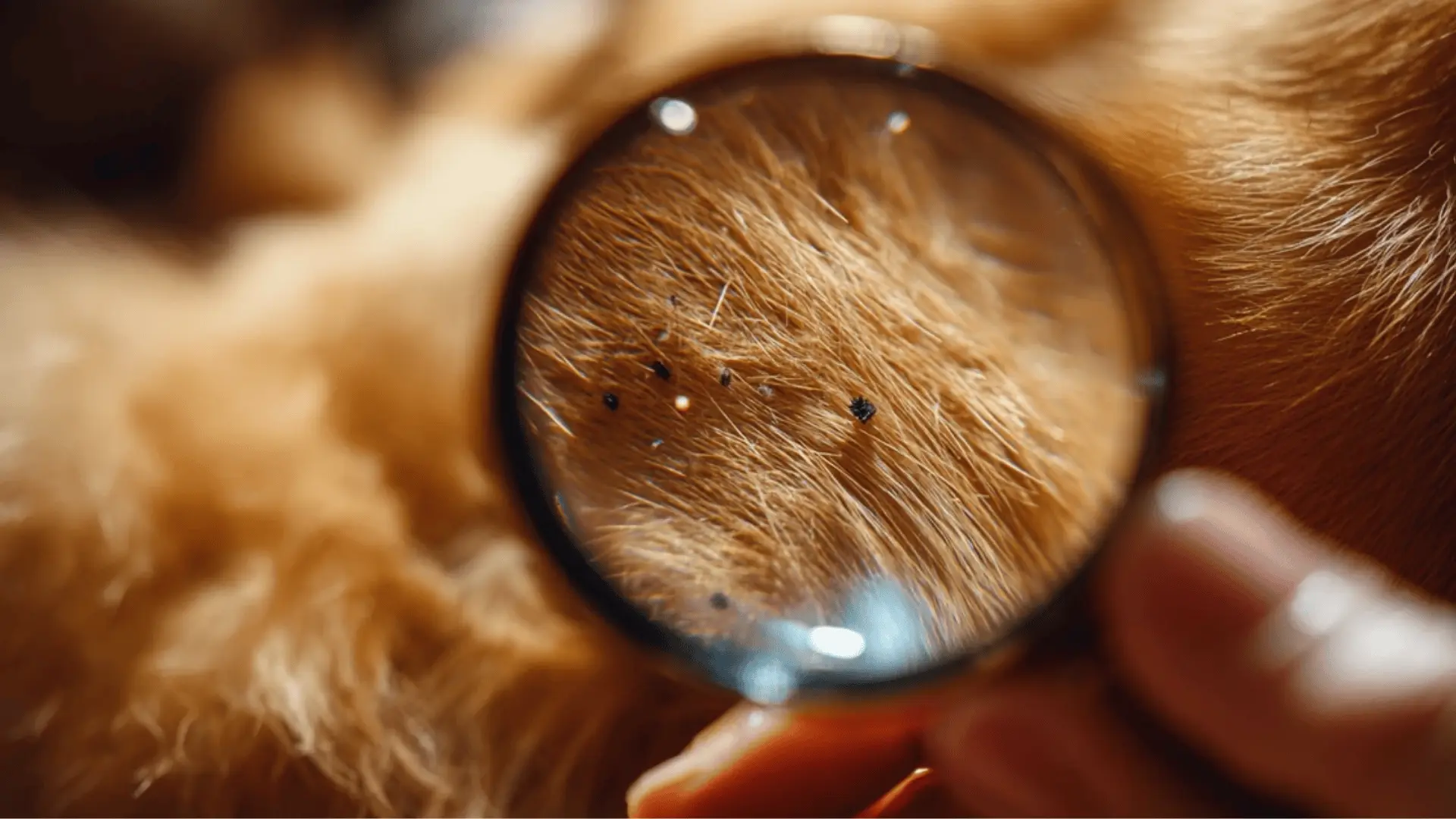
Fleas on pets look like tiny dark specks moving fast through the fur. Check the belly, neck, and near the tail, as these are the spots fleas prefer most.
Where Fleas Usually Hide?
Fleas hide in warm, dark spots like pet bedding, rugs, and furniture. They stay close to where pets sleep or rest, so those areas need the closest attention.
Can You See Fleas in Carpet or Bedding?
Fleas in carpet or bedding are hard to see, but not impossible to spot. Look for tiny dark dots or small jumping specks, especially in areas where your pet spends the most time.
Checking both your pet and your home together gives the best chance of catching a flea problem before it gets out of hand.
What Else Should You Look for Besides Fleas?
Sometimes the flea itself is not the first thing you find. Flea dirt, which is flea waste, looks like tiny black or dark brown specks on your pet’s skin or fur. It is often easier to spot than the flea itself.
Flea eggs are even harder to notice since they are very small, pale, and almost see-through. If you find dark specks on a wet paper towel that turn red, that is a strong sign of flea dirt.
What Do Flea Bites Look Like on Humans?
Many people notice flea bites before they ever spot the flea itself. Here is what to look for and how to tell them apart from other bug bites.
- Bite Appearance: Flea bites appear as small, red, itchy bumps on the skin, usually clustered together with a tiny red dot in the center.
- Common Locations: Bites most often occur on the ankles, feet, and lower legs because fleas jump up from floors and carpets.
- Versus Mosquitoes: Mosquito bites are larger and rounder and appear randomly on the body, while flea bites are smaller and almost always near the feet.
- Bite Pattern: Flea bites tend to show up in groups or lines, which makes them easier to tell apart from single, scattered bug bites.
If bites keep showing up in the same spots, especially around the feet and ankles, it is worth checking the home and pets for fleas right away.
What Bugs Can Be Mistaken for Fleas?
Fleas are not the only tiny bugs that are hard to spot. Here is a quick look at how they compare to other common bugs that people often mix them up with.
| Bug | What It Looks Like | Key Difference |
|---|---|---|
| Bed Bugs | Flat, oval, reddish-brown | Broader, found near beds, cannot jump |
| Ticks | Round, dark, swells after feeding | Larger, found outdoors, does not jump |
| Lice | Tiny, pale, six-legged | Lives in hair, crawls, not linked to pets |
If the bug is dark, narrow, and jumps fast near your pet or carpet, it is most likely a flea. Any bug that is rounder, paler, or found in hair or bedding is probably not a pest.
How to Tell if You Really Have Fleas?
Suspecting fleas is one thing, but confirming them is another. Run a flea comb through your pet’s fur and look for dark specks or fast-moving dots near the neck, belly, and tail.
Place white paper where your pet rests and check for tiny dark specks that turn red when wet, which is a clear sign of flea dirt.
Watch for small bugs jumping quickly near carpet or bedding. Spotting even one of these signs means it is time to act.
Conclusion
Knowing what do fleas look like to the human eye is the first step toward dealing with them. These small, dark, wingless insects can be seen, but their size and speed make them easy to overlook.
When the bug itself stays out of sight, flea dirt, constant pet scratching, and clustered bites around the ankles are usually the clearest clues that something is going on.
Found this helpful? Bookmark this page for the next time a mysterious bite or dark speck has you second-guessing.