



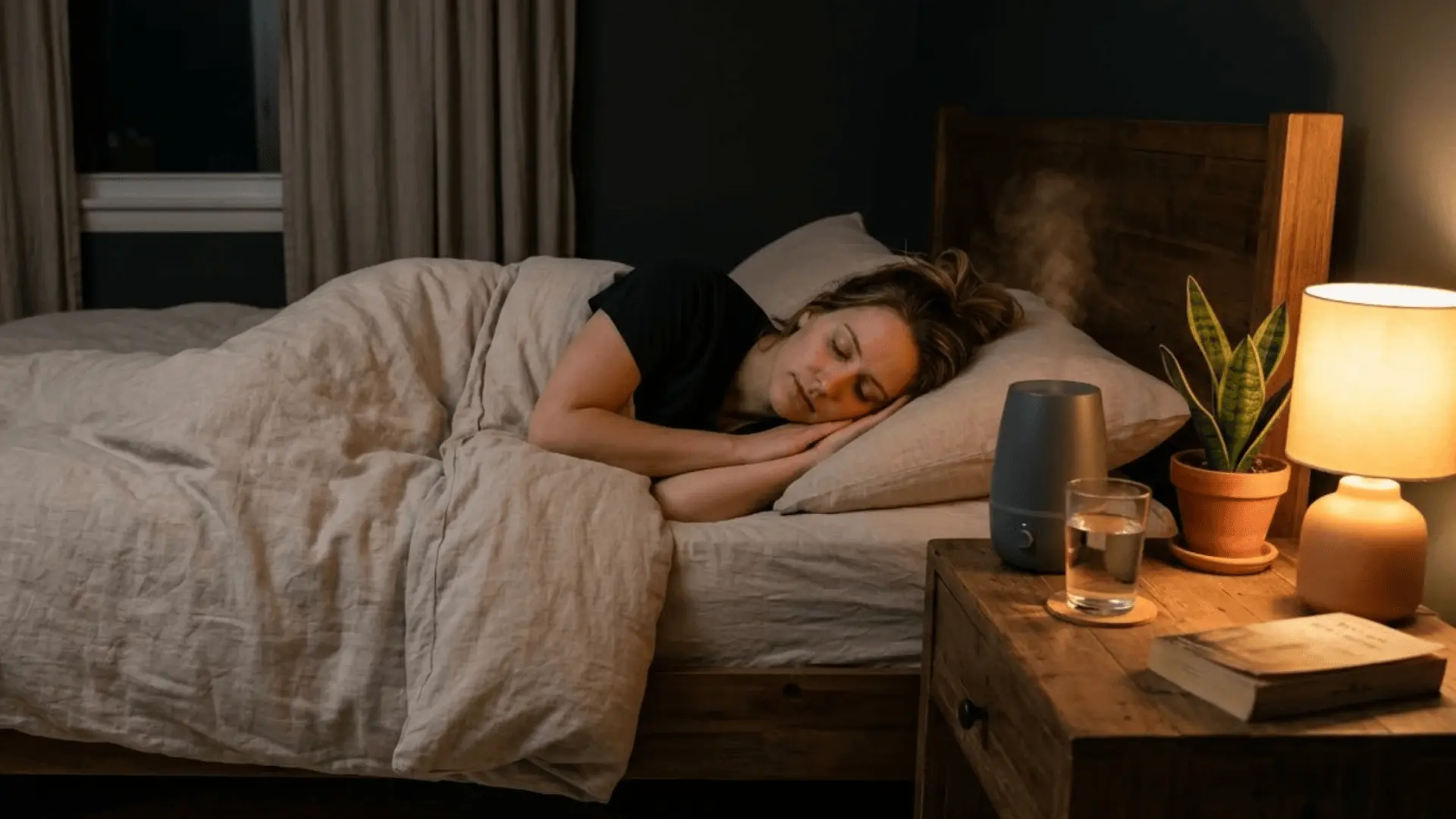
I know how frustrating it is to finally crawl into bed after a long day, only to feel your nose stuff up the moment your head hits the pillow.
If you’ve ever dealt with sinus drainage at night, you understand the struggle of tossing and turning, trying to find a position that lets you breathe.
The good news is that finding the best sleeping position for sinus drainage can make a huge difference in how well you sleep and how you feel in the morning.
Your body position affects how mucus moves through your sinuses, and small changes can bring big relief. That’s why we are going to learn everything you need to know about sleeping better when sinus problems strike.
Why Does My Sinus Get Worse at Night?
Your sinuses are air-filled spaces around your nose, cheeks, forehead, and eyes. They produce mucus that traps dust, germs, and other irritants, and this mucus usually drains naturally while you are upright.
At night, lying down makes that drainage harder. Instead of flowing normally, mucus can collect in your sinuses and throat, leading to congestion, postnasal drip, and trouble breathing.
Common causes of nighttime sinus problems include colds, flu, allergies, sinus infections, a deviated septum, and dry bedroom air.
In some cases, ongoing congestion can also affect breathing patterns during sleep and may be linked to conditions like sleep apnea.
Best Sleeping Positions for Sinus Drainage
The right sleeping position uses gravity to help mucus drain naturally, reduce congestion, and keep your airways open for better breathing at night.
1. Sleeping on Your Back With Head Elevated

This is the gold standard for sinus drainage relief. Elevate your head 30 to 45 degrees using firm pillows or a wedge pillow.
This position uses gravity to drain mucus naturally while keeping airways open and reducing sinus pressure. Ensure your entire upper body is elevated, not just your head.
Pro Tip: Place a small pillow under your knees to reduce lower back strain and help you stay in this position all night without rolling over.
2. Side Sleeping on Your Left Side

Left-side sleeping uses gravity to drain the right sinus cavities while keeping the airways open. This position allows natural drainage without heart pressure.
Keep your head elevated with a supportive pillow, and place one between your knees to support spine alignment. Ideal if your right side feels more congested.
Pro Tip: Hug a body pillow to prevent rolling onto your stomach during sleep and maintain proper alignment throughout the night.
3. Side Sleeping on Your Right Side

Right-sided sleeping drains the left sinus cavities effectively through gravity and reduces pressure. If your left nostril is blocked, this position helps it drain better.
Use a firm, elevated pillow for neck support. Alternating sides throughout the night promotes balanced drainage and prevents stiffness.
Pro Tip: If one side feels more congested, try switching to the other side naturally when you wake during the night.
4. Reclined Position (Semi-Sitting)

Sleeping in a reclined position at 45 degrees provides excellent relief for severe sinus drainage by maximizing gravity’s drainage effect.
Use an adjustable bed, wedge pillow, or stacked pillows against your headboard. Many with chronic sinus issues find this most comfortable for breathing, especially during acute infections.
Pro Tip: Place pillows under your arms for additional support and comfort, creating a cozy nest that helps you stay in position comfortably.
5. Fetal Position on Your Side

Sleep on your side with knees drawn toward your chest. This position opens the nasal passages, promotes drainage, and provides comfort.
Keep your head elevated with a supportive pillow and avoid curling too tightly. Alternate sides throughout the night. Many naturally choose this when feeling unwell.
Pro Tip: Keep a thick pillow between your knees to maintain hip alignment and prevent your top leg from pulling your spine out of position.
How to Elevate Your Head Properly
Getting the right elevation makes all the difference between relief and continued discomfort.
The goal is to create a gentle slope, not a sharp neck bend. Wedge pillows work best, providing consistent elevation throughout the night. Most experts recommend a 7 to 9-inch wedge for sinus relief.
Without a wedge pillow, stack two or three firm pillows that won’t flatten overnight. Some people elevate the entire bed by placing blocks under the headboard legs.
Common mistakes include using a single thin pillow, propping up so much that your chin touches your chest, or using soft pillows that lose their shape.
Worst Sleeping Position for Sinus Drainage
Sleeping on your stomach is the worst position for sinus drainage and should be avoided when dealing with congestion.
This position puts direct pressure on your face and sinuses, preventing mucus from draining properly. It forces you to turn your head to one side, twisting your neck and compressing one nostril while restricting airflow.
Stomach sleeping increases facial puffiness and worsens congestion throughout the night. It also doesn’t allow proper head elevation, which is essential for sinus drainage.
If you’re a natural stomach sleeper, use a body pillow to train yourself to sleep on your side instead.
Strategies to Ease Sinus Congestion

Beyond choosing the right sleeping position, several other strategies can help reduce sinus drainage and improve your breathing at night. These tips work well together to create a more comfortable sleeping environment.
1. Use a Humidifier
Dry air irritates nasal passages and thickens mucus, making drainage difficult. A humidifier adds moisture to the air, keeping nasal tissues moist and thinning mucus for easier drainage.
Place it near your bed and maintain humidity between 30 and 50 percent. Clean your humidifier regularly to prevent mold and bacteria buildup.
2. Nasal Rinsing or Saline Spray Before Bed
Rinsing the nasal passages with saline solution before bed helps wash away mucus, allergens, and irritants. Use a neti pot, squeeze bottle, or saline spray to clear your sinuses.
This simple step significantly reduces congestion and improves breathing throughout the night. Always use distilled or boiled water, never straight tap water.
3. Steam Inhalation or Warm Shower
Taking a warm shower before bed or inhaling steam from hot water loosens thick mucus and opens nasal passages. The combination of moisture and heat provides temporary but effective relief.
Adding eucalyptus or peppermint oil enhances the effect, though it’s optional. Even 10 minutes of steam exposure can make a noticeable difference.
4. Hydration
Drinking plenty of water throughout the day keeps mucus thin and easier to drain. Dehydration can make mucus thick and sticky, worsening congestion and discomfort.
Aim for at least 8 glasses of water daily. Avoid alcohol and caffeine close to bedtime, as both can dehydrate you and worsen symptoms.
5. Optimizing Your Sleep Environment
Keep your bedroom clean and free of allergens to prevent sinus irritation. Wash bedding weekly in hot water to eliminate dust mites. Use allergen-proof covers on pillows and mattresses.
Keep pets out if you have pet allergies. An air purifier with a HEPA filter removes airborne irritants, significantly improving air quality.
6. OTC Remedies (Optional)
Over-the-counter medications such as decongestants, antihistamines, and nasal corticosteroid sprays can provide relief when used properly.
However, avoid using nasal decongestant sprays for more than 3 days to prevent rebound congestion. Read labels carefully and consult a pharmacist if you’re unsure which product suits your needs.
When to See a Doctor

While most sinus drainage issues resolve on their own or with home care, sometimes you need professional help.
See a doctor if your symptoms last longer than 10 days without improvement, if you have severe facial pain or headaches, if you develop a high fever, or if you notice thick yellow or green discharge with a bad smell.
These could be signs of a bacterial sinus infection that needs antibiotics.
If you experience frequent sinus problems throughout the year, you might have chronic sinusitis or severe allergies that require ongoing treatment.
A doctor can evaluate your specific situation, possibly refer you to an ear, nose, and throat specialist, and recommend treatments that go beyond basic home remedies.
Final Thoughts
Finding the best sleeping position for sinus drainage has made such a difference in my own sleep quality, and I hope it does the same for you.
Remember that sleeping on your back with your head elevated gives you the best chance for relief, though side sleeping can work well too.
Combine the right sleeping position with other helpful habits, such as using a humidifier, staying hydrated, and keeping your bedroom allergen-free.
Most sinus drainage problems improve with these simple changes, and you’ll likely notice better sleep within just a few nights. Here’s to breathing easier and sleeping better tonight!