





In recent years, Japanese beds on the floor, often called Japanese floor beds, have attracted growing interest for their simplicity, functionality, and calming aesthetic.
Rooted in tradition yet perfectly suited for modern homes, this style of sleeping aligns beautifully with minimalist bedroom ideas.
A Japanese floor bed can be a practical and stylish solution for anyone trying to save space or create a calm, clutter-free environment.
What Are Japanese Beds on the Floor?
Japanese beds on the floor are low-height sleeping arrangements that stay close to the ground, typically using futons, tatami mats, or low wooden platforms.
A floor sleeping setup like this emphasizes openness and flexibility. Many people place their mattress directly on a tatami mat bed, which provides natural support and ventilation.
Unlike traditional Western beds, this setup allows you to keep your room minimal while still maintaining comfort.
The Traditional Japanese Sleeping Style
The idea of sleeping on the floor comes from centuries-old Japanese sleeping style practices. Traditionally, people in Japan use futons that are spread out at night and folded away during the day.
This allows rooms to serve multiple purposes, making it one of the most efficient space-saving bed ideas.
This approach is deeply rooted in Japanese interior design, which focuses on simplicity, functionality, and the flexible use of space. It’s not just about sleeping, it’s about creating a lifestyle that values openness and intentional living.
This long-standing practice helps explain why Japanese sleep on the floor, even though many modern homes also use Western-style beds.
Types of Japanese Beds on the Floor
Japanese beds on the floor come in various styles, each offering unique benefits tailored to your needs and lifestyle.
1. Traditional Futon Bed

This is the most traditional form of Japanese bedding, commonly known as a shikibuton. A futon (shikibuton) is placed directly on the floor or tatami mat at night and folded away during the day. It’s ideal for flexibility and works well in compact spaces.
2. Tatami Mat Bed
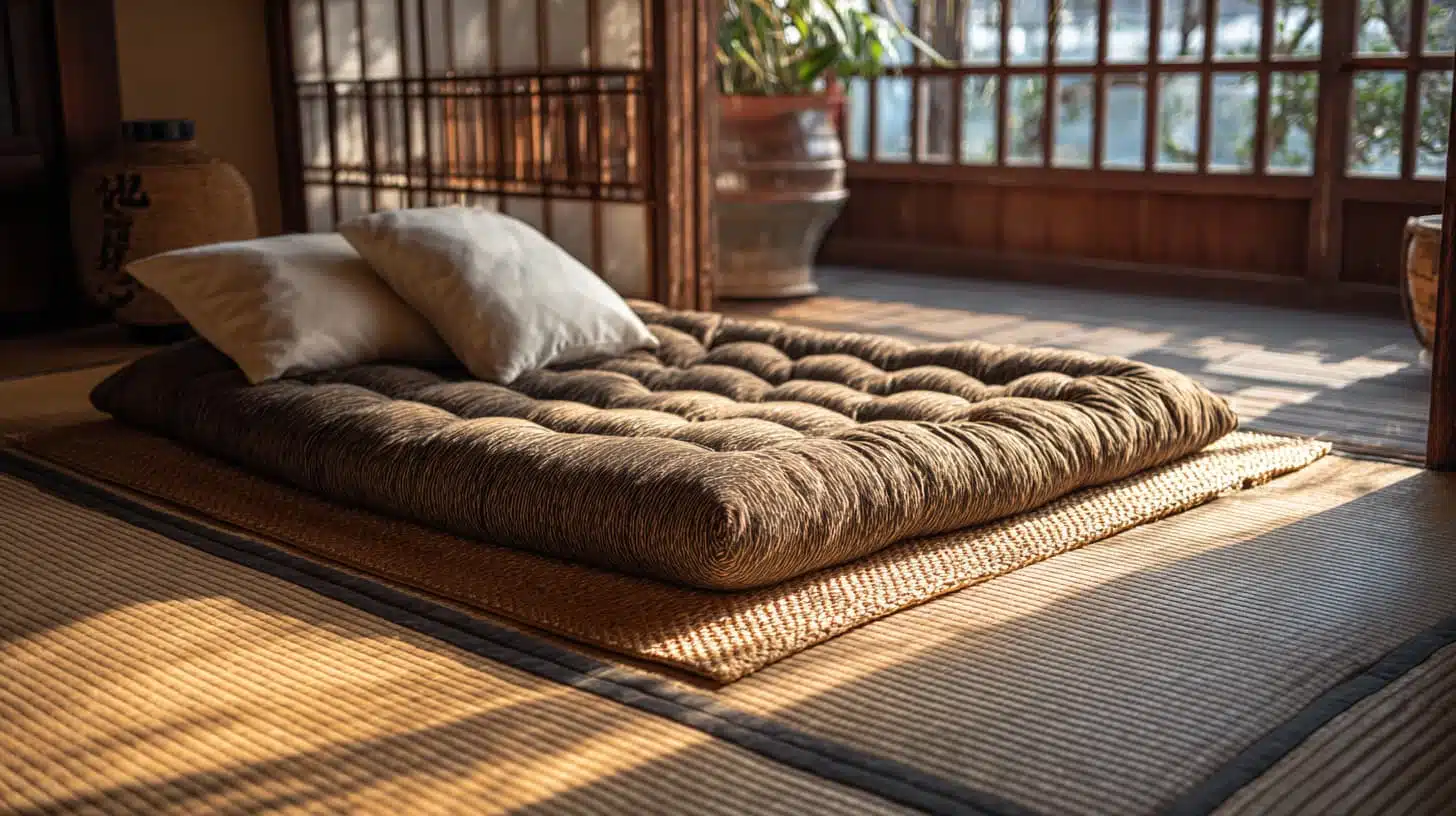
A tatami mat bed uses woven straw mats as a base. These mats improve airflow, reduce moisture, and add a natural texture to the room. They are a great addition to any Japanese floor bed setup.
3. Low Profile Bed Frame

A low-profile bed frame offers a slightly raised structure while maintaining the minimal aesthetic. It’s perfect for those who want the look of a floor bed with a bit more structure and stability.
4. Platform Floor Bed
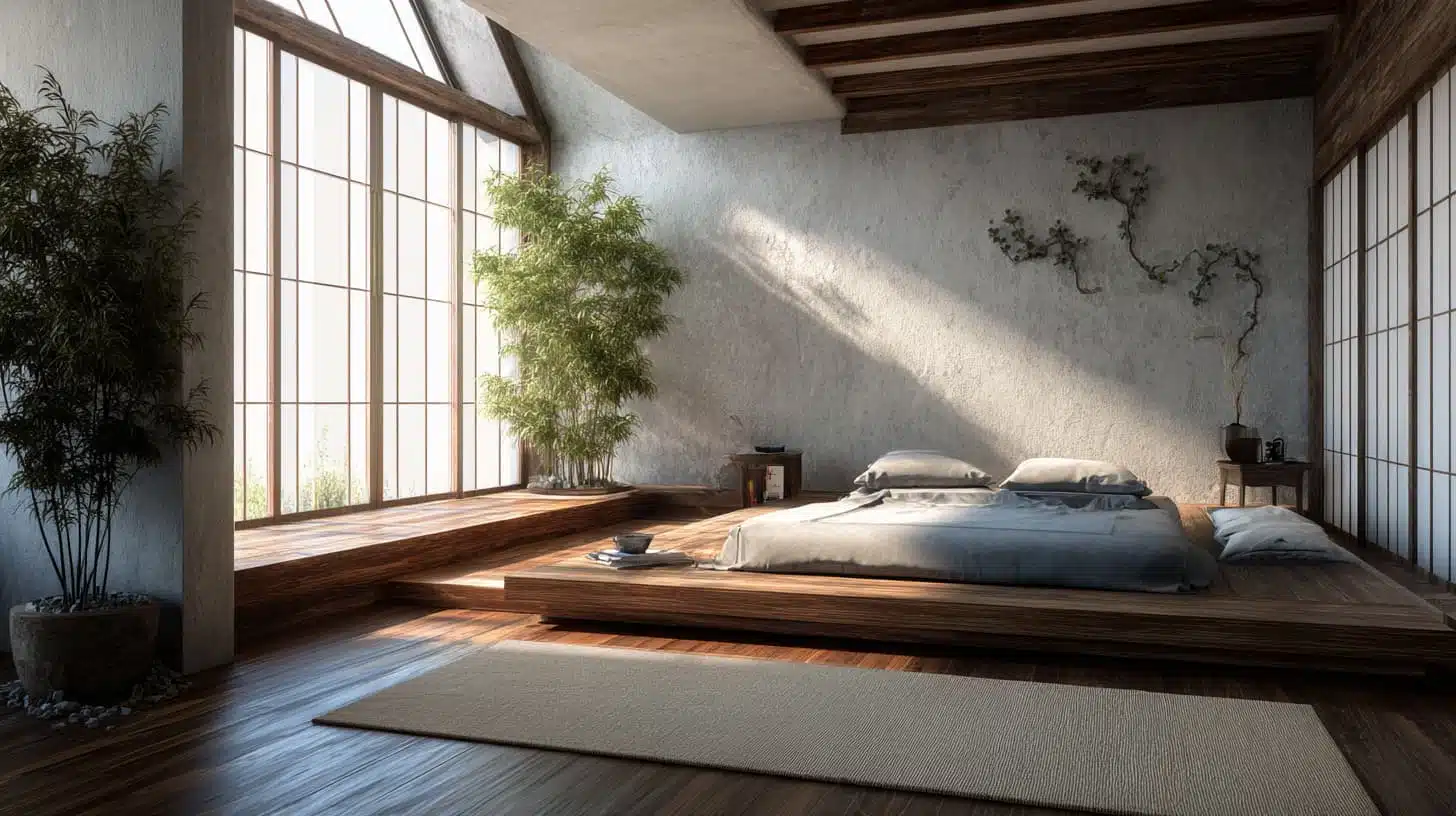
This modern version features a simple wooden base with clean lines. It blends traditional inspiration with modern design, making it ideal for minimalist bedroom decor.
5. Roll-Up Floor Mattress
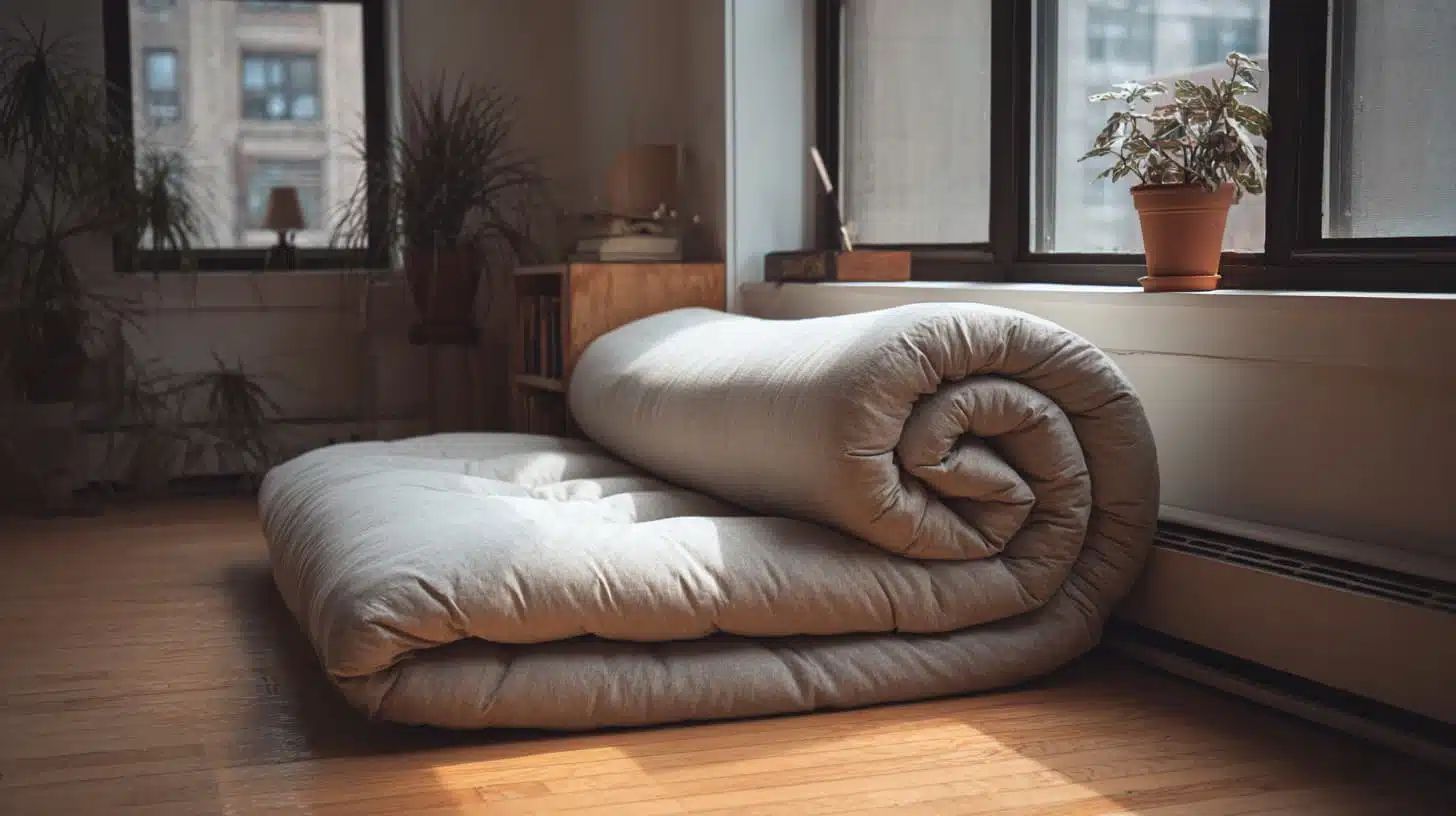
A roll-up futon mattress is highly practical for small homes. It can be easily stored, making it perfect for compact living spaces and multi-purpose rooms.
Benefits of Japanese Beds on the Floor
There are several practical reasons why people choose this minimalist sleeping style:
- Space-saving: Ideal for small homes and apartments
- Minimalist look: Keeps the room clean and uncluttered
- Affordable: A great alternative to expensive bed frames
- Open feel: Makes the bedroom look bigger and more breathable
- Flexible usage: Easily movable and adaptable
These benefits make this floor bed style one of the smartest small-bedroom solutions while supporting a minimalist sleep setup.
Are Japanese Floor Beds Comfortable?
Comfort depends on the materials used, the flooring type, and personal preference. A good-quality futon or shikibuton can provide excellent support, especially if you prefer a firm sleeping surface.
Some people prefer the feel of a firmer, lower sleep surface, while others may need additional padding. If you’re transitioning from a soft mattress, it may take a few days to adjust to the floor bed comfort.
Choosing the right futon or mattress for floor sleeping is key to ensuring a comfortable experience.
Things to Consider Before Sleeping on the Floor
While this type of floor sleeping setup offers many benefits, there are a few practical factors to consider:
- Ventilation: Proper airflow prevents moisture buildup
- Cleanliness: Floors must be kept clean regularly
- Insulation: Cold floors may require mats or rugs
- Moisture control: Air out your mattress frequently to prevent dampness
It is also worth knowing the floor sleeping downsides before committing to this setup, especially if you have existing joint or back concerns.
How to Style a Japanese Bed on the Floor
To create a calming Japanese-inspired bedroom, styling and layout play an important role:
- Use neutral and earthy tones like beige, white, and light wood
- Add natural materials like wood and cotton
- Keep furniture low and minimal
- Use soft, warm lighting
- Avoid unnecessary clutter
These elements help create a peaceful space inspired by Zen bedroom ideas and Japanese bedroom decor. A thoughtfully designed low furniture bedroom enhances both comfort and visual appeal.
Conclusion
This style of floor sleeping beautifully combines simplicity, functionality, and style. From their roots in traditional futon and tatami setups to their place in modern homes, they offer a practical and simple alternative to conventional beds.
For anyone drawn to the aesthetics, simplicity, or space-saving benefits, this low-height sleeping setup can turn a bedroom into a calm and intentional environment.
As more people take up minimalist home lifestyle choices, this sleeping style continues to stand out as one of the most effective bedroom space-saving ideas, especially for those looking to simplify their living space without sacrificing comfort.